
Home › Digestive Health
Digestive health guide · Medically reviewed
Digestive Problems: When Should You See a Gastroenterologist?
Digestive problems can involve the esophagus, stomach, intestines, liver, pancreas or gallbladder. This guide explains common digestive symptoms, the conditions a gastroenterologist evaluates, the tests that may be used, and when symptoms need medical attention.
Medically reviewed by Muhammad Ali Khan, MD, FACP, FASGE
Board-certified gastroenterologist
What Kind of Doctor Treats Digestive Problems?
A gastroenterologist is the physician specialist who treats digestive problems. After training in internal medicine, gastroenterologists complete additional years of training focused on the digestive system: the esophagus, stomach, small intestine, colon and rectum, along with the liver, pancreas, gallbladder and bile ducts. Gastroenterologists also perform procedures such as upper endoscopy and colonoscopy.
Many digestive symptoms are first checked by a primary care clinician, who can treat common, short-lived problems and refer patients when symptoms persist, keep returning, or come with warning signs. A gastroenterologist is typically involved when a problem needs a specialist diagnosis, a procedure, or long-term management of a chronic condition such as inflammatory bowel disease, celiac disease or chronic liver disease. A gastroenterologist with additional focus on liver disease is often called a hepatologist.
What Are Digestive Problems?
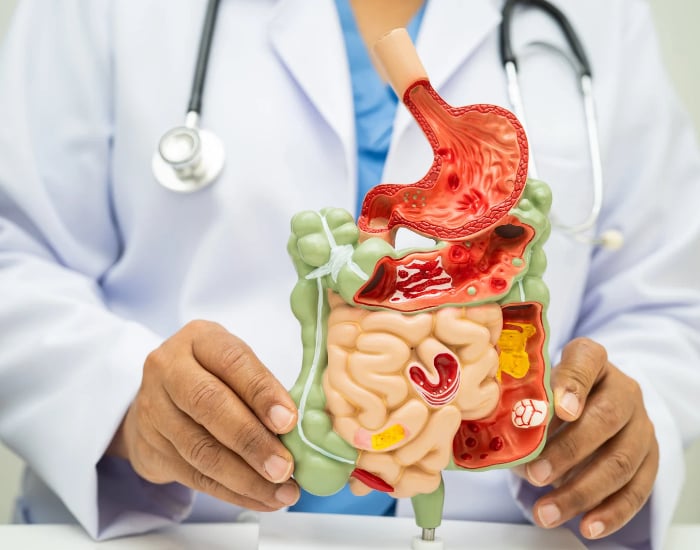
Digestive problems are symptoms or conditions that affect how the body swallows, digests and absorbs food and removes waste. The digestive system includes the gastrointestinal (GI) tract, a continuous passage from the mouth to the anus made up of the esophagus, stomach, small intestine, colon (large intestine) and rectum, and the solid organs that help digestion: the liver, gallbladder and pancreas.
Each part has a different job. The esophagus carries food to the stomach, the stomach mixes food with acid, and the small intestine absorbs most nutrients with help from bile made by the liver and stored in the gallbladder, and enzymes made by the pancreas. The colon absorbs water and forms stool, and the rectum stores stool until a bowel movement. Because the same symptom, such as abdominal pain, can come from several of these organs, the location and pattern of symptoms matter.
Some digestive problems are short-lived, such as a stomach virus. Others are chronic, such as gastroesophageal reflux disease (GERD), irritable bowel syndrome (IBS), inflammatory bowel disease (IBD), celiac disease or fatty liver disease, and benefit from specialist diagnosis and follow-up.
Common Digestive Symptoms
Digestive symptoms are common, and most people have them from time to time. The symptoms below are among the most frequent reasons people see a gastroenterologist. A symptom on its own does not identify its cause: the same symptom can come from different parts of the digestive system, and many causes are minor. Select a symptom to read more about it.
When Should You See a Gastroenterologist?
You should consider seeing a gastroenterologist when digestive symptoms last longer than a few weeks, keep coming back, do not improve with initial treatment, or appear with warning signs such as bleeding, trouble swallowing, unexplained weight loss or anemia. A gastroenterologist is also the specialist for recommended colorectal cancer screening.
Occasional heartburn, gas or a brief change in bowel habits usually does not need a specialist. What matters is the pattern: how long symptoms have lasted, whether they are getting worse, and whether they come with signs that something more serious may be happening. Your age, family history and medications also influence when evaluation is recommended.
Adults at average risk are advised to begin colorectal cancer screening at age 45, according to the U.S. Preventive Services Task Force. Learn more in our colorectal cancer screening guide.
When to seek emergency care
Call 911 or go to the nearest emergency department for vomiting blood, heavy rectal bleeding, black or tarry stools with dizziness or fainting, severe or rapidly worsening abdominal pain, or signs of severe dehydration.
Reasons to see a gastroenterologist
- Heartburn or reflux more than twice a week, or despite medication
- Difficulty or pain when swallowing
- Abdominal pain that persists or keeps returning
- Diarrhea or constipation lasting more than a few weeks
- Blood in the stool or rectal bleeding
- Unexplained weight loss or loss of appetite
- Iron-deficiency anemia
- Abnormal liver blood tests or imaging
- A family history of colorectal cancer or IBD
- Being due for colorectal cancer screening
This list is a general guide, not a diagnosis. A qualified medical professional should evaluate your specific symptoms.
Digestive Problems That Gastroenterologists Evaluate
Gastroenterologists diagnose and manage conditions throughout the digestive system. The groups below show common examples by organ. Each condition is different, so an accurate diagnosis guides treatment.
Esophageal Conditions
Gastroesophageal reflux disease (GERD), esophagitis, Barrett’s esophagus and difficulty swallowing (dysphagia).
Stomach Conditions
Gastritis, H. pylori infection, peptic ulcer disease and dyspepsia (chronic indigestion).
Intestinal Conditions
Irritable bowel syndrome (IBS), Crohn’s disease, ulcerative colitis, celiac disease, diverticular disease and small intestinal bacterial overgrowth (SIBO).
Colon and Rectal Conditions
Colon polyps, rectal bleeding, hemorrhoids, changes in bowel habits and colorectal cancer screening.
Liver Conditions
Fatty liver disease (MASLD), abnormal liver enzymes, hepatitis and cirrhosis.
Pancreatic and Gallbladder Conditions
Pancreatitis and other pancreatic disorders, gallstones and bile duct problems, some of which are treated with ERCP.
Managing a long-term digestive condition? Read about chronic GI conditions.
How Gastroenterologists Evaluate Digestive Symptoms
A gastroenterologist does not diagnose from a single symptom. Evaluation follows a stepwise path from your symptoms to a specific diagnosis, and testing is chosen only when it will answer a clinical question. This framework is for understanding the process, not for diagnosing yourself.
1. The Symptom
Your doctor clarifies the details: location, severity, duration, what makes it better or worse, and associated symptoms such as fever, bleeding or weight loss.
2. Possible Categories of Causes
Findings are grouped into possible categories, such as acid-related, inflammatory, infectious, functional (like IBS), structural, medication-related or liver-related, rather than jumping to one answer.
3. Clinical Evaluation
A medical history, medication review, family history and physical examination often narrow the possibilities and show whether testing is needed at all.
4. Targeted Diagnostic Testing
When needed, tests are matched to the suspected cause, for example blood or stool tests, H. pylori testing, imaging, upper endoscopy or colonoscopy.
Example: persistent upper abdominal pain after meals may lead to questions about reflux, NSAID use and H. pylori, and possibly H. pylori testing or an upper endoscopy, while lower abdominal pain with a change in bowel habits points the evaluation in a different direction. Your own evaluation depends on your history and your clinician’s judgment.
What Tests May a Gastroenterologist Use for Digestive Problems?
Gastroenterologists choose tests based on your symptoms and the suspected cause. Common options include blood tests, stool tests, H. pylori testing, upper endoscopy, colonoscopy, imaging and liver evaluation. Not every patient needs every test, and many people need only a few, or none, after a careful history and examination.
Are Digestive Symptoms Always Caused by Inflammation?
No. Bloating, abdominal pain, diarrhea, constipation and other digestive symptoms do not automatically mean a person has inflammation in the digestive tract. Many digestive symptoms come from causes that do not involve inflammation, such as irritable bowel syndrome, constipation, food intolerances or acid reflux without esophageal damage.
Irritable bowel syndrome (IBS), for example, is a disorder of gut–brain interaction: it changes how the bowel works and how sensitive it feels, but it does not cause the ongoing inflammation and tissue damage seen in inflammatory bowel disease (IBD), such as Crohn’s disease and ulcerative colitis. Gastritis, celiac disease, infections and some medications can inflame parts of the digestive tract, which is why a doctor looks for objective evidence, such as blood or stool markers, endoscopy findings or biopsy results, before calling a symptom “inflammatory.”
To understand what “gut inflammation” actually means, where it can occur and how doctors check for it, read our guide to gut inflammation.

Dr. Muhammad Ali Khan, MD, FACP, FASGE
Board-certified gastroenterologist and hepatologist, United Gastroenterology Associates
About the Medical Reviewer
This page was medically reviewed by Muhammad Ali Khan, MD, FACP, FASGE, a board-certified gastroenterologist and hepatologist at United Gastroenterology Associates, PLLC. He evaluates and treats digestive and liver conditions in patients from across Greater Houston at the practice’s offices in Katy and Cypress, Texas.
Dr. Khan earned his medical degree at Dow Medical College, completed an internal medicine residency at the University of Toledo, and completed a gastroenterology and hepatology fellowship at the University of Tennessee Health Science Center. He served as an Assistant Professor at the University of Alabama at Birmingham and as an Associate Professor at The University of Texas MD Anderson Cancer Center.
He is board-certified in gastroenterology, hepatology, and internal medicine, is a Fellow of the American Society for Gastrointestinal Endoscopy (FASGE) and the American College of Physicians (FACP), and has authored more than 100 peer-reviewed articles. Last medically reviewed September 28, 2026.
Professional Memberships
- American Society for Gastrointestinal Endoscopy (Fellow, FASGE)
- American College of Physicians (Fellow, FACP)
Areas of Care
- Digestive symptoms and GI conditions
- Acid reflux, GERD and gastritis
- IBS and inflammatory bowel disease
- Liver disease and abnormal liver tests
- Upper endoscopy and colonoscopy
- Colorectal cancer screening
Frequently Asked Questions About Digestive Problems
What is the difference between a gastroenterologist and a primary care doctor?
A primary care clinician treats a wide range of health problems and is often the first stop for digestive symptoms. A gastroenterologist has specialist training in the digestive system and liver and performs procedures such as endoscopy and colonoscopy. Primary care doctors often refer patients when symptoms persist or need specialized testing.
Do I need a referral to see a gastroenterologist?
It depends on your health plan. Some plans, such as many HMOs, require a referral from a primary care physician, while others allow you to schedule directly. Check with your insurance plan before booking.
Why do I keep having digestive problems?
Recurring digestive symptoms can have many causes, including reflux, IBS, food intolerances, medications, infections, inflammatory conditions and liver or gallbladder problems. Symptoms that keep coming back are a good reason for evaluation to identify the cause rather than treating each episode on its own.
Can stress cause digestive problems?
Stress can worsen digestive symptoms such as abdominal pain, bloating, heartburn and changes in bowel habits, particularly in IBS, through the gut–brain connection. Stress alone does not cause conditions such as IBD or ulcers, and new or persistent symptoms should still be evaluated.
What tests will a gastroenterologist order?
Tests depend on your symptoms. They may include blood tests, stool tests, H. pylori testing, imaging, upper endoscopy or colonoscopy. Many visits start with a detailed history and examination, and testing is added only when it will change management.
Are digestive problems a sign of cancer?
Most digestive symptoms are not caused by cancer. However, warning signs such as blood in the stool, black stools, unexplained weight loss, trouble swallowing, persistent vomiting or iron-deficiency anemia should be evaluated promptly so that serious causes can be excluded.
Can digestive problems cause unexplained weight loss?
Yes. Conditions that affect eating, digestion or absorption, such as celiac disease, IBD, peptic ulcers, pancreatic disorders and some cancers, can cause weight loss. Losing weight without trying should always be discussed with a doctor.
When is a digestive symptom an emergency?
Seek emergency care for vomiting blood, heavy rectal bleeding, black or tarry stools with dizziness, severe or rapidly worsening abdominal pain, fainting, or signs of severe dehydration. Call 911 in an emergency.
Need a Gastroenterology Evaluation in the Houston Area?
United Gastroenterology Associates, PLLC offers digestive and liver care with Muhammad Ali Khan, MD, FACP, FASGE, at offices in Katy and Cypress, Texas. Learn about our Katy gastroenterology office or Cypress gastroenterology office, or call (346) 340-4414 to request an appointment.
Sources
- National Institute of Diabetes and Digestive and Kidney Diseases (NIDDK). Your Digestive System & How It Works. niddk.nih.gov
- NIDDK. Digestive Diseases. niddk.nih.gov
- NIDDK. Upper GI Endoscopy. niddk.nih.gov
- NIDDK. Colonoscopy. niddk.nih.gov
- NIDDK. Acid Reflux (GER & GERD) in Adults. niddk.nih.gov
- NIDDK. Irritable Bowel Syndrome (IBS). niddk.nih.gov
- American College of Gastroenterology. Clinical Guidelines. gi.org
- U.S. Preventive Services Task Force. Colorectal Cancer: Screening. Final recommendation statement, May 18, 2021. uspreventiveservicestaskforce.org
This page provides general educational information and does not replace medical advice, diagnosis, or treatment. Symptoms should be evaluated by a qualified medical professional. For a medical emergency, call 911. Medically reviewed by Muhammad Ali Khan, MD, FACP, FASGE. Last medically reviewed September 28, 2026. Last updated September 28, 2026.