
When a doctor recommends an endoscopy or colonoscopy, it is natural to wonder why you need the procedure and how it differs from the other one. Understanding the endoscopy vs colonoscopy difference can help you feel more prepared and understand why your gastroenterologist recommends a particular test. Both use a thin, flexible camera to examine the digestive tract, and both are commonly performed by gastroenterologists. But they are designed to look at very different areas.
An upper endoscopy examines the upper digestive tract, including the esophagus, stomach and duodenum. A colonoscopy examines the colon and rectum, which make up the large intestine.
The preparation, reasons for the procedure, symptoms investigated and findings that can be treated are also different. Understanding these differences can make the recommendation feel much less confusing and help you know what to expect before, during and after your procedure.
Important Note
An endoscopy and a colonoscopy are not interchangeable tests. The right procedure depends on where your symptoms are coming from, your medical history, screening needs and what your gastroenterologist needs to evaluate. If you have been told you need one of these procedures, knowing the difference can make the process much easier to understand.
Endoscopy vs Colonoscopy: What Is the Main Difference?
The biggest difference is the part of the digestive tract each procedure examines.
An upper endoscopy, also called an EGD or esophagogastroduodenoscopy, examines the upper digestive tract. The endoscope is passed through the mouth to examine the esophagus, stomach and duodenum.
A colonoscopy examines the lower digestive tract. The colonoscope is inserted through the rectum and guided through the colon to look for abnormalities in the large intestine.
Both procedures can be used to diagnose disease, investigate unexplained symptoms, take biopsies and perform certain treatments.
| Upper Endoscopy | Colonoscopy |
|---|---|
| Examines the esophagus, stomach and duodenum | Examines the colon and rectum |
| Scope enters through the mouth | Scope enters through the rectum |
| Usually requires fasting | Requires bowel cleansing and dietary preparation |
| Often evaluates heartburn, swallowing problems, ulcers and upper abdominal symptoms | Often evaluates bleeding, bowel changes, polyps and colorectal cancer risk |
What Is an Upper Endoscopy?
An upper endoscopy is a procedure used to directly examine the upper portion of the digestive system.
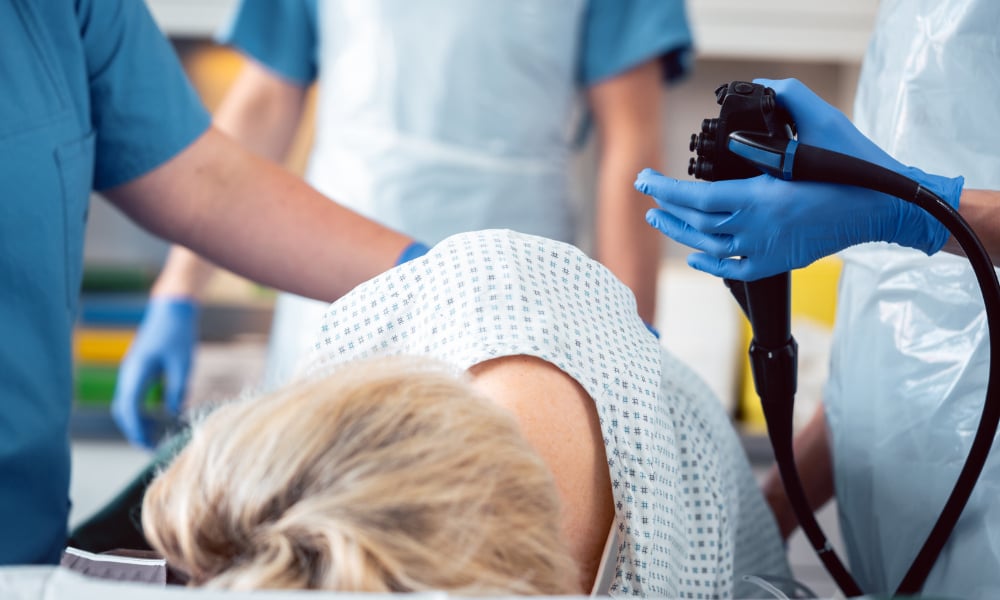
During the procedure, a gastroenterologist guides a thin, flexible endoscope through the mouth and into the esophagus, stomach and duodenum.
The camera allows the physician to see the lining of these organs in real time. If an abnormal area is identified, the gastroenterologist can often take a small biopsy for laboratory analysis.
An upper endoscopy can also be used for certain treatments. Depending on the problem, a physician may be able to control bleeding, remove certain lesions or widen a narrowed portion of the esophagus.
Why Would Someone Need an Upper Endoscopy?
An upper endoscopy is generally recommended when a doctor needs to investigate symptoms or findings involving the upper digestive tract.
Common reasons include persistent heartburn, difficulty swallowing, unexplained upper abdominal pain, nausea, vomiting, indigestion, gastrointestinal bleeding and unexplained anemia.
Your gastroenterologist may also recommend an EGD when there is concern about conditions such as gastritis, esophagitis, peptic ulcers, Barrett’s esophagus, celiac disease or an abnormality seen on another test.
Upper Endoscopy for Acid Reflux
People with persistent reflux symptoms sometimes need an upper endoscopy to look for inflammation or complications associated with GERD. Results help guide gastroesophageal reflux disease (GERD) treatment.
Not everyone with acid reflux will have visible changes on an endoscopy. However, the procedure can provide important information when symptoms are persistent, severe, atypical or associated with warning signs.
Upper Endoscopy for Difficulty Swallowing
Difficulty swallowing, medically known as dysphagia, can have several causes. An upper endoscopy allows the gastroenterologist to examine the esophagus directly and look for narrowing, inflammation, structural abnormalities and other problems.
In selected cases, an esophageal narrowing can also be treated during the procedure.
What Is a Colonoscopy?
A colonoscopy is a procedure that allows a gastroenterologist to examine the lining of the colon and rectum.
The physician uses a flexible colonoscope with a small camera. The instrument is carefully inserted through the rectum and advanced through the large intestine.
Because the entire colon can be examined, colonoscopy is one of the most important tools for colorectal cancer screening and for investigating symptoms involving the lower digestive tract.
During a colonoscopy, the gastroenterologist can remove many types of polyps and obtain biopsies from areas that appear abnormal.
Why Would Someone Need a Colonoscopy?
A colonoscopy may be recommended for routine colorectal cancer screening or to investigate symptoms such as rectal bleeding, blood in the stool, unexplained changes in bowel habits, chronic diarrhea, persistent constipation or unexplained anemia.
It can also be used to follow up on previous polyps, investigate abnormal test results or evaluate inflammatory bowel disease.
Colonoscopy for Colorectal Cancer Screening
One of the most important reasons for colonoscopy is colorectal cancer screening.
Screening can help detect precancerous polyps before they develop into cancer. If a polyp is found during colonoscopy, it can often be removed during the same procedure.
This combination of detection and removal is one reason colonoscopy plays such an important role in colorectal cancer prevention.
Colonoscopy for Rectal Bleeding
Blood in the stool or rectal bleeding can have many causes, including hemorrhoids, anal fissures, polyps, inflammatory bowel disease and colorectal cancer.
Although hemorrhoids are common, persistent or unexplained bleeding should not automatically be attributed to hemorrhoids without appropriate medical evaluation.
Which Symptoms Usually Lead to Endoscopy vs Colonoscopy?
The location and nature of your symptoms often help determine which procedure is appropriate.
Upper digestive symptoms are more likely to lead to an upper endoscopy. These may include persistent heartburn, trouble swallowing, upper abdominal discomfort, nausea, vomiting or suspected upper GI bleeding.
Lower digestive symptoms are more likely to lead to colonoscopy. These may include blood in the stool, rectal bleeding, persistent changes in bowel habits, unexplained diarrhea, constipation or concerns related to colorectal cancer.
However, symptoms do not always point to one specific organ. Your physician may need to consider your complete medical history, age, medications, laboratory results and other tests before deciding which procedure is appropriate.
How Does Preparation Differ?
The preparation for a colonoscopy is generally more involved than the preparation for an upper endoscopy.
For an upper endoscopy, the primary preparation requirement is usually fasting so the stomach is empty during the procedure.
A colonoscopy requires the colon to be thoroughly cleaned. This typically involves dietary restrictions, clear liquids and a bowel preparation medication prescribed or recommended by the medical team.
The exact preparation schedule varies depending on the procedure center, medical history and bowel preparation being used.
Patients should follow the specific instructions provided by their gastroenterologist rather than relying solely on general online advice.
What Can You Eat Before an Endoscopy or Colonoscopy?
The dietary requirements are different.
Before an upper endoscopy, patients are generally instructed to stop eating and drinking according to a specific fasting schedule.
Before a colonoscopy, dietary restrictions usually begin earlier because the goal is to remove stool from the colon. Patients may be instructed to follow a low-fiber or low-residue diet before transitioning to clear liquids and completing the bowel preparation.
Your specific instructions may differ depending on the bowel preparation product and your health history.
For more detailed information, review the colonoscopy preparation instructions provided by United Gastro TX.
Do Both Procedures Use Sedation?
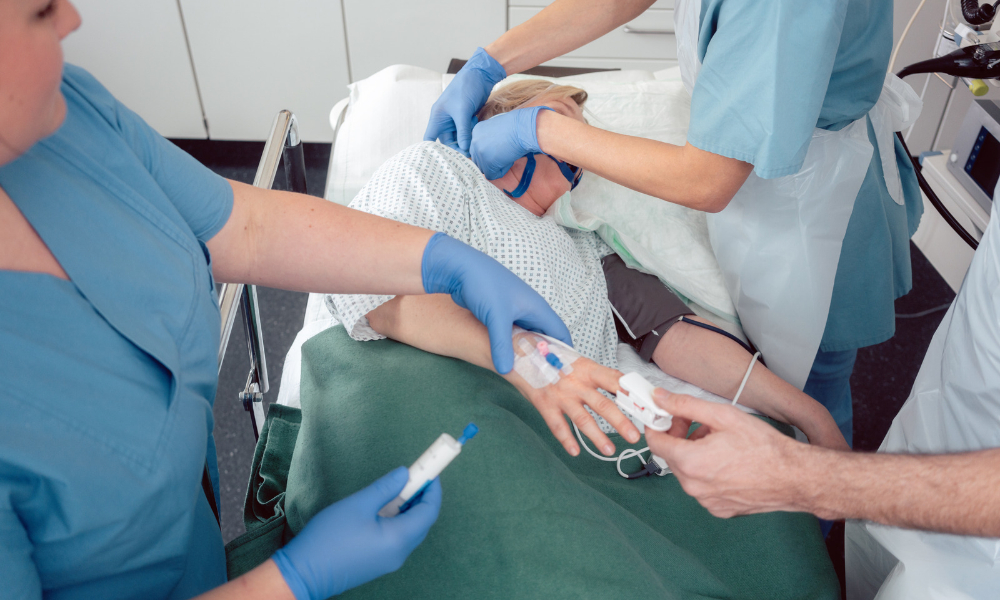
Both upper endoscopy and colonoscopy commonly involve medication to promote comfort and relaxation.
The exact sedation or anesthesia approach varies depending on the facility, physician, procedure and patient’s health.
During the procedure, your medical team monitors you closely.
If sedation is used, you will generally need someone to take you home afterward, and you should follow the facility’s instructions regarding driving and other activities.
Which Procedure Is More Painful?
There is no simple answer because people’s experiences differ, and sedation can significantly affect what patients feel and remember.
Neither procedure is intended to be painful. During an upper endoscopy, some patients may experience temporary throat irritation or bloating afterward. Colonoscopy can cause temporary abdominal pressure, bloating or gas, particularly as air or carbon dioxide is used to improve visibility.
Your gastroenterology team will explain the sedation plan and ways they work to keep you comfortable.
How Long Does Each Procedure Take?
Both procedures are generally completed within a relatively short examination period, but the exact duration varies.
An uncomplicated upper endoscopy may take around 15 to 30 minutes.
A colonoscopy may take approximately 20 to 45 minutes, although the time can be longer when polyps are removed, biopsies are obtained or other findings require additional attention.
Remember that the total appointment takes longer than the procedure itself because you need time for preparation, sedation and recovery.
What Can an Upper Endoscopy Detect?
An upper endoscopy can help identify a variety of abnormalities involving the esophagus, stomach and duodenum.
These include:
- Esophagitis
- Gastritis
- Peptic ulcers
- Esophageal strictures
- Barrett’s esophagus
- Upper gastrointestinal bleeding
- Abnormal growths or lesions
- Changes associated with celiac disease
Biopsies can provide additional information when the appearance alone does not establish a diagnosis.
What Can a Colonoscopy Detect?
A colonoscopy can identify abnormalities throughout the colon and rectum.
These can include:
- Colon polyps
- Colorectal cancer
- Inflammation
- Diverticular disease
- Sources of gastrointestinal bleeding
- Abnormal growths
- Changes associated with inflammatory bowel disease
One of the major advantages of colonoscopy is that many polyps can be removed during the procedure rather than simply observed.
Can Both Procedures Take Biopsies?
Yes. Both upper endoscopy and colonoscopy can be used to obtain tissue samples.
During an upper endoscopy, biopsies may be obtained from the esophagus, stomach or duodenum.
During colonoscopy, tissue samples can be obtained from the colon or rectum when the gastroenterologist sees an area that requires further evaluation.
The biopsy is then examined by a pathologist.
It is important to remember that taking a biopsy does not automatically mean that cancer is suspected. Biopsies are frequently used to investigate inflammation, infection and other conditions.
Can Polyps Be Removed During a Colonoscopy?
Yes. Many colon polyps can be removed during colonoscopy.
This is an important distinction between diagnostic tests that only produce images and colonoscopy, which can also allow certain abnormalities to be treated immediately.
The removed tissue is typically sent for laboratory examination to determine its type and whether additional surveillance is necessary.
What Are the Risks?
Both procedures are generally considered safe, but no medical procedure is completely risk-free.
Potential risks include bleeding, infection, reactions to sedation and, rarely, perforation of the digestive tract.
The risk can vary depending on the procedure, your overall health and whether additional treatment such as polyp removal or dilation is performed.
Your gastroenterologist should review the risks and benefits with you before the procedure.
Important Note
It is easy to worry when you hear that a digestive test may involve a camera or biopsy. Remember that these procedures are commonly used to investigate symptoms and prevent complications. A recommendation for an endoscopy or colonoscopy does not mean that your doctor believes you have cancer. The purpose is to find the cause of a problem or detect abnormalities early.
What Is Recovery Like?
Recovery from both procedures is generally straightforward when no complications occur.
Because sedation may cause temporary drowsiness, patients typically spend some time in a recovery area before leaving.
After an upper endoscopy, a mild sore throat or temporary bloating can occur.
After colonoscopy, bloating or gas can occur as the digestive tract returns to normal.
Your physician will provide individualized instructions about eating, medications and physical activity.
When Should You Call a Doctor After Either Procedure?
Contact your medical team if you develop severe or worsening abdominal or chest pain, significant bleeding, vomiting blood, black stools, persistent vomiting, fever, difficulty breathing or another concerning symptom after your procedure.
A small amount of temporary discomfort may occur, but severe or unexpected symptoms should be evaluated.
Can You Have an Endoscopy and Colonoscopy on the Same Day?
Yes, in some situations an upper endoscopy and colonoscopy can be performed during the same appointment.
This may be considered when a patient has symptoms or medical indications involving both the upper and lower digestive tract, or when multiple diagnostic questions need to be addressed.
Whether combining the procedures is appropriate depends on your health, symptoms, medical history and the recommendation of your gastroenterologist.
Which Procedure Do I Need?
The procedure you need depends on what your doctor is trying to evaluate.
If the concern involves the esophagus, stomach or duodenum, an upper endoscopy may be appropriate.
If the concern involves the colon or rectum—or if you are due for colorectal cancer screening—a colonoscopy may be recommended.
In some situations, neither test is the first choice. Other diagnostic tests may be appropriate depending on the symptoms.
Your gastroenterologist can determine the most appropriate evaluation after considering your symptoms, medical history, age, family history, medications and previous test results.
Endoscopy and Colonoscopy in Cypress, Katy and the Houston Area
If you need digestive health evaluation in the Houston area, United Gastro TX provides gastroenterology care and endoscopic procedures for patients in and around Cypress and Katy.
You can learn more about endoscopy in Cypress, TX, endoscopy near Katy, TX, colonoscopy in Cypress, TX and colonoscopy in Katy, TX.
For patients seeking care in the broader Houston area, you can also learn more about endoscopy in Houston and colonoscopy in Houston.
Need an Endoscopy or Colonoscopy?
If you have digestive symptoms, abnormal test results or questions about colorectal cancer screening, a gastroenterologist can help determine which evaluation is appropriate for you.
Frequently Asked Questions
Is an endoscopy the same as a colonoscopy?
No. An upper endoscopy examines the esophagus, stomach and duodenum through the mouth, while a colonoscopy examines the colon and rectum through the rectum.
Which is easier, an endoscopy or colonoscopy?
The experience varies, but colonoscopy generally requires more extensive preparation because the colon must be thoroughly cleansed. Both procedures commonly use sedation for comfort.
Which procedure requires bowel prep?
Colonoscopy requires bowel preparation. An upper endoscopy generally does not require bowel cleansing, but fasting is typically necessary.
Is colonoscopy more painful than endoscopy?
Neither procedure is intended to be painful, and sedation is commonly used. Some patients experience temporary bloating, pressure or throat irritation afterward.
Can an endoscopy detect colon cancer?
No. An upper endoscopy does not examine the colon. Colonoscopy is one of the primary procedures used to examine the colon and detect colorectal cancer and precancerous polyps.
Can a colonoscopy detect stomach problems?
No. A colonoscopy examines the colon and rectum rather than the stomach. Stomach and upper digestive tract problems are evaluated with procedures such as upper endoscopy.
Can you have an endoscopy and colonoscopy at the same time?
Yes. In selected patients, both procedures can be performed during the same appointment. Your gastroenterologist will determine whether this is appropriate.
Do both procedures use a camera?
Yes. Both procedures use flexible instruments equipped with a camera and light so the gastroenterologist can examine the digestive tract directly.
Which procedure is used for rectal bleeding?
Colonoscopy may be recommended to investigate unexplained or persistent rectal bleeding, particularly when the physician needs to evaluate the colon and rectum for polyps, inflammation, bleeding sources or other abnormalities.
Which procedure is used for trouble swallowing?
Upper endoscopy is commonly used to evaluate difficulty swallowing because it allows the physician to examine the esophagus directly and look for narrowing, inflammation or other abnormalities.
Which procedure is used for acid reflux?
An upper endoscopy may be recommended when persistent or complicated acid reflux needs further evaluation. It can examine the esophagus and stomach for inflammation or other changes.
Which procedure is better for colorectal cancer screening?
Colonoscopy is an important colorectal cancer screening test because it allows the physician to examine the colon and remove many precancerous polyps during the same procedure.
The Bottom Line: Endoscopy vs Colonoscopy
The simplest way to remember the difference is this: upper endoscopy looks down at the upper digestive tract, while colonoscopy looks at the lower digestive tract.
An upper endoscopy evaluates the esophagus, stomach and duodenum and is often used for symptoms such as persistent heartburn, swallowing difficulties, upper abdominal discomfort, nausea or suspected upper GI bleeding.
A colonoscopy evaluates the colon and rectum and is commonly used for colorectal cancer screening, rectal bleeding, changes in bowel habits and other lower digestive symptoms.
Both procedures can provide important diagnostic information, and both may allow the gastroenterologist to obtain biopsies or perform certain treatments.
If your doctor has recommended one of these procedures, ask what they are looking for, how you should prepare and what symptoms or test results led to the recommendation. Understanding the purpose of the procedure can make the experience considerably less stressful.
Medical Disclaimer: This article is for general educational purposes only and does not replace individualized medical advice, diagnosis or treatment. Preparation, sedation, procedure recommendations and follow-up can vary based on your health and medical history. Always follow the instructions provided by your gastroenterologist and procedure center. If you experience severe or concerning symptoms, seek appropriate medical attention.