
Home › GERD Treatment
Acid Reflux & GERD Care in Katy & Cypress, TX
Acid Reflux & GERD Specialist in Katy, Cypress & Near Fulshear, TX
Heartburn, regurgitation or a sour taste that keeps coming back two or more times a week may be gastroesophageal reflux disease (GERD). Board-certified gastroenterologist Dr. Muhammad Ali Khan evaluates acid reflux and heartburn, checks the esophagus when needed and builds a step-by-step treatment plan at our offices in Katy and Cypress, TX. Most major insurance plans are accepted. Check insurance information.

Dr. Muhammad Ali Khan, MD, FACP, FASGE
Board-Certified Gastroenterologist & Hepatologist
Meet Your GERD Specialist: Muhammad Ali Khan, MD, FACP, FASGE
BOARD-CERTIFIED Gastroenterologist and Hepatologist
CREDENTIALS AT A GLANCE
Board-Certified
Gastroenterology, hepatology, and internal medicine
Academic Medicine
Former Associate Professor, UT MD Anderson Cancer Center
Published Research
More than 100 peer-reviewed articles in gastroenterology
FACP and FASGE
Fellow, American College of Physicians and American Society for Gastrointestinal Endoscopy

Dr. Muhammad Ali Khan, MD, FACP, FASGE
Board-certified gastroenterologist and hepatologist, United Gastroenterology Associates
Dr. Muhammad Ali Khan, MD, FACP, FASGE, is a board-certified gastroenterologist and hepatologist who sees patients at the United Gastroenterology Associates offices in Cypress and Katy. He diagnoses and treats GERD and its complications, performs upper endoscopy and esophageal dilation, orders reflux and esophageal motility testing, and coordinates surgical referral when needed.
Dr. Khan earned his medical degree at Dow Medical College, completed an internal medicine residency at the University of Toledo, and completed a gastroenterology and hepatology fellowship at the University of Tennessee Health Science Center. He served as an Assistant Professor at the University of Alabama at Birmingham and as an Associate Professor at The University of Texas MD Anderson Cancer Center.
He is board-certified in gastroenterology, hepatology, and internal medicine, is a Fellow of the American Society for Gastrointestinal Endoscopy (FASGE) and the American College of Physicians (FACP), and has authored more than 100 peer-reviewed articles. Read Dr. Khan’s full profile.
Professional Memberships
- American College of Gastroenterology
- American Society for Gastrointestinal Endoscopy (Fellow)
- American Gastroenterological Association
- American College of Physicians (Fellow)
- Texas Medical Association
- Texas Society of Gastroenterology & Endoscopy
Areas of Care
- GERD and acid reflux
- Silent reflux (LPR)
- Erosive esophagitis
- Barrett’s esophagus
- Hiatal hernia
- Difficulty swallowing
- Upper endoscopy (EGD)
- Esophageal pH monitoring
What Is Gastroesophageal Reflux Disease (GERD)?
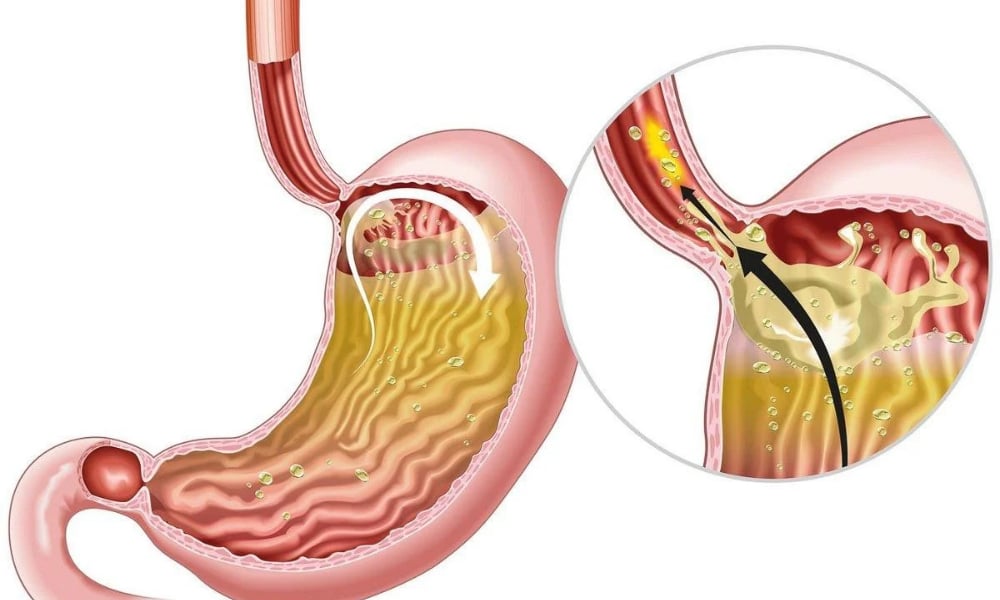
Gastroesophageal reflux disease (GERD) is a long-term condition in which stomach contents flow back into the esophagus often enough to cause troublesome symptoms or damage to the esophageal lining. It happens when the lower esophageal sphincter, the ring of muscle between the esophagus and the stomach, relaxes at the wrong times or does not close well. A hiatal hernia can make reflux more likely.
Occasional reflux after a large or late meal is common and is called gastroesophageal reflux (GER). Reflux becomes GERD when it happens regularly, commonly two or more times a week, disturbs daily life or sleep, or causes inflammation or other changes in the esophagus.
GERD is common and treatable. Most people improve with lifestyle changes and medication, and a gastroenterologist can confirm the diagnosis, look for complications, and step treatment up or down as needed.
Understanding heartburn and acid reflux · Acid reflux treatment in Houston · GERD vs gastritis
Board-Certified
Gastroenterology, hepatology, and internal medicine
Academic Medicine
Former Associate Professor, UT MD Anderson Cancer Center
Published Research
More than 100 peer-reviewed articles in gastroenterology
FACP and FASGE
Fellow, American College of Physicians and American Society for Gastrointestinal Endoscopy
What Are the Symptoms of GERD?
Heartburn, a burning feeling behind the breastbone that often rises toward the throat, and regurgitation of sour liquid or food are the classic symptoms of GERD. They are often worse after meals, when bending over, or when lying down at night.
Some people have few typical symptoms and notice throat, voice or breathing problems instead.
When to seek emergency care
Chest pain can come from the heart. Call 911 for chest pain with shortness of breath, sweating, or pain spreading to the arm, neck or jaw, and for vomiting blood or black, tarry stools.
Common symptoms of GERD
- Heartburn, often after meals or at night
- Regurgitation of sour liquid or food
- Chest discomfort
- Difficulty or pain when swallowing
- A sour or bitter taste in the mouth
- Chronic cough or throat clearing
- Hoarseness or a sore throat
- Nausea or upper abdominal discomfort
These symptoms have other possible causes and should be evaluated by a qualified medical professional.
What Is Silent Reflux?
Silent reflux, also called laryngopharyngeal reflux (LPR), describes reflux-related symptoms in the throat and voice box, often with little or no heartburn. Symptoms can include a chronic cough, frequent throat clearing, hoarseness, a feeling of a lump in the throat, and postnasal drip.
Because these symptoms also have many causes other than reflux, such as allergies, asthma or vocal cord problems, evaluation may involve your primary care doctor or an ear, nose and throat specialist as well as a gastroenterologist.
Silent reflux care near Fulshear · Is chronic cough related to GERD? · Acid reflux and shortness of breath
When Heartburn Keeps Coming Back
Heartburn that returns two or more times a week, keeps coming back after you stop antacids, or has lasted for months is a reason to see a gastroenterologist rather than keep treating it on your own. Frequent heartburn is the most common sign of GERD, and an evaluation confirms the cause, checks for damage to the esophagus when needed, and sets up a treatment plan that fits your symptoms.
Regurgitation of sour liquid, a bitter taste, reflux after eating and symptoms that are worse when you bend over or lie down point in the same direction.
Heartburn and acid reflux explained · Acid reflux treatment in Houston
Acid Reflux Despite Medication
If you still have heartburn or regurgitation while taking an acid-reducing medicine, the cause may be timing or dose, reflux that is not acid-related, or a different condition such as gastritis, an esophageal motility disorder or eosinophilic esophagitis. A gastroenterologist reviews how and when you take your medicine and decides whether testing such as upper endoscopy or pH monitoring is needed.
Do not stop or change prescribed medication without medical guidance; some medicines need to be tapered rather than stopped suddenly.
Heartburn every day despite medication · Gastritis treatment
Nighttime GERD and Reflux
Reflux at night can wake you with burning, coughing, choking or a sour taste, and it can disrupt sleep. Lying flat makes it easier for stomach contents to reach the esophagus. Helpful steps include finishing meals two to three hours before bed, raising the head of the bed and, for some people, sleeping on the left side.
Nighttime symptoms that persist despite these changes, or that come with hoarseness, chronic cough or difficulty swallowing, should be evaluated.
What Causes GERD and Who Is at Risk?
GERD usually results from a weak or relaxed valve combined with pressure that pushes stomach contents upward. Common contributing factors include:
Hiatal Hernia
Part of the stomach moves up through the diaphragm, weakening the barrier that normally keeps acid in the stomach.
Excess Weight
Extra abdominal weight increases pressure on the stomach and is a well-established risk factor for reflux.
Pregnancy
Hormonal changes and pressure from the growing uterus commonly cause heartburn during pregnancy.
Smoking
Smoking weakens the lower esophageal sphincter and reduces saliva, which normally helps clear acid from the esophagus.
Meal Size and Timing
Large meals and lying down within two to three hours of eating make reflux more likely.
Trigger Foods and Medicines
Fatty or fried foods, alcohol, chocolate, peppermint and some medications can bring on symptoms in some people.
Stress does not cause GERD directly, but it can make symptoms feel worse. Does stress make acid reflux worse? · Why reflux can happen even with a healthy diet.
Gastroenterology Care for Fulshear Patients
Patients from Fulshear and nearby communities can conveniently visit our Katy gastroenterology office at 23920 Katy Freeway, Suite 555, Katy, TX 77494, about 21 minutes away. United Gastroenterology Associates welcomes new patients seeking evaluation for acid reflux, heartburn, GERD, difficulty swallowing and other digestive concerns.
How Is GERD Diagnosed?
Many people with typical heartburn and regurgitation and no warning signs are diagnosed from their symptoms and their response to acid-reducing medicine. Testing is used when the diagnosis is unclear, symptoms do not respond to treatment, warning signs are present, or complications need to be checked.
Upper Endoscopy (EGD)
A thin, flexible camera examines the esophagus, stomach and duodenum under sedation to look for esophagitis, strictures, hiatal hernia and Barrett’s esophagus, with biopsies when needed.
Upper endoscopy (EGD) · Endoscopy in Katy · Endoscopy in Cypress
Esophageal pH Monitoring
Measures how often acid reaches the esophagus over 24 to 96 hours and whether reflux episodes match your symptoms. It is especially useful before surgery or when symptoms continue despite treatment.
Esophageal Manometry
Measures the pressure and coordination of the esophageal muscles and the valve. It helps rule out motility disorders and is required before anti-reflux procedures.
Not sure whether you need a scope? Read when an endoscopy is recommended for acid reflux and what happens during an upper endoscopy.
How Is GERD Treated?
GERD treatment usually starts with the simplest effective steps and moves up only when needed. The goals are to control symptoms, heal any inflammation, and prevent complications.
Lifestyle Changes
Losing excess weight, raising the head of the bed, avoiding meals two to three hours before bedtime, stopping smoking, and limiting personal trigger foods.
Antacids and H2 Blockers
Antacids give quick, short-term relief. H2 blockers reduce acid production and can help milder or occasional symptoms.
Proton Pump Inhibitors
The most effective medicines for healing esophagitis and controlling frequent symptoms. Timing and dose matter, and long-term use is reviewed regularly.
Endoscopic Treatment
Stretching a narrowed esophagus with esophageal dilation, and monitoring Barrett’s esophagus with periodic endoscopy and biopsies.
Anti-Reflux Procedures
For selected patients with confirmed GERD who do not respond well to medication or do not want it long term, options such as fundoplication or magnetic sphincter augmentation, with referral to an experienced surgeon.
Follow-Up and Step-Down
Treatment is reviewed over time, stepping down to the lowest effective therapy once symptoms are controlled.
This information is educational. Do not start or stop medication without medical advice. Heartburn every day despite medication.
What Are the Complications of Untreated GERD?
Most people with GERD never develop serious complications, but long-standing acid exposure can change the esophagus. Finding these problems early makes them easier to treat.
Erosive Esophagitis
Inflammation and sores in the esophageal lining that can cause pain, bleeding and trouble swallowing.
Esophageal Stricture
Scar tissue that narrows the esophagus so food sticks. It can often be stretched during endoscopy.
Barrett’s Esophagus
A change in the esophageal lining that raises the risk of esophageal adenocarcinoma, although most people with Barrett’s esophagus never develop cancer. It is monitored with periodic endoscopy.
Throat and Lung Problems
Chronic cough, hoarseness and worsening asthma can be linked to reflux in some patients.
Is acid reflux dangerous? · Severe GERD care for Houston patients.
When GERD May Need Gastroenterology Evaluation
See a gastroenterologist when heartburn or regurgitation happens two or more times a week, lasts for several weeks, comes back whenever you stop medication, or does not improve with over-the-counter treatment. Prompt evaluation is important if you have:- Difficulty or pain when swallowing, or food sticking
- Vomiting, especially vomiting blood
- Black or tarry stools
- Unintentional weight loss
- Iron-deficiency anemia
- Symptoms that continue despite daily acid-reducing medicine
Screening for Barrett’s esophagus may be considered for people with chronic GERD and three or more risk factors, such as male sex, age over 50, white race, obesity, smoking, or a family history of Barrett’s esophagus or esophageal cancer.
Can acid reflux cause chest pain? · Burning chest pain from acid reflux · Food stuck in the throat · Difficulty swallowing
Where Can You Get GERD Treatment Near You?
Dr. Khan treats GERD at two offices, Katy on I-10 and Cypress on US-290. These local guides cover GERD care, driving times and directions for each area.
Katy
GERD symptoms and treatment at the Katy office on Katy Freeway near the Grand Parkway.
Cypress
Acid reflux and GERD symptoms, treated at the Cypress office on Northwest Freeway.
Fulshear
Silent reflux and GERD care for Fulshear, about 21 minutes from the Katy office.
Rosenberg
GERD treatment for Rosenberg and nearby Fort Bend County at the Katy office.
Houston
Severe and long-standing GERD care for Houston patients at either office.
Greater Houston
Acid reflux diagnosis and treatment for patients across the Houston area.
Prefer to talk with the office first? Call (346) 340-4414 or view both office locations.
What Does a GERD Specialist Do?
A GERD specialist is usually a gastroenterologist, a physician trained in diseases of the esophagus, stomach and intestines. A gastroenterologist confirms whether your symptoms come from reflux or another condition, performs upper endoscopy when needed, orders pH and esophageal motility testing, treats complications such as esophagitis and strictures, and adjusts long-term treatment so you take no more medicine than you need.
Consider seeing an acid reflux specialist when heartburn happens two or more times a week, when over-the-counter medicine no longer controls your symptoms, when you have needed daily medication for months, or when reflux comes with trouble swallowing, weight loss, anemia, or throat and breathing symptoms. Many patients can schedule directly; some insurance plans require a referral.
Read Dr. Khan’s full profile · Heartburn every day despite medication
Why Choose United Gastroenterology Associates for GERD Care?
Patients from Katy, Cypress and the west and northwest Houston area choose United Gastroenterology Associates for a careful GERD evaluation and a clear, step-by-step plan.
Diagnosis Before Long-Term Treatment
Testing is used when it will change your care, so long-term treatment rests on a confirmed diagnosis.
Endoscopy in the Same Practice
Dr. Khan performs upper endoscopy and esophageal dilation when they are needed.
Reflux and Motility Testing
pH monitoring and esophageal manometry help when symptoms persist and before anti-reflux procedures.
Other Causes Considered
Gastritis, ulcers, gallbladder problems and esophageal motility disorders can mimic GERD and are considered.
Step-Down Follow-Up
Medication is reviewed so you stay on the lowest effective treatment.
Two Convenient Offices
Katy on I-10 and Cypress on US-290, with one phone number for scheduling.
GERD Treatment at Our Katy and Cypress Offices
Dr. Khan sees patients at the Cypress office at 21216 Northwest Freeway, Suite 640, Cypress, TX 77429, serving Cypress, Tomball, Jersey Village and northwest Houston, and at the Katy office at 23920 Katy Freeway, Suite 555, Katy, TX 77494, serving Katy, Fulshear, Richmond, Rosenberg and west Houston. Fulshear-area patients usually find the Katy office most convenient. Both offices share one phone number for scheduling.
United Gastroenterology Associates – Cypress Office
Cypress office – Northwest Freeway (US-290)
- Address: 21216 Northwest Freeway, Suite 640, Cypress, TX 77429
- Phone: (346) 340-4414
- Hours: Monday–Friday, 8:30 AM–5:00 PM (closed 12:00–1:30 PM for lunch; last appointment 4:30 PM)
United Gastroenterology Associates – Katy Office
Katy office – Katy Freeway (I-10) near the Grand Parkway
- Address: 23920 Katy Freeway, Suite 555, Katy, TX 77494
- Phone: (346) 340-4414
- Hours: Monday–Friday, 8:30 AM–5:00 PM (closed 12:00–1:30 PM for lunch; last appointment 4:30 PM)
Insurance and Self-Pay Options
United Gastroenterology Associates accepts most major insurance plans. Insurance coverage, benefits and patient responsibility vary by plan and should be verified before treatment or procedures; the office can help you check your benefits. Self-pay options are available.
A carrier logo does not guarantee coverage for a specific plan or service. Call (346) 340-4414 to confirm your benefits.









What Patients Say About Dr. Khan
These reviews were shared by patients of United Gastroenterology Associates and are published on the practice website.
“Dr. Khan is an exceptionally kind and compassionate physician. He truly listens to his patients and takes the time to explain everything clearly and thoroughly. His treatment plans are straightforward and easy to understand, and he provides a very personalized, attentive level of care. I felt respected, heard, and genuinely cared for throughout my visit.”
Maria Andreina Behrens · Katy
“Dr. Khan is an amazing physician. He is so kind hearted & wants to help you in every way possible. He listens & doesn’t make you feel rushed. I feel so comfortable talking to him about anything. I am so glad to have him as my gastro doctor. His staff is outstanding as well. Shout out to Dr. Khan & his staff.”
Donna LaPlante · Cypress
“Dr Kahn and his staff are AWESOME. He is thorough, kind, listens and puts you at ease. The staff are patient and very helpful. I was so afraid of having a colonscopy. Dr Kahn was wonderful. My procedure went so well. It was over and done with in what seemed like a minute! So expect that! Dr Kahn is excellent, I trust him completely. And I recommend him, and his staff.”
Steph Apie · Fulshear
GERD Guides and Patient Resources
Learn more about GERD symptoms, diet, medication and testing in these patient guides from United Gastroenterology Associates.
Diet and Lifestyle
GERD diet guide
Managing acid reflux and heartburn
Stress and acid reflux
Related Conditions
Endoscopy Near You
Endoscopy in Katy
Endoscopy in Cypress
Endoscopy for Houston patients
GERD Treatment: Frequently Asked Questions
Answers to common questions about gastroesophageal reflux disease and GERD care in Katy and Cypress.
What is the best treatment for GERD?
There is no single best treatment. Most people start with lifestyle changes and acid-reducing medication, usually a proton pump inhibitor for frequent symptoms or esophagitis. Testing and procedures are added when symptoms persist or complications are found.
Is GERD the same as acid reflux or heartburn?
Not exactly. Heartburn is a symptom, and acid reflux is the backflow of stomach contents into the esophagus. GERD is the condition diagnosed when reflux happens often, causes troublesome symptoms, or damages the esophagus.
Can GERD go away on its own?
Occasional reflux may settle with lifestyle changes, but GERD is often long term. Many people control it well with treatment and can step down to less medication over time.
How long does GERD take to heal?
Symptoms often improve within a few weeks of consistent treatment, and esophagitis commonly heals over about eight weeks of acid-reducing therapy. Read more about GERD healing time.
When do I need an endoscopy for GERD?
An endoscopy is recommended for warning signs such as trouble swallowing, bleeding, weight loss or anemia, when symptoms do not respond to treatment, before anti-reflux procedures, and to screen for Barrett’s esophagus in people with several risk factors.
Can GERD cause chest pain?
Yes. Reflux can cause chest discomfort, but chest pain can also come from the heart. Seek emergency care for chest pain with shortness of breath, sweating, or pain spreading to the arm, neck or jaw.
Is it safe to take reflux medicine long term?
For people who need them, proton pump inhibitors are generally considered safe at the lowest effective dose. Your gastroenterologist reviews whether you still need them and at what dose.
Do I need a referral to see a GERD specialist?
Many patients can schedule directly. Some insurance plans require a referral, so contact the office to confirm based on your plan.
Where can I get GERD treatment near me?
Dr. Muhammad Ali Khan treats GERD at 23920 Katy Freeway, Suite 555, Katy, TX 77494 and 21216 Northwest Freeway, Suite 640, Cypress, TX 77429. Call (346) 340-4414 to schedule.
Need a Gastroenterology Appointment?
United Gastroenterology Associates welcomes new patients at our Katy and Cypress offices. Send a request and our team will contact you to schedule, or call (346) 340-4414.
- Board-certified gastroenterologist & hepatologist
- Most major insurance plans accepted
- Katy and Cypress locations
- Convenient access for Fulshear patients at the Katy office
- Colonoscopy and endoscopy available when clinically appropriate
Request an Appointment
Tell us how to reach you. Please do not include detailed medical information; we will discuss your symptoms when we call.
Prefer to book yourself? Use our online scheduler. Insurance coverage, benefits and patient responsibility vary by plan and should be verified before treatment or procedures. View insurance information. For a medical emergency, call 911.
Sources
- National Institute of Diabetes and Digestive and Kidney Diseases. Acid Reflux (GER & GERD) in Adults. niddk.nih.gov
- Katz PO, Dunbar KB, Schnoll-Sussman FH, et al. ACG Clinical Guideline for the Diagnosis and Management of Gastroesophageal Reflux Disease. Am J Gastroenterol. 2022;117(1):27–56. doi.org/10.14309/ajg.0000000000001538
- Shaheen NJ, Falk GW, Iyer PG, et al. Diagnosis and Management of Barrett’s Esophagus: An Updated ACG Guideline. Am J Gastroenterol. 2022;117(4):559–587. doi.org/10.14309/ajg.0000000000001680
- Yadlapati R, Gyawali CP, Pandolfino JE, et al. AGA Clinical Practice Update on the Personalized Approach to the Evaluation and Management of GERD: Expert Review. Clin Gastroenterol Hepatol. 2022;20(5):984–994.e1. doi.org/10.1016/j.cgh.2022.01.025
This page provides general educational information and does not replace medical advice, diagnosis, or treatment. Symptoms should be evaluated by a qualified medical professional. Chest pain can have heart-related causes; call 911 for chest pain with shortness of breath, sweating, or pain spreading to the arm or jaw. For a medical emergency, call 911. Content reviewed by United Gastroenterology Associates, PLLC. Last updated September 30, 2026.