
Home › Procedure Preparation › ERCP Prep
Patient Instructions · United Gastroenterology Associates
ERCP Prep: How to Prepare for Your ERCP
Preparing for an ERCP (endoscopic retrograde cholangiopancreatography) mainly means fasting for several hours, reviewing your medicines with the care team, and arranging an adult to drive you home. This page explains what to expect for patients of Muhammad Ali Khan, MD, FACP, FASGE, at United Gastroenterology Associates in Katy and Cypress. Always follow the personal instructions you receive from the office. Questions? Call (346) 340-4414.
ERCP questions: (346) 340-4414
What Is ERCP?
ERCP combines upper endoscopy and X-rays to examine and treat the bile ducts and pancreatic duct. A thin, flexible scope is passed through the mouth into the small intestine, and contrast dye is used to see the ducts on X-ray. During the same procedure, the doctor can remove bile duct stones, open narrowed ducts, place stents or take tissue samples.
Learn more about ERCP at United Gastroenterology Associates and bile duct and gallbladder conditions.
Follow your personal instructions
ERCP preparation is individualized. Your fasting time, medicine changes and arrival time come from the office. Do not stop, start or change any medicine unless Dr. Khan's office or your prescribing doctor tells you to.
ERCP Preparation Checklist
Use this checklist alongside the instructions you receive from the office.
Medicines and Health Conditions to Review Before ERCP
Blood thinners: some ERCP treatments, such as opening the bile duct, can cause bleeding. Dr. Khan and your prescribing doctor will decide whether to hold a blood thinner and for how long. Do not stop it on your own.
Diabetes medicines: because you will be fasting, insulin and other diabetes medicines may need to be adjusted. GLP-1 medicines can slow stomach emptying, so tell the office if you take one.
Allergies and pregnancy: ERCP uses contrast dye and X-rays. Tell the team about contrast or iodine allergies and about pregnancy or possible pregnancy.
Tell your care team if you
- Take a blood thinner or antiplatelet medicine
- Have diabetes or take insulin
- Take a GLP-1 medicine
- Are allergic to contrast dye or iodine
- Are pregnant or may be pregnant
- Have heart, lung or kidney disease
The office will give you personal instructions based on your health.
What to Expect on the Day of Your ERCP
ERCP is performed in a hospital or outpatient procedure center.
Check-in
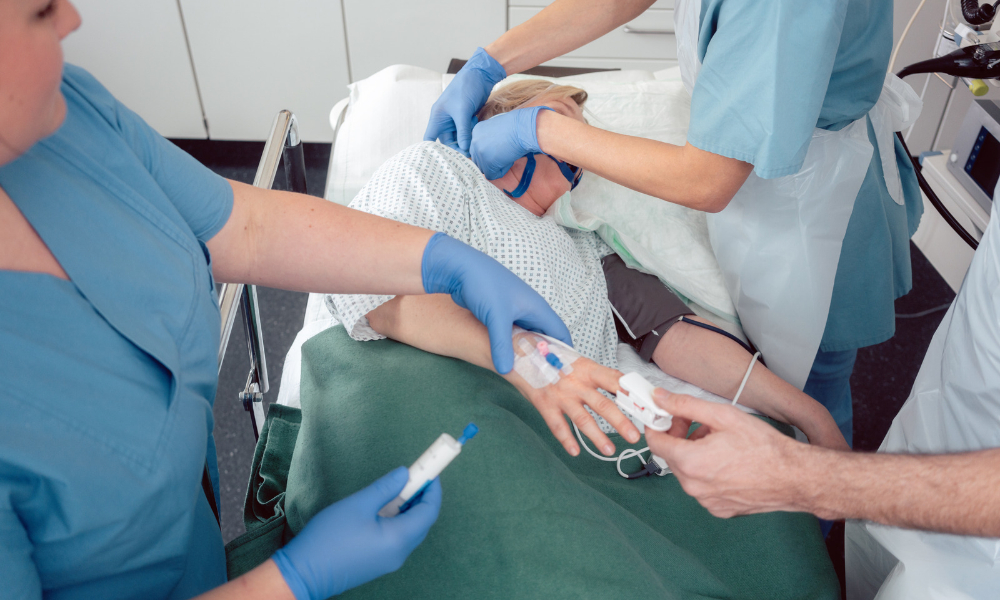
The team reviews your health history, medicines, allergies and fasting, and places an IV.
Sedation or anesthesia
You receive medicine to keep you comfortable. Many patients receive anesthesia care during ERCP.
The procedure
The scope is passed through the mouth, and contrast dye and X-rays are used to see the ducts. The procedure usually takes about 30 to 60 minutes.
Recovery
You are monitored as the sedation wears off. Some patients are observed longer or stay overnight, depending on what was done.
Going home
An adult drives you home. The team explains what was found, what was treated and what follow-up you need.
Risks and Recovery After ERCP
ERCP is generally safe, but it carries more risk than a routine upper endoscopy. The most common complication is pancreatitis, an inflammation of the pancreas that causes abdominal pain. Other possible complications include bleeding, infection and, rarely, a tear in the intestine. To lower the risk of pancreatitis, medicine such as rectal indomethacin is commonly given around the time of the procedure.
A sore throat, bloating or mild discomfort can occur after ERCP and usually improves within a day or two. Follow your discharge instructions about eating, activity and medicines.
Seek medical care right away after ERCP for:
- Severe or worsening abdominal pain
- Fever or chills
- Repeated vomiting
- Black or bloody stools
- Chest pain or trouble breathing
Questions About Your ERCP Prep?
If you are unsure about fasting, your medicines or your arrival time, call the office before your procedure.
ERCP Prep FAQs
Answers to common questions from patients preparing for ERCP.
How long do I need to fast before an ERCP?
You will need an empty stomach, so you will be asked to stop eating and drinking for several hours before the procedure, often up to 8 hours. The exact time depends on your procedure time and the facility, so follow the fasting instructions you receive from the office.
Should I stop my blood thinner before ERCP?
Do not stop any blood thinner on your own. Tell the office if you take warfarin, apixaban, rivaroxaban, clopidogrel or another blood thinner. Dr. Khan and the doctor who prescribed the medicine will decide whether and when to hold it, based on your procedure and your medical condition.
What if I have diabetes?
Tell the office if you take insulin or other diabetes medicines, including GLP-1 medicines. Because you will be fasting, your doses may need to be adjusted. Follow the medicine instructions you are given and check your blood sugar as directed.
Can I drive home after ERCP?
No. ERCP is done with sedation or anesthesia, so you need an adult to drive you home. Plan to rest for the remainder of the day.
How long does an ERCP take?
The procedure usually takes about 30 to 60 minutes, but you should plan to spend more time at the facility for check-in, preparation and recovery.
What are the warning signs after ERCP?
Seek medical care right away for severe or worsening abdominal pain, fever or chills, repeated vomiting, black or bloody stools, chest pain or trouble breathing. Pancreatitis is the most common complication of ERCP and usually causes abdominal pain that can spread to the back.
Why do I need to mention a contrast or iodine allergy?
ERCP uses contrast dye and X-rays to see the bile and pancreatic ducts. Tell the team about any contrast or iodine allergy, and about pregnancy or possible pregnancy, so they can plan the procedure safely.
United Gastroenterology Associates Offices
Questions about ERCP preparation can be answered by either office. Your procedure location and arrival time are in your appointment instructions.
United Gastroenterology Associates – Katy
Katy Freeway (I-10) near the Grand Parkway
- Address: 23920 Katy Freeway, Suite 555, Katy, TX 77494
- Phone: (346) 340-4414
- Hours: Monday–Friday, 8:30 AM–5:00 PM (closed 12:00–1:30 PM for lunch; last appointment 4:30 PM)
United Gastroenterology Associates – Cypress
Northwest Freeway (US-290) in Cypress
- Address: 21216 Northwest Freeway, Suite 640, Cypress, TX 77429
- Phone: (346) 340-4414
- Hours: Monday–Friday, 8:30 AM–5:00 PM (closed 12:00–1:30 PM for lunch; last appointment 4:30 PM)
Prepared for Your ERCP?
Review your medicines with the office, follow your fasting instructions and arrange your driver. Call (346) 340-4414 with any questions.
Sources
- National Institute of Diabetes and Digestive and Kidney Diseases. Endoscopic Retrograde Cholangiopancreatography (ERCP). niddk.nih.gov
- American Society for Gastrointestinal Endoscopy. Guideline on post-ERCP pancreatitis prevention strategies (2023). asge.org
This page provides general preparation information and does not replace the personal instructions you receive from your doctor. Do not change any medicine without medical guidance. For a medical emergency, call 911. Last updated October 5, 2026.