Experiencing heartburn once in a while is common. Many people occasionally feel burning after a large meal, spicy food, or eating too close to bedtime. But when heartburn happens every day despite medication, it may be a sign that your condition needs a closer evaluation.
Persistent symptoms can happen for several reasons. Your medication dose or timing may need adjustment, the underlying cause may not be fully addressed, or another digestive condition may be causing symptoms that feel like acid reflux.
A gastroenterologist can help determine why your heartburn continues and whether additional testing, such as an upper endoscopy or pH monitoring, may provide answers.
Important Note
Daily heartburn is more than just an uncomfortable symptom. It may affect your sleep, eating habits, and quality of life. This guide explains why symptoms can continue despite medication, what warning signs require medical attention, and how a gastroenterologist can help identify the right treatment approach.
Why Am I Having Heartburn Every Day?
Daily heartburn usually occurs when stomach acid or stomach contents repeatedly move upward into the esophagus, causing irritation.
The esophagus is the tube that carries food from your mouth to your stomach. Normally, a muscular valve called the lower esophageal sphincter helps prevent stomach contents from flowing backward.
When this valve becomes weak or relaxes at the wrong time, acid can travel upward and irritate the lining of the esophagus.
This backward flow is known as acid reflux.
When reflux happens frequently, it may develop into gastroesophageal reflux disease (GERD), a chronic digestive condition that often requires medical management.
Common reasons someone may experience daily heartburn include:
- GERD that is not fully controlled
- Medication that is not matched to the severity of symptoms
- Incorrect medication timing
- Large meals or eating close to bedtime
- Obesity or increased abdominal pressure
- Hiatal hernia
- Certain foods and beverages triggering symptoms
- Delayed stomach emptying
- Other conditions that mimic reflux symptoms
Understanding the cause is important because simply increasing medication without identifying the reason symptoms continue may not always solve the problem.
Why Is My Heartburn Medication Not Working?
If you still have heartburn despite medication, it does not necessarily mean treatment has failed. It may mean your current approach needs adjustment.
Many patients assume that taking acid reflux medication should completely eliminate symptoms immediately. However, GERD treatment often requires understanding how symptoms occur and what type of reflux is affecting you.
Several factors may explain why medication is not providing enough relief.
Your Medication May Not Be Taken at the Optimal Time
Some acid-reducing medications work best when taken at specific times, often before meals. Taking them incorrectly may reduce their effectiveness.
If you are unsure about the timing, discuss it with your healthcare provider before making changes.
Your Symptoms May Have Another Cause
Not every burning sensation in the chest or throat is caused by acid reflux.
Other conditions can sometimes create similar symptoms, including:
- Esophageal sensitivity
- Functional heartburn
- Esophageal motility disorders
- Gastritis
- Peptic ulcers
- Heart-related conditions
This is why persistent symptoms deserve proper evaluation rather than assuming every symptom is simply GERD.
You May Have Non-Acid Reflux
Some patients continue experiencing reflux symptoms even when acid levels are controlled.
This may occur with non-acid reflux, where stomach contents other than acid move into the esophagus and cause irritation.
Specialized testing can help determine what type of reflux is occurring.
Is Daily Heartburn a Sign of GERD?
Frequent heartburn is one of the most common symptoms of GERD, especially when it occurs more than twice a week or continues despite treatment.
GERD is a chronic condition where reflux repeatedly irritates the esophagus.
Common GERD symptoms include:
- Burning sensation behind the breastbone
- Acid taste in the mouth
- Regurgitation of food or liquid
- Chest discomfort after eating
- Symptoms that worsen when lying down
- Nighttime coughing or throat irritation
- Hoarseness
- Difficulty swallowing
Some people experience classic heartburn symptoms, while others have less obvious symptoms sometimes called silent reflux.
Silent reflux may involve throat-related symptoms rather than traditional chest burning.
These symptoms may include:
- Frequent throat clearing
- Chronic cough
- Feeling like something is stuck in the throat
- Voice changes
- Excess mucus sensation
A gastroenterologist can help determine whether these symptoms are truly related to reflux.
When Daily Heartburn Should Not Be Ignored
Occasional heartburn is common, but certain symptoms require medical evaluation.
You should contact a gastroenterologist if you experience:
- Heartburn that occurs every day
- Symptoms that continue despite medication
- Difficulty swallowing food or liquids
- Food feeling stuck in the throat or chest
- Unexplained weight loss
- Vomiting
- Bleeding or black stools
- Persistent chest discomfort
- Symptoms that wake you frequently at night
These symptoms do not always indicate a serious condition, but they should be evaluated to identify the cause and prevent complications.
When Should You See a Gastroenterologist?
You should consider seeing a gastroenterologist when heartburn becomes frequent, disruptive, or difficult to control.
A primary care provider may begin initial treatment for acid reflux, but persistent symptoms often benefit from specialized evaluation.
A gastroenterologist specializes in conditions affecting the digestive system, including the esophagus, stomach, intestines, and related organs.
A GI specialist can help when:
- Heartburn occurs several times per week
- Medication provides incomplete relief
- You need long-term GERD management
- You have swallowing difficulties
- You need evaluation for complications
- Your diagnosis is uncertain
Have symptoms like these?
Dr. Muhammad Ali Khan, a board-certified gastroenterologist and hepatologist, sees adults at our Katy and Cypress offices, serving patients across Greater Houston.
How Gastroenterologists Diagnose Persistent GERD
When heartburn continues despite medication, a gastroenterologist focuses on finding out why symptoms are happening rather than simply adding more medication.
Persistent reflux symptoms can have different causes. Some patients have ongoing acid exposure, while others may have non-acid reflux, esophageal sensitivity, or another digestive condition that feels similar to GERD.
A gastroenterologist may begin with a detailed discussion about your symptoms, including:
- When your heartburn started
- How often symptoms occur
- Whether symptoms happen after meals or at night
- Foods and beverages that trigger symptoms
- How your medication is being taken
- Whether you have swallowing problems or other warning signs
This symptom history helps guide the next steps in evaluation.
Medical History and Symptom Review
Your doctor may ask questions that help distinguish typical GERD from other conditions.
For example:
“Do you feel burning in your chest, or is it more like pressure?”
“Does food feel stuck when swallowing?”
“Do symptoms improve with acid medication?”
“Do symptoms happen when lying down or during sleep?”
These details provide important clues about the underlying cause.
Reviewing Your Current GERD Medication
Your gastroenterologist may review:
- The type of medication you are taking
- The dosage
- How long you have been taking it
- The timing of each dose
- Whether symptoms improve partially or not at all
Some patients may need medication adjustments, while others may need additional testing to better understand their reflux pattern.
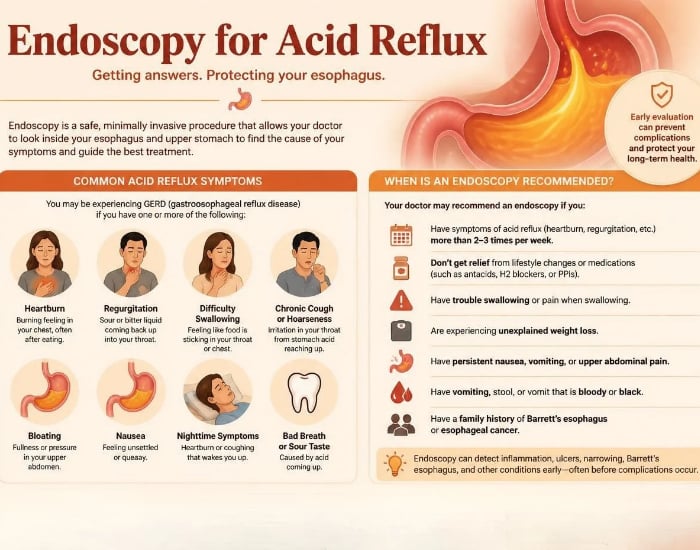
Upper Endoscopy for Chronic Heartburn
An upper endoscopy (EGD) allows a gastroenterologist to directly examine the esophagus, stomach, and upper digestive tract.
For patients with persistent heartburn, an EGD can provide valuable information that cannot be obtained from symptoms alone.
During an upper endoscopy, a thin flexible camera is gently passed through the mouth while the patient is sedated. The physician examines the lining of the digestive tract for abnormalities.
An EGD may help identify:
- Inflammation caused by acid reflux (esophagitis)
- Narrowing of the esophagus
- Hiatal hernia
- Barrett’s esophagus changes
- Stomach inflammation
- Other causes of upper digestive symptoms
This information helps your doctor determine whether your heartburn is causing damage or whether another condition may be responsible.
When Is Upper Endoscopy Often Considered?
| Situation | Why Evaluation May Help |
|---|---|
| Heartburn that continues despite medication | Checks for ongoing irritation or complications |
| Difficulty swallowing | Evaluates narrowing or structural problems |
| Long history of GERD symptoms | Screens for reflux-related changes |
| Unexplained symptoms | Helps identify other possible causes |
Learn more about upper endoscopy evaluation:
 pH Monitoring for Persistent Acid Reflux Symptoms
pH monitoring is an advanced test that measures how often acid enters the esophagus and how strongly symptoms are connected to reflux episodes.
Some patients continue having heartburn symptoms even after medication because the exact reflux pattern is unclear.
pH monitoring may help answer questions such as:
- Are my symptoms actually caused by acid reflux?
- How frequently is acid reaching the esophagus?
- Are my symptoms happening at the same time as reflux events?
- Is my treatment controlling acid exposure?
During reflux monitoring, a small sensor measures acid exposure over a period of time while you continue normal daily activities.
This information can help doctors create a more targeted treatment plan.
For some patients, the issue is not simply “too much acid.” The problem may involve reflux episodes, sensitivity of the esophagus, or another digestive condition.
Learn more about reflux testing:
Treatment Options When GERD Medication Is Not Enough
When heartburn continues despite medication, treatment usually focuses on identifying the cause and creating a more personalized approach.
There is no single treatment plan that works for every person with GERD. The best approach depends on symptom severity, testing results, lifestyle factors, and whether complications are present.
Medication Optimization
Your gastroenterologist may evaluate whether your current medication approach is appropriate.
Possible considerations include:
- Medication timing
- Dosage adjustments
- Combination treatment approaches
- Alternative medications when appropriate
Medication changes should always be discussed with your healthcare provider rather than made independently.
Managing Trigger Factors
Many patients notice that certain habits make reflux worse.
Common triggers may include:
- Large meals
- Lying down shortly after eating
- Heavy meals late at night
- Spicy foods
- High-fat foods
- Caffeine in some individuals
- Carbonated beverages
- Alcohol
However, triggers vary from person to person. A food that affects one patient may not bother another.
Weight Management and Abdominal Pressure
Increased abdominal pressure can contribute to reflux by making it easier for stomach contents to move upward.
For patients who are overweight, gradual weight reduction may improve reflux symptoms and overall digestive health.
Advanced GERD Treatment Options
Some patients with severe GERD or medication-resistant symptoms may benefit from additional treatment discussions.
Depending on the situation, options may include procedures designed to improve the function of the lower esophageal sphincter.
A gastroenterologist can determine whether these options are appropriate based on testing results.
Important Note
Persistent heartburn does not always mean your condition is getting worse, but it does mean your symptoms deserve attention. Many causes of ongoing reflux can be identified with proper evaluation. Avoid trying to manage severe or long-lasting symptoms alone because the right diagnosis can make treatment more effective.
Lifestyle Changes That May Reduce Heartburn
Lifestyle changes can play an important role in controlling GERD symptoms, especially when combined with medical treatment.
Many patients with daily heartburn feel frustrated because they have already tried avoiding certain foods or changing habits without seeing complete relief. The key is understanding that GERD triggers are different for everyone, and successful management usually involves identifying the changes that matter most for your body.
Lifestyle adjustments should not replace medical evaluation when symptoms are persistent, but they can support treatment and reduce the frequency and severity of reflux episodes.
Adjust Meal Timing and Portion Sizes
Large meals can increase pressure inside the stomach, making it easier for acid and stomach contents to move upward into the esophagus.
Many people with GERD benefit from:
- Eating smaller portions
- Avoiding very large meals late in the evening
- Allowing time for digestion before lying down
- Eating slowly and mindfully
A common question patients ask is:
“How long should I wait after eating before going to bed?”
Many healthcare providers recommend avoiding lying down immediately after meals because gravity helps keep stomach contents from flowing backward.
Identify Your Personal Food Triggers
There is no universal GERD diet that works for everyone. Some foods commonly worsen symptoms, but individual responses vary.
Potential triggers may include:
- Fried or high-fat foods
- Spicy foods
- Chocolate
- Coffee or caffeinated drinks
- Carbonated beverages
- Tomato-based foods
- Citrus fruits
- Alcohol
Instead of eliminating many foods unnecessarily, consider tracking when symptoms occur. A symptom diary can help identify patterns between meals, activities, and reflux episodes.
Improve Sleep Position
Nighttime reflux can be especially disruptive because symptoms may interfere with sleep quality.
Some patients experience improvement by making changes such as:
- Elevating the upper portion of the body while sleeping
- Avoiding meals close to bedtime
- Maintaining consistent sleep habits
Nighttime symptoms should not be ignored, especially if they occur frequently or interfere with daily life.
Maintain a Healthy Weight When Appropriate
Extra pressure around the abdomen can contribute to reflux by affecting how the stomach and esophagus function.
For patients who are overweight, gradual and sustainable weight management may help reduce reflux symptoms.
The goal is not rapid weight loss but improving overall metabolic and digestive health.
Avoid Smoking and Limit Alcohol Exposure
Smoking can affect the function of the lower esophageal sphincter and may worsen reflux symptoms.
Alcohol may also trigger reflux in some individuals by relaxing the esophageal valve and irritating the digestive tract.
If you have persistent heartburn, discuss lifestyle factors with your gastroenterologist to determine which changes may be most beneficial for you.
Get answers instead of guessing
Request a visit with Dr. Muhammad Ali Khan at our Katy and Cypress offices. Most major insurance plans are accepted and self-pay options are available.
Long-Term Effects of Untreated Acid Reflux
Chronic untreated GERD can sometimes lead to complications, which is why ongoing symptoms should be properly evaluated.
Many people manage reflux successfully with treatment. However, frequent acid exposure over time may irritate and damage the lining of the esophagus.
Possible complications of long-standing GERD include:
Esophagitis
Esophagitis occurs when repeated acid exposure causes inflammation of the esophageal lining.
Symptoms may include:
- Painful swallowing
- Chest discomfort
- Difficulty eating certain foods
Esophageal Stricture
Chronic inflammation can sometimes lead to narrowing of the esophagus.
This may cause:
- Food feeling stuck
- Difficulty swallowing solid foods
- Changes in eating habits
Barrett’s Esophagus
Barrett’s esophagus is a condition where repeated acid exposure causes changes in the cells lining the lower esophagus.
Not everyone with GERD develops Barrett’s esophagus, but certain patients with long-term reflux may require monitoring.
Sleep and Quality-of-Life Problems
Even when GERD does not cause serious physical complications, daily symptoms can significantly affect quality of life.
Patients with uncontrolled reflux may experience:
- Poor sleep
- Difficulty concentrating
- Reduced enjoyment of meals
- Anxiety about symptoms returning
Effective treatment is not only about reducing acid — it is about helping patients return to normal daily activities without constantly worrying about symptoms.
Acid Reflux Treatment in Houston: Getting the Right Evaluation
If you are experiencing heartburn every day despite medication, a specialized evaluation can help identify why your symptoms continue.
At United Gastroenterology Associates, PLLC, patients in Cypress, Katy, and the greater Houston area receive comprehensive evaluation and treatment for acid reflux and GERD-related conditions.
The practice provides personalized digestive care focused on identifying the underlying cause of symptoms and recommending evidence-based treatment options.
GERD evaluation may include:
- Review of symptoms and medical history
- Medication assessment
- Upper endoscopy when appropriate
- Reflux monitoring and pH testing
- Evaluation for complications
Learn more about GERD treatment options:
Acid Reflux Treatment in Houston
Gastroesophageal Reflux Disease (GERD)
GERD Care in Cypress and Katy, TX
United Gastroenterology Associates provides advanced gastroenterology care for patients dealing with persistent heartburn, acid reflux, and digestive symptoms.
The clinic is led by Dr. Muhammad Ali Khan, MD, FACP, FASGE, a board-certified gastroenterologist and hepatologist with extensive experience diagnosing and treating digestive disorders.
Dr. Khan and the United Gastro TX team focus on helping patients understand their symptoms, receive accurate diagnoses, and develop personalized treatment plans.
Patients experiencing ongoing heartburn may benefit from evaluation for:
- GERD severity
- Esophageal irritation
- Reflux complications
- Need for endoscopy
- Need for pH monitoring
United Gastroenterology Associates serves patients from:
- Cypress, TX
- Katy, TX
- Willowbrook
- Greater Houston communities
United Gastroenterology Associates
Cypress Office
21216 Northwest Freeway, Suite 640
Cypress, TX 77429
Katy Office
23920 Katy Fwy, Suite 555
Katy, TX 77494
Phone: (346) 340-4414
Hours: Monday-Friday
Frequently Asked Questions About Heartburn Every Day Despite Medication
Why do I still have heartburn every day while taking medication?
Daily heartburn despite medication may happen because the medication approach needs adjustment, reflux may not be fully controlled, another condition may be causing similar symptoms, or additional testing may be needed to understand the cause.
When should I see a gastroenterologist for heartburn?
You should consider seeing a gastroenterologist if heartburn occurs frequently, does not improve with medication, affects your sleep, causes swallowing problems, or interferes with your daily activities.
Can GERD get worse even while taking medicine?
Some patients continue experiencing symptoms despite treatment because the underlying cause has not been fully identified. A gastroenterologist can evaluate whether additional testing or treatment changes are needed.
What tests can diagnose GERD?
GERD evaluation may include symptom review, upper endoscopy, and specialized reflux testing such as pH monitoring. These tests help determine whether symptoms are caused by acid reflux and whether complications are present.
Can heartburn every day damage my esophagus?
Frequent acid exposure may irritate the esophagus and, in some cases, contribute to complications such as inflammation or narrowing. Proper evaluation helps reduce these risks.
Is daily heartburn always caused by acid reflux?
No. While GERD is a common cause, other digestive conditions and non-acid reflux problems can create similar symptoms. Proper diagnosis helps identify the correct cause.
What doctor treats chronic acid reflux?
A gastroenterologist specializes in diagnosing and treating GERD, acid reflux, esophageal conditions, and related digestive disorders.
Medical Disclaimer
This content is for educational purposes only and should not replace professional medical advice, diagnosis, or treatment.
If you experience daily heartburn despite medication, schedule an evaluation with a qualified gastroenterologist to determine the cause and appropriate treatment plan.
For expert GERD and acid reflux care in Cypress and Katy, TX, contact United Gastroenterology Associates.
Call (346) 340-4414 to schedule a consultation.
Where to be seen in Katy and Cypress
United Gastroenterology Associates has two offices: Katy, at 23920 Katy Freeway, Suite 555, next to Memorial Hermann Katy Hospital, and Cypress, at 21216 Northwest Freeway, Suite 640, on US-290. Both are open Monday through Friday, 8:30 AM to 5:00 PM, closed for lunch from 12:00 to 1:30 PM, and serve patients from Fulshear, Richmond and across Greater Houston. Call (346) 340-4414 for either office.
Katy office
23920 Katy Freeway, Suite 555
Katy, TX 77494
Memorial Hermann Medical Plaza 1
Next steps
If you are dealing with heartburn despite medication or any ongoing digestive concern, a focused evaluation can find the cause and start the right treatment. Dr. Muhammad Ali Khan and the team at United Gastroenterology Associates see adults from Katy, Cypress, Fulshear, Richmond, Greater Houston and across Texas. Call (346) 340-4414 or request an appointment today.
If you have severe pain, vomit blood, pass black stools or have chest pain, call 911 or go to the nearest emergency room.