
Home › Ulcerative Colitis Specialist
Ulcerative Colitis Care in Katy & Cypress, TX
Ulcerative Colitis Specialist in Katy, Cypress & Near Fulshear, TX
Frequent diarrhea, urgency, rectal bleeding or abdominal cramping can be signs of ulcerative colitis, a chronic inflammatory bowel disease of the colon and rectum. United Gastroenterology Associates diagnoses ulcerative colitis and provides ongoing care and flare management at our offices in Katy and Cypress, TX. Most major insurance plans are accepted. Check insurance information.
Dr. Muhammad Ali Khan, MD, FACP, FASGE
Board-Certified Gastroenterologist & Hepatologist
Meet Your Ulcerative Colitis Specialist: Muhammad Ali Khan, MD, FACP, FASGE
BOARD-CERTIFIED Gastroenterologist and Hepatologist
CREDENTIALS AT A GLANCE
Board-Certified
Gastroenterology, hepatology, and internal medicine
Academic Medicine
Former Associate Professor, UT MD Anderson Cancer Center
Published Research
More than 100 peer-reviewed articles in gastroenterology
FACP and FASGE
Fellow, American College of Physicians and American Society for Gastrointestinal Endoscopy

Dr. Muhammad Ali Khan, MD, FACP, FASGE
Board-certified gastroenterologist and hepatologist, United Gastroenterology Associates
Dr. Muhammad Ali Khan, MD, FACP, FASGE, is a board-certified gastroenterologist and hepatologist who sees patients at the United Gastroenterology Associates offices in Cypress and Katy. He diagnoses and manages ulcerative colitis and Crohn's disease, performs colonoscopy with biopsies and surveillance, and coordinates long-term IBD care.
Dr. Khan earned his medical degree at Dow Medical College, completed an internal medicine residency at the University of Toledo, and completed a gastroenterology and hepatology fellowship at the University of Tennessee Health Science Center. He served as an Assistant Professor at the University of Alabama at Birmingham and as an Associate Professor at The University of Texas MD Anderson Cancer Center.
He is board-certified in gastroenterology, hepatology, and internal medicine, is a Fellow of the American Society for Gastrointestinal Endoscopy (FASGE) and the American College of Physicians (FACP), and has authored more than 100 peer-reviewed articles. Read Dr. Khan’s full profile.
Professional Memberships
- American College of Gastroenterology
- American Society for Gastrointestinal Endoscopy (Fellow)
- American Gastroenterological Association
- American College of Physicians (Fellow)
- Texas Medical Association
- Texas Society of Gastroenterology & Endoscopy
Areas of Care
- Ulcerative colitis
- Crohn's disease
- Inflammatory bowel disease (IBD)
- Rectal bleeding
- Chronic diarrhea
- Colonoscopy with biopsy
- IBD surveillance colonoscopy
- Anemia and nutritional deficiencies
Board-Certified
Gastroenterology, hepatology, and internal medicine
Academic Medicine
Former Associate Professor, UT MD Anderson Cancer Center
Published Research
More than 100 peer-reviewed articles in gastroenterology
FACP and FASGE
Fellow, American College of Physicians and American Society for Gastrointestinal Endoscopy
What Is Ulcerative Colitis?
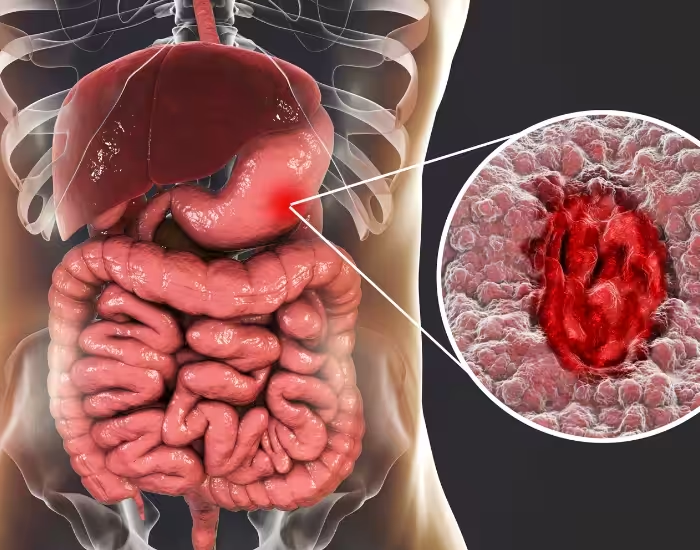
Ulcerative colitis is a chronic inflammatory bowel disease that causes inflammation and sores in the lining of the large intestine (colon) and rectum. It almost always begins in the rectum and can extend continuously up the colon. Doctors describe it by extent: limited to the rectum (proctitis), the left side of the colon, or most of the colon.
Symptoms often come and go, with flares and periods of well-controlled disease. Because it is long term, ongoing care with a gastroenterologist is important.
What Are the Symptoms of Ulcerative Colitis?
Symptoms depend on how much of the colon is inflamed and how active the disease is. Some people also have symptoms outside the gut, such as joint pain, skin problems or eye inflammation.
These symptoms can also come from infections, hemorrhoids, IBS and other conditions, so an evaluation is important before assuming the cause.
When to seek emergency care
Seek emergency care for heavy rectal bleeding, severe abdominal pain or swelling, high fever, many bloody stools a day with weakness or dizziness, or signs of dehydration.
Common symptoms of ulcerative colitis
- Diarrhea, often with blood or mucus
- Urgent need to have a bowel movement
- Rectal bleeding
- Abdominal discomfort or cramping
- Frequent bowel movements, including at night
- Feeling that the bowel does not empty
- Fatigue
- Weight loss or loss of appetite
These symptoms have many possible causes and should be evaluated by a qualified medical professional.
When Should You See an Ulcerative Colitis Specialist?
See a gastroenterologist for diarrhea that lasts more than a few weeks, blood in the stool, frequent or urgent bowel movements, ongoing abdominal pain, or unexplained weight loss. If you already have ulcerative colitis, specialist care matters when flares return, symptoms change, steroids are needed often, or treatment is not working as expected.
Ulcerative colitis is not caused by a particular food or by stress, although some foods and stressful periods can worsen symptoms for some people.
Gastroenterology Care for Fulshear Patients
Patients from Fulshear and nearby communities can conveniently visit our Katy gastroenterology office at 23920 Katy Freeway, Suite 555, Katy, TX 77494, about 21 minutes away. United Gastroenterology Associates welcomes new patients seeking evaluation for ulcerative colitis, Crohn’s disease, rectal bleeding, chronic diarrhea, colonoscopy and other digestive concerns.
How Is Ulcerative Colitis Diagnosed?
Diagnosis combines your history with tests that confirm inflammation, define its extent and rule out other causes such as infection.
History and Examination
Bowel frequency, bleeding, urgency, nighttime symptoms, weight changes, family history and medications are reviewed.
Blood and Stool Tests
Blood tests check for anemia and inflammation; stool tests look for infection and markers of intestinal inflammation such as calprotectin.
Colonoscopy With Biopsies
Shows the pattern and extent of inflammation and provides tissue samples to confirm the diagnosis.
How Is Ulcerative Colitis Treated?
Treatment is individualized based on the extent and severity of inflammation, previous treatments and your overall health. The goals are to control inflammation, relieve symptoms, heal the colon lining and keep the disease under control. Options may include:
Aminosalicylates
Medicines such as mesalamine, taken by mouth or rectally, often used for mild to moderate disease.
Corticosteroids
Used for short periods to bring a flare under control, not for long-term maintenance.
Immunomodulators
Medicines that reduce immune activity, sometimes used together with other therapies.
Biologic and Targeted Therapies
Advanced medicines that block specific inflammatory pathways for moderate to severe disease.
Flare Management
Prompt evaluation of new symptoms, checking for infection and adjusting treatment to regain control.
Surgery When Needed
Removal of the colon is considered for severe disease that does not respond to medicine or for precancerous changes, in coordination with a surgeon.
Results vary from person to person, and treatment cannot guarantee remission or cure. Do not stop or change prescribed medicine without talking with your gastroenterologist.
Ulcerative Colitis and Colonoscopy
Colonoscopy is used to diagnose ulcerative colitis, judge how active and extensive it is, guide treatment decisions and take biopsies. People with long-standing ulcerative colitis that involves more than the rectum have a higher risk of colorectal cancer, so surveillance colonoscopy is usually recommended, commonly beginning about eight years after symptoms start. Your gastroenterologist sets the timing based on your history.
Ulcerative Colitis and Blood in the Stool
Rectal bleeding is common in ulcerative colitis because the inflamed lining of the rectum and colon bleeds easily. Blood in the stool also has many other causes, including hemorrhoids, fissures, polyps, diverticular disease and infection, so it should never automatically be assumed to come from colitis.
Possible Complications of Ulcerative Colitis
Not everyone develops complications. Monitoring depends on the duration, extent and activity of your disease.
Anemia and Bleeding
Ongoing bleeding can cause iron-deficiency anemia; heavy bleeding needs urgent care.
Severe Flares
Severe inflammation may require hospital care; a dangerously dilated colon is a rare emergency.
Colorectal Cancer Risk
Risk rises with long-standing, extensive colitis, which is why surveillance colonoscopy is recommended.
Liver and Joint Conditions
Ulcerative colitis is associated with certain liver diseases, arthritis and skin and eye inflammation.
Ulcerative Colitis and Diet
No single diet works for everyone with ulcerative colitis. During flares, some people tolerate a lower-fiber diet better, and good hydration and nutrition are especially important. Your care team can help you identify trigger foods and address deficiencies such as low iron.
Ulcerative Colitis Care at Our Katy and Cypress Offices
Dr. Khan sees patients at the Cypress office at 21216 Northwest Freeway, Suite 640, Cypress, TX 77429, serving Cypress, Tomball, Jersey Village and northwest Houston, and at the Katy office at 23920 Katy Freeway, Suite 555, Katy, TX 77494, serving Katy, Fulshear, Richmond, Rosenberg and west Houston. Fulshear-area patients usually find the Katy office most convenient. Both offices share one phone number for scheduling.
United Gastroenterology Associates – Cypress Office
Cypress office – Northwest Freeway (US-290)
- Address: 21216 Northwest Freeway, Suite 640, Cypress, TX 77429
- Phone: (346) 340-4414
- Hours: Monday–Friday, 8:30 AM–5:00 PM (closed 12:00–1:30 PM for lunch; last appointment 4:30 PM)
United Gastroenterology Associates – Katy Office
Katy office – Katy Freeway (I-10) near the Grand Parkway
- Address: 23920 Katy Freeway, Suite 555, Katy, TX 77494
- Phone: (346) 340-4414
- Hours: Monday–Friday, 8:30 AM–5:00 PM (closed 12:00–1:30 PM for lunch; last appointment 4:30 PM)
Insurance and Self-Pay Options
United Gastroenterology Associates accepts most major insurance plans. Insurance coverage, benefits and patient responsibility vary by plan and should be verified before treatment or procedures; the office can help you check your benefits. Self-pay options are available.
A carrier logo does not guarantee coverage for a specific plan or service. Call (346) 340-4414 to confirm your benefits.









What Patients Say About Dr. Khan
These reviews were shared by patients of United Gastroenterology Associates and are published on the practice website.
“Dr. Khan is an amazing physician. He is so kind hearted & wants to help you in every way possible. He listens & doesn’t make you feel rushed. I feel so comfortable talking to him about anything. I am so glad to have him as my gastro doctor. His staff is outstanding as well. Shout out to Dr. Khan & his staff.”
Donna LaPlante · Cypress
“Dr. Khan is an exceptionally kind and compassionate physician. He truly listens to his patients and takes the time to explain everything clearly and thoroughly. His treatment plans are straightforward and easy to understand, and he provides a very personalized, attentive level of care. I felt respected, heard, and genuinely cared for throughout my visit.”
Maria Andreina Behrens · Katy
“Dr Kahn and his staff are AWESOME. He is thorough, kind, listens and puts you at ease. The staff are patient and very helpful. I was so afraid of having a colonscopy. Dr Kahn was wonderful. My procedure went so well. It was over and done with in what seemed like a minute! So expect that! Dr Kahn is excellent, I trust him completely. And I recommend him, and his staff.”
Steph Apie · Fulshear
Related Conditions and Patient Guides
These pages cover inflammatory bowel disease, bleeding and related tests.
Inflammatory Bowel Disease
Ulcerative Colitis: Frequently Asked Questions
Answers to common questions about ulcerative colitis care in Katy and Cypress.
What type of doctor treats ulcerative colitis?
A gastroenterologist diagnoses and manages ulcerative colitis and other inflammatory bowel diseases, working with surgeons when needed.
Is ulcerative colitis the same as Crohn's disease?
No. Both are forms of IBD, but ulcerative colitis affects only the lining of the colon and rectum in a continuous pattern, while Crohn's disease can affect any part of the digestive tract and deeper layers of the bowel wall.
Is ulcerative colitis the same as IBS?
No. Ulcerative colitis causes visible inflammation and ulcers in the colon. IBS causes symptoms without that inflammation.
Can ulcerative colitis be cured?
Ulcerative colitis is a chronic condition. Many people achieve long periods of well-controlled disease with treatment, but outcomes vary and cannot be guaranteed. Surgery to remove the colon is an option for some patients.
What should I do during a flare?
Contact your gastroenterologist for new or worsening symptoms so infection can be checked and treatment adjusted. Seek emergency care for heavy bleeding, severe pain, high fever or dehydration.
How often do I need a colonoscopy with ulcerative colitis?
It depends on the extent and duration of your disease and your findings. Surveillance commonly begins about eight years after symptoms start and repeats at intervals your gastroenterologist recommends.
Where can I see an ulcerative colitis specialist near Katy, Cypress or Fulshear?
Dr. Muhammad Ali Khan sees patients at 23920 Katy Freeway, Suite 555, Katy, TX 77494 and 21216 Northwest Freeway, Suite 640, Cypress, TX 77429. Fulshear patients usually visit the Katy office. Call (346) 340-4414.
Need a Gastroenterology Appointment?
United Gastroenterology Associates welcomes new patients at our Katy and Cypress offices. Send a request and our team will contact you to schedule, or call (346) 340-4414.
- Board-certified gastroenterologist & hepatologist
- Most major insurance plans accepted
- Katy and Cypress locations
- Convenient access for Fulshear patients at the Katy office
- Colonoscopy and endoscopy available when clinically appropriate
Request an Appointment
Tell us how to reach you. Please do not include detailed medical information; we will discuss your symptoms when we call.
Prefer to book yourself? Use our online scheduler. Insurance coverage, benefits and patient responsibility vary by plan and should be verified before treatment or procedures. View insurance information. For a medical emergency, call 911.
Sources
- National Institute of Diabetes and Digestive and Kidney Diseases. Ulcerative Colitis. niddk.nih.gov
- Rubin DT, Ananthakrishnan AN, Siegel CA, Sauer BG, Long MD. ACG Clinical Guideline: Ulcerative Colitis in Adults. Am J Gastroenterol. 2019;114(3):384–413. doi.org/10.14309/ajg.0000000000000152
This page provides general educational information and does not replace medical advice, diagnosis, or treatment. Symptoms should be evaluated by a qualified medical professional. For a medical emergency, call 911. Content reviewed by United Gastroenterology Associates, PLLC. Last updated September 30, 2026.