
Home › Chronic GI Conditions
Long-term digestive care · Cypress and Katy, TX
Chronic GI Conditions: Long-Term Digestive Care in Cypress & Katy, TX
Chronic GI conditions are digestive and liver diseases that last months or years, such as Crohn’s disease, ulcerative colitis, IBS, GERD, celiac disease, chronic pancreatitis, and chronic liver disease. At United Gastroenterology Associates, PLLC in Cypress and Katy, TX, Dr. Muhammad Ali Khan, MD, FACP, FASGE, a board-certified gastroenterologist and hepatologist, diagnoses these conditions and manages them over time to control symptoms, prevent flares, and lower the risk of complications. For an overview of conditions, testing and when to seek care, see digestive disease care in Greater Houston.

Dr. Muhammad Ali Khan, MD, FACP, FASGE
Gastroenterologist and Hepatologist
Meet Your Long-Term GI Doctor: Muhammad Ali Khan, MD, FACP, FASGE
BOARD-CERTIFIED Gastroenterologist and Hepatologist
CREDENTIALS AT A GLANCE
Board-Certified
Gastroenterology, hepatology, and internal medicine
Academic Medicine
Former Associate Professor, UT MD Anderson Cancer Center
Published Research
More than 100 peer-reviewed articles in gastroenterology
FACP and FASGE
Fellow, American College of Physicians and American Society for Gastrointestinal Endoscopy

“My gastroenterology & hepatology practice is dedicated to working closely with you to develop a personalized treatment plan that meets your unique needs and preferences.”
Dr. Muhammad Ali Khan, MD, FACP, FASGE
Board-certified gastroenterologist and hepatologist, United Gastroenterology Associates
Dr. Muhammad Ali Khan, MD, FACP, FASGE, is a board-certified gastroenterologist and hepatologist who sees patients at the United Gastroenterology Associates offices in Cypress and Katy. He manages chronic digestive and liver conditions, performs colonoscopy and upper endoscopy for diagnosis and surveillance, and coordinates care with surgeons and other specialists.
Dr. Khan earned his medical degree at Dow Medical College, completed an internal medicine residency at the University of Toledo, and completed a gastroenterology and hepatology fellowship at the University of Tennessee Health Science Center. He served as an Assistant Professor at the University of Alabama at Birmingham and as an Associate Professor at The University of Texas MD Anderson Cancer Center.
He is board-certified in gastroenterology, hepatology, and internal medicine, is a Fellow of the American Society for Gastrointestinal Endoscopy (FASGE) and the American College of Physicians (FACP), and has authored more than 100 peer-reviewed articles. Read Dr. Khan’s full profile.
Professional Memberships
- American College of Gastroenterology
- American Society for Gastrointestinal Endoscopy (Fellow)
- American Gastroenterological Association
- American College of Physicians (Fellow)
- Texas Medical Association
- Texas Society of Gastroenterology & Endoscopy
Areas of Care
- Crohn’s disease and ulcerative colitis
- IBS and chronic bowel symptoms
- GERD and Barrett’s esophagus
- Celiac disease
- Chronic pancreatitis
- Fatty liver, hepatitis, and cirrhosis
What Is a Chronic GI Condition?
A chronic gastrointestinal (GI) condition is a digestive or liver disease that lasts three months or longer or keeps coming back. Some, such as Crohn’s disease and ulcerative colitis, cause ongoing inflammation. Others, such as irritable bowel syndrome (IBS), cause lasting symptoms without visible damage. Chronic liver diseases, such as fatty liver disease and hepatitis B, can progress silently for years.
Most chronic GI conditions cannot be cured with a single treatment, but they can usually be controlled. Long-term care focuses on an accurate diagnosis, effective treatment, regular monitoring, and early action when symptoms change.
At United Gastroenterology Associates, Dr. Muhammad Ali Khan provides this ongoing care at 21216 Northwest Freeway, Suite 640, Cypress, TX 77429 and 23920 Katy Freeway, Suite 555, Katy, TX 77494.
Board-Certified
Gastroenterology, hepatology, and internal medicine
Academic Medicine
Former Associate Professor, UT MD Anderson Cancer Center
Published Research
More than 100 peer-reviewed articles in gastroenterology
FACP and FASGE
Fellow, American College of Physicians and American Society for Gastrointestinal Endoscopy
Chronic GI Conditions We Manage
Dr. Khan provides diagnosis and long-term management for these chronic digestive and liver conditions.
Crohn’s Disease
Chronic inflammation that can affect any part of the digestive tract, often with flares and remissions.
Ulcerative Colitis
Chronic inflammation of the colon and rectum that causes bloody diarrhea, urgency, and cramping.
Irritable Bowel Syndrome (IBS)
Recurring abdominal pain with diarrhea, constipation, or both, linked to changes in gut-brain signaling.
GERD and Barrett’s Esophagus
Chronic acid reflux that can inflame the esophagus and, in some people, lead to Barrett’s esophagus.
Celiac Disease
A lifelong immune reaction to gluten that damages the small intestine and is managed with a strict gluten-free diet.
Chronic Pancreatitis
Long-term inflammation of the pancreas that can cause pain, poor digestion, and diabetes.
Fatty Liver Disease (MASLD)
Excess fat in the liver linked to weight, diabetes, and cholesterol that can lead to scarring.
Chronic Hepatitis B and C
Long-lasting viral infections of the liver. Hepatitis C can usually be cured, and hepatitis B can be controlled.
Cirrhosis and Autoimmune Liver Disease
Advanced liver scarring and conditions such as autoimmune hepatitis and primary biliary cholangitis.
Chronic Constipation
Hard, infrequent, or difficult bowel movements that last for months despite diet changes.
Chronic Diarrhea
Loose stools lasting more than four weeks, from causes such as microscopic colitis, IBS, IBD, or celiac disease.
Chronic Gastritis
Long-standing inflammation of the stomach lining, often caused by H. pylori infection or autoimmune disease.
Signs a Digestive Problem May Be Chronic

Symptoms that last longer than a few weeks, return again and again, or interfere with work, sleep, or eating suggest a condition that needs a diagnosis rather than repeated short-term fixes.
Many chronic GI conditions share symptoms, so testing is often needed to tell them apart and choose the right treatment.
When to seek emergency care
Call 911 or go to the nearest emergency room for vomiting blood, heavy rectal bleeding, black or tarry stools with dizziness, severe abdominal pain, or high fever with a swollen abdomen.
Symptoms that deserve an evaluation
- Abdominal pain or cramping that keeps returning
- Diarrhea or constipation lasting weeks
- Heartburn more than twice a week
- Blood or mucus in the stool
- Bloating with weight loss
- Fatigue with iron-deficiency anemia
- Abnormal liver blood tests
- Symptoms that wake you from sleep
A symptom alone does not confirm a diagnosis. Symptoms should be evaluated by a qualified medical professional.
Living With Ongoing Digestive Symptoms?
Dr. Khan provides diagnosis and long-term care for chronic digestive and liver conditions at the Cypress and Katy offices.
How Chronic GI Conditions Are Managed
Long-term care is tailored to your condition, its severity, and your goals. Most plans combine several of these parts.
An Accurate Diagnosis
Blood and stool tests, colonoscopy, upper endoscopy, imaging, FibroScan, or specialized tests confirm the condition and rule out others.
Medication Management
Treatment may include acid-reducing medicines, anti-inflammatory drugs, biologics, antivirals, pancreatic enzymes, or medicines for pain and bowel habits.
Nutrition and Lifestyle
Diet changes, weight management, limiting alcohol, stress management, and a gluten-free diet for celiac disease support symptom control.
Monitoring and Surveillance
Regular visits, lab tests, and scheduled colonoscopy, endoscopy, or liver imaging track your condition and catch complications early.
A Plan for Flares
You know which symptoms mean a flare and how to reach the office, so treatment can be adjusted quickly.
Coordinated Care
Care is coordinated with your primary care doctor, surgeons, and other specialists when needed.
Preventing Complications of Chronic GI Disease
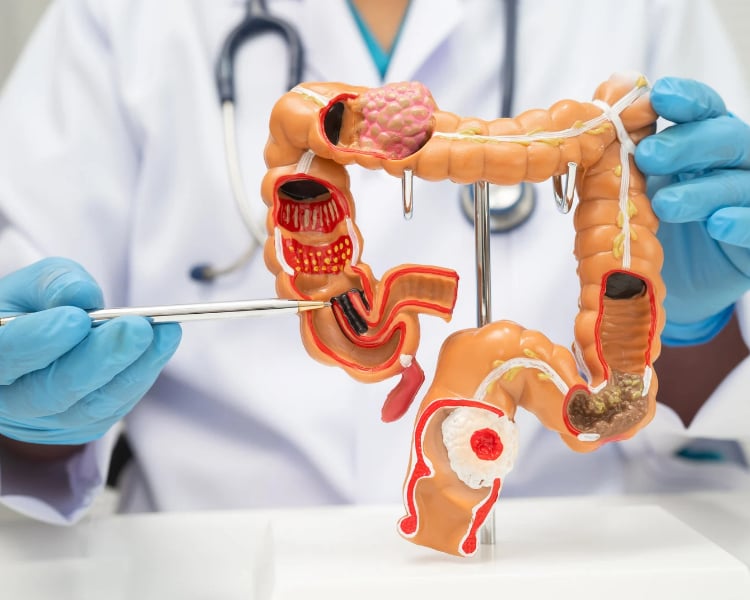 Some chronic conditions raise the risk of complications that can be prevented or found early with planned follow-up:
- Long-standing ulcerative colitis or Crohn’s colitis: surveillance colonoscopy, often every one to three years, to check for precancerous changes.
- Barrett’s esophagus: periodic upper endoscopy with biopsies, and treatment such as HALO ablation when needed.
- Cirrhosis or chronic hepatitis B: liver cancer surveillance with ultrasound about every six months.
- Celiac disease and IBD: checks for iron, vitamin B12, vitamin D, and bone health.
- Chronic liver disease: hepatitis A and B vaccination when you are not already immune.
Your follow-up schedule is based on your diagnosis, how active the disease is, and your personal risk factors.
Why Choose United Gastroenterology Associates for Chronic GI Care?
Chronic conditions are easier to control when the same physician follows you over time and knows your history.
Continuity with One Specialist
Dr. Khan follows your condition over time, from diagnosis through treatment changes.
Digestive and Liver Expertise
Board-certified in gastroenterology, hepatology, and internal medicine.
Surveillance in the Same Practice
Colonoscopy, upper endoscopy, and FibroScan are scheduled through the practice that manages your care.
Insurance Authorization Support
The office helps coordinate prior authorization for medicines and procedures.
Planned Follow-Up
Follow-up visits and tests are scheduled at the intervals your condition needs.
Two Convenient Offices
Offices on Northwest Freeway in Cypress and Katy Freeway in Katy, with one number for scheduling.
Chronic GI Care at Our Cypress and Katy Offices
Patients with chronic digestive and liver conditions can be seen at either United Gastroenterology Associates office. The Cypress office is on Northwest Freeway (US-290), and the Katy office is on Katy Freeway (I-10). Both offices share one phone number for scheduling.
United Gastroenterology Associates – Cypress Office
Cypress office – Northwest Freeway (US-290)
- Address: 21216 Northwest Freeway, Suite 640, Cypress, TX 77429
- Phone: (346) 340-4414
- Hours: Monday–Friday, 8:30 AM–5:00 PM (closed 12:00–1:30 PM for lunch; last appointment 4:30 PM)
United Gastroenterology Associates – Katy Office
Katy office – Katy Freeway (I-10) near the Grand Parkway
- Address: 23920 Katy Freeway, Suite 555, Katy, TX 77494
- Phone: (346) 340-4414
- Hours: Monday–Friday, 8:30 AM–5:00 PM (closed 12:00–1:30 PM for lunch; last appointment 4:30 PM)
Insurance and Self-Pay Options
United Gastroenterology Associates accepts most major insurance plans, including the carriers shown here. Coverage for visits, testing, and procedures depends on your plan, so the office verifies your benefits before your appointment. Some long-term medicines require prior authorization, which the office helps coordinate. Self-pay options are available.
A carrier logo does not guarantee coverage for a specific plan or service. Call (346) 340-4414 to confirm your benefits.









What Patients Say About Dr. Khan
These reviews were shared by patients of United Gastroenterology Associates and are published on the practice website.
“From the moment I walked in, I felt like I was in good hands at United Gastroenterology Associates. The staff was courteous and efficient, and the doctors were knowledgeable and compassionate. They diagnosed my condition quickly and provided an effective treatment plan. I’m feeling much better thanks to them!”
Olivia
“Dr. Khan is an exceptionally kind and compassionate physician. He truly listens to his patients and takes the time to explain everything clearly and thoroughly. His treatment plans are straightforward and easy to understand, and he provides a very personalized, attentive level of care. I felt respected, heard, and genuinely cared for throughout my visit.”
Maria Andreina Behrens · Katy
“Dr Kahn and his staff are AWESOME. He is thorough, kind, listens and puts you at ease. The staff are patient and very helpful. I was so afraid of having a colonscopy. Dr Kahn was wonderful. My procedure went so well. It was over and done with in what seemed like a minute! So expect that! Dr Kahn is excellent, I trust him completely. And I recommend him, and his staff.”
Steph Apie · Fulshear
How to Schedule a Chronic GI Care Appointment
Scheduling with United Gastroenterology Associates takes three steps. Request an appointment online or by phone and choose the Cypress or Katy office.
Request an appointment
Call (346) 340-4414 or use the online request form and choose “Chronic GI Condition / Follow-Up” as the reason for your visit.
Share your records
Bring recent lab results, imaging reports, a medication list, and any referral. The office verifies your insurance or explains self-pay options.
Meet Dr. Khan
Dr. Khan reviews your history and results, explains what they mean, and recommends next steps, which may include further testing.
Frequently Asked Questions About Chronic GI Conditions
Answers to common questions about long-term digestive and liver care.
What are the most common chronic GI conditions?
Common chronic GI conditions include GERD, irritable bowel syndrome, Crohn’s disease, ulcerative colitis, celiac disease, chronic constipation, chronic pancreatitis, and chronic liver diseases such as fatty liver disease and hepatitis B and C.
Can chronic digestive conditions be cured?
Some can. Hepatitis C can usually be cured, and H. pylori gastritis can be treated. Many others, such as IBD, IBS, and celiac disease, cannot be cured but can be controlled for long periods with the right treatment.
How often should I see a gastroenterologist for a chronic condition?
It depends on the condition and how active it is. Many patients are seen every three to twelve months, with more frequent visits during flares or treatment changes.
What is the difference between IBS and IBD?
IBS causes pain and bowel changes without visible damage to the bowel. IBD (Crohn’s disease and ulcerative colitis) causes inflammation and damage that can be seen on colonoscopy and other tests.
Do chronic GI conditions increase cancer risk?
Some do. Long-standing ulcerative colitis or Crohn’s colitis, Barrett’s esophagus, and cirrhosis raise the risk of certain cancers, which is why surveillance is recommended.
Can diet help manage a chronic GI condition?
Diet plays a major role in some conditions, such as a gluten-free diet for celiac disease or a low-FODMAP diet for IBS. For others, such as IBD, diet supports but does not replace medical treatment.
What should I do during a flare?
Follow your flare plan and contact the office if symptoms worsen or do not improve. Call 911 for heavy bleeding, severe pain, or signs of dehydration.
Where can I get chronic GI care in Cypress or Katy?
United Gastroenterology Associates provides long-term digestive and liver care at 21216 Northwest Freeway, Suite 640, Cypress, TX 77429 and 23920 Katy Freeway, Suite 555, Katy, TX 77494. Call (346) 340-4414 to schedule.
Start Long-Term Care for Your Digestive Health
A chronic GI condition does not have to control your life. Dr. Khan can confirm your diagnosis, build a treatment plan, and follow your progress over time. Most major insurance plans are accepted. Call (346) 340-4414 or request an appointment online.
Stay informed
Get The Latest
Digestive Discomfort? When to Consult a Gastroenterologist
Consulting with a gastroenterologist can lead to more accurate detection of polyps and cancer, fewer complications from procedures, and shorter hospital stays. So, for individuals experiencing digestive issues or in need of screening, reaching out to a gastroenterologist for expert care is recommended. Read More
Understanding Your Digestive System, Symptoms and Causes
The digestive system is composed of many parts, including the G.I. tract, liver, pancreas, and gallbladder, so it’s no surprise that symptoms in these areas can vary widely. Some symptoms can be mild, indicating something as simple as eating questionable leftovers. Learn More


Sources
- National Institute of Diabetes and Digestive and Kidney Diseases. Digestive Diseases. niddk.nih.gov
- Centers for Disease Control and Prevention. Inflammatory Bowel Disease (IBD) Basics. cdc.gov
- National Institute of Diabetes and Digestive and Kidney Diseases. Liver Disease. niddk.nih.gov
This page provides general educational information and does not replace medical advice, diagnosis, or treatment. Symptoms should be evaluated by a qualified medical professional. For a medical emergency, call 911. Content reviewed by United Gastroenterology Associates, PLLC. Last updated September 27, 2026.