Why does my stomach hurt after I eat?
Stomach pain after eating is most often caused by indigestion, acid reflux, gastritis, a peptic ulcer, gallbladder problems, food intolerances such as lactose intolerance, irritable bowel syndrome or simply eating too much, too fast or too much fat. Less common causes include pancreatitis, slow stomach emptying, celiac disease and, in older adults with vascular disease, reduced blood flow to the intestines.
| Pain pattern | Possible cause |
|---|---|
| Burning in the upper middle belly soon after eating | Gastritis, ulcer, indigestion |
| Burning rising into the chest | Acid reflux (GERD) |
| Pain under the right ribs after fatty meals | Gallstones or gallbladder inflammation |
| Severe upper pain spreading to the back | Pancreatitis (emergency) |
| Cramping and bloating hours later | Food intolerance, IBS |
| Fullness and nausea after small meals | Functional dyspepsia, gastroparesis |
| Pain 15 to 60 minutes after meals with weight loss in older adults | Reduced intestinal blood flow (needs prompt evaluation) |
Is stomach pain after eating a sign of an ulcer?
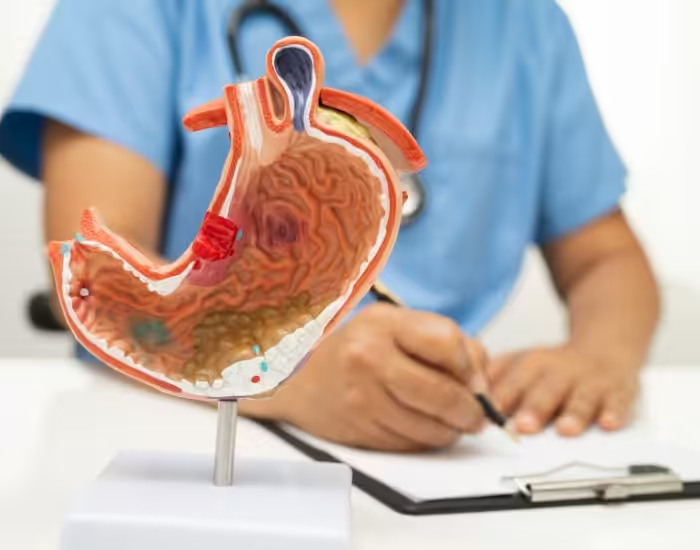
It can be. Stomach (gastric) ulcers often cause burning or gnawing upper abdominal pain that may worsen soon after eating, while duodenal ulcers more often hurt on an empty stomach and may briefly improve with food. Ulcers are commonly caused by H. pylori infection or anti-inflammatory pain relievers and are confirmed with testing or upper endoscopy.
Learn about peptic ulcer symptoms and why your stomach burns.
Can the gallbladder cause pain after eating?
Yes. Gallstones can cause attacks of steady pain under the right ribs or in the upper middle abdomen, often 30 minutes to a few hours after a fatty or large meal. The pain may spread to the right shoulder or back and can last several hours, sometimes with nausea. Fever, yellowing of the skin or eyes, or pain that does not go away needs urgent care.
Timing clues after a meal
- Within minutesEsophagus and stomach: reflux, gastritis, gastric ulcer, indigestion.
- 30 minutes to a few hoursGallbladder, pancreas or slow stomach emptying.
- Several hours laterIntestines: food intolerance, IBS, gas.
Have symptoms like these?
Dr. Muhammad Ali Khan, a board-certified gastroenterologist and hepatologist, sees adults at our Katy and Cypress offices, serving patients across Greater Houston.
When is stomach pain after eating an emergency?
Get emergency care for severe stomach pain after eating that does not ease, pain spreading to the back with vomiting, a hard or swollen belly, fever, yellowing of the skin or eyes, vomiting blood or black stools, or chest pain, shortness of breath or sweating. These can signal pancreatitis, a gallbladder infection, a bleeding ulcer, a blockage or a heart problem.
Emergency warning signs
- Severe or constant pain, or pain spreading to the back
- Fever, persistent vomiting or a hard belly
- Yellow skin or eyes
- Vomiting blood or black stools
- Chest pain, shortness of breath or sweating
How can I reduce stomach pain after meals?
To reduce stomach pain after meals, eat smaller portions slowly, limit fatty, fried and spicy foods, avoid alcohol, stay upright for two to three hours after eating, notice and reduce trigger foods, and avoid frequent anti-inflammatory pain relievers. These steps help with indigestion, reflux and gallbladder symptoms but do not replace treatment of an ulcer or gallstones.
- Choose smaller, lower-fat meals
- Eat slowly and stop before you are overly full
- Limit alcohol, spicy foods and late-night eating
- Ask your doctor before taking ibuprofen or naproxen regularly
Tip: Note timing and location
Write down how soon pain starts after eating, where you feel it and which foods were involved. These three details narrow the cause more than anything else.
How is the cause of pain after eating found?
A gastroenterologist starts with your history and an exam, then chooses tests based on the pattern: H. pylori testing and upper endoscopy for stomach causes, an abdominal ultrasound for gallstones, blood tests including liver tests and lipase for gallbladder or pancreas problems, breath tests for intolerances, and sometimes CT imaging or a gastric emptying study.
Read about bloating after eating and upper endoscopy.
Get answers instead of guessing
Request a visit with Dr. Muhammad Ali Khan at our Katy and Cypress offices. Most major insurance plans are accepted and self-pay options are available.
Key takeaways
- Stomach pain after eating often comes from indigestion, reflux, gastritis, ulcers, the gallbladder or food intolerances.
- Timing and location after meals are strong clues to the cause.
- Right-upper pain after fatty meals suggests gallstones.
- Severe pain, pain into the back, fever, yellow skin or bleeding is an emergency.
- Testing such as endoscopy or ultrasound is chosen based on your pattern.
Frequently asked questions
Why does my upper stomach hurt after eating?
Upper stomach pain after eating is often due to indigestion, gastritis, a stomach ulcer, acid reflux or the gallbladder. Persistent pain should be evaluated.
Can food intolerance cause stomach pain after eating?
Yes. Lactose intolerance and sensitivity to certain carbohydrates commonly cause cramping, bloating and gas a few hours after eating.
Is it normal to have stomach pain after every meal?
No. Pain after most meals has a cause that can usually be found and treated. See a doctor if it keeps happening.
What should I eat if my stomach hurts after eating?
Small portions of bland, low-fat foods such as rice, toast, bananas, oatmeal and lean protein are usually easiest while you find the cause.
Do I need a referral to see a gastroenterologist in Katy or Cypress?
It depends on your insurance plan. Many PPO plans let you book a specialist directly, while some HMO plans require a referral from your primary care doctor. Call (346) 340-4414 and the team can help you check.
Sources
- NIDDK — Indigestion (dyspepsia)
- NIDDK — Gastritis and gastropathy
- NIDDK — Gallstones
- MedlinePlus — Indigestion
- MedlinePlus — Abdominal pain
- American College of Gastroenterology — Dyspepsia
Where to be seen in Katy and Cypress
United Gastroenterology Associates has two offices: Katy, at 23920 Katy Freeway, Suite 555, next to Memorial Hermann Katy Hospital, and Cypress, at 21216 Northwest Freeway, Suite 640, on US-290. Both are open Monday through Friday, 8:30 AM to 5:00 PM, closed for lunch from 12:00 to 1:30 PM, and serve patients from Fulshear, Richmond and across Greater Houston. Call (346) 340-4414 for either office.
Katy office
23920 Katy Freeway, Suite 555
Katy, TX 77494
Memorial Hermann Medical Plaza 1
Next steps
If you are dealing with stomach pain after eating or any ongoing digestive concern, a focused evaluation can find the cause and start the right treatment. Dr. Muhammad Ali Khan and the team at United Gastroenterology Associates see adults from Katy, Cypress, Fulshear, Richmond, Greater Houston and across Texas. Call (346) 340-4414 or request an appointment today.
If you have severe pain, vomit blood, pass black stools or have chest pain, call 911 or go to the nearest emergency room.