
Home › Bloating & Gas Specialist
Bloating, Gas & Indigestion Care in Katy & Cypress, TX
Bloating, Gas & Indigestion Specialist in Katy, Cypress & Near Fulshear, TX
Bloating after meals, excessive gas, belching, stomach fullness or a burning upper stomach that keeps coming back deserves a closer look. United Gastroenterology Associates evaluates adults with persistent bloating and indigestion at our offices in Katy and Cypress, TX. Most major insurance plans are accepted. Check insurance information.

Dr. Muhammad Ali Khan, MD, FACP, FASGE
Board-Certified Gastroenterologist & Hepatologist
Meet Your Bloating & Gas Specialist: Muhammad Ali Khan, MD, FACP, FASGE
BOARD-CERTIFIED Gastroenterologist and Hepatologist
CREDENTIALS AT A GLANCE
Board-Certified
Gastroenterology, hepatology, and internal medicine
Academic Medicine
Former Associate Professor, UT MD Anderson Cancer Center
Published Research
More than 100 peer-reviewed articles in gastroenterology
FACP and FASGE
Fellow, American College of Physicians and American Society for Gastrointestinal Endoscopy

Dr. Muhammad Ali Khan, MD, FACP, FASGE
Board-certified gastroenterologist and hepatologist, United Gastroenterology Associates
Dr. Muhammad Ali Khan, MD, FACP, FASGE, is a board-certified gastroenterologist and hepatologist who sees patients at the United Gastroenterology Associates offices in Cypress and Katy. He evaluates bloating, gas, indigestion and stomach burning, and performs upper endoscopy and colonoscopy when they are clinically appropriate.
Dr. Khan earned his medical degree at Dow Medical College, completed an internal medicine residency at the University of Toledo, and completed a gastroenterology and hepatology fellowship at the University of Tennessee Health Science Center. He served as an Assistant Professor at the University of Alabama at Birmingham and as an Associate Professor at The University of Texas MD Anderson Cancer Center.
He is board-certified in gastroenterology, hepatology, and internal medicine, is a Fellow of the American Society for Gastrointestinal Endoscopy (FASGE) and the American College of Physicians (FACP), and has authored more than 100 peer-reviewed articles. Read Dr. Khan’s full profile.
Professional Memberships
- American College of Gastroenterology
- American Society for Gastrointestinal Endoscopy (Fellow)
- American Gastroenterological Association
- American College of Physicians (Fellow)
- Texas Medical Association
- Texas Society of Gastroenterology & Endoscopy
Areas of Care
- Bloating and excessive gas
- Indigestion and stomach fullness
- GERD and gastritis
- H. pylori infection
- IBS and constipation
- Celiac disease
- Upper endoscopy (EGD)
- Colonoscopy
Board-Certified
Gastroenterology, hepatology, and internal medicine
Academic Medicine
Former Associate Professor, UT MD Anderson Cancer Center
Published Research
More than 100 peer-reviewed articles in gastroenterology
FACP and FASGE
Fellow, American College of Physicians and American Society for Gastrointestinal Endoscopy
When Should You See a Specialist for Bloating and Gas?
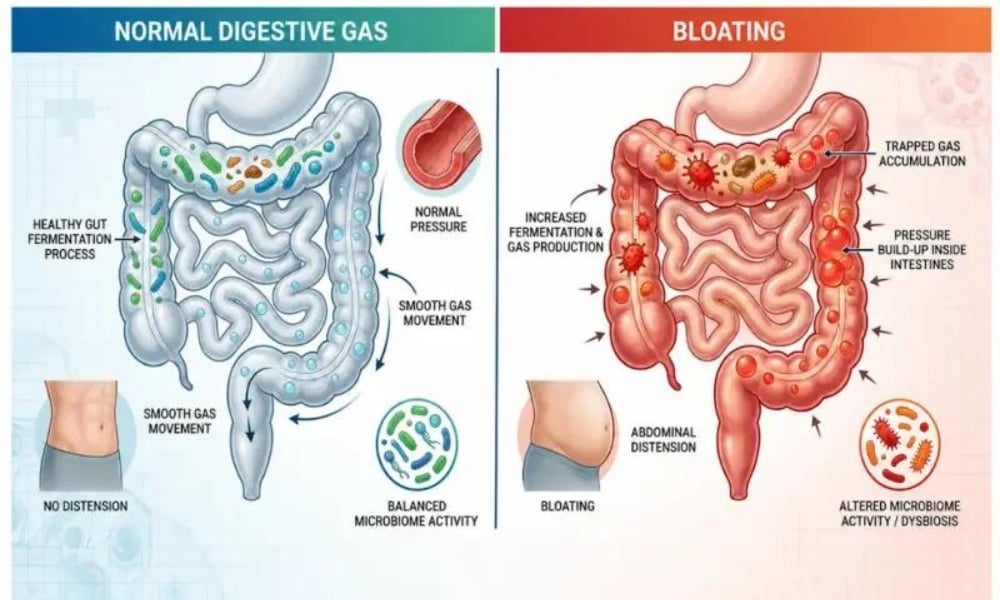
See a digestive disease specialist (gastroenterologist) when bloating, gas or stomach fullness happens most days, keeps returning, is getting worse, or comes with abdominal pain, a change in bowel habits, diarrhea or constipation, nausea, or unexplained weight loss. Occasional gas and fullness after a large meal are normal.
Bloating is a symptom rather than a diagnosis. It can feel like pressure, tightness or a swollen abdomen, and the pattern of when it happens helps point to the cause. Not every patient needs extensive testing; your history and examination guide the next steps.
Bloating, Indigestion and Stomach Fullness After Eating
People describe these symptoms in different ways. Common complaints include:
Bloating After Eating
A tight, swollen or pressured abdomen that builds during or after meals.
Excessive Gas
Frequent passing of gas, a sensation of trapped gas or cramping that eases after passing gas.
Belching
Repeated burping, often from swallowed air, carbonated drinks or eating quickly; sometimes linked to reflux.
Abdominal Fullness
Feeling full early in a meal or for hours afterward, sometimes with nausea.
Indigestion
Upper abdominal discomfort, pain or burning around meals, also called dyspepsia.
Stomach Burning
A burning feeling in the upper stomach, which can relate to gastritis, ulcers or acid reflux.
Why Does My Stomach Feel Bloated After Every Meal?
Bloating after almost every meal usually reflects how the gut handles food and gas rather than a single serious problem. Common reasons include gas produced as bacteria break down certain carbohydrates, constipation, a sensitive gut in irritable bowel syndrome, swallowing air, and slower stomach emptying. Food intolerances such as lactose intolerance, celiac disease and certain medications can also contribute.
Keeping a short diary of meals, symptoms and bowel movements before your visit helps your gastroenterologist see the pattern.
Bloating after eating causes · Small intestinal bacterial overgrowth (SIBO)
Can GERD or Gastritis Cause Bloating or Burning?
Yes, they can contribute, but they are different conditions. GERD is stomach contents flowing back into the esophagus and typically causes heartburn and regurgitation; it can also cause belching and upper abdominal fullness. Gastritis is inflammation of the stomach lining and can cause upper stomach burning, early fullness, nausea and bloating, and is often linked to H. pylori infection or pain relievers.
IBS, constipation and small intestinal bacterial overgrowth (SIBO) are separate conditions that can also cause bloating. Because several conditions produce similar symptoms, and more than one can be present, an evaluation helps sort out which ones apply to you.
GERD treatment · Gastritis treatment · H. pylori symptoms and testing
Gastroenterology Care for Fulshear Patients
Patients from Fulshear and nearby communities can conveniently visit our Katy gastroenterology office at 23920 Katy Freeway, Suite 555, Katy, TX 77494, about 21 minutes away. United Gastroenterology Associates welcomes new patients seeking evaluation for bloating, gas, indigestion, reflux, abdominal pain, bowel changes and other digestive concerns.
What Can Cause Persistent Bloating?
There is no single cause of bloating. A gastroenterologist considers your symptoms, diet, medications and bowel habits. Possible contributors include:
Irritable Bowel Syndrome
Bloating is common in IBS, along with abdominal pain and diarrhea, constipation or both. Not everyone with bloating has IBS.
Constipation
Hard or infrequent stools and incomplete emptying often cause fullness, pressure and bloating.
Food Intolerances
Lactose intolerance, celiac disease and sensitivity to certain carbohydrates can cause gas and bloating.
Upper GI Conditions
Gastritis, ulcers, reflux and delayed stomach emptying can cause fullness, burning and belching.
Bacterial Overgrowth
Small intestinal bacterial overgrowth (SIBO) can cause bloating, gas and loose stools in some people.
Medications and Air Swallowing
Some medicines, supplements, carbonated drinks and eating quickly can increase gas and bloating.
Because symptoms overlap, persistent bloating is best evaluated individually rather than assumed to have one cause.
Can Liver Disease Cause Stomach Swelling?
Yes. Some liver conditions can cause the abdomen to become enlarged because of fluid buildup, a condition known as ascites.
Ascites is different from typical bloating caused by gas. Instead of feeling temporarily full, the abdomen gradually becomes larger as fluid accumulates.
Symptoms may include:
- Progressive abdominal enlargement
- A feeling of heaviness or tightness
- Rapid weight gain
- Leg swelling
- Shortness of breath
- Yellowing of the skin or eyes (jaundice)
Ascites may occur in people with advanced liver disease and requires prompt medical evaluation.
Can a Bowel Obstruction Cause Bloating?
Yes. A bowel obstruction prevents food, fluid, and gas from moving normally through the intestines.
Symptoms may include:
- Severe abdominal swelling
- Cramping abdominal pain
- Persistent vomiting
- Constipation
- Inability to pass gas
- A tight or firm abdomen
A bowel obstruction is a medical emergency and should not be treated at home.
Can Women Experience Bloating From Gynecologic Conditions?
Yes. Although many cases are digestive in origin, bloating may also be related to gynecologic conditions.
Possible causes include:
- Ovarian cysts
- Endometriosis
- Uterine fibroids
- Pregnancy
- Ovarian cancer (less commonly)
Women with persistent abdominal swelling, pelvic pain, abnormal bleeding, or bloating that continues for several weeks should seek medical evaluation.
Can Cancer Cause Persistent Bloating?
Most cases of bloating are not caused by cancer. However, persistent abdominal swelling that does not improve may occasionally be associated with cancers affecting the digestive tract or nearby organs.
Warning signs include:
- Unexplained weight loss
- Blood in the stool
- Persistent vomiting
- Difficulty swallowing
- Ongoing abdominal pain
- Progressive abdominal enlargement
- Loss of appetite
- Iron-deficiency anemia
These symptoms do not necessarily mean cancer is present, but they should be evaluated promptly.

Trusted Care for Abdominal Bloating
Foods That Commonly Cause Bloating
Find the Cause. Feel Better.
Certain foods naturally produce more gas during digestion. This does not mean they are unhealthy, but some people are more sensitive to them than others.
Common dietary triggers include:
- Beans and lentils
- Broccoli
- Cabbage
- Cauliflower
- Brussels sprouts
- Onions
- Garlic
- Apples
- Pears
- Watermelon
- Dairy products in people with lactose intolerance
- Carbonated beverages
- Artificial sweeteners
- Fried or fatty foods
- Large meals
Keeping a food diary may help identify foods that consistently trigger symptoms.
Call (346) 340-4414How Is Persistent Bloating Evaluated?
Your gastroenterologist asks when bloating began, how often it happens, how it relates to meals and foods, your bowel habits, weight changes, medications and family history. Not every patient with bloating needs testing, and tests are chosen based on your symptoms.
History and Diet Review
A detailed history and food and symptom diary often reveal the pattern and guide simple first steps.
Blood, Stool and Breath Tests
May include celiac and blood count testing, stool tests, H. pylori testing, or breath testing for certain intolerances or bacterial overgrowth.
Endoscopy or Colonoscopy When Needed
Considered for warning signs, persistent upper or lower symptoms, or age-appropriate screening.
When Persistent Bloating Should Be Evaluated
Bloating that is new, steadily worsening, or comes with other symptoms should be evaluated promptly. This is especially important for new symptoms after age 45 or with a family history of digestive cancer.
When to seek emergency care
Call 911 or seek emergency care for severe or rapidly worsening abdominal pain or swelling, persistent vomiting, vomiting blood, black or bloody stools, inability to keep fluids down, or fainting.
Get evaluated soon if bloating comes with
- Unintentional weight loss
- Blood in the stool or black stools
- Persistent vomiting
- Difficulty swallowing
- Iron-deficiency anemia
- A new change in bowel habits
- Abdominal swelling that keeps increasing
- Symptoms that wake you at night
These symptoms have many possible causes and should be evaluated by a qualified medical professional.
Bloating and Gas Care at Our Katy and Cypress Offices
Dr. Khan sees patients at the Cypress office at 21216 Northwest Freeway, Suite 640, Cypress, TX 77429, serving Cypress, Tomball, Jersey Village and northwest Houston, and at the Katy office at 23920 Katy Freeway, Suite 555, Katy, TX 77494, serving Katy, Fulshear, Richmond, Rosenberg and west Houston. Fulshear-area patients usually find the Katy office most convenient. Both offices share one phone number for scheduling.
United Gastroenterology Associates – Cypress Office
Cypress office – Northwest Freeway (US-290)
- Address: 21216 Northwest Freeway, Suite 640, Cypress, TX 77429
- Phone: (346) 340-4414
- Hours: Monday–Friday, 8:30 AM–5:00 PM (closed 12:00–1:30 PM for lunch; last appointment 4:30 PM)
United Gastroenterology Associates – Katy Office
Katy office – Katy Freeway (I-10) near the Grand Parkway
- Address: 23920 Katy Freeway, Suite 555, Katy, TX 77494
- Phone: (346) 340-4414
- Hours: Monday–Friday, 8:30 AM–5:00 PM (closed 12:00–1:30 PM for lunch; last appointment 4:30 PM)
Insurance and Self-Pay Options
United Gastroenterology Associates accepts most major insurance plans. Insurance coverage, benefits and patient responsibility vary by plan and should be verified before treatment or procedures; the office can help you check your benefits. Self-pay options are available.
A carrier logo does not guarantee coverage for a specific plan or service. Call (346) 340-4414 to confirm your benefits.









What Patients Say About Dr. Khan
These reviews were shared by patients of United Gastroenterology Associates and are published on the practice website.
“Dr. Khan is an exceptionally kind and compassionate physician. He truly listens to his patients and takes the time to explain everything clearly and thoroughly. His treatment plans are straightforward and easy to understand, and he provides a very personalized, attentive level of care. I felt respected, heard, and genuinely cared for throughout my visit.”
Maria Andreina Behrens · Katy
“Dr. Khan is an amazing physician. He is so kind hearted & wants to help you in every way possible. He listens & doesn’t make you feel rushed. I feel so comfortable talking to him about anything. I am so glad to have him as my gastro doctor. His staff is outstanding as well. Shout out to Dr. Khan & his staff.”
Donna LaPlante · Cypress
“Dr Kahn and his staff are AWESOME. He is thorough, kind, listens and puts you at ease. The staff are patient and very helpful. I was so afraid of having a colonscopy. Dr Kahn was wonderful. My procedure went so well. It was over and done with in what seemed like a minute! So expect that! Dr Kahn is excellent, I trust him completely. And I recommend him, and his staff.”
Steph Apie · Fulshear
Related Conditions and Patient Guides
These pages cover conditions that commonly cause bloating, gas and indigestion.
Upper Digestive
Bowel Conditions
Pain and Bowel Changes
Abdominal pain specialist
Changes in bowel habits
Stomach swelling and bloating
Bloating and Gas: Frequently Asked Questions
Answers to common questions about bloating, gas and indigestion in Katy and Cypress.
What doctor should I see for persistent bloating?
A gastroenterologist evaluates persistent or unexplained bloating, gas and indigestion and can look for conditions such as IBS, constipation, food intolerance, gastritis or reflux.
Why do I feel bloated after every meal?
Common reasons include gas from digesting certain foods, constipation, IBS, swallowing air and slower stomach emptying. A food and symptom diary helps identify the pattern.
Can IBS cause bloating and gas?
Yes. Bloating and gas are common in IBS, but these symptoms have other causes too, so a proper evaluation matters.
Can GERD or gastritis cause bloating?
They can contribute to upper abdominal fullness, belching and burning, but they are different conditions from IBS or SIBO. More than one can be present.
Can constipation cause bloating?
Yes. Constipation often causes fullness, pressure and bloating, and treating it frequently improves bloating.
Will I need an endoscopy or colonoscopy for bloating?
Not usually as a first step. Procedures are considered for warning signs, persistent symptoms or age-appropriate screening.
Where can I see a bloating specialist near Katy, Cypress or Fulshear?
Dr. Muhammad Ali Khan sees patients at 23920 Katy Freeway, Suite 555, Katy, TX 77494 and 21216 Northwest Freeway, Suite 640, Cypress, TX 77429. Fulshear patients usually visit the Katy office. Call (346) 340-4414.
Need a Gastroenterology Appointment?
United Gastroenterology Associates welcomes new patients at our Katy and Cypress offices. Send a request and our team will contact you to schedule, or call (346) 340-4414.
- Board-certified gastroenterologist & hepatologist
- Most major insurance plans accepted
- Katy and Cypress locations
- Convenient access for Fulshear patients at the Katy office
- Colonoscopy and endoscopy available when clinically appropriate
Request an Appointment
Tell us how to reach you. Please do not include detailed medical information; we will discuss your symptoms when we call.
Prefer to book yourself? Use our online scheduler. Insurance coverage, benefits and patient responsibility vary by plan and should be verified before treatment or procedures. View insurance information. For a medical emergency, call 911.
Sources
- National Institute of Diabetes and Digestive and Kidney Diseases. Gas in the Digestive Tract. niddk.nih.gov
- Moayyedi PM, Lacy BE, Andrews CN, et al. ACG and CAG Clinical Guideline: Management of Dyspepsia. Am J Gastroenterol. 2017;112(7):988–1013. doi.org/10.1038/ajg.2017.154
This page provides general educational information and does not replace medical advice, diagnosis, or treatment. Symptoms should be evaluated by a qualified medical professional. For a medical emergency, call 911. Content reviewed by United Gastroenterology Associates, PLLC. Last updated September 30, 2026.