What is a high-fiber diet?
A high-fiber diet is an eating pattern built around plant foods that provide about 25 to 35 grams of fiber a day for most adults: vegetables, fruits, beans and lentils, whole grains, nuts and seeds. Fiber is the part of plant food the body cannot fully digest. It adds bulk and water to stool, feeds healthy gut bacteria, and slows the absorption of sugar. Most Americans eat only about half the recommended amount.
What is the difference between soluble and insoluble fiber?
Soluble fiber dissolves in water to form a gel that softens stool, slows digestion and can lower cholesterol and blood sugar; it is found in oats, beans, lentils, apples, citrus, chia and psyllium. Insoluble fiber does not dissolve and adds bulk that helps stool move; it is found in wheat bran, whole grains, nuts and the skins of fruits and vegetables. Most plant foods contain both, and a mix is best.
Two types of fiber
- SolubleForms a gel; softens stool, helps cholesterol and blood sugar. Oats, beans, apples, psyllium.
- InsolubleAdds bulk; helps stool move. Bran, whole grains, nuts, vegetable skins.
- Both togetherA varied plate of whole plant foods gives the best balance.
Which foods are highest in fiber?
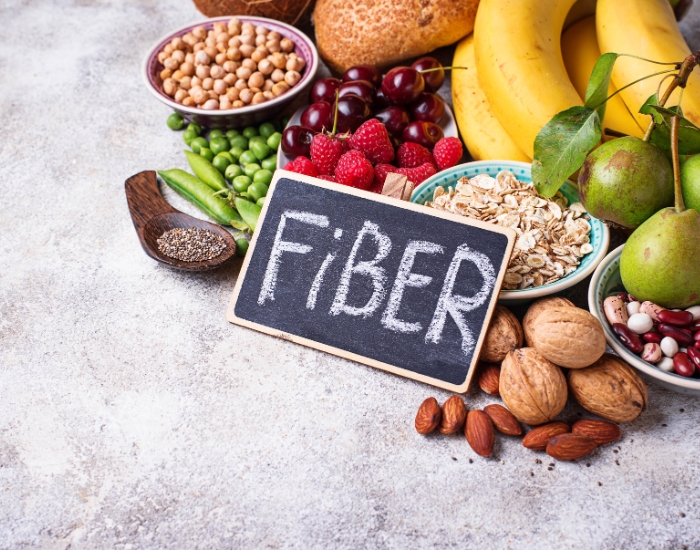
Foods highest in fiber include beans, lentils and split peas (often 6 to 8 grams per half cup cooked), chia seeds and ground flaxseed, raspberries and blackberries, pears and apples with the skin, avocado, whole-grain cereals and bran, oats, whole-wheat pasta, artichokes, broccoli, Brussels sprouts and sweet potatoes with the skin. Choosing whole fruits instead of juice keeps the fiber.
| Food | Serving | Fiber |
|---|---|---|
| Lentils or black beans | 1/2 cup cooked | About 7 to 8 g |
| Chia seeds | 1 ounce (about 2 to 3 tbsp) | About 10 g |
| Raspberries | 1 cup | About 8 g |
| Pear with skin | 1 medium | About 5 to 6 g |
| Oatmeal | 1 cup cooked | About 4 g |
| Broccoli | 1 cup cooked | About 5 g |
| Whole-wheat pasta | 1 cup cooked | About 6 g |
| Avocado | 1/2 fruit | About 5 g |
Values are approximate and vary by product; check nutrition labels.
Have symptoms like these?
Dr. Muhammad Ali Khan, a board-certified gastroenterologist and hepatologist, sees adults at our Katy and Cypress offices, serving patients across Greater Houston.
How do I increase fiber without gas and bloating?
Increase fiber gradually, by about 5 grams a day each week, rather than all at once, and drink more water as you go. Spread fiber across meals, choose cooked vegetables if raw ones cause discomfort, and soak and thoroughly cook beans. Some gas is normal as your gut adjusts and usually settles within a few weeks.
- Swap white bread, rice and pasta for whole-grain versions
- Add beans or lentils to soups, salads and rice dishes
- Eat whole fruit with the skin instead of juice
- Add a tablespoon of chia or ground flax to oatmeal or yogurt
- Drink water with every meal and between meals
Tip: Read the label
Foods with 5 grams of fiber or more per serving are considered high-fiber choices. Comparing labels on bread and cereal is an easy way to add fiber without changing what you eat.
Who should be careful with a high-fiber diet?
Some people need to limit fiber at times: people preparing for a colonoscopy, which requires a low-residue diet; people with a narrowed bowel (stricture) from Crohn’s disease; people with gastroparesis, in whom fiber can worsen fullness; and people during certain inflammatory bowel disease flares or after some bowel surgeries. Follow your doctor’s advice in these situations.
See low residue foods for colonoscopy.
When should I talk to a doctor about my bowel habits?
Talk to a doctor if constipation or diarrhea lasts more than three weeks despite a high-fiber diet, if fiber causes significant pain or bloating, or if you have blood in the stool, black stools, weight loss, anemia or a new change in bowel habits after age 45. A gastroenterologist can look for causes such as IBS, pelvic floor dysfunction, celiac disease or inflammatory bowel disease.
Red flags
- Blood in the stool or black stools
- Unexplained weight loss or anemia
- Severe abdominal pain or vomiting
- New bowel changes after age 45
Get answers instead of guessing
Request a visit with Dr. Muhammad Ali Khan at our Katy and Cypress offices. Most major insurance plans are accepted and self-pay options are available.
Key takeaways
- A high-fiber diet provides about 25 to 35 grams of fiber a day from plant foods.
- Soluble fiber softens stool; insoluble fiber adds bulk. A mix is best.
- Beans, lentils, chia, berries, pears, whole grains and vegetables are top sources.
- Increase fiber gradually and drink more water to avoid gas and bloating.
- Some conditions require limiting fiber; follow your doctor’s advice.
Frequently asked questions
How much fiber should I eat a day?
Most adults need about 25 to 35 grams a day, depending on age and sex.
Are fiber supplements as good as food?
Food provides fiber plus vitamins and minerals. Supplements such as psyllium can help fill gaps.
Does fiber help diarrhea too?
Soluble fiber can firm loose stools for some people by absorbing water.
Can a high-fiber diet help with weight?
Fiber-rich foods are filling and can help with appetite control as part of a balanced diet.
Do I need a referral to see a gastroenterologist in Katy or Cypress?
It depends on your insurance plan. Many PPO plans let you book a specialist directly, while some HMO plans require a referral from your primary care doctor. Call (346) 340-4414 and the team can help you check.
Sources
- NIDDK — Eating, diet and nutrition for constipation
- MedlinePlus — Dietary fiber
- NIDDK — Constipation
- NIDDK — Irritable bowel syndrome
Where to be seen in Katy and Cypress
United Gastroenterology Associates has two offices: Katy, at 23920 Katy Freeway, Suite 555, next to Memorial Hermann Katy Hospital, and Cypress, at 21216 Northwest Freeway, Suite 640, on US-290. Both are open Monday through Friday, 8:30 AM to 5:00 PM, closed for lunch from 12:00 to 1:30 PM, and serve patients from Fulshear, Richmond and across Greater Houston. Call (346) 340-4414 for either office.
Katy office
23920 Katy Freeway, Suite 555
Katy, TX 77494
Memorial Hermann Medical Plaza 1
Next steps
If you are dealing with high fiber diet or any ongoing digestive concern, a focused evaluation can find the cause and start the right treatment. Dr. Muhammad Ali Khan and the team at United Gastroenterology Associates see adults from Katy, Cypress, Fulshear, Richmond, Greater Houston and across Texas. Call (346) 340-4414 or request an appointment today.
If you have severe pain, vomit blood, pass black stools or have chest pain, call 911 or go to the nearest emergency room.