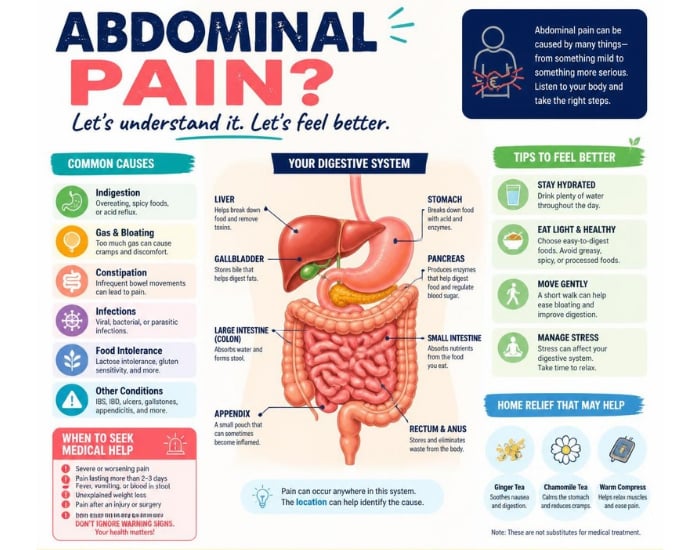
When symptoms do develop, they can resemble many other digestive conditions, including gastritis, acid reflux, peptic ulcer disease, or functional indigestion. Because symptoms alone cannot confirm an H. pylori infection, proper testing is essential before treatment begins. Fortunately, accurate diagnostic tests and effective treatments are available, and confirming that the infection has been eliminated after treatment is just as important as making the initial diagnosis.
This guide explains what H. pylori is, the symptoms it may cause, how testing works, the differences between breath tests and stool tests, when an upper endoscopy may be recommended, how treatment is performed, and why follow-up testing matters.
Important Note
Many people with H. pylori never experience symptoms, while others develop chronic stomach irritation or ulcers. Because symptoms can overlap with many digestive disorders, self-diagnosing is not reliable. Early evaluation by a gastroenterologist can help identify the true cause of ongoing stomach symptoms and guide appropriate treatment before complications develop.
What Is H. pylori?
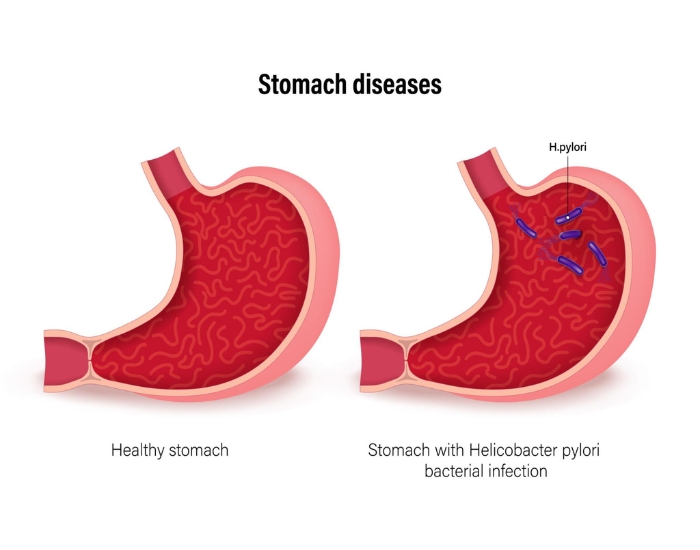
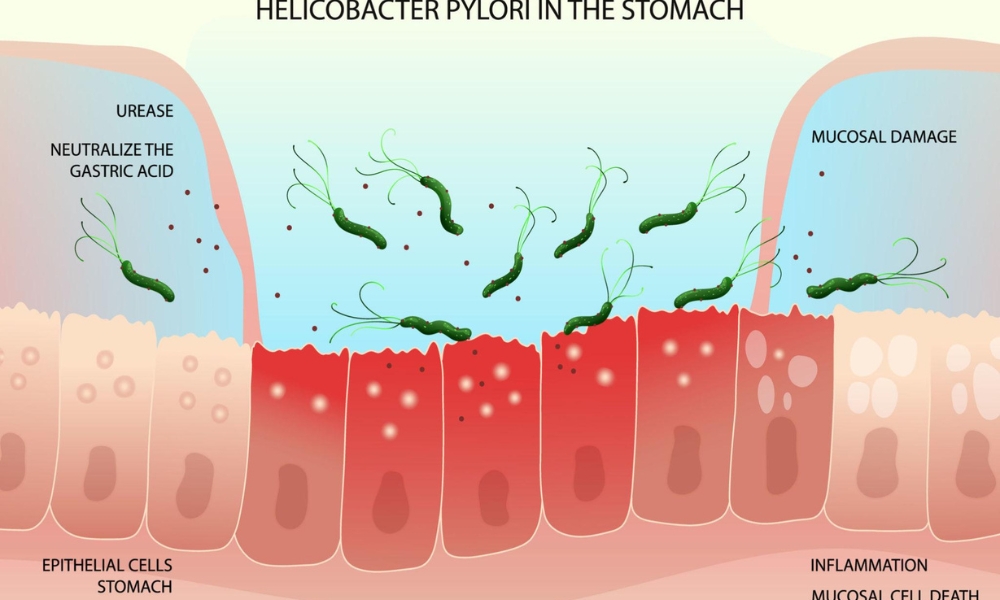
H. pylori is a spiral-shaped bacterium that lives in the protective mucus lining of the stomach. Unlike many bacteria that cannot survive in the stomach's acidic environment, H. pylori produces enzymes that help it adapt and remain within the stomach lining.
Over time, the bacteria may irritate the stomach lining and trigger chronic inflammation known as gastritis. In some individuals, this inflammation contributes to peptic ulcers affecting the stomach or the first part of the small intestine (the duodenum). Others may never develop noticeable symptoms despite carrying the bacteria for many years.
Researchers estimate that H. pylori infects a significant portion of the world's population. Fortunately, having the bacteria does not automatically mean someone will develop ulcers, stomach cancer, or severe digestive disease. Many people remain symptom-free throughout their lives.
However, when H. pylori is responsible for ongoing digestive symptoms, identifying and treating the infection can reduce inflammation, promote ulcer healing, and lower the risk of certain long-term complications.
Because H. pylori frequently causes chronic inflammation of the stomach lining, it is often discussed alongside gastritis and stomach inflammation.
Does H. pylori Always Cause Symptoms?
No. One of the most important facts about H. pylori is that many infected individuals have no symptoms at all.
Some people discover the infection only after undergoing testing for another digestive concern or during an upper endoscopy performed for persistent stomach pain, anemia, or ulcers.
Others may develop symptoms gradually over months or years. Because these symptoms are common in many gastrointestinal conditions, they do not automatically indicate H. pylori infection.
For example, indigestion may also occur with acid reflux, functional dyspepsia, medication-related stomach irritation, gallbladder disease, pancreatic disorders, food intolerances, or stress-related digestive conditions.
This is why physicians rely on appropriate testing rather than symptoms alone when determining whether H. pylori is present.
Common Symptoms Associated with H. pylori
When H. pylori does produce symptoms, they often develop gradually and may come and go. Some individuals notice only mild discomfort after meals, while others experience persistent stomach irritation that interferes with daily life.
Common symptoms may include:
- Burning or aching pain in the upper abdomen.
- Frequent indigestion.
- Bloating after eating.
- Early fullness during meals.
- Excessive burping.
- Nausea.
- Occasional vomiting.
- Reduced appetite.
Many patients describe discomfort that improves temporarily after eating and then gradually returns. Others notice symptoms are worse when the stomach has been empty for several hours.
If ulcers develop, symptoms may become more severe and can include nighttime abdominal pain, persistent nausea, unexplained weight loss, vomiting blood, or black, tarry stools. These symptoms require prompt medical evaluation.
Patients experiencing ongoing nausea and vomiting or persistent upper abdominal discomfort should discuss their symptoms with a healthcare provider rather than assuming H. pylori is the cause.
How People Get H. pylori
Although researchers continue studying exactly how H. pylori spreads, it is generally believed that infection occurs through person-to-person transmission, particularly during childhood. The bacteria may spread through saliva, contaminated food or water, or exposure to infected stool under certain circumstances.
Many people acquire the infection years before symptoms ever appear. Because of this long delay, most adults cannot determine exactly when or where they became infected.
Factors that may increase the likelihood of infection include crowded living conditions, limited access to clean water, poor sanitation, and living in regions where H. pylori infection is more common.
Importantly, becoming infected is not a reflection of personal cleanliness. Many individuals with excellent hygiene develop H. pylori simply because it is a common infection worldwide.
Is H. pylori Contagious?
H. pylori can spread from one person to another, so it is considered contagious. However, casual day-to-day contact does not necessarily mean that family members or coworkers will become infected.
Most transmission appears to occur within households, especially during childhood, although researchers are still learning about the exact mechanisms of spread.
Routine testing of every family member is generally not recommended simply because one person has H. pylori. Instead, testing decisions are based on individual symptoms, medical history, and clinical judgment.
Good hygiene practices—including washing hands after using the restroom and before preparing food—remain important for reducing the spread of many gastrointestinal infections.
H. pylori Breath Test
The urea breath test is one of the most accurate noninvasive methods for detecting an active H. pylori infection.
During the test, the patient drinks or swallows a substance containing a special form of urea. If H. pylori is present, the bacteria break down the urea and release carbon dioxide that can be detected in the breath. The procedure is painless, quick, and does not require sedation.
One of the advantages of the breath test is that it identifies an active infection rather than evidence of a past infection. For this reason, it is commonly used both before treatment and later to confirm that treatment successfully eliminated the bacteria.
Because certain medications can interfere with test accuracy, patients should carefully follow all preparation instructions provided by their healthcare team before the appointment.
Have symptoms like these?
Dr. Muhammad Ali Khan, a board-certified gastroenterologist and hepatologist, sees adults at our Katy and Cypress offices, serving patients across Greater Houston.
H. pylori Stool Antigen Test
The H. pylori stool antigen test is another highly accurate, noninvasive method used to detect an active H. pylori infection. Unlike older blood antibody tests, which may remain positive long after an infection has been treated, the stool antigen test looks for proteins from the bacteria that indicate a current infection.
During this test, a small stool sample is collected and analyzed in a laboratory. The process is simple, does not require sedation, and is appropriate for many patients who need either an initial diagnosis or confirmation that treatment has successfully eliminated the infection.
Like the urea breath test, the stool antigen test is sensitive to certain medications. Acid-suppressing medications and recent antibiotic use may reduce the accuracy of the results if preparation instructions are not followed carefully.
Your healthcare provider will explain when to temporarily stop certain medications before testing and when they can safely be restarted afterward. Following these instructions helps reduce the risk of false-negative results.
Breath Test vs. Stool Test: What's the Difference?
Both the urea breath test and the stool antigen test are excellent choices for diagnosing an active H. pylori infection. Neither test is considered universally better—the best option depends on your medical history, availability, and your physician's recommendation.
| Feature | Breath Test | Stool Antigen Test |
|---|---|---|
| Detects Active Infection | ✔ Yes | ✔ Yes |
| Noninvasive | ✔ Yes | ✔ Yes |
| Useful After Treatment | ✔ Yes | ✔ Yes |
| Affected by Certain Medications | Yes | Yes |
Regardless of which test is used, accurate preparation is essential. Patients should never assume that a negative result completely rules out H. pylori if testing was performed while taking medications that interfere with the results.
When Upper Endoscopy and Biopsy May Be Needed
Although many people can be diagnosed using breath or stool testing, some patients require an upper endoscopy, also called an esophagogastroduodenoscopy (EGD).
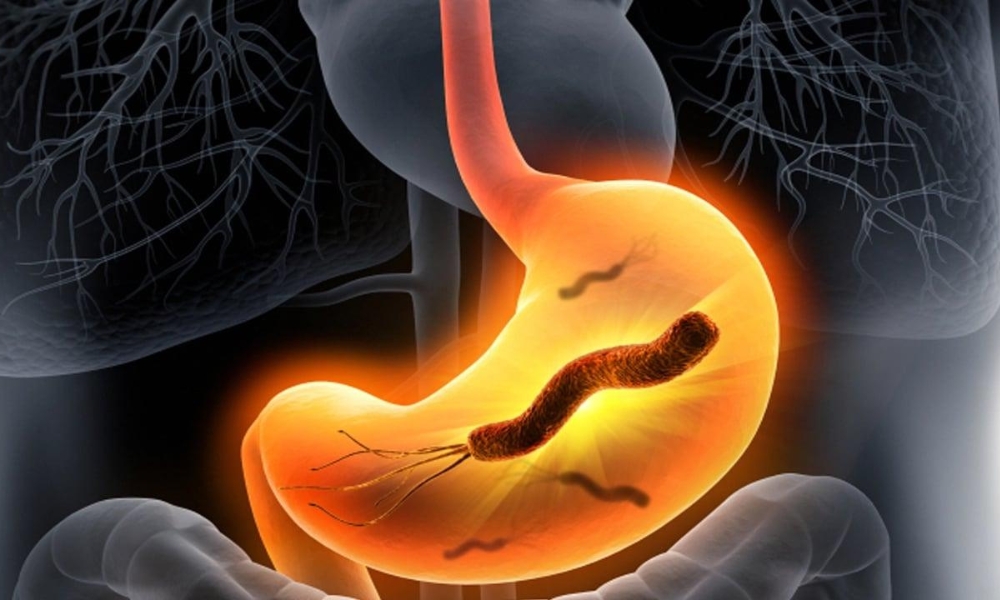
During an upper endoscopy, a thin flexible camera is passed through the mouth into the esophagus, stomach, and beginning of the small intestine. This allows the gastroenterologist to directly examine the stomach lining for inflammation, ulcers, bleeding, or other abnormalities.
Small tissue samples (biopsies) may also be collected during the procedure. These samples can be tested for H. pylori and examined for other stomach conditions.
An upper endoscopy may be recommended when patients have:
- Persistent or severe upper abdominal pain.
- Difficulty swallowing.
- Bleeding or black stools.
- Unexplained anemia.
- Persistent nausea or vomiting.
- Unintentional weight loss.
- Symptoms that continue despite treatment.
- Concern for stomach ulcers or other upper gastrointestinal disease.
Learn more about upper endoscopy (EGD) and the practice's advanced endoscopy services.
Important Note
Many digestive symptoms have similar causes. While H. pylori is a common reason for chronic gastritis and stomach ulcers, symptoms such as indigestion, bloating, acid reflux, or stomach pain may also be related to GERD, functional dyspepsia, gallbladder disease, medication side effects, or other gastrointestinal disorders. Proper testing helps ensure you receive the correct treatment rather than treating the wrong condition.
How H. pylori Is Treated
Treatment for H. pylori is designed to completely eliminate the bacteria while allowing the stomach lining to heal. Unlike many common bacterial infections, H. pylori is rarely treated with a single antibiotic because antibiotic resistance has become increasingly common worldwide.
Instead, treatment usually combines:
- An acid-suppressing medication, often a proton pump inhibitor (PPI).
- Two or more antimicrobial medications selected according to current treatment recommendations and individual patient factors.
- Occasionally additional medications that help improve treatment success.
The exact combination depends on several factors, including previous antibiotic exposure, medication allergies, local resistance patterns, and your physician's clinical judgment.
It is extremely important to take every medication exactly as prescribed and complete the entire treatment course—even if symptoms improve after only a few days.
Stopping treatment early may allow some bacteria to survive, increasing the likelihood that the infection will persist and become more difficult to treat.
Patients should never attempt to treat H. pylori using leftover antibiotics or medications prescribed for someone else. Inappropriate antibiotic use contributes to antibiotic resistance and may delay effective treatment.
Many patients also notice improvement in symptoms related to acid reflux (GERD) or gastritis after the underlying infection has been properly addressed, although not every case of reflux is caused by H. pylori.
Why a Test of Cure Is Important
One of the most common misconceptions about H. pylori is that symptom improvement alone means the infection has been eliminated. In reality, symptoms may improve even if some bacteria remain.
For this reason, gastroenterologists often recommend a test of cure after treatment. This follow-up testing confirms that the infection has been successfully eradicated.
Testing is typically performed using either a urea breath test or a stool antigen test at the appropriate interval after treatment has been completed. Your healthcare provider will determine the best timing based on your treatment plan and medication use.
Confirming eradication helps reduce the risk of persistent gastritis, recurrent ulcers, and ongoing inflammation. It also allows your physician to determine whether additional treatment is needed if the infection has not been completely eliminated.
Medicines That May Affect H. pylori Test Accuracy
Accurate testing depends not only on choosing the right diagnostic method but also on proper preparation. Certain medications can temporarily reduce the number of H. pylori bacteria in the stomach or interfere with the test, leading to a false-negative result even when the infection is still present.
Before scheduling a urea breath test or stool antigen test, your healthcare provider will review your medications and provide specific instructions. Following these recommendations carefully helps ensure the most reliable results.
Medications that may interfere with testing include:
- Proton pump inhibitors (PPIs), such as omeprazole, pantoprazole, esomeprazole, and similar acid-suppressing medications.
- Recent antibiotic use.
- Bismuth-containing medications, such as certain over-the-counter stomach remedies.
Do not stop any prescribed medication on your own. Always follow the instructions provided by your healthcare provider regarding when to temporarily discontinue and restart medications before testing.
Blood antibody tests may detect previous exposure to H. pylori, but they cannot always distinguish between a past infection and a current active infection. Because of this limitation, breath tests and stool antigen tests are generally preferred when confirming an active infection or verifying that treatment has been successful.

Get answers instead of guessing
Request a visit with Dr. Muhammad Ali Khan at our Katy and Cypress offices. Most major insurance plans are accepted and self-pay options are available.
When Stomach Symptoms Need Prompt Medical Care
Most cases of H. pylori infection develop gradually and are not medical emergencies. However, certain symptoms may indicate complications such as bleeding ulcers or another serious digestive condition that requires immediate evaluation.
Seek emergency medical care if you experience:
- Vomiting blood or material that resembles coffee grounds.
- Black, tarry stools that may indicate gastrointestinal bleeding.
- Sudden, severe abdominal pain.
- Persistent vomiting that prevents you from keeping fluids down.
- Dizziness, fainting, or signs of significant blood loss.
You should also schedule an appointment with a gastroenterologist if you have persistent indigestion, ongoing upper abdominal pain, recurring nausea, unexplained weight loss, or symptoms that continue despite treatment. These symptoms do not necessarily mean you have H. pylori, but they do deserve a professional evaluation.
Comprehensive H. pylori Evaluation in Katy, Cypress, and the Greater Houston Area
At United Gastroenterologists, patients receive individualized care for a wide variety of digestive conditions, including H. pylori infection, gastritis, peptic ulcer disease, acid reflux, and chronic upper abdominal pain.
If H. pylori is suspected, your gastroenterologist will determine whether a breath test, stool antigen test, upper endoscopy, or another diagnostic evaluation is the most appropriate next step based on your symptoms and medical history.
The practice also provides advanced diagnostic procedures, including upper endoscopy (EGD), comprehensive treatment for gastritis, management of gastroesophageal reflux disease (GERD), and personalized digestive care throughout the Houston area.
Whether you're looking for a gastroenterologist in Cypress or a gastroenterologist in Katy, early evaluation can help identify the cause of persistent stomach symptoms and guide effective treatment.
Frequently Asked Questions
What are the most common symptoms of H. pylori?
Common symptoms include upper abdominal pain, indigestion, bloating, nausea, excessive burping, early fullness, and stomach discomfort. However, many people with H. pylori have no symptoms at all.
Is H. pylori contagious?
Yes. H. pylori can spread from person to person, most commonly during childhood. Good hand hygiene and safe food practices may help reduce transmission.
Can H. pylori cause stomach ulcers?
Yes. H. pylori is one of the leading causes of peptic ulcers. Treating the infection often allows ulcers to heal and reduces the chance of recurrence.
How long does H. pylori treatment take?
Treatment usually lasts about 10 to 14 days, depending on the medication regimen prescribed by your physician. It is important to complete the full course exactly as directed.
Can H. pylori come back after treatment?
Reinfection is uncommon in most adults but can occur. This is why a test of cure is often recommended after treatment to confirm that the bacteria have been completely eradicated.
Do I need another test after finishing antibiotics?
In many cases, yes. A follow-up breath test or stool antigen test is commonly recommended to confirm that treatment was successful. Your healthcare provider will advise you on the appropriate timing.
Does H. pylori always lead to stomach cancer?
No. Most people with H. pylori never develop stomach cancer. However, long-term infection is associated with an increased risk of certain stomach cancers in some individuals. Early diagnosis and appropriate treatment can reduce some long-term complications.
Can I treat H. pylori naturally?
There is no reliable natural treatment that has been proven to eradicate H. pylori. Because the infection usually requires multiple medications, patients should follow a treatment plan prescribed by their healthcare provider rather than relying on home remedies alone.
Key Takeaways
H. pylori is a common bacterial infection that may cause chronic gastritis, stomach ulcers, and persistent digestive symptoms in some people, while many others remain symptom-free. Because symptoms overlap with many other gastrointestinal conditions, testing—not symptoms alone—is necessary to confirm the diagnosis.
Modern breath tests and stool antigen tests provide accurate ways to detect active infection, while upper endoscopy may be recommended in selected patients. Completing the prescribed treatment and confirming eradication with a test of cure are important steps in successful management.
If you've been experiencing ongoing upper abdominal discomfort, indigestion, nausea, or symptoms suggestive of H. pylori, consulting a gastroenterologist can help identify the cause and determine the most appropriate treatment plan.
Medical Disclaimer
This article is provided for educational purposes only and should not replace professional medical advice, diagnosis, or treatment. Symptoms such as abdominal pain, nausea, indigestion, or ulcers may have many different causes. Always consult a qualified healthcare provider for personalized evaluation and follow the preparation instructions provided before any H. pylori testing or treatment.
Where to be seen in Katy and Cypress
United Gastroenterology Associates has two offices: Katy, at 23920 Katy Freeway, Suite 555, next to Memorial Hermann Katy Hospital, and Cypress, at 21216 Northwest Freeway, Suite 640, on US-290. Both are open Monday through Friday, 8:30 AM to 5:00 PM, closed for lunch from 12:00 to 1:30 PM, and serve patients from Fulshear, Richmond and across Greater Houston. Call (346) 340-4414 for either office.
Katy office
23920 Katy Freeway, Suite 555
Katy, TX 77494
Memorial Hermann Medical Plaza 1
Next steps
If you are dealing with h. pylori symptoms or any ongoing digestive concern, a focused evaluation can find the cause and start the right treatment. Dr. Muhammad Ali Khan and the team at United Gastroenterology Associates see adults from Katy, Cypress, Fulshear, Richmond, Greater Houston and across Texas. Call (346) 340-4414 or request an appointment today.
If you have severe pain, vomit blood, pass black stools or have chest pain, call 911 or go to the nearest emergency room.