
Home › Advanced Procedures › Esophageal Dilation
Swallowing Problems · Upper Endoscopy
Esophageal Dilation for a Narrowed Esophagus
Esophageal dilation is a procedure that gently stretches a narrowed section of the esophagus so food and pills can pass more easily. It is usually done during an upper endoscopy (EGD) and is a common treatment for esophageal strictures, Schatzki rings and other causes of food sticking. At United Gastroenterology Associates, PLLC, Muhammad Ali Khan, MD, FACP, FASGE, evaluates swallowing problems and performs esophageal dilation for patients from Katy, Cypress and Greater Houston.
Swallowing evaluation with Dr. Muhammad Ali Khan
Meet Your Esophageal Dilation Specialist: Muhammad Ali Khan, MD, FACP, FASGE
BOARD-CERTIFIED Gastroenterologist and Hepatologist
CREDENTIALS AT A GLANCE
Board-Certified
Gastroenterology, hepatology, and internal medicine
Academic Medicine
Former Associate Professor, UT MD Anderson Cancer Center
Published Research
More than 100 peer-reviewed articles in gastroenterology
FACP and FASGE
Fellow, American College of Physicians and American Society for Gastrointestinal Endoscopy

“My gastroenterology & hepatology practice is dedicated to working closely with you to develop a personalized treatment plan that meets your unique needs and preferences.”
Dr. Muhammad Ali Khan, MD, FACP, FASGE
Board-certified gastroenterologist and hepatologist, United Gastroenterology Associates
Esophageal dilation is performed by Dr. Khan, a gastroenterologist board-certified in gastroenterology, hepatology and internal medicine and a Fellow of the American Society for Gastrointestinal Endoscopy (FASGE). Because the dilation happens during an upper endoscopy he performs himself, the same physician sees the narrowing, takes biopsies and plans your follow-up care.
Dr. Khan is a former Associate Professor at The University of Texas MD Anderson Cancer Center and has authored more than 100 peer-reviewed publications.
Related areas of care
- Difficulty swallowing (dysphagia)
- GERD and reflux esophagitis
- Eosinophilic esophagitis
- Schatzki rings and esophageal strictures
- Upper endoscopy (EGD)
What Is Esophageal Dilation?
Esophageal dilation, also called esophageal dilatation, widens a part of the esophagus that has become narrow. The narrowing, called a stricture, can make food feel stuck in the chest or throat. Dilation stretches the area so swallowing becomes easier.
Dilation is performed during an upper endoscopy (EGD), which lets the gastroenterologist see the narrowing, check the lining for inflammation, and take biopsies to find the cause. Finding the cause matters, because a reflux stricture, a Schatzki ring and eosinophilic esophagitis are treated differently after the stretch.
Not every swallowing problem is caused by a stricture. Some come from muscle or nerve problems in the esophagus, which need different testing. Dr. Khan starts by evaluating your symptoms to decide whether dilation is the right step.
Esophageal dilation at a glance
- How it is done: during an upper endoscopy
- Technique: balloon or tapered dilators (bougies)
- Sedation: yes, for comfort
- Procedure time: usually 15 to 30 minutes
- Going home: the same day, with an adult driver
- Repeat sessions: sometimes needed
Your preparation and diet instructions come from the office and may differ.
Board-Certified Gastroenterologist
Gastroenterology, hepatology and internal medicine
Fellow, ASGE
American Society for Gastrointestinal Endoscopy
Endoscopy and Dilation Together
The narrowing is seen, sampled and treated in one procedure
Two Locations
Offices in Katy and Cypress
What Causes a Narrowed Esophagus?
Several conditions can narrow the esophagus. Identifying the cause helps decide how the stricture is stretched and how to keep it from returning.
Reflux (Peptic) Strictures
Long-standing acid reflux can scar the lower esophagus. After dilation, acid-reducing medicine is usually continued to help prevent the narrowing from coming back.
Schatzki Ring
A thin ring of tissue where the esophagus meets the stomach. It often causes solid food, especially meat or bread, to stick and is usually treated with dilation.
Eosinophilic Esophagitis
An allergic-type inflammation that can stiffen and narrow the esophagus. Dilation relieves food sticking, but anti-inflammatory treatment is still needed.
Narrowing After Surgery or Radiation
Scar tissue can form where the esophagus was operated on or treated with radiation. These strictures may need gradual stretching over several sessions.
Other Causes to Rule Out
Muscle and nerve disorders and, less often, tumors can also cause trouble swallowing. Biopsies taken during endoscopy help rule out serious causes.
Symptoms That May Lead to Esophageal Dilation
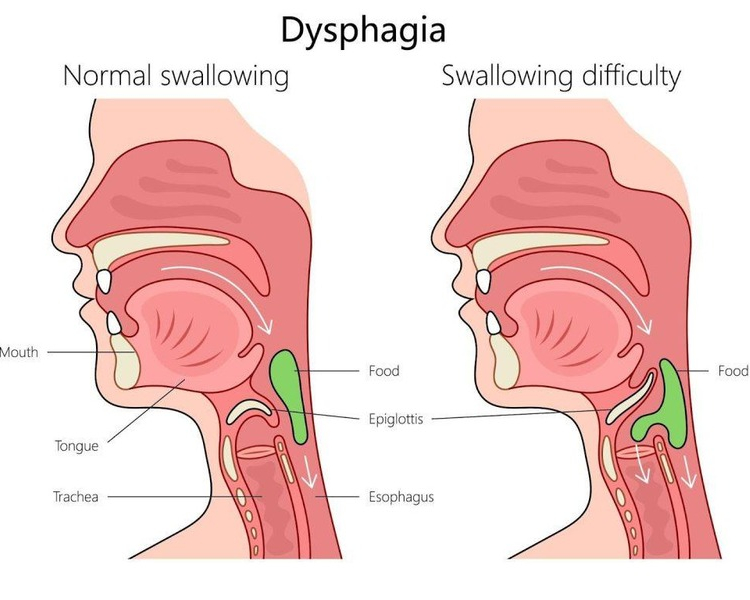
The main symptom of an esophageal stricture is difficulty swallowing, called dysphagia. Many people notice it first with solid foods such as meat or bread, and they may start cutting food into smaller pieces or drinking more water with meals.
Swallowing problems should be evaluated rather than ignored, especially when they are getting worse or come with weight loss. Read more about when an endoscopy is needed for difficulty swallowing.
Go to the nearest emergency room if:
Food is stuck and you cannot swallow your own saliva, or you have chest pain, trouble breathing or vomiting blood. A food impaction that will not pass needs emergency care.
Common symptoms of a stricture
- Food that sticks in the chest or throat
- Pills that feel stuck after swallowing
- Needing water to wash food down
- Pain or discomfort when swallowing
- Bringing back undigested food
- Coughing or choking while eating
- Unintended weight loss
A symptom alone does not confirm a diagnosis. Symptoms should be evaluated by a qualified medical professional.
How Is an Esophageal Stricture Stretched During Endoscopy?
During an upper endoscopy, Dr. Khan passes a thin, flexible camera through the mouth into the esophagus to locate the narrowing. He then widens it with one of two main tools, chosen based on the length, tightness and cause of the stricture. The stretch is usually done in measured steps rather than all at once.
Balloon dilation
A deflated balloon is passed through the endoscope and positioned across the narrowing. It is inflated to a set width for a short time, which stretches the stricture while the doctor watches through the camera.
Bougie dilation
Bougies are tapered, flexible dilators that are passed through the narrowed area, often over a guide wire placed during the endoscopy. Increasing sizes can be used to widen the stricture gradually.
Biopsies may be taken during the same procedure. If the cause is reflux, acid-reducing medicine is usually part of the plan afterward, and if it is eosinophilic esophagitis, treatment for the inflammation is still needed after dilation.
Does Food Get Stuck When You Swallow?
Dr. Khan can evaluate your swallowing, find the cause and explain whether esophageal dilation could help. New patients are welcome in Katy and Cypress.
Preparing for Esophageal Dilation and What to Expect
Always follow the instructions provided by the office. This overview shows the usual steps.
Evaluation
Dr. Khan reviews your symptoms and history and decides whether an upper endoscopy, and possibly dilation, is the right next step. Imaging is sometimes recommended first.
Before the procedure
You will be asked not to eat or drink for a period beforehand. Tell the team about blood thinners and diabetes medicines, and do not stop a prescription unless your doctor tells you to. Arrange for an adult driver.
During the procedure
You receive sedation, and the endoscopy with dilation usually takes about 15 to 30 minutes.
Recovery
You rest while the sedation wears off. A sore throat or mild chest discomfort is common. Most people start with liquids or soft foods, as instructed.
Follow-up
You will review biopsy results and next steps, such as reflux treatment. If swallowing trouble returns, dilation can often be repeated.
Risks and Safety of Esophageal Dilation
Esophageal dilation is a common procedure, and serious complications are uncommon. The most important risk is a tear (perforation) of the esophagus, which is rare but needs prompt treatment. Bleeding and reactions to sedation can also occur. A sore throat or mild chest discomfort for a day or so is common and expected.
Seek urgent medical care after dilation if you have:
- Severe chest, neck or upper abdominal pain
- Fever or chills
- Trouble breathing
- Vomiting blood or passing black stools
Insurance and Self-Pay Options
United Gastroenterology Associates participates with many major insurance plans. Coverage and benefits depend on your specific plan and must be verified. Please contact the office or your insurance carrier to verify benefits for your specific plan and service. Patients without insurance can ask about self-pay options for endoscopy.
Esophageal Dilation FAQs
Answers to common questions about esophageal dilation at United Gastroenterology Associates.
What procedure helps when the esophagus is narrowed and food gets stuck?
Esophageal dilation. During an upper endoscopy, the gastroenterologist gently stretches the narrowed area with a balloon or with tapered dilators called bougies. Many people swallow more easily afterward, and treating the cause of the narrowing, such as acid reflux, helps keep it from coming back.
Who performs esophageal dilation in Katy or Cypress?
At United Gastroenterology Associates, esophageal dilation is performed by Muhammad Ali Khan, MD, FACP, FASGE, a board-certified gastroenterologist who sees patients at the Katy office (23920 Katy Freeway, Suite 555) and the Cypress office (21216 Northwest Freeway, Suite 640). Call (346) 340-4414 to schedule an evaluation.
Can esophageal dilation treat a Schatzki ring?
Yes. A Schatzki ring is a thin ring of tissue near the lower end of the esophagus that can make solid food stick. Dilation during an upper endoscopy is the usual treatment, and some people need it repeated if symptoms return over time.
Is esophageal dilation painful?
The procedure is done with sedation, so most people do not feel it. Afterward, a sore throat or mild chest discomfort for a day or so is common. Severe chest or neck pain, fever or trouble breathing after dilation needs urgent medical attention.
Will I need more than one dilation?
Sometimes. A tight or long stricture may be stretched gradually over several sessions, and some strictures narrow again over months or years. Treating the underlying cause, such as reflux or eosinophilic esophagitis, lowers the chance of needing repeat dilation.
What can I eat after esophageal dilation?
Follow the instructions you receive. Many patients start with liquids or soft foods on the day of the procedure and return to their usual diet as advised, taking small bites and chewing well.
How long does esophageal dilation take?
The endoscopy with dilation usually takes about 15 to 30 minutes. Plan on extra time for check-in and recovery from sedation, and arrange for an adult to drive you home.
Esophageal Dilation Near Katy and Cypress
Dr. Khan evaluates swallowing problems at both offices of United Gastroenterology Associates, serving patients from Katy, Cypress, Fulshear, Richmond, Rosenberg and communities throughout Greater Houston.
United Gastroenterology Associates – Katy
Katy Freeway (I-10) near the Grand Parkway
- Address: 23920 Katy Freeway, Suite 555, Katy, TX 77494
- Phone: (346) 340-4414
- Hours: Monday–Friday, 8:30 AM–5:00 PM (closed 12:00–1:30 PM for lunch; last appointment 4:30 PM)
United Gastroenterology Associates – Cypress
Northwest Freeway (US-290) in Cypress
- Address: 21216 Northwest Freeway, Suite 640, Cypress, TX 77429
- Phone: (346) 340-4414
- Hours: Monday–Friday, 8:30 AM–5:00 PM (closed 12:00–1:30 PM for lunch; last appointment 4:30 PM)
Get Help for Trouble Swallowing
Food sticking, painful swallowing or a feeling that pills will not go down deserves an evaluation. Call (346) 340-4414 or request an appointment with Dr. Khan.
Sources
- American Society for Gastrointestinal Endoscopy. The role of endoscopy in the evaluation and management of dysphagia (guideline). asge.org
- National Institute of Diabetes and Digestive and Kidney Diseases. Upper GI Endoscopy. niddk.nih.gov
- MedlinePlus, U.S. National Library of Medicine. Swallowing Disorders. medlineplus.gov
This page provides general educational information and does not replace medical advice, diagnosis or treatment. Follow the preparation and diet instructions provided by your physician. For a medical emergency, call 911. Last updated October 5, 2026.