Trouble swallowing, medically known as dysphagia, is more than just an uncomfortable feeling. It can be a sign that something is affecting the normal movement of food from your mouth through your esophagus and into your stomach. Some causes are relatively simple to treat, while others require careful evaluation by a gastroenterologist.
Many patients delay seeking medical attention because they hope the problem will disappear on its own. They may avoid certain foods, eat more slowly, or drink extra water to help food go down. Although these adjustments may temporarily make swallowing easier, they do not always address the underlying cause.
Important Note
Difficulty swallowing can range from a temporary irritation to a condition that requires medical treatment. If food frequently feels stuck, swallowing becomes painful, or symptoms are getting worse, understanding the cause early can help prevent complications and improve your quality of life. This guide explains what dysphagia means, why it happens, and when seeing a GI specialist may be the right next step.
What Is Dysphagia and Why Does It Happen?
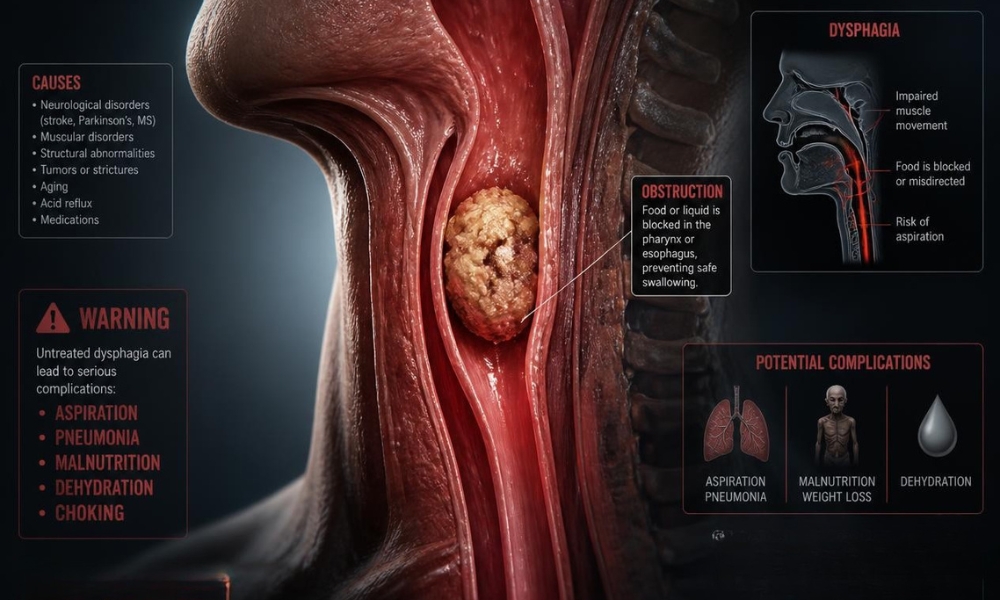
Dysphagia is the medical term for difficulty swallowing food, liquids, or saliva. It occurs when there is a problem with one or more parts of the swallowing process.
Swallowing may seem simple, but it is actually a highly coordinated process involving muscles, nerves, and the digestive tract. Dozens of muscles work together to move food from your mouth into your throat, through your esophagus, and finally into your stomach.
When something interferes with this process, you may notice symptoms such as:
- Food feeling stuck in your throat
- A sensation of pressure in your chest after eating
- Difficulty moving food downward
- Needing multiple swallows to clear food
- Coughing or choking while eating
- Pain when swallowing
- Regurgitation of food or liquids
- A feeling of a lump in the throat
Some people describe dysphagia as feeling like food “goes down the wrong way.” Others explain it as though food stops halfway between their throat and stomach.
The location of the sensation can sometimes provide clues. For example, difficulty starting a swallow may suggest a problem higher in the swallowing pathway, while food sticking after swallowing may point toward an issue involving the esophagus.
Why Does Food Feel Stuck in Your Throat or Chest?
The feeling that food is stuck usually happens when food movement through the esophagus is slowed, blocked, or disrupted.
The esophagus is the muscular tube that connects your throat to your stomach. Its job is to push food downward through coordinated muscle contractions.
If the esophagus becomes narrowed, inflamed, or affected by abnormal muscle movement, food may not pass normally. This can create the sensation that something is caught or trapped.
Patients often describe this feeling in different ways:
- “Food feels stuck after I swallow.”
- “I need water to push food down.”
- “It feels like food stops in my chest.”
- “I avoid certain foods because I am afraid they will get stuck.”
These symptoms can be stressful because eating is something people do every day. Over time, some individuals begin changing their eating habits, avoiding certain textures, or eating less because they worry about another uncomfortable episode.
Understanding the reason behind the swallowing problem is important because many causes can be successfully treated once identified.

Different Types of Trouble Swallowing
Not all swallowing problems are the same. Doctors often classify dysphagia based on where the difficulty occurs and what types of foods trigger symptoms.
Esophageal Dysphagia
Esophageal dysphagia occurs when food has trouble moving through the esophagus after swallowing begins.
Patients with esophageal dysphagia often report:
- Food sticking in the chest
- Difficulty with solid foods
- A need to drink liquids to help food pass
- Symptoms that occur after the swallowing process begins
Common causes may include narrowing of the esophagus, inflammation, acid reflux-related changes, or problems with esophageal muscle movement.
Oropharyngeal Dysphagia
Oropharyngeal dysphagia affects the earlier stage of swallowing involving the mouth and throat.
Symptoms may include:
- Trouble starting a swallow
- Coughing while eating or drinking
- Choking episodes
- Food or liquid entering the airway
- A sensation that food is not moving correctly from the throat
This type of swallowing difficulty may involve neurological, muscular, or structural causes and may require evaluation from different specialists depending on the situation.
Common Causes of Difficulty Swallowing
Difficulty swallowing can happen for many reasons. A proper diagnosis depends on understanding your symptoms, medical history, and how swallowing problems develop over time.
Acid Reflux and GERD
Acid reflux is one of the common digestive conditions associated with swallowing difficulties.
When stomach acid repeatedly flows back into the esophagus, it can irritate the lining and cause inflammation. Over time, chronic irritation may contribute to swelling, narrowing, or discomfort during swallowing.
Patients with GERD-related swallowing symptoms may also experience:
- Heartburn
- Acid taste in the mouth
- Chest discomfort
- Chronic cough
- Feeling like something is stuck in the throat
Persistent swallowing difficulty related to reflux should be evaluated because treatment may require more than occasional antacid use. Learn how GERD treatment can help when reflux affects swallowing.
United Gastro TX provides evaluation and treatment options for acid reflux and related digestive conditions. Learn more about acid reflux care here:
Acid Reflux Treatment in Houston
Esophageal Stricture (Narrowing of the Esophagus)
An esophageal stricture occurs when scar tissue causes the esophagus to become narrower than normal.
This narrowing can make it difficult for food to pass, especially solid foods such as meat, bread, or certain vegetables.
Some patients notice that symptoms gradually worsen over time. They may begin avoiding specific foods because swallowing becomes uncomfortable or unpredictable.
One treatment option may involve esophageal dilation, a procedure that gently widens the narrowed area to improve swallowing.
More information about this treatment option can be found here:
Eosinophilic Esophagitis (EoE)
Eosinophilic esophagitis, often called EoE, is a condition where immune cells called eosinophils build up in the lining of the esophagus, causing inflammation.
This inflammation can make swallowing uncomfortable and may create the sensation that food is getting stuck. Many patients with EoE describe episodes where solid foods suddenly become difficult to swallow or feel trapped in the chest.
EoE is increasingly recognized as a cause of swallowing difficulty, especially in people who experience:
- Repeated episodes of food getting stuck
- Difficulty swallowing solid foods
- History of allergies, asthma, eczema, or food sensitivities
- Long-standing swallowing discomfort
Diagnosis usually requires an upper endoscopy with biopsies of the esophagus. During this procedure, a gastroenterologist examines the esophageal lining and collects small tissue samples to check for inflammation.
Achalasia and Esophageal Muscle Disorders
Sometimes swallowing problems happen because the muscles and nerves controlling the esophagus do not work properly.
Achalasia is a rare swallowing disorder where the lower esophageal sphincter does not relax normally, making it difficult for food to move into the stomach.
People with achalasia may experience:
- Food sticking after swallowing
- Regurgitation of undigested food
- Chest discomfort
- Difficulty swallowing both solids and liquids
- Unintentional weight loss
Because achalasia can resemble other digestive problems, specialized testing is often needed to confirm the diagnosis.
Esophageal Rings and Webs
Structural changes inside the esophagus, such as rings or thin tissue membranes called webs, can sometimes narrow the passage where food travels.
A common example is a Schatzki ring, which is a thin narrowing near the lower esophagus. Some patients may have occasional episodes where solid food feels stuck, especially while eating quickly or consuming dry foods.
These conditions can often be identified during an upper endoscopy and may be treated during the same procedure depending on the findings.
Esophageal Cancer and Other Growths
Although less common, abnormal growths inside or near the esophagus can affect swallowing.
This is one reason doctors take persistent or worsening swallowing problems seriously. Early evaluation helps identify the cause and determine the appropriate treatment plan.
Most people with swallowing difficulty do not have cancer. However, symptoms such as progressive difficulty swallowing, unexplained weight loss, or persistent chest discomfort should always be discussed with a healthcare provider.
When Should You See a Gastroenterologist for Trouble Swallowing?
You should see a gastroenterologist if swallowing difficulty happens repeatedly, worsens over time, or affects your ability to eat normally.
Occasional difficulty swallowing may happen when eating too quickly or not chewing thoroughly. However, frequent episodes are different and may indicate an underlying issue involving the esophagus or digestive system.
You should consider scheduling a GI evaluation if you experience:
- Food frequently feeling stuck in your throat or chest
- Difficulty swallowing solid foods
- Difficulty swallowing liquids
- Pain when swallowing
- Needing to change your diet because of swallowing problems
- Repeated choking or coughing while eating
- Unexplained weight loss
- Symptoms that are becoming more frequent
A gastroenterologist specializes in conditions affecting the esophagus, stomach, intestines, liver, and digestive system. They can determine whether your symptoms require testing such as an upper endoscopy or other specialized evaluation.
Have symptoms like these?
Dr. Muhammad Ali Khan, a board-certified gastroenterologist and hepatologist, sees adults at our Katy and Cypress offices, serving patients across Greater Houston.
Warning Signs That Need Medical Attention
Some swallowing symptoms should not be delayed because they may indicate a more urgent problem.
Seek Medical Evaluation Promptly If You Experience:
- Food becoming completely stuck and unable to pass
- Difficulty swallowing that is rapidly worsening
- Unexplained weight loss
- Vomiting blood or signs of bleeding
- Severe chest pain after swallowing
- Repeated choking episodes
- Inability to swallow liquids or saliva
A complete blockage of food in the esophagus, sometimes called a food impaction, may require urgent medical attention because trapped food can cause complications if not treated.
If you suddenly feel that food is completely stuck and you cannot swallow liquids or saliva, seek emergency medical care.
Important Note
Many causes of swallowing difficulty are treatable, and experiencing dysphagia does not automatically mean something serious is happening. However, avoiding foods or adjusting your eating habits to manage symptoms can sometimes delay finding the real cause. A proper evaluation can provide answers and help you return to eating comfortably.
How Doctors Diagnose Swallowing Problems
Diagnosing dysphagia starts with understanding exactly what you are experiencing.
Your gastroenterologist may ask questions such as:
- Does food feel stuck in your throat or chest?
- Do you have trouble swallowing solids, liquids, or both?
- When did symptoms begin?
- Are symptoms getting worse?
- Do you experience heartburn, regurgitation, or chest discomfort?
- Have you lost weight unintentionally?
The answers help determine which tests may provide the most useful information.
Upper Endoscopy (EGD)
An upper endoscopy, also called EGD (esophagogastroduodenoscopy), is one of the most common tests used to evaluate swallowing problems.
During an EGD, a gastroenterologist uses a thin, flexible camera to examine the inside of the esophagus, stomach, and upper small intestine.
This allows doctors to look for:
- Esophageal narrowing
- Inflammation
- Acid reflux damage
- Eosinophilic esophagitis
- Ulcers
- Abnormal growths
- Food-related blockage causes
Small tissue samples may also be collected during the procedure if needed. These biopsies can provide important information that cannot be seen by appearance alone.
Learn more about this procedure:
Barium Swallow Study
A barium swallow is an imaging test where a patient drinks a contrast liquid that helps doctors observe how food and liquid move through the swallowing pathway.
This test may help identify:
- Narrowing areas
- Structural abnormalities
- Problems with swallowing coordination
- Movement problems within the esophagus
Esophageal Manometry
Esophageal manometry measures the muscle contractions and pressure inside the esophagus.
This test may be recommended when doctors suspect a movement disorder such as achalasia or another condition affecting how the esophagus pushes food toward the stomach.
Additional Testing
Depending on your symptoms, your doctor may recommend additional evaluation, including reflux testing or specialized studies to better understand the cause of your swallowing difficulty.
The goal of testing is not simply to identify the symptom. It is to understand why swallowing is difficult so treatment can target the underlying problem.
How Endoscopy Helps Evaluate and Treat Swallowing Problems
For many patients experiencing trouble swallowing, an upper endoscopy (EGD) is one of the most valuable diagnostic tools available. It allows a gastroenterologist to directly examine the esophagus instead of relying only on symptoms or imaging tests.
Unlike a standard X-ray, an endoscopy provides a close view of the inside lining of the digestive tract. This helps doctors identify problems that may explain why food feels stuck, swallowing feels uncomfortable, or symptoms keep returning.
During an EGD, a thin flexible tube with a small camera is gently guided through the mouth and into the esophagus, stomach, and first portion of the small intestine. The procedure is typically performed with sedation to help patients remain comfortable.
Depending on what is found, an endoscopy may allow the gastroenterologist to:
- Identify narrowing or blockages in the esophagus
- Evaluate inflammation caused by acid reflux
- Check for eosinophilic esophagitis
- Look for ulcers or other abnormalities
- Collect biopsies for further testing
- Perform certain treatments during the same procedure
For patients worried about the procedure, it is helpful to know that modern endoscopy is designed around patient comfort and safety. Many people are surprised by how quick and manageable the experience is compared with what they imagined.
Treatment Options for Trouble Swallowing or Food Stuck in the Throat
The right treatment for dysphagia depends on what is causing the swallowing problem. There is no single treatment that works for every patient because swallowing difficulty can develop from several different conditions.
Once the underlying cause is identified, treatment can be personalized to improve swallowing, reduce discomfort, and prevent future complications.
Esophageal Dilation for Narrowing of the Esophagus
When swallowing problems are caused by a narrowed esophagus, a procedure called esophageal dilation may help widen the narrowed area.
This treatment is commonly used for conditions such as esophageal strictures, where scar tissue causes the esophagus to become smaller and makes it harder for food to pass.
During dilation, a gastroenterologist carefully stretches the narrowed section to improve the passageway for food.
Patients who benefit from dilation often report improvements such as:
- Less sensation of food sticking
- Easier swallowing of solid foods
- Reduced fear around eating
- Improved quality of life
Because some narrowing conditions can return, follow-up care may be recommended depending on the underlying cause.
Learn more about this treatment option:
Treating Acid Reflux-Related Swallowing Problems
When GERD or chronic acid reflux contributes to swallowing difficulty, treatment focuses on reducing irritation and protecting the esophagus.
Depending on your condition, treatment may include:
- Prescription acid-reducing medications
- Lifestyle adjustments
- Dietary changes
- Evaluation for reflux-related damage
- Endoscopy when symptoms require further investigation
Although occasional heartburn is common, persistent reflux symptoms combined with difficulty swallowing deserve medical attention.
Long-term acid exposure can sometimes contribute to inflammation and structural changes in the esophagus.
United Gastro TX provides evaluation and treatment options for GERD and acid reflux symptoms:
Acid Reflux Treatment in Houston
Treatment for Eosinophilic Esophagitis
If testing confirms eosinophilic esophagitis, treatment typically focuses on reducing inflammation and preventing future swallowing problems.
Management may involve:
- Medication to reduce esophageal inflammation
- Dietary adjustments
- Allergy-related evaluation when appropriate
- Monitoring with follow-up examinations
Because EoE can cause repeated episodes of food getting stuck, early diagnosis can help prevent ongoing irritation and narrowing of the esophagus.
Managing Esophageal Motility Disorders
When swallowing difficulty results from problems with esophageal muscle movement, treatment depends on the specific disorder.
Some conditions may require medication, specialized procedures, or other interventions designed to improve how the esophagus moves food.
The treatment approach is based on test results, symptom severity, and how the condition affects daily life.
Get answers instead of guessing
Request a visit with Dr. Muhammad Ali Khan at our Katy and Cypress offices. Most major insurance plans are accepted and self-pay options are available.
Living With Swallowing Difficulty: Practical Tips While Seeking Care
Waiting for evaluation can feel frustrating, especially when eating becomes stressful. While these strategies do not replace medical treatment, they may help some people manage symptoms more comfortably while waiting for an appointment.
- Eat slowly and chew food thoroughly
- Take smaller bites
- Sit upright while eating
- Avoid rushing meals
- Pay attention to foods that trigger symptoms
- Drink enough fluids unless your doctor has advised otherwise
Some people naturally begin avoiding foods that feel difficult to swallow. While this may reduce discomfort temporarily, avoiding more and more foods can affect nutrition and quality of life.
The goal should not simply be adapting to the problem. The goal should be understanding why it is happening and treating the cause.
GI Care for Dysphagia in Cypress and Katy, TX
If you frequently feel like food is stuck in your throat, have difficulty swallowing, or experience discomfort while eating, an evaluation by an experienced gastroenterologist can help identify the cause.
At United Gastroenterology Associates, PLLC, patients throughout Cypress, Katy, and the greater Houston area receive specialized digestive care focused on accurate diagnosis and personalized treatment.
The practice is led by Dr. Muhammad Ali Khan, MD, FACP, FASGE, a board-certified gastroenterologist and hepatologist with extensive experience diagnosing and treating digestive disorders.
Dr. Khan combines advanced gastroenterology expertise with a patient-focused approach, taking time to understand symptoms, explain findings, and develop treatment plans based on each patient's needs.
For swallowing concerns, United Gastro TX provides evaluation for conditions affecting the esophagus, including:
- Difficulty swallowing (dysphagia)
- Acid reflux-related esophageal problems
- Esophageal narrowing
- Conditions requiring upper endoscopy evaluation
- Digestive tract disorders affecting eating comfort
Diagnostic and treatment services may include:
- Upper endoscopy (EGD)
- Esophageal evaluation
- Esophageal dilation when appropriate
- Comprehensive digestive health assessment
United Gastroenterology Associates
Cypress Location
21216 Northwest Freeway, Suite 640
Cypress, TX 77429
Katy Location
23920 Katy Fwy, Suite 555
Katy, TX 77494
Phone: (346) 340-4414
If swallowing problems are affecting your meals, causing anxiety around eating, or becoming more frequent, scheduling a consultation can help you understand what is happening and what treatment options may be available.
Frequently Asked Questions About Trouble Swallowing and Dysphagia
Why does food feel stuck in my throat?
Food may feel stuck because of problems affecting the esophagus, including narrowing, inflammation, acid reflux-related changes, or muscle movement disorders. A gastroenterologist can help determine the specific cause.
Is difficulty swallowing always serious?
No. Some causes of swallowing difficulty are mild and treatable. However, repeated or worsening swallowing problems should be evaluated because they may indicate an underlying condition that requires treatment.
When should I see a GI doctor for trouble swallowing?
You should see a gastroenterologist if swallowing problems happen repeatedly, food feels stuck, symptoms are worsening, you are losing weight, or eating has become difficult or stressful.
What test is used to diagnose difficulty swallowing?
An upper endoscopy (EGD) is commonly used to evaluate swallowing problems because it allows doctors to directly examine the esophagus and identify inflammation, narrowing, or other abnormalities.
Can acid reflux cause trouble swallowing?
Yes. Chronic acid reflux can irritate the esophagus and contribute to inflammation, narrowing, or discomfort when swallowing.
Can an endoscopy fix swallowing problems?
In some cases, yes. During an endoscopy, doctors may identify problems and perform certain treatments, such as dilation of a narrowed esophagus, depending on the cause.
What happens if food gets completely stuck?
If food becomes completely stuck and you cannot swallow liquids or saliva, this may require urgent medical attention. Seek immediate care if you experience a complete blockage.
Sources
Medical Disclaimer
This article is intended for educational purposes only and should not replace professional medical advice, diagnosis, or treatment. If you experience persistent difficulty swallowing, food getting stuck, or other concerning symptoms, consult a qualified healthcare professional.
Do not ignore swallowing problems. Getting the right evaluation can help identify the cause and guide you toward effective treatment.
United Gastroenterology Associates provides expert digestive care for patients in Cypress, Katy, and the greater Houston area.
Call (346) 340-4414 to schedule a consultation.
Where to be seen in Katy and Cypress
United Gastroenterology Associates has two offices: Katy, at 23920 Katy Freeway, Suite 555, next to Memorial Hermann Katy Hospital, and Cypress, at 21216 Northwest Freeway, Suite 640, on US-290. Both are open Monday through Friday, 8:30 AM to 5:00 PM, closed for lunch from 12:00 to 1:30 PM, and serve patients from Fulshear, Richmond and across Greater Houston. Call (346) 340-4414 for either office.
Katy office
23920 Katy Freeway, Suite 555
Katy, TX 77494
Memorial Hermann Medical Plaza 1
Next steps
If you are dealing with trouble swallowing or any ongoing digestive concern, a focused evaluation can find the cause and start the right treatment. Dr. Muhammad Ali Khan and the team at United Gastroenterology Associates see adults from Katy, Cypress, Fulshear, Richmond, Greater Houston and across Texas. Call (346) 340-4414 or request an appointment today.
If you have severe pain, vomit blood, pass black stools or have chest pain, call 911 or go to the nearest emergency room.