
IBS and IBD can sound almost identical, especially when you are searching for answers about ongoing abdominal pain, diarrhea, constipation or changes in your bowel habits. But IBS vs IBD is not simply a difference in terminology. Irritable bowel syndrome and inflammatory bowel disease are two distinct groups of digestive conditions with different causes, diagnostic approaches and treatment goals.
IBS is a disorder of gut-brain interaction that can cause abdominal pain, bloating and changes in bowel habits without the intestinal inflammation and tissue damage typically seen in IBD. IBD is a group of chronic inflammatory diseases—primarily Crohn’s disease and ulcerative colitis—that cause inflammation in the gastrointestinal tract and can lead to tissue injury and complications.
That distinction matters. Someone with IBS may have significant pain and bowel symptoms even when testing does not show visible inflammation. Someone with IBD may have symptoms caused by active inflammation that require medical treatment to control the disease and prevent complications.
If you have been dealing with digestive symptoms for weeks or months, it is understandable to wonder which condition might explain them. The symptoms can overlap, but there are important clues that can help you understand why a gastroenterologist may recommend certain tests and why treatment for IBS is different from treatment for IBD.
Important Note
Digestive symptoms can be frustrating because many different conditions can cause abdominal pain, diarrhea, bloating or changes in bowel habits. Having these symptoms does not automatically mean you have IBD, and having normal tests does not mean your symptoms are not real. Understanding the difference between IBS and IBD can help you recognize when symptoms may need further evaluation and why an individualized diagnosis is important.
IBS vs IBD: What Is the Main Difference?
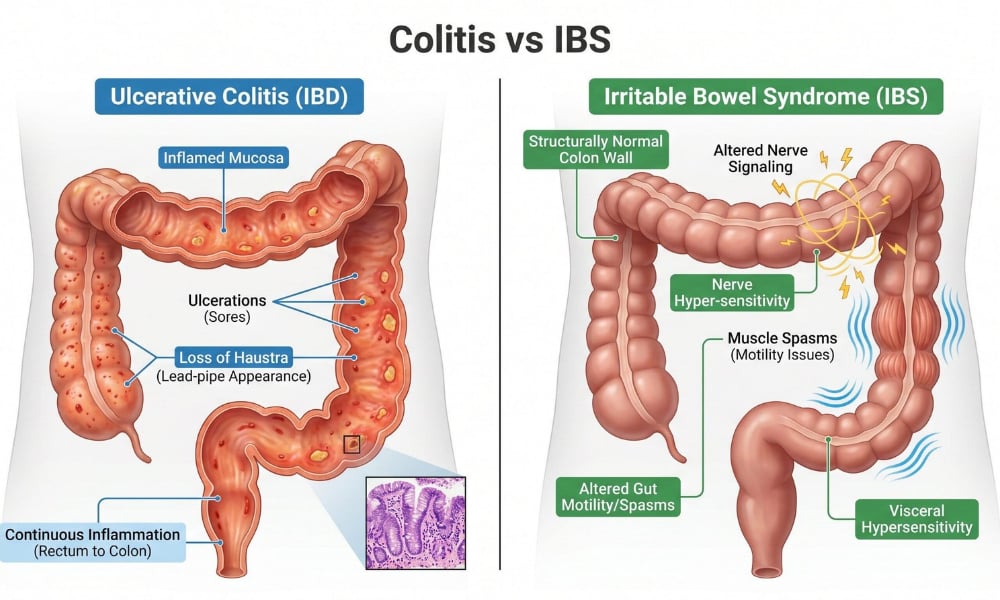
The biggest difference between IBS and IBD is that IBD involves chronic inflammation of the gastrointestinal tract, while IBS does not cause the same type of inflammatory damage to the digestive tract.
IBS, or irritable bowel syndrome, is considered a disorder of gut-brain interaction. It can affect how the intestines move, how the digestive system responds to food and stretching, and how the brain and gut communicate. People with IBS can experience very real and sometimes severe symptoms even though standard examinations may not show ulcers or destructive inflammation.
IBD, or inflammatory bowel disease, includes Crohn’s disease and ulcerative colitis. These are chronic inflammatory conditions in which the immune system plays an important role. Inflammation can damage intestinal tissue and, depending on the type and severity of disease, may lead to ulcers, bleeding, narrowing of the intestine, fistulas or other complications.
In simple terms, IBS primarily involves abnormal digestive function and gut sensitivity, while IBD involves measurable inflammation and structural changes in the gastrointestinal tract.
What Is IBS?
IBS is a chronic digestive disorder characterized by recurring abdominal pain associated with changes in bowel habits.
Some people with IBS primarily experience constipation. This is often called IBS-C. Others primarily have diarrhea, known as IBS-D. Some people alternate between constipation and diarrhea, which may be described as IBS-M, or mixed IBS.
Bloating is also extremely common. A person may feel full, swollen or uncomfortable after eating even when there is no dangerous abnormality inside the digestive tract.
IBS can be frustrating precisely because symptoms may be significant while routine tests do not show obvious structural disease. Patients sometimes worry that a normal colonoscopy means the doctor did not find anything and therefore their symptoms are being dismissed.
That is not the case. IBS is a recognized medical condition, and its symptoms can substantially affect quality of life.
What Is IBD?
Inflammatory bowel disease is a group of chronic conditions characterized by inflammation in the digestive tract.
The two major types are Crohn’s disease and ulcerative colitis.
Crohn’s disease can affect different parts of the gastrointestinal tract, from the mouth to the anus, although it commonly involves the small intestine and/or colon. The inflammation can affect deeper layers of the intestinal wall and may occur in patches.
Ulcerative colitis primarily affects the colon and rectum. The inflammation typically begins in the rectum and extends continuously through part of the colon or the entire colon.
Both conditions can cause periods when symptoms become active and periods when symptoms improve. The goal of treatment is not only to make a person feel better but also to control inflammation and reduce the risk of long-term complications.
What Is Crohn’s Disease?
Crohn’s disease is a form of IBD that can cause inflammation anywhere along the gastrointestinal tract.
Symptoms can include abdominal pain, persistent diarrhea, fatigue, reduced appetite, weight loss and, in some cases, blood in the stool.
Because Crohn’s disease can affect different sections of the digestive tract, symptoms vary considerably from person to person.
Some patients develop complications such as strictures, fistulas or abscesses. Others may have relatively mild disease that responds well to treatment.
For patients with suspected Crohn’s disease, diagnosis often requires a combination of medical history, laboratory testing, stool testing, endoscopy, imaging and tissue biopsies rather than relying on one symptom alone.
Learn more about Crohn’s disease specialist care in Cypress and Katy.
What Is Ulcerative Colitis?
Ulcerative colitis is a chronic inflammatory condition that affects the colon and rectum.
Common symptoms include diarrhea, rectal bleeding, urgency and abdominal discomfort. Some people may feel that they urgently need to use the bathroom even when little stool is passed.
The inflammation primarily affects the inner lining of the colon. The extent and severity of disease can vary from one person to another.
Like Crohn’s disease, ulcerative colitis can alternate between active periods and periods of improvement. Treatment aims to control inflammation, relieve symptoms and maintain remission.
You can learn more about ulcerative colitis specialist care.
What Symptoms Do IBS and IBD Have in Common?
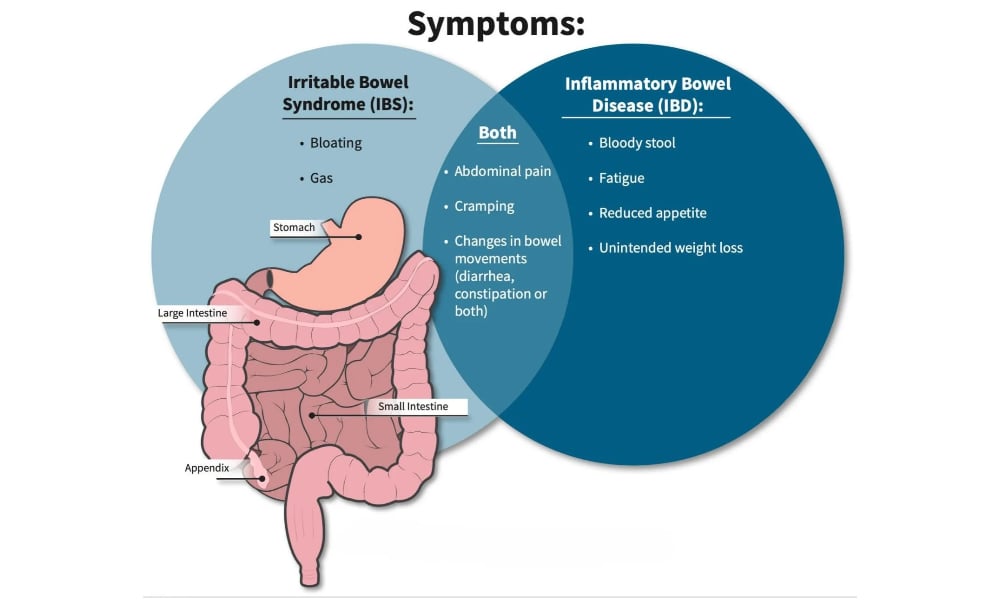
IBS and IBD can both cause abdominal pain, diarrhea, changes in bowel habits and fatigue, which is one reason they can be confused.
People with either condition may describe cramping or discomfort in the abdomen. Both can interfere with work, school, travel and social activities.
Bloating is especially common with IBS, while IBD may also cause bloating depending on the location and severity of inflammation or complications.
Diarrhea can occur in both conditions. However, the reason for diarrhea and the other symptoms accompanying it may be very different.
This is why a symptom checklist alone cannot reliably distinguish IBS from IBD.
How Are IBS and IBD Symptoms Different?
IBD is more likely than IBS to cause objective signs of inflammation, gastrointestinal bleeding, significant unexplained weight loss, fever, anemia or other systemic effects.
People with IBS commonly experience abdominal pain related to bowel movements, bloating and changes in stool frequency or consistency. Symptoms may fluctuate and can sometimes be associated with meals, stress or other triggers.
People with active IBD may experience persistent diarrhea, blood or mucus in the stool, urgency, nighttime bowel movements, weight loss, fever or significant fatigue.
These differences are not absolute. Not every person with IBD has every warning sign, and IBS symptoms can be extremely uncomfortable. But the presence of certain features may make a gastroenterologist more concerned about inflammation or another underlying condition.
Is Abdominal Pain More Common in IBS or IBD?
Abdominal pain can occur in both IBS and IBD, but its pattern and accompanying symptoms are important.
In IBS, abdominal pain is a central part of the condition. It may improve or change after a bowel movement and can occur alongside constipation, diarrhea or both.
With IBD, abdominal pain may result from active intestinal inflammation or complications. The location and severity can vary depending on whether the disease involves the small intestine, colon or another portion of the digestive tract.
Severe or persistent abdominal pain should not automatically be attributed to IBS, particularly if it is accompanied by fever, vomiting, bleeding, weight loss or other concerning symptoms.
Is Diarrhea Different With IBS and IBD?
Diarrhea can occur with both IBS and IBD, but persistent inflammatory diarrhea may be accompanied by signs that suggest an underlying intestinal disease.
IBS-related diarrhea may occur alongside abdominal pain, urgency and bloating. Some people notice that certain foods, stress or changes in routine influence their symptoms.
IBD-related diarrhea can occur because inflammation interferes with the normal function of the intestinal lining. People may also experience blood, mucus, urgency, nighttime bowel movements or unexplained weight loss.
If diarrhea persists, particularly if you are waking during the night to have bowel movements or noticing blood in the stool, it is important to speak with a healthcare professional.
Is Blood in the Stool More Suggestive of IBD?
Blood in the stool can occur with IBD, particularly ulcerative colitis, but blood does not automatically mean someone has IBD.
Rectal bleeding can have several causes, including hemorrhoids, anal fissures, infections, polyps and other gastrointestinal conditions.
However, blood associated with persistent diarrhea, urgency, abdominal pain or other inflammatory symptoms deserves medical evaluation.
Bleeding should not be assumed to be “just hemorrhoids” without considering the complete clinical picture.
For additional information, see our resource on blood in stool and when to see a GI doctor.
Is Bloating More Common in IBS?
Bloating is particularly common in IBS and is often one of the symptoms that bothers patients the most.
People with IBS may experience a sensation of abdominal pressure or fullness that seems disproportionate to what they have eaten. Some develop visible abdominal distension as well.
Bloating can also occur in IBD, especially when inflammation, altered intestinal movement or complications affect the passage of food and stool.
However, persistent bloating by itself is much more commonly associated with functional digestive disorders, constipation, dietary factors and other non-inflammatory conditions than with active IBD.
Does IBS Cause Weight Loss?
Significant unexplained weight loss is not considered a typical feature of IBS and should prompt medical evaluation.
Some people with IBS may lose weight intentionally because they change their diet, avoid foods they believe trigger symptoms or eat less because they are afraid of discomfort.
That is different from losing weight without trying.
Unintentional weight loss can occur with active IBD and several other gastrointestinal conditions. If your weight is dropping without an intentional change in diet or exercise, tell your healthcare provider.
Can IBS and IBD Both Cause Fatigue?
Yes, but the reasons may differ.
People with IBS may experience fatigue because chronic abdominal symptoms, disrupted sleep, dietary restrictions and the emotional burden of managing unpredictable bowel symptoms can be exhausting.
With active IBD, fatigue can also result from ongoing inflammation, anemia, nutritional deficiencies, poor sleep or the body’s response to chronic disease.
Severe or persistent fatigue, particularly when accompanied by weight loss, bleeding or other systemic symptoms, deserves evaluation.
Does IBS Cause Intestinal Inflammation?
IBS does not cause the same type of chronic destructive intestinal inflammation seen in Crohn’s disease and ulcerative colitis.
This is one of the most important differences between the two conditions.
People with IBS can have changes in gut function, sensitivity and interactions between the nervous system and digestive tract. Some research has explored subtle immune and inflammatory changes in IBS, but IBS is not classified as an inflammatory bowel disease and does not typically produce the tissue damage characteristic of active IBD.
IBD, on the other hand, can produce visible and microscopic inflammation that doctors can evaluate using endoscopy, biopsies, imaging and laboratory or stool markers.
How Is IBS Diagnosed?
IBS is generally diagnosed based on symptoms and medical history while considering whether another condition could better explain them.
Your physician may ask about abdominal pain, bowel frequency, stool consistency, urgency, bloating and how symptoms relate to bowel movements.
Depending on your age, symptoms, medical history and risk factors, your doctor may order blood or stool tests or other studies to rule out conditions that can mimic IBS.
There is no single blood test that simply says “you have IBS.” Diagnosis often involves recognizing a consistent symptom pattern and making sure important alternative diagnoses have been appropriately considered.
How Is IBD Diagnosed?
IBD diagnosis usually requires objective evidence of inflammation or intestinal disease.
Your gastroenterologist may use blood tests to look for anemia or signs of inflammation, stool testing to assess intestinal inflammation or infection, and imaging or endoscopy to examine the digestive tract.
Colonoscopy with biopsies is particularly important in evaluating ulcerative colitis and many cases of Crohn’s disease involving the colon or terminal ileum.
Depending on symptoms, physicians may also use upper endoscopy, CT or MRI-based imaging, capsule endoscopy or other specialized studies.
The diagnosis is based on the combination of symptoms, test results, endoscopic findings, imaging and tissue examination rather than one test alone.
Can a Colonoscopy Tell the Difference Between IBS and IBD?
A colonoscopy can help identify inflammatory changes associated with IBD and can also help rule out other causes of bowel symptoms, but a normal colonoscopy does not mean that a person’s IBS symptoms are not real.
During colonoscopy, the gastroenterologist can examine the lining of the colon and rectum and look for inflammation, ulcers, bleeding, polyps or other abnormalities. Biopsies can also be collected even when the lining looks relatively normal if clinically appropriate.
In many patients with IBS, the colonoscopy appears normal because IBS does not typically cause the structural inflammation seen in IBD.
This distinction can actually be reassuring. A normal examination can help exclude several concerning conditions and support a functional diagnosis when the symptoms fit.
What Tests Help Distinguish IBS From IBD?
There is no single test that perfectly separates IBS from IBD in every patient.
Blood tests may help identify anemia, inflammation or nutritional problems. Stool tests can sometimes measure markers of intestinal inflammation and can also help evaluate infection.
One commonly used group of stool markers includes fecal calprotectin and fecal lactoferrin. These can help identify intestinal inflammation and may be useful when a physician is trying to distinguish an inflammatory condition from a functional disorder.
However, test results must be interpreted in context. A laboratory result should not be used by itself to diagnose IBD or rule out every possible gastrointestinal disease.
Why Might a Gastroenterologist Recommend Endoscopy?
Endoscopy allows a physician to directly examine the digestive tract and obtain tissue samples when necessary.
For suspected IBD, colonoscopy is often an important diagnostic tool because it allows the physician to inspect the colon and rectum for inflammation, ulcers and other abnormalities.
In certain situations, upper endoscopy may be appropriate, particularly when Crohn’s disease or another upper gastrointestinal condition is being considered.
The procedure your doctor recommends depends on the location of your symptoms and the clinical question that needs to be answered.
Patients can learn more about gastroenterology treatments and procedures and colorectal evaluation and screening.
How Is IBS Treated?
IBS treatment focuses on controlling symptoms, improving bowel function and helping patients maintain a better quality of life.
Treatment varies depending on whether constipation, diarrhea or mixed bowel symptoms predominate.
Dietary changes may be helpful for some patients. A healthcare professional may recommend identifying individual triggers or, in selected cases, a structured low-FODMAP approach with appropriate guidance.
Medications may also be used to manage constipation, diarrhea, abdominal pain or other specific symptoms.
Stress management, regular physical activity and adequate sleep can also be important because the gut and nervous system communicate continuously.
The objective is not to eliminate every digestive sensation. It is to reduce symptoms enough that they no longer control your life.
How Is IBD Treated?
IBD treatment focuses on controlling intestinal inflammation, achieving remission and preventing complications.
Treatment may include medications that target different parts of the immune and inflammatory pathways. Depending on the condition and severity, physicians may use aminosalicylates, corticosteroids for selected situations, immunomodulators, biologic therapies or other targeted medications.
Some patients require surgery, particularly when complications develop or medical treatment cannot adequately control the disease.
Treatment is individualized. The goal is not simply to make diarrhea or abdominal pain disappear for a few days. Controlling the underlying inflammation is an important part of protecting long-term digestive health.
What Does Remission Mean in IBD?
Remission means that IBD activity is substantially reduced or controlled, but the exact definition can vary depending on symptoms, laboratory findings, endoscopic findings and the specific disease.
A patient may feel better while some inflammation remains. That is why physicians may use blood tests, stool markers, imaging or endoscopy to monitor disease activity rather than relying entirely on symptoms.
This is another major difference from IBS. In IBS, symptom control is generally the central focus. In IBD, physicians also need to monitor the underlying inflammatory process.
What Is an IBD Flare?
An IBD flare is a period when inflammatory bowel disease becomes more active and symptoms worsen.
Symptoms can include increased diarrhea, abdominal pain, rectal bleeding, urgency, fatigue and weight loss. The exact pattern varies between Crohn’s disease and ulcerative colitis and from patient to patient.
Someone with known IBD who notices a significant change from their normal symptoms should contact their healthcare team rather than assuming it is simply a temporary stomach bug.
Can Stress Cause IBS?
Stress does not mean IBS is “all in your head.”
The digestive tract and nervous system communicate through complex pathways often referred to as the gut-brain axis. Emotional stress can influence intestinal movement, sensitivity and the perception of digestive symptoms.
For some people, periods of stress coincide with more abdominal pain, urgency, diarrhea or constipation.
Managing stress does not mean the symptoms are imaginary. It is one part of treating a condition that involves communication between the brain and digestive system.
Can Stress Cause IBD?
Stress does not cause Crohn’s disease or ulcerative colitis, although stress can affect how a person experiences and manages chronic illness.
Someone with IBD may notice that stressful periods make symptoms feel more difficult to manage. Sleep disruption, changes in eating habits and medication routines can also affect overall well-being.
However, active intestinal inflammation requires appropriate medical management and should not be attributed solely to stress.
Is the Diet for IBS and IBD the Same?
No. There is no single diet that applies to both IBS and IBD.
Dietary needs depend on the specific condition, symptoms, disease activity and nutritional status.
People with IBS may benefit from identifying individual food triggers or working with a dietitian on a structured dietary approach.
People with active IBD may have increased nutritional needs, food restrictions due to symptoms or complications, and in some cases deficiencies that require attention.
During an IBD flare, simply eliminating more and more foods can sometimes make it harder to obtain adequate nutrition. Dietary changes should therefore be individualized rather than based solely on online food lists.
Can IBS Cause Complications Like IBD?
IBS does not cause the intestinal ulcers, strictures, fistulas and other tissue-damaging complications associated with active Crohn’s disease or ulcerative colitis.
However, IBS can still have a substantial impact on quality of life. Frequent pain, unpredictable bowel movements, urgency and dietary restrictions can interfere with travel, work, social activities and emotional well-being.
IBD can cause both symptoms and physical complications because inflammation can damage intestinal tissue.
Understanding this distinction helps explain why IBD requires ongoing disease monitoring even when symptoms improve.
Does IBD Increase Colon Cancer Risk?
Some people with long-standing inflammatory bowel disease involving the colon have an increased risk of colorectal cancer compared with the general population.
The level of risk varies depending on factors such as the duration and extent of disease, the degree of inflammation and other individual risk factors.
For this reason, people with certain forms of longstanding IBD may need specialized colorectal cancer surveillance based on their gastroenterologist’s recommendations.
This is different from IBS, which does not itself cause colorectal cancer.
When Should You See a Gastroenterologist for IBS-Like Symptoms?
Consider seeing a gastroenterologist if digestive symptoms persist, recur frequently, interfere with daily activities or are accompanied by warning signs.
You do not need to wait until symptoms become unbearable. A gastroenterologist can help determine whether the pattern is consistent with IBS or whether testing is needed to investigate IBD or another condition.
Warning signs that deserve particular attention include blood in the stool, unexplained weight loss, persistent fever, anemia, nighttime diarrhea, persistent vomiting, severe abdominal pain or a significant change in bowel habits.
These symptoms do not automatically mean IBD, but they make medical evaluation more important.
When Are IBS or IBD Symptoms an Emergency?
Most IBS symptoms are not emergencies, although severe symptoms can still require medical evaluation.
For someone with known IBD, severe abdominal pain, heavy rectal bleeding, persistent vomiting, high fever, dehydration, severe weakness or other rapidly worsening symptoms may require urgent medical attention.
Severe abdominal swelling accompanied by intense pain, repeated vomiting or an inability to pass stool or gas can also represent a potentially serious intestinal problem.
If symptoms are severe or rapidly worsening, do not wait for a routine appointment.
IBS and IBD Care in Cypress, Katy and the Houston Area
If you are experiencing ongoing abdominal pain, bloating, diarrhea, constipation or changes in bowel habits, determining whether the symptoms fit IBS, IBD or another digestive condition is an important first step.
United Gastro TX provides gastroenterology care for patients in Cypress, Katy and surrounding Houston-area communities. Learn more about IBS specialist care in Cypress and Katy or explore our information about Crohn’s disease specialist care and ulcerative colitis specialist care.
You can also review our broader information about inflammatory bowel disease management and gastrointestinal symptoms and conditions.
Persistent Digestive Symptoms Deserve the Right Diagnosis
IBS and IBD can share symptoms, but they require very different approaches. If abdominal pain, diarrhea, constipation, bloating or bowel changes keep returning, a gastroenterology evaluation can help determine what is really happening.
Frequently Asked Questions About IBS vs IBD
What is the main difference between IBS and IBD?
IBS is a disorder of gut-brain interaction that causes symptoms such as abdominal pain, bloating and changes in bowel habits without the chronic intestinal inflammation characteristic of IBD. IBD includes Crohn’s disease and ulcerative colitis and involves inflammation that can damage digestive tract tissue.
Is IBS an inflammatory bowel disease?
No. IBS and inflammatory bowel disease are different conditions. IBS does not cause the chronic intestinal inflammation and tissue damage associated with Crohn’s disease and ulcerative colitis.
Which is worse, IBS or IBD?
They are different conditions and cannot simply be ranked as better or worse. IBS can significantly affect quality of life, while IBD can cause intestinal inflammation and complications that require ongoing medical treatment and monitoring.
Can IBS turn into IBD?
No. IBS does not transform into Crohn’s disease or ulcerative colitis. However, someone initially thought to have IBS may later be diagnosed with IBD if new symptoms or test results provide evidence of intestinal inflammation.
Can IBS cause blood in the stool?
Blood in the stool is not considered a typical symptom of IBS and should be evaluated rather than automatically attributed to IBS. Rectal bleeding can have many causes, including hemorrhoids, fissures, inflammatory bowel disease and other gastrointestinal conditions.
Can IBS cause weight loss?
Significant unexplained weight loss is not typical of IBS. Intentional weight loss caused by dietary changes is different, but unintentional weight loss should be discussed with a healthcare professional.
Can you have IBS and IBD at the same time?
Yes. A person with IBD can also experience IBS-type symptoms. Persistent abdominal pain, bloating or bowel changes may continue even when inflammatory disease appears controlled, so your gastroenterologist may need to determine whether symptoms are caused by active inflammation, IBS-type symptoms or another condition.
Does IBS show up on a colonoscopy?
IBS generally does not cause the visible intestinal abnormalities associated with inflammatory bowel disease, so a colonoscopy may appear normal. A normal colonoscopy can help rule out other conditions when the patient’s symptoms and clinical history are consistent with IBS.
Does IBD show up on a colonoscopy?
Colonoscopy can identify inflammation, ulcers and other changes associated with ulcerative colitis and some forms of Crohn’s disease. Biopsies may also be taken to examine tissue under a microscope.
Can a blood test tell if you have IBS or IBD?
There is no single blood test that diagnoses IBS. Blood tests can help identify anemia, inflammation or other abnormalities that may support further evaluation for IBD or other conditions. Additional testing may be necessary.
Is diarrhea more likely to be IBS or IBD?
Diarrhea can occur with both. IBS-related diarrhea commonly occurs with abdominal pain and other functional bowel symptoms, while IBD-related diarrhea may occur with blood, urgency, nighttime symptoms, weight loss or other signs of inflammation.
Is bloating more likely to be IBS or IBD?
Bloating is very common in IBS, although it can also occur with IBD. Bloating alone cannot distinguish between the two conditions.
Can stress cause IBS symptoms?
Stress can influence gut-brain communication and may worsen IBS symptoms in some people. This does not mean IBS is psychological or imaginary. It reflects the complex interaction between the nervous system and digestive tract.
Can stress cause an IBD flare?
Stress does not cause IBD, but stressful periods can affect how someone experiences symptoms and manages a chronic condition. Active intestinal inflammation still requires appropriate medical evaluation and treatment.
The Bottom Line: IBS vs IBD
IBS and IBD may share symptoms, but they are fundamentally different conditions.
IBS is a disorder of gut-brain interaction that commonly causes abdominal pain, bloating and changes in bowel habits without the destructive intestinal inflammation seen in IBD. Crohn’s disease and ulcerative colitis are forms of IBD in which inflammation can damage the gastrointestinal tract and cause complications.
If your symptoms include abdominal pain, diarrhea, constipation or bloating, it does not automatically mean you have IBD. But symptoms such as blood in the stool, unexplained weight loss, persistent fever, nighttime diarrhea, anemia, severe abdominal pain or persistent vomiting should prompt medical evaluation.
Perhaps the most important takeaway is that you do not have to diagnose yourself based on symptoms alone. IBS, IBD and several other gastrointestinal conditions can overlap in how they feel. A gastroenterologist can look at the complete picture—including your symptoms, medical history, laboratory results, stool testing, imaging and, when appropriate, endoscopy—to determine what evaluation makes sense.
Getting the right diagnosis is the foundation for getting the right treatment. If digestive symptoms are becoming a regular disruption to your life, it is worth having a conversation with a healthcare professional rather than continuing to guess at the cause.
Medical Disclaimer: This article is intended for general educational purposes and does not replace personalized medical advice, diagnosis or treatment. IBS and IBD can have overlapping symptoms, and only a qualified healthcare professional can determine the appropriate diagnosis and treatment. Seek urgent medical attention for severe abdominal pain, significant bleeding, persistent vomiting, severe dehydration, fainting or rapidly worsening symptoms.