Does stress make acid reflux worse?
Yes, stress can make acid reflux worse. Research suggests stress does not greatly increase the amount of acid the stomach makes, but it makes the esophagus more sensitive to acid, so the same amount of reflux feels more painful. Stress also disrupts sleep and often leads to habits that trigger reflux, such as skipped meals, large late meals, more coffee or alcohol, smoking and less exercise.
How stress feeds reflux
- SensitivityStress lowers the threshold for feeling heartburn, so normal reflux hurts more.
- HabitsLate meals, comfort food, caffeine, alcohol and smoking increase reflux.
- SleepPoor sleep heightens pain perception and can worsen night-time reflux.
Why does heartburn feel worse when I am anxious?
Heartburn feels worse during anxiety because the gut and brain are tightly linked through nerves and stress hormones. When you are anxious, the brain amplifies signals from the esophagus, so you notice and feel reflux more intensely. Anxiety can also cause chest tightness, a lump-in-the-throat feeling and stomach upset that overlap with reflux symptoms.
This is real physical sensitivity, not imagination. It is also why some people have heartburn with normal acid levels, a condition called reflux hypersensitivity or functional heartburn, which responds to treatments that calm the gut-brain connection.
Have symptoms like these?
Dr. Muhammad Ali Khan, a board-certified gastroenterologist and hepatologist, sees adults at our Katy and Cypress offices, serving patients across Greater Houston.
Can stress cause GERD?
Stress alone is not thought to cause GERD, which is driven mainly by a weak valve between the esophagus and stomach, a hiatal hernia, extra weight and other physical factors. But stress can bring out symptoms in people who already have reflux and can make GERD harder to control. Managing stress is a useful part of a reflux plan, not a replacement for medical treatment.
| Stress habit | Effect on reflux | Try instead |
|---|---|---|
| Skipping meals, then a large dinner | Overfull stomach late in the day | Regular smaller meals, earlier dinner |
| Extra coffee | Triggers reflux in some people | One smaller cup with food, or decaf |
| Alcohol to unwind | Relaxes the esophageal valve | Herbal non-mint tea, a short walk |
| Late-night screen time | Short sleep, heightened sensitivity | A regular wind-down routine |
| Smoking | Weakens the valve and slows healing | Quit support from your doctor |
How can I reduce stress-related reflux?
To reduce stress-related reflux, combine reflux habits with stress management: eat regular, smaller meals and finish dinner early, limit caffeine and alcohol, keep a regular sleep schedule, get daily physical activity, and practice relaxation such as slow diaphragmatic breathing, mindfulness or yoga. Diaphragmatic breathing may also strengthen the muscles that help keep acid in the stomach.
- Practice slow belly breathing for 5 to 10 minutes twice a day
- Walk for 20 to 30 minutes most days, but not right after a large meal
- Keep a consistent bedtime and raise the head of your bed
- Plan regular meals so you do not arrive at dinner starving
- Talk to your doctor about counseling or stress-management support
Tip: Rate stress and heartburn together
For two weeks, score your stress and your heartburn from 0 to 10 each evening. Seeing them side by side helps you and your doctor understand how much stress is driving symptoms.
When should I see a doctor for reflux and stress?
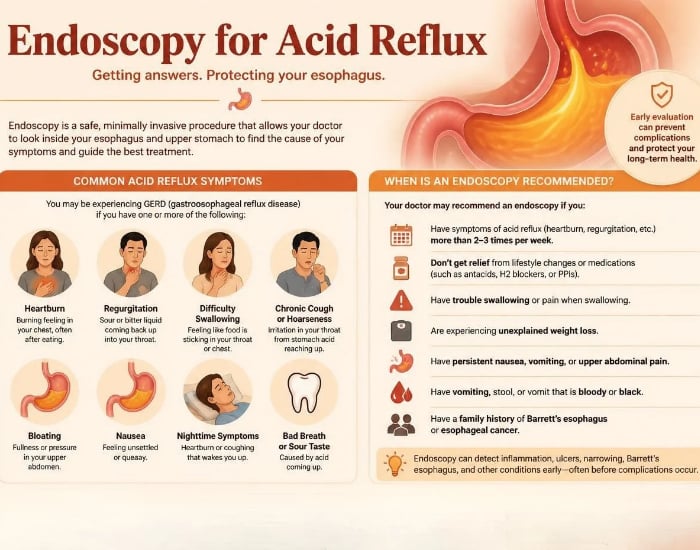
See a doctor if heartburn happens more than twice a week, if you rely on antacids or acid reducers for more than two weeks, if symptoms wake you at night, or if you have trouble swallowing, weight loss or vomiting. Chest tightness during anxiety should be checked, because heart problems can feel similar. A gastroenterologist can test whether acid reflux, reflux hypersensitivity or another condition is the cause.
Call 911 for
- Chest pain or pressure, especially with shortness of breath or sweating
- Pain spreading to the arm, back, neck or jaw
- Vomiting blood or black stools
Learn more about managing acid reflux and GERD care.
Get answers instead of guessing
Request a visit with Dr. Muhammad Ali Khan at our Katy and Cypress offices. Most major insurance plans are accepted and self-pay options are available.
Key takeaways
- Stress makes acid reflux worse mainly by increasing esophageal sensitivity and changing habits.
- Stress is not thought to cause GERD by itself but can make it harder to control.
- Regular meals, less caffeine and alcohol, good sleep and relaxation help.
- Reflux hypersensitivity can cause heartburn with normal acid levels.
- Frequent heartburn or chest symptoms need a medical evaluation.
Frequently asked questions
Can anxiety feel like acid reflux?
Yes. Anxiety can cause chest tightness, a lump in the throat and stomach upset that feel like reflux, and it can make true reflux feel worse.
Does stress increase stomach acid?
Studies suggest stress has only a small effect on acid levels. Its bigger effect is making the esophagus more sensitive and changing eating and sleep habits.
Can exercise help acid reflux from stress?
Regular moderate exercise reduces stress and supports a healthy weight, both of which help reflux. Avoid intense exercise right after eating.
Do reflux medicines work for stress-related heartburn?
They help when acid reflux is present. If heartburn persists despite medicine, testing can show whether hypersensitivity is involved, which is treated differently.
Do I need a referral to see a gastroenterologist in Katy or Cypress?
It depends on your insurance plan. Many PPO plans let you book a specialist directly, while some HMO plans require a referral from your primary care doctor. Call (346) 340-4414 and the team can help you check.
Sources
- NIDDK — Symptoms and causes of GER and GERD
- NIDDK — Treatment for GER and GERD
- MedlinePlus — Stress
- MedlinePlus — GERD
- American College of Gastroenterology — Acid reflux
Where to be seen in Katy and Cypress
United Gastroenterology Associates has two offices: Katy, at 23920 Katy Freeway, Suite 555, next to Memorial Hermann Katy Hospital, and Cypress, at 21216 Northwest Freeway, Suite 640, on US-290. Both are open Monday through Friday, 8:30 AM to 5:00 PM, closed for lunch from 12:00 to 1:30 PM, and serve patients from Fulshear, Richmond and across Greater Houston. Call (346) 340-4414 for either office.
Katy office
23920 Katy Freeway, Suite 555
Katy, TX 77494
Memorial Hermann Medical Plaza 1
Next steps
If you are dealing with stress and acid reflux or any ongoing digestive concern, a focused evaluation can find the cause and start the right treatment. Dr. Muhammad Ali Khan and the team at United Gastroenterology Associates see adults from Katy, Cypress, Fulshear, Richmond, Greater Houston and across Texas. Call (346) 340-4414 or request an appointment today.
If you have severe pain, vomit blood, pass black stools or have chest pain, call 911 or go to the nearest emergency room.