Why do I get acid reflux even when I eat healthy?
You can get acid reflux even when you eat healthy because reflux depends on how well the valve between your esophagus and stomach (the lower esophageal sphincter) stays closed, not only on what you eat. Large meals, eating late, lying down after meals, extra abdominal weight, a hiatal hernia, pregnancy, smoking, alcohol, stress and some medicines all weaken that barrier. Several healthy foods, such as citrus, tomatoes, onions, garlic, mint, coffee and high-fat foods like nuts and avocado, can also trigger symptoms.
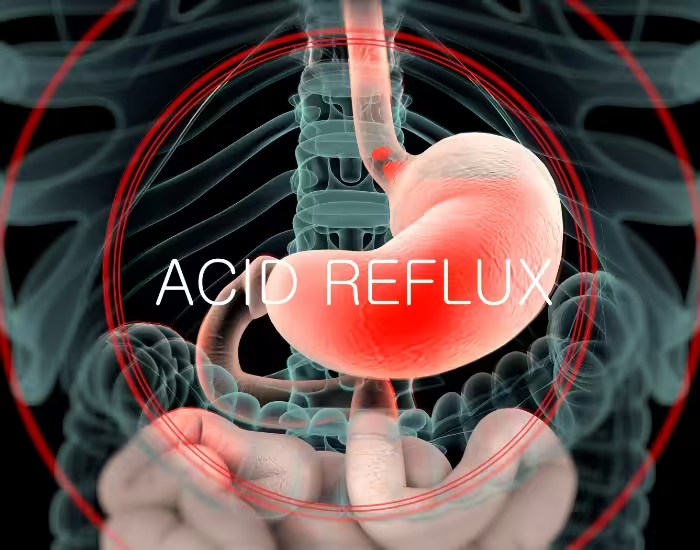
The lower esophageal sphincter is a ring of muscle that opens to let food into the stomach and then closes. When it relaxes at the wrong time, or when pressure inside the stomach is high, acid and digestive enzymes rise into the esophagus and cause heartburn, regurgitation, a sour taste or cough. A nutritious meal that is large, eaten quickly or eaten right before bed can still cause reflux.
Three reasons reflux happens even with a healthy diet
- The food itselfAcidic, spicy, minty or high-fat healthy foods can relax the valve or irritate the esophagus.
- How and when you eatLarge portions, eating fast and late dinners raise stomach pressure at the worst time.
- Your bodyA hiatal hernia, extra weight, pregnancy, medicines and sensitive nerves make reflux more likely.
Which healthy foods can trigger acid reflux?
Healthy foods that commonly trigger acid reflux include citrus fruits and juices, tomatoes and tomato sauce, raw onions and garlic, peppermint and spearmint, spicy peppers, coffee and some teas, dark chocolate, carbonated water, and higher-fat foods such as nuts, nut butters, avocado, cheese, salmon and olive oil in large amounts. Triggers vary from person to person, so it helps to track your own.
| Healthy food | Why it can trigger reflux | Gentler swap to try |
|---|---|---|
| Orange or grapefruit juice | Acidic; irritates an inflamed esophagus | Banana, melon or pear |
| Tomato sauce, salsa | Acidic | Olive oil and herb sauce, roasted vegetables |
| Raw onion and garlic | Can relax the lower esophageal sphincter | Cooked onion in small amounts, fresh herbs |
| Peppermint tea, mint | Relaxes the sphincter | Ginger or chamomile tea |
| Coffee, green or black tea | Caffeine and acidity | Smaller cup, decaf, or with food |
| Nuts, avocado, cheese in large portions | High fat slows stomach emptying | Smaller portions spread through the day |
| Sparkling water, kombucha | Carbonation raises stomach pressure | Still water |
| Big salad bowls | Large volume stretches the stomach | Smaller portions, more often |
You do not need to give up every item on this list. Most people react to only a few. Remove one suspected trigger for two weeks and see whether symptoms change before cutting more foods from a balanced diet.
Can portion size and meal timing cause reflux?
Yes. Large meals stretch the stomach and increase pressure on the lower esophageal sphincter, making reflux more likely even when the food is healthy. Eating within two to three hours of lying down, eating quickly, and exercising hard right after a meal also increase reflux. Smaller meals eaten earlier in the evening, and staying upright after eating, often reduce symptoms noticeably.
- Finish dinner at least two to three hours before bed
- Choose four or five smaller meals instead of two large ones
- Eat slowly and stop when you are comfortably full
- Wait one to two hours after eating before intense exercise or bending
What else besides food causes acid reflux?
Besides food, acid reflux is commonly caused or worsened by a hiatal hernia, extra weight around the abdomen, pregnancy, smoking, alcohol including wine, tight clothing and belts, stress and poor sleep, and medicines such as anti-inflammatory pain relievers, some blood pressure medicines, nitrates, certain asthma medicines, sedatives and some antidepressants. Slow stomach emptying and an extra-sensitive esophagus can also cause reflux symptoms.
Hiatal hernia
A hiatal hernia happens when the top of the stomach pushes up through the diaphragm. It weakens the natural barrier against reflux and is a common reason reflux persists despite a healthy diet.
Weight and abdominal pressure
Even a modest amount of extra weight around the waist increases pressure on the stomach. Losing a small percentage of body weight often improves reflux.
Medicines
If reflux started after a new medicine, ask the prescribing doctor whether it could be related. Do not stop any medicine on your own.
Reflux hypersensitivity and functional heartburn
Some people feel heartburn with normal amounts of acid because the esophagus is extra sensitive. Testing can identify this, and the treatment approach differs from classic GERD.
Have symptoms like these?
Dr. Muhammad Ali Khan, a board-certified gastroenterologist and hepatologist, sees adults at our Katy and Cypress offices, serving patients across Greater Houston.
Is it acid reflux or GERD?
Occasional acid reflux after a big meal is common and not a disease. When reflux happens at least twice a week, interferes with sleep or daily life, or causes complications such as inflammation of the esophagus, it is called gastroesophageal reflux disease (GERD). GERD usually needs a treatment plan rather than diet changes alone.
Learn more about GERD diagnosis and treatment at United Gastroenterology Associates.
When should I see a doctor for reflux?
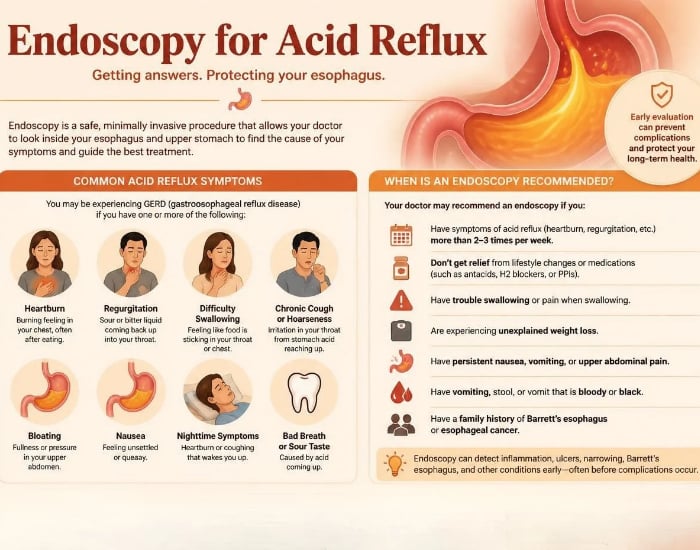
See a doctor if you have heartburn or regurgitation more than twice a week, if you need antacids or acid reducers for more than two weeks, or if reflux wakes you at night. Get prompt care for trouble or pain swallowing, food sticking, unexplained weight loss, vomiting, black stools or anemia. Adults over 60 with new reflux symptoms should be evaluated, and chest pain should always be checked for heart causes first.
Warning signs with reflux
- Difficulty or pain when swallowing, or food getting stuck
- Unexplained weight loss or loss of appetite
- Vomiting, vomiting blood, or black stools
- Chest pain, pressure or shortness of breath (call 911)
- New reflux symptoms after age 60
How does a gastroenterologist find the cause?
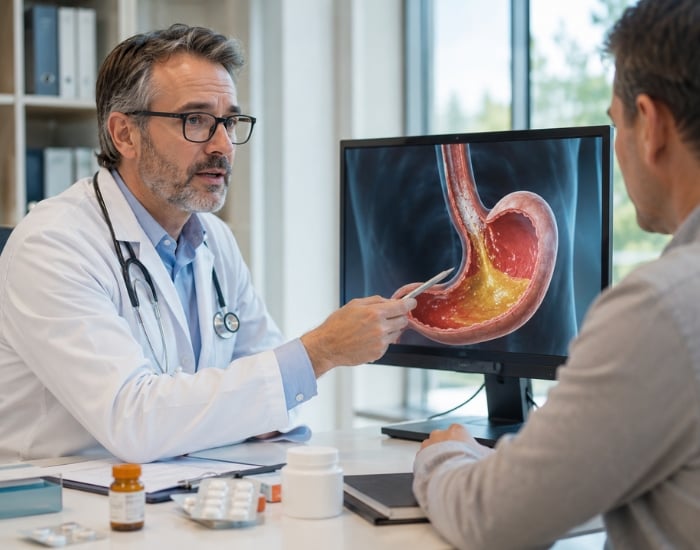
A gastroenterologist reviews your symptoms, diet, meal timing, weight changes and medicines, and may suggest a short trial of acid-reducing medicine. An upper endoscopy (EGD) looks for inflammation, a hiatal hernia or Barrett’s esophagus, and esophageal pH monitoring measures how much acid reaches the esophagus and whether it matches your symptoms. These tests help separate GERD from reflux hypersensitivity and other causes.
Your evaluation, step by step
- Track itFor two weeks, log meals, portions, bedtime, symptoms and medicines.
- At the visitDr. Khan reviews your log and checks for warning signs.
- TestingUpper endoscopy and esophageal pH monitoring when needed.
- Your planTargeted lifestyle steps and medicine, with follow-up.
Read more about upper endoscopy (EGD).
Get answers instead of guessing
Request a visit with Dr. Muhammad Ali Khan at our Katy and Cypress offices. Most major insurance plans are accepted and self-pay options are available.
How is reflux treated when diet changes are not enough?
When diet changes are not enough, reflux is usually treated with a combination of habits and medicine: smaller and earlier meals, raising the head of the bed, weight loss if needed, stopping smoking and limiting alcohol, plus antacids, H2 blockers or proton pump inhibitors as advised by your doctor. People with a large hiatal hernia or reflux that does not respond to medicine may be evaluated for a procedure or surgery.
Tip: Test one change at a time
Move dinner earlier for two weeks, or remove one suspected trigger food, before changing anything else. One change at a time shows you what actually helps.
Key takeaways
- Acid reflux when eating healthy is common because reflux depends on the esophageal valve, portion size, timing and body factors, not just food quality.
- Citrus, tomatoes, onions, garlic, mint, coffee, carbonation and large portions of nuts or avocado are common healthy triggers.
- Smaller, earlier meals and staying upright after eating reduce reflux for many people.
- A hiatal hernia, extra weight, pregnancy, smoking, alcohol and medicines often explain reflux that persists.
- Reflux more than twice a week, or with trouble swallowing or weight loss, needs a medical evaluation.
Frequently asked questions
Why do I get heartburn after eating salad?
Salads can trigger heartburn because of large portion size, acidic dressings with vinegar or citrus, raw onion, tomatoes or high-fat toppings such as cheese, nuts and avocado. Try a smaller salad, a milder dressing and fewer high-fat toppings.
Can healthy fats like avocado and olive oil cause reflux?
In large amounts, yes. Fat slows stomach emptying and can relax the lower esophageal sphincter. Healthy fats are still good for you; spreading smaller portions across the day usually helps.
Does drinking water help acid reflux?
Sipping water can rinse acid from the esophagus and ease mild symptoms. Drinking large amounts with meals can fill the stomach, so sip rather than gulp.
Can stress cause acid reflux even with a good diet?
Stress can make the esophagus more sensitive to acid and disrupt sleep and eating habits, so reflux symptoms often feel worse during stressful periods.
Should I stop eating fruit if I have reflux?
No. Most fruits are fine. Citrus and some acidic fruits bother some people, but bananas, melon, apples and pears are usually well tolerated.
Do I need a referral to see a gastroenterologist in Katy or Cypress?
It depends on your insurance plan. Call (346) 340-4414 and the team can help you check.
Sources
- NIDDK — Acid reflux (GER and GERD) in adults
- NIDDK — Eating, diet and nutrition for GER and GERD
- NIDDK — Treatment for GER and GERD
- MedlinePlus — GERD
- MedlinePlus — Hiatal hernia
- American College of Gastroenterology — Acid reflux
Where to be seen in Katy and Cypress
United Gastroenterology Associates has two offices: Katy, at 23920 Katy Freeway, Suite 555, next to Memorial Hermann Katy Hospital, and Cypress, at 21216 Northwest Freeway, Suite 640, on US-290. Both are open Monday through Friday, 8:30 AM to 5:00 PM, closed for lunch from 12:00 to 1:30 PM, and serve patients from Fulshear, Richmond and across Greater Houston. Call (346) 340-4414 for either office.
Katy office
23920 Katy Freeway, Suite 555
Katy, TX 77494
Memorial Hermann Medical Plaza 1
Next steps
If you are dealing with acid reflux when eating healthy or any ongoing digestive concern, a focused evaluation can find the cause and start the right treatment. Dr. Muhammad Ali Khan and the team at United Gastroenterology Associates see adults from Katy, Cypress, Fulshear, Richmond, Greater Houston and across Texas. Call (346) 340-4414 or request an appointment today.
If you have severe pain, vomit blood, pass black stools or have chest pain, call 911 or go to the nearest emergency room.