What is the best way to manage acid reflux?
The best way to manage acid reflux is a stepwise plan: start with habits such as smaller, earlier meals, staying upright after eating, raising the head of the bed, losing extra weight, stopping smoking and limiting your trigger foods and alcohol. Add antacids for occasional symptoms or H2 blockers before meals you expect to cause trouble. Frequent reflux usually needs a proton pump inhibitor and a doctor’s guidance.
A stepwise reflux plan
- HabitsMeal size and timing, bed elevation, weight, smoking and trigger foods.
- Occasional reliefAntacids or alginates as needed, H2 blockers before known triggers.
- Daily controlA proton pump inhibitor taken correctly, under a doctor’s guidance.
- Testing and proceduresEndoscopy, pH testing and surgical options when symptoms persist.
Which lifestyle changes help acid reflux the most?
The lifestyle changes with the strongest evidence for acid reflux are losing weight if you are overweight, raising the head of the bed for night-time symptoms, avoiding meals within two to three hours of lying down, and stopping smoking. Cutting back on foods and drinks that clearly trigger your symptoms, such as alcohol, fatty meals, chocolate, mint, coffee and citrus, also helps many people.
- Finish dinner two to three hours before bed
- Raise the head of the bed 6 to 8 inches with blocks or a wedge
- Lose a few pounds if you carry extra weight around the waist
- Stop smoking and limit alcohol
- Eat smaller meals and wear looser clothing at the waist
See our GERD diet guide for foods to eat and avoid.
How do acid reflux medicines work?
Antacids neutralize acid already in the stomach and work within minutes for short relief. Alginates form a barrier that reduces acid rising into the esophagus. H2 blockers reduce acid production for several hours and work within about an hour. Proton pump inhibitors block acid production most strongly and are best for frequent heartburn and healing inflammation, but take a few days to reach full effect.
| Medicine type | Speed | Best for |
|---|---|---|
| Antacids | Minutes, short-lived | Occasional heartburn |
| Alginates | Minutes | After-meal and night-time reflux |
| H2 blockers | About an hour | Planned triggers, mild frequent symptoms |
| Proton pump inhibitors | One to four days for full effect | Frequent heartburn, healing esophagitis |
Have symptoms like these?
Dr. Muhammad Ali Khan, a board-certified gastroenterologist and hepatologist, sees adults at our Katy and Cypress offices, serving patients across Greater Houston.
How should I take a proton pump inhibitor?
Most proton pump inhibitors work best when taken 30 to 60 minutes before breakfast, or before the first meal of the day, because they block acid pumps that are activated by food. Take them consistently rather than only when symptoms flare. Over-the-counter versions are labeled for a 14-day course; if you need them longer or more often, see a doctor. Do not stop long-term prescription treatment without talking to your doctor.
Tip: Timing matters
Taking a proton pump inhibitor at bedtime or after eating is a common reason it seems not to work. Before breakfast, with breakfast following, is the usual right time unless your doctor says otherwise.
Is long-term reflux medicine safe?
For people who need them, proton pump inhibitors are generally safe and effective, and the benefits usually outweigh the risks when there is a clear reason to take them. Doctors aim to use the lowest dose that controls symptoms and review the need for long-term use periodically. Discuss any concerns with your doctor rather than stopping suddenly, which can cause rebound heartburn.
When does acid reflux need testing or a procedure?
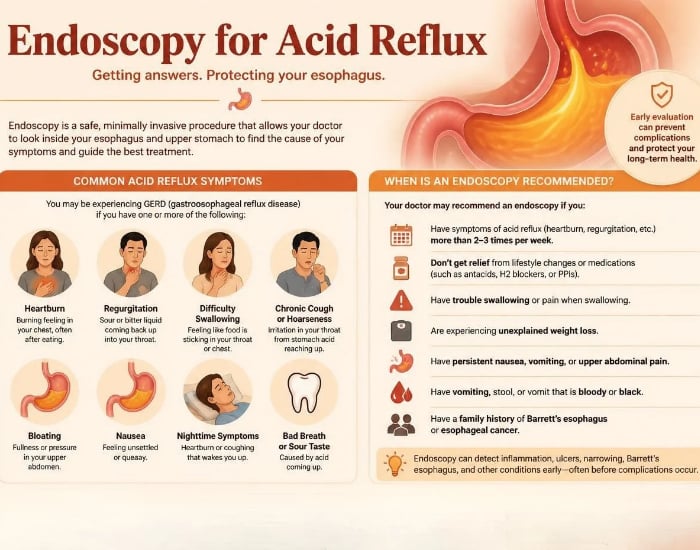
Acid reflux needs testing when symptoms continue despite medicine, when there are warning signs such as trouble swallowing, weight loss, vomiting or anemia, or when you have had frequent heartburn for many years. Upper endoscopy checks for inflammation, narrowing and Barrett’s esophagus, and pH monitoring confirms reflux. People with a large hiatal hernia or reflux that does not respond to medicine may be evaluated for anti-reflux surgery or an endoscopic procedure.
See a doctor promptly for
- Difficulty or pain when swallowing, or food getting stuck
- Unexplained weight loss or iron-deficiency anemia
- Vomiting, vomiting blood or black stools
- Chest pain or pressure (call 911)
If heartburn continues despite treatment, see heartburn every day despite medication. Learn more about GERD care at United Gastroenterology Associates.
Get answers instead of guessing
Request a visit with Dr. Muhammad Ali Khan at our Katy and Cypress offices. Most major insurance plans are accepted and self-pay options are available.
Key takeaways
- Managing acid reflux works best as a stepwise plan: habits first, then the right medicine.
- Weight loss, head-of-bed elevation, earlier dinners and stopping smoking have the strongest evidence.
- Antacids act fastest; proton pump inhibitors are strongest and work best before breakfast.
- Use over-the-counter acid reducers as labeled and see a doctor if you need them often.
- Persistent symptoms or warning signs call for endoscopy and possibly other treatments.
Frequently asked questions
Can acid reflux go away on its own?
Occasional reflux often improves with habit changes. Frequent reflux, or GERD, usually needs ongoing management, though many people need less medicine after losing weight or changing habits.
What is the fastest way to stop acid reflux?
Sit upright, loosen tight clothing and take an antacid or alginate as directed. These usually relieve symptoms within minutes.
Should I take reflux medicine before or after eating?
Antacids are taken when symptoms occur or after meals. Proton pump inhibitors work best 30 to 60 minutes before the first meal of the day. Follow your doctor’s or the label’s instructions.
Does losing weight help acid reflux?
Yes. Even modest weight loss reduces pressure on the stomach and is one of the most effective ways to improve reflux.
Do I need a referral to see a gastroenterologist in Katy or Cypress?
It depends on your insurance plan. Many PPO plans let you book a specialist directly, while some HMO plans require a referral from your primary care doctor. Call (346) 340-4414 and the team can help you check.
Sources
- NIDDK — Treatment for GER and GERD
- NIDDK — Eating, diet and nutrition for GER and GERD
- NIDDK — Acid reflux (GER and GERD) in adults
- MedlinePlus — GERD
- American College of Gastroenterology — Acid reflux
Where to be seen in Katy and Cypress
United Gastroenterology Associates has two offices: Katy, at 23920 Katy Freeway, Suite 555, next to Memorial Hermann Katy Hospital, and Cypress, at 21216 Northwest Freeway, Suite 640, on US-290. Both are open Monday through Friday, 8:30 AM to 5:00 PM, closed for lunch from 12:00 to 1:30 PM, and serve patients from Fulshear, Richmond and across Greater Houston. Call (346) 340-4414 for either office.
Katy office
23920 Katy Freeway, Suite 555
Katy, TX 77494
Memorial Hermann Medical Plaza 1
Next steps
If you are dealing with managing acid reflux or any ongoing digestive concern, a focused evaluation can find the cause and start the right treatment. Dr. Muhammad Ali Khan and the team at United Gastroenterology Associates see adults from Katy, Cypress, Fulshear, Richmond, Greater Houston and across Texas. Call (346) 340-4414 or request an appointment today.
If you have severe pain, vomit blood, pass black stools or have chest pain, call 911 or go to the nearest emergency room.