What is the difference between heartburn and acid reflux?
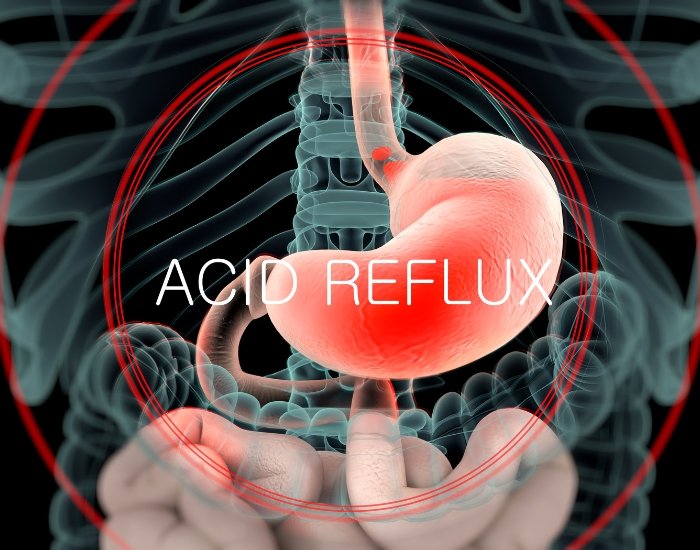
Acid reflux is the backward flow of stomach acid and contents into the esophagus. Heartburn is the burning feeling behind the breastbone that reflux often causes. In other words, acid reflux is the event and heartburn is the most common symptom. When reflux happens at least twice a week or causes damage or complications, it is called gastroesophageal reflux disease, or GERD.
Three terms, one pathway
- Acid refluxStomach contents move up into the esophagus when the valve between them opens at the wrong time.
- HeartburnThe burning sensation behind the breastbone caused by acid irritating the esophagus.
- GERDReflux that happens often, disrupts life or causes complications such as inflammation.
What causes acid reflux and heartburn?
Acid reflux happens when the lower esophageal sphincter, the muscle valve at the bottom of the esophagus, relaxes at the wrong time or does not close tightly. Common contributors are large or late meals, fatty or spicy foods, alcohol, coffee, chocolate, mint, smoking, extra abdominal weight, pregnancy, a hiatal hernia and certain medicines such as anti-inflammatory pain relievers. Lying down after eating makes reflux more likely.
What are the symptoms of acid reflux?
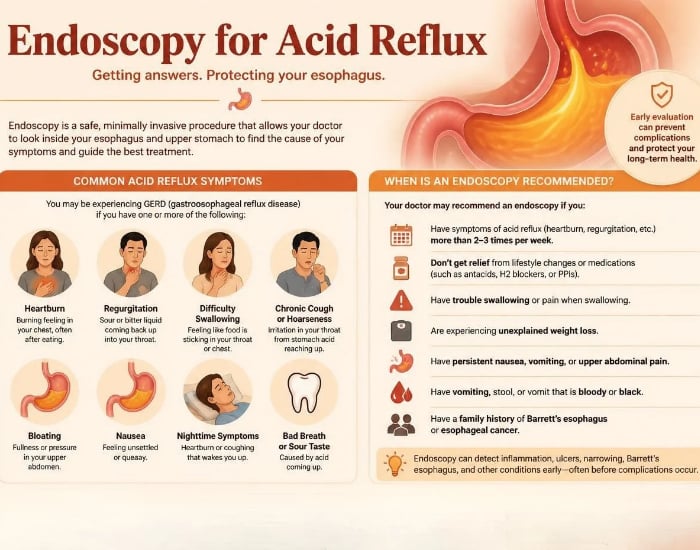
The most common symptoms of acid reflux are heartburn and regurgitation, a sour or bitter taste of stomach contents rising into the throat or mouth. Other symptoms include upper stomach discomfort, belching, nausea, a chronic cough, hoarseness, a sore throat, a feeling of a lump in the throat and trouble swallowing. Symptoms are often worse after meals, at night and when bending over.
| Term | What it is | When it needs care |
|---|---|---|
| Heartburn | Burning behind the breastbone | If frequent, severe or not relieved by antacids |
| Acid reflux | Backflow of stomach contents into the esophagus | If it keeps returning or affects sleep |
| GERD | Reflux at least twice a week or with complications | Usually needs a treatment plan from a doctor |
| Silent reflux (LPR) | Reflux reaching the throat with little heartburn | Ongoing cough, hoarseness or throat symptoms |
Have symptoms like these?
Dr. Muhammad Ali Khan, a board-certified gastroenterologist and hepatologist, sees adults at our Katy and Cypress offices, serving patients across Greater Houston.
Is heartburn ever something other than reflux?
Yes. Chest burning can come from the heart, from inflammation of the esophagus caused by pills or infection, from esophageal spasm, from stomach ulcers or gastritis, and from gallbladder problems. Some people have functional heartburn, in which the esophagus is extra sensitive even though acid levels are normal. Because a heart attack can feel like heartburn, new or severe chest pain should be treated as an emergency.
Call 911 for chest pain with
- Pressure, squeezing or tightness, especially with exertion
- Shortness of breath, sweating, nausea or lightheadedness
- Pain spreading to the arm, back, neck or jaw
- Vomiting blood or black stools
Learn more about reflux chest pain vs. heart pain.
How can I relieve heartburn at home?
To relieve occasional heartburn at home, stay upright after eating, eat smaller meals, avoid your trigger foods, finish dinner two to three hours before bed, raise the head of your bed, and use an over-the-counter antacid as directed for quick relief. Stopping smoking, limiting alcohol and losing extra weight help prevent repeat episodes.
- Eat smaller meals and stop before you feel overly full
- Stay upright for two to three hours after eating
- Raise the head of your bed 6 to 8 inches
- Limit alcohol, fatty foods, chocolate, mint and late caffeine
- Use antacids for occasional symptoms, following the label
For fast relief steps, see how to stop burning chest pain from acid reflux.
When should I see a doctor for heartburn and acid reflux?
See a doctor if heartburn happens more than twice a week, if you need antacids or acid reducers for more than two weeks, if reflux wakes you at night, or if you have trouble swallowing, food sticking, unexplained weight loss, vomiting, black stools or anemia. Adults over 60 with new reflux symptoms and people with long-standing frequent heartburn should also be evaluated.
Get answers instead of guessing
Request a visit with Dr. Muhammad Ali Khan at our Katy and Cypress offices. Most major insurance plans are accepted and self-pay options are available.
How do doctors diagnose GERD?
Doctors often diagnose GERD from typical symptoms and response to acid-reducing medicine. When symptoms are atypical, persistent or come with warning signs, an upper endoscopy (EGD) checks the esophagus for inflammation, narrowing or Barrett’s esophagus, and esophageal pH monitoring measures how much acid reaches the esophagus. Dr. Khan performs or arranges these tests.
Your evaluation, step by step
- Track symptomsNote timing, foods, night symptoms and medicines for two weeks.
- At the visitDr. Khan reviews your history and checks for warning signs.
- TestingUpper endoscopy or pH monitoring when needed.
- Your planLifestyle steps and medicine matched to your results.
Learn more about GERD diagnosis and treatment and upper endoscopy.
Tip: Count your heartburn days
Mark each day you have heartburn on a calendar for a month. Two or more days a week is the point at which reflux is usually considered GERD and worth a medical plan.
Key takeaways
- Acid reflux is stomach contents moving into the esophagus; heartburn is the burning it causes.
- Reflux at least twice a week, or with complications, is called GERD.
- Large or late meals, trigger foods, extra weight, smoking and a hiatal hernia are common causes.
- New or severe chest pain should be treated as an emergency until the heart is ruled out.
- Frequent heartburn, trouble swallowing or weight loss needs a medical evaluation.
Frequently asked questions
Can you have acid reflux without heartburn?
Yes. Some people have regurgitation, cough, hoarseness or throat symptoms without heartburn. This is sometimes called silent reflux or laryngopharyngeal reflux.
Is heartburn the same as GERD?
No. Heartburn is a symptom. GERD is a condition diagnosed when reflux happens often or causes complications.
Does milk help heartburn?
Milk may soothe briefly, but its fat and protein can stimulate more acid later. Water or an antacid is usually a better choice.
Can heartburn last for days?
Heartburn usually comes and goes, but it can recur over several days, especially after trigger foods or late meals. Ongoing symptoms deserve a visit.
Do I need a referral to see a gastroenterologist in Katy or Cypress?
It depends on your insurance plan. Many PPO plans let you book a specialist directly, while some HMO plans require a referral from your primary care doctor. Call (346) 340-4414 and the team can help you check.
Sources
- NIDDK — Acid reflux (GER and GERD) in adults
- NIDDK — Symptoms and causes of GER and GERD
- MedlinePlus — Heartburn
- MedlinePlus — GERD
- American College of Gastroenterology — Acid reflux
Where to be seen in Katy and Cypress
United Gastroenterology Associates has two offices: Katy, at 23920 Katy Freeway, Suite 555, next to Memorial Hermann Katy Hospital, and Cypress, at 21216 Northwest Freeway, Suite 640, on US-290. Both are open Monday through Friday, 8:30 AM to 5:00 PM, closed for lunch from 12:00 to 1:30 PM, and serve patients from Fulshear, Richmond and across Greater Houston. Call (346) 340-4414 for either office.
Katy office
23920 Katy Freeway, Suite 555
Katy, TX 77494
Memorial Hermann Medical Plaza 1
Next steps
If you are dealing with heartburn and acid reflux or any ongoing digestive concern, a focused evaluation can find the cause and start the right treatment. Dr. Muhammad Ali Khan and the team at United Gastroenterology Associates see adults from Katy, Cypress, Fulshear, Richmond, Greater Houston and across Texas. Call (346) 340-4414 or request an appointment today.
If you have severe pain, vomit blood, pass black stools or have chest pain, call 911 or go to the nearest emergency room.