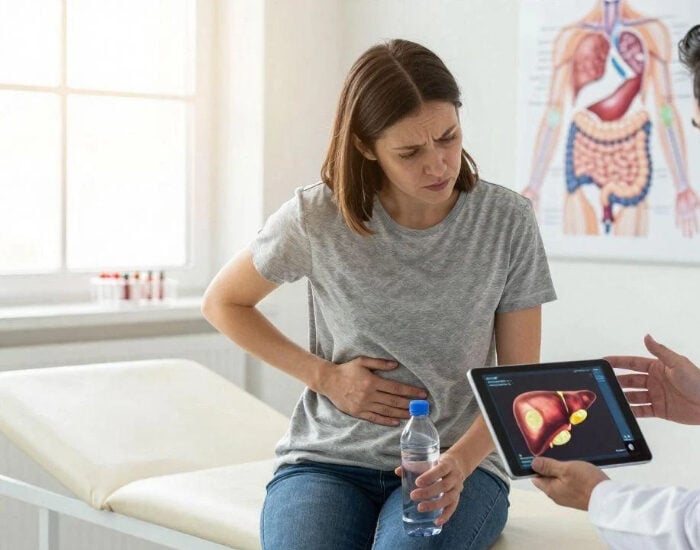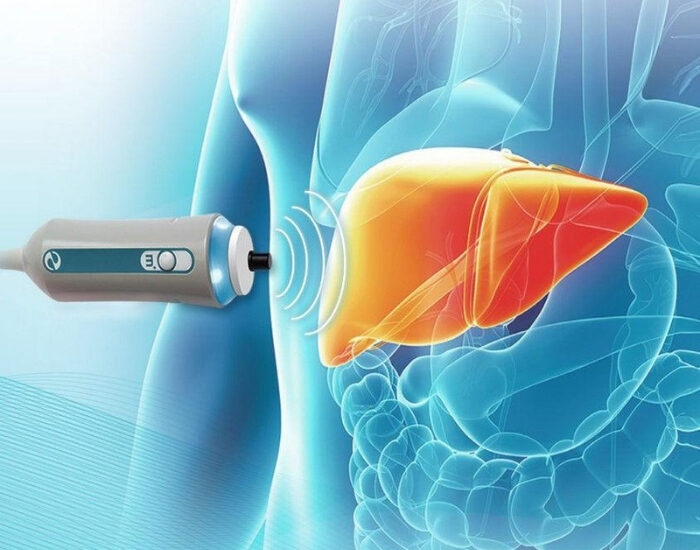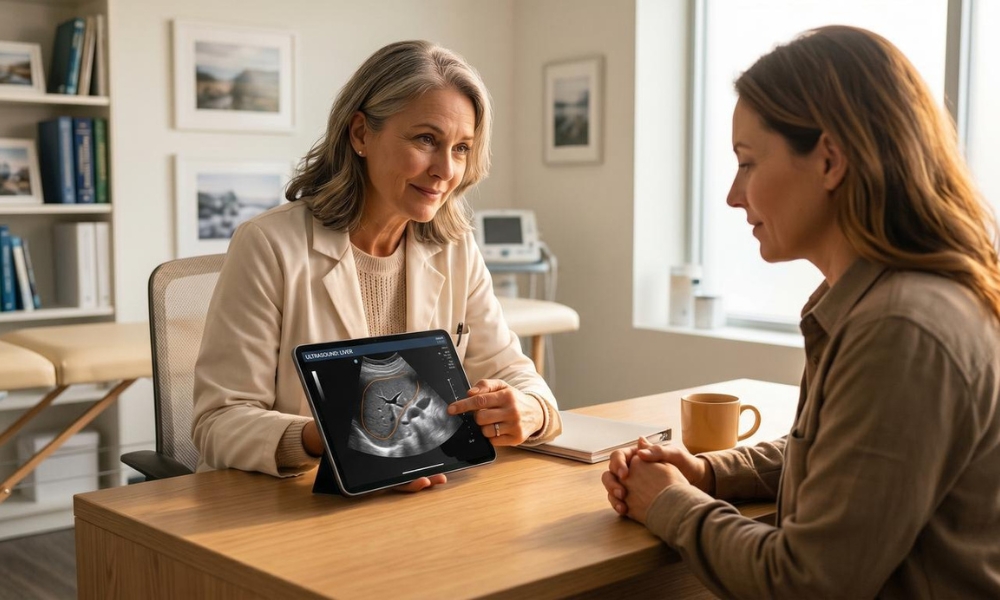
Many people first hear the words “fatty liver” by accident. An ultrasound ordered for gallbladder pain, a CT scan after a car accident or a routine blood panel shows something unexpected, and the report says hepatic steatosis. There were no symptoms, and suddenly there is a diagnosis to look up.
This guide explains what fatty liver disease actually is, what the newer medical names mean, how the condition moves through stages, and what an evaluation looks like when you see a liver specialist in Katy or Cypress.
Key takeaways
- Fatty liver means excess fat stored in liver cells — more than about 5% of the liver.
- Most cases are now called MASLD; the older name was NAFLD.
- Simple fat is common and often reversible; inflammation and scarring are what make it serious.
- A FibroScan or blood-based fibrosis score is usually the next step after fat is found.
What Is Fatty Liver Disease?
Fatty liver disease is the build-up of triglyceride fat inside liver cells, called hepatocytes, beyond the small amount a healthy liver holds. Doctors call this finding hepatic steatosis, and the disease is diagnosed when fat affects more than about 5% of liver cells. It is now the most common liver condition in the United States and often causes no symptoms for years.
Your liver normally handles fat every day. It processes fat from food, makes new fat from extra sugar, and packages fat to send out into the blood. When more fat arrives or is made than the liver can export or burn, the extra fat is stored inside liver cells as droplets.
A small amount of stored fat causes no harm. Problems begin when the fat is persistent and the liver reacts to it with inflammation. Over years, that inflammation can lead to scar tissue (fibrosis), and in a minority of people, to cirrhosis.
Is fatty liver the same as hepatic steatosis?
Hepatic steatosis is the descriptive term for fat in the liver — what a radiologist sees on imaging or a pathologist sees on a biopsy. Fatty liver disease is the clinical diagnosis a doctor makes after looking at the cause, your risk factors and whether the liver is inflamed or scarred. If your report used the phrase “diffuse hepatic steatosis,” our guide on what diffuse hepatic steatosis means on a report walks through that wording.
What Is MASLD, and Why Did the Name Change?
MASLD stands for metabolic dysfunction-associated steatotic liver disease. It replaced the older term NAFLD, or nonalcoholic fatty liver disease, in 2023. The new name describes fatty liver by its link to metabolic risk factors, such as excess weight, high blood sugar, high blood pressure and abnormal cholesterol, rather than only by the absence of heavy alcohol use.
The liver societies made the change for two reasons: the old name focused on what the disease was not, and the word “fatty” was felt to be stigmatizing. The new framework uses one umbrella term — steatotic liver disease — and sorts patients by cause.
- MASLD: fatty liver plus at least one cardiometabolic risk factor, with little or no alcohol use.
- MASH: the inflamed, more active form of MASLD (formerly called NASH).
- MetALD: fatty liver with metabolic risk factors and moderate alcohol intake.
- Alcohol-related liver disease (ALD): fatty liver driven mainly by heavier drinking.
- Other causes: certain medicines, rapid weight loss, hepatitis C, genetic and hormonal conditions.
You may see both NAFLD and MASLD on older and newer reports. For most patients they describe the same condition.
What are the five cardiometabolic risk factors for MASLD?
Doctors diagnose MASLD when fat is present along with at least one of these:
- Overweight or a larger waist size (BMI above 25, or lower thresholds for some Asian backgrounds)
- Prediabetes, type 2 diabetes or high fasting blood sugar
- High blood pressure or blood pressure medication
- High triglycerides or triglyceride medication
- Low HDL (“good”) cholesterol
What Are the Stages of Fatty Liver Disease?
Fatty liver disease runs from simple fat, called steatosis, to fat with inflammation, called MASH, then to scarring, called fibrosis, and finally to cirrhosis. Most people stay at the first stage for life. The amount of scarring, not the amount of fat, is what best predicts long-term risk of liver failure, liver cancer and other complications.
| Stage | What happens in the liver | Can it improve? |
|---|---|---|
| Steatosis (MASLD) | Fat fills more than about 5% of liver cells | Yes, usually with weight loss |
| MASH | Fat plus inflammation and liver cell injury | Often, with 7% to 10% weight loss |
| Fibrosis | Scar tissue builds up around liver cells | Early scarring can partly improve |
| Cirrhosis | Widespread scarring and loss of liver function | Rarely; care focuses on preventing complications |
How fatty liver disease can progress
- SteatosisFat in liver cells, little or no inflammation. Often reversible.
- MASHFat plus inflammation and liver-cell injury.
- FibrosisScar tissue builds up, graded F1 to F3.
- CirrhosisAdvanced scarring (F4) that changes liver structure.
Studies suggest that a minority of people with MASLD develop the inflamed form, and only some of those go on to significant scarring. That is why a fatty liver diagnosis should lead to a fibrosis check rather than alarm.
Why does liver scarring matter more than liver fat?
The amount of fat on an ultrasound does not tell you how healthy the liver is. A person with “mild” fat can have scarring, and a person with “severe” fat can have none. In our hepatology work with patients from Katy, Cypress and Fulshear, the most useful question after fat is found is: is there fibrosis, and how much?
What Causes Fatty Liver Disease?
The most common cause is insulin resistance, the same metabolic problem behind prediabetes and type 2 diabetes. Extra calories, especially from sugar, sweet drinks and refined carbohydrates, and fat stored around the abdomen send more fat to the liver than it can clear. Genetics, certain medicines, rapid weight loss and heavy alcohol use can also play a role.
Other contributors include:
- Alcohol, even at moderate levels when combined with metabolic risk
- Sugary drinks and high-fructose foods
- Inactivity and poor sleep, including untreated sleep apnea
- Medicines such as corticosteroids, tamoxifen, methotrexate and amiodarone
- Polycystic ovary syndrome and low thyroid function
- Inherited gene variants (for example PNPLA3) that make some people more prone to liver fat
Fatty liver also occurs in people who are not overweight. This is sometimes called lean MASLD, and it is often driven by insulin resistance, abdominal fat or genetics.
Does Fatty Liver Disease Cause Symptoms?
Most people with fatty liver disease have no symptoms, and the condition is often found by chance on a blood test or ultrasound. When symptoms occur, they are vague, such as tiredness or a dull ache under the right ribs. Clear signs like yellow skin, leg swelling or a swollen belly usually appear only after cirrhosis develops.
Signs that suggest more advanced liver disease and need prompt evaluation include:
- Yellowing of the skin or eyes (jaundice)
- Swelling of the belly or legs
- Easy bruising or bleeding
- Confusion or unusual sleepiness
- Vomiting blood or black, tarry stools
For a deeper look at warning signs, see fatty liver disease symptoms and risk factors.
Told you have fatty liver?
Dr. Muhammad Ali Khan, a board-certified gastroenterologist and hepatologist, evaluates fatty liver and liver scarring at our Katy and Cypress offices, including FibroScan testing.
How Is Fatty Liver Disease Diagnosed?
Fatty liver is usually found on an ultrasound, CT scan or MRI, sometimes after mildly raised liver enzymes on a routine blood test. Diagnosis then has two jobs: ruling out other causes of liver fat and measuring scarring. Doctors use a blood-based score such as FIB-4 and a liver stiffness test such as FibroScan to estimate fibrosis.
At United Gastroenterology Associates, a typical fatty liver evaluation includes:
- History and medicines. Alcohol intake, weight changes, diabetes, sleep and any medicines known to cause liver fat.
- Blood work. Liver enzymes (ALT, AST), platelets, blood sugar or A1c, lipids, and tests for hepatitis B and C, iron overload and autoimmune liver disease when appropriate.
- FIB-4 score. A simple calculation from age, ALT, AST and platelets that sorts people into low, indeterminate or high risk of advanced scarring.
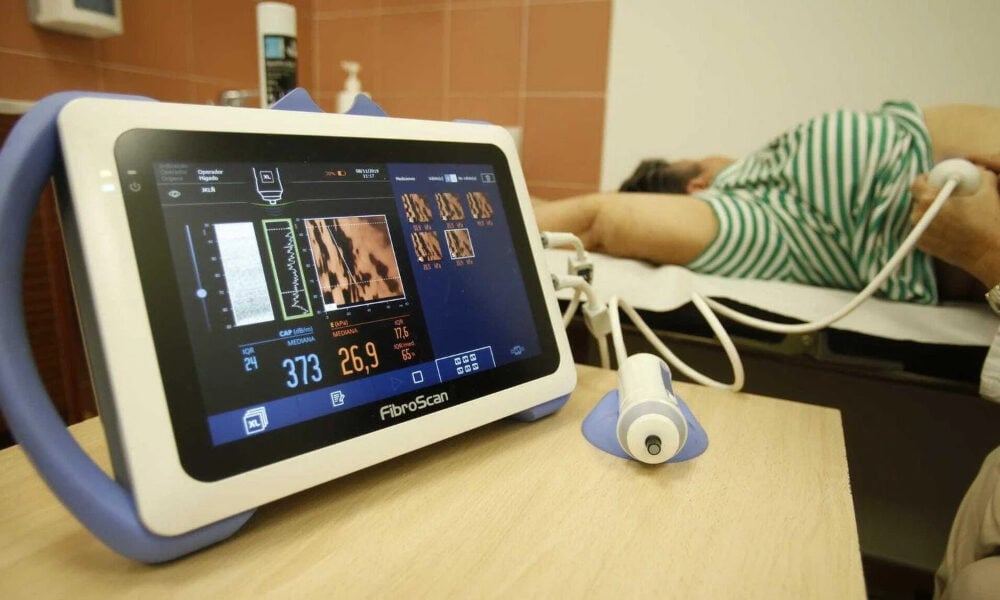
- FibroScan. A painless, ultrasound-based test that measures liver stiffness (scarring) and gives a CAP score for fat. Learn more on our FibroScan page.
- Further imaging or biopsy only when results are unclear or another diagnosis is suspected.
Normal liver enzymes do not rule out fatty liver or scarring. If your enzymes are raised, our article on elevated liver enzymes explains what the numbers can mean.
Can Fatty Liver Disease Be Reversed?
Yes, fatty liver disease can often be reversed, especially before advanced scarring develops. Losing about 3% to 5% of body weight can reduce liver fat, and losing 7% to 10% or more is linked with less inflammation and, in some people, less scarring. Regular exercise, less sugar and alcohol, and good diabetes control support the improvement for most people.
The plan that works best is usually the one a patient can keep up for years, not weeks:
- Gradual weight loss of about 1–2 pounds a week. Crash diets can worsen liver inflammation.
- A Mediterranean-style eating pattern — vegetables, legumes, whole grains, fish, olive oil and nuts, with fewer sugary drinks and processed foods.
- Regular activity, about 150 minutes a week of moderate exercise, plus some strength training. Exercise lowers liver fat even before the scale moves.
- Limiting or avoiding alcohol, especially if scarring is present.
- Treating diabetes, cholesterol, blood pressure and sleep apnea.
For people with MASH and moderate to advanced scarring, prescription options now exist, and some diabetes and weight-loss medicines also benefit the liver. Whether a medicine is appropriate depends on your stage of fibrosis, which is why staging comes first. Our guide Can fatty liver be reversed? covers lifestyle steps in more detail.
Important note
Do not start supplements or “liver cleanses” without talking to your doctor. Several herbal products are known to injure the liver, and none has been shown to reverse fatty liver disease.
Is Fatty Liver Disease Dangerous?
Simple fatty liver is usually not dangerous on its own, but it is an important marker of metabolic risk. People with MASLD have higher rates of heart disease, type 2 diabetes and chronic kidney disease, and heart disease is their leading cause of death. Those with advanced scarring also face a higher risk of cirrhosis and liver cancer over time.
Heart disease is actually the most common cause of serious illness in people with fatty liver. That is why liver care and heart care overlap: improving blood sugar, blood pressure, cholesterol and weight protects both organs.
People with cirrhosis need regular monitoring, including liver cancer screening with ultrasound every six months and checks for enlarged veins in the esophagus.
When Should You See a Liver Specialist for Fatty Liver?
See a gastroenterologist or hepatologist if fat was found on imaging and your FIB-4 score is not low, or if your liver enzymes stay raised. A referral also makes sense if you have type 2 diabetes, several metabolic risk factors or any sign of advanced liver disease. Dr. Khan offers liver evaluation at the Katy and Cypress offices.
Patients in Katy, Cypress, Fulshear, Richmond and the wider Houston area often come to us after a primary care doctor notices an abnormal ultrasound or ALT. A referral is not always required; our fatty liver specialist page explains what the first visit includes.
Frequently Asked Questions About Fatty Liver Disease
What is the difference between NAFLD and MASLD?
NAFLD and MASLD describe mostly the same patients, but MASLD defines the disease by metabolic risk factors instead of by the absence of alcohol. Doctors adopted the new name in 2023 to make the diagnosis clearer and less stigmatizing.
Can fatty liver disease go away completely?
Liver fat can disappear when people lose weight, cut back on sugar and alcohol, and exercise regularly. Early scarring may also improve, while cirrhosis is much harder to reverse.
What are the first signs of fatty liver disease?
Most people have no early signs, so the first clue is often a raised liver enzyme on a blood test or fat seen on an ultrasound. Some people notice tiredness or a dull ache in the upper right abdomen.
Who treats fatty liver disease in Katy and Cypress, TX?
Muhammad Ali Khan, MD, a board-certified gastroenterologist and hepatologist at United Gastroenterology Associates, evaluates and treats fatty liver disease. He sees patients at the Katy and Cypress offices and can order liver scarring tests when needed.
What sources support this article?
- AASLD — Practice guidance on the clinical assessment and management of NAFLD (2023)
- AASLD — Changes in fatty liver nomenclature (MASLD)
- NIDDK — Nonalcoholic fatty liver disease and NASH
- MedlinePlus — Fatty liver disease
Where can you see a gastroenterologist in Katy or Cypress?
United Gastroenterology Associates has two offices: Katy, at 23920 Katy Freeway, Suite 555, next to Memorial Hermann Katy Hospital, and Cypress, at 21216 Northwest Freeway, Suite 640, on US-290. Both are open Monday through Friday, 8:30 AM to 5:00 PM, closed for lunch from 12:00 to 1:30 PM, and serve patients from Fulshear, Richmond and across Greater Houston. Call (346) 340-4414 for either office.
Where is the Katy office?
23920 Katy Freeway, Suite 555
Katy, TX 77494
Memorial Hermann Medical Plaza 1
Where is the Cypress office?
21216 Northwest Freeway, Suite 640
Cypress, TX 77429
On US-290
What should you do next?
If an ultrasound, CT scan or blood test has raised the question of fatty liver, a focused liver evaluation can tell you how much fat is there, whether there is scarring, and what to do about it. Dr. Muhammad Ali Khan, a board-certified gastroenterologist and hepatologist, sees adults from Katy, Cypress, Fulshear, Richmond and across Greater Houston. Call (346) 340-4414 or request an appointment today.