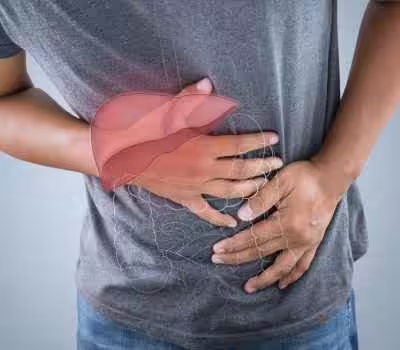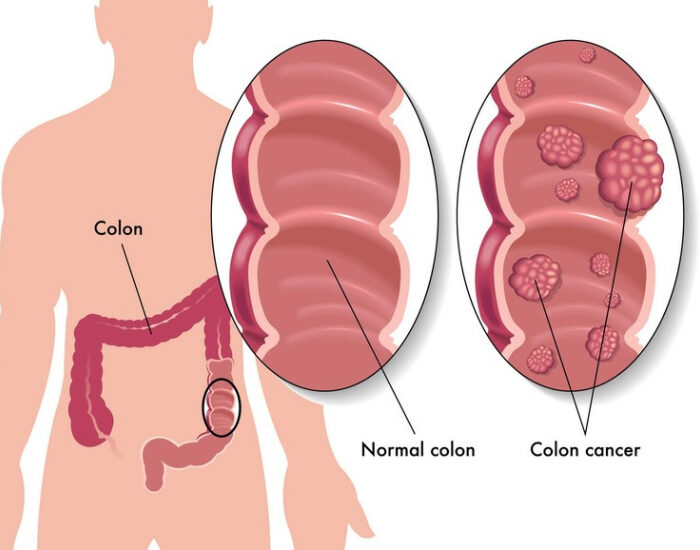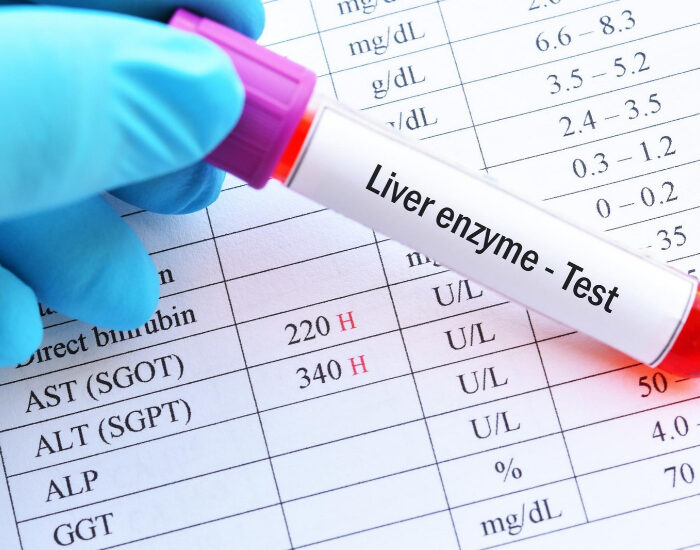
FibroScan can be particularly useful when someone has fatty liver, elevated liver enzymes, metabolic risk factors, chronic viral hepatitis or another condition that may affect the liver over time. One of its biggest advantages is that it can provide information about liver fibrosis without requiring a traditional surgical biopsy.
But a FibroScan is not automatically necessary for everyone with an abnormal liver test or fatty liver. The decision depends on your medical history, blood tests, imaging findings and overall risk of liver fibrosis.
Important Note
Being referred for a FibroScan does not mean that you have cirrhosis or advanced liver disease. In many cases, the test is recommended because your doctor wants a clearer picture of your liver health without immediately turning to an invasive procedure. Understanding whether there is significant fibrosis can help your healthcare team decide what monitoring or treatment is appropriate.
What Is a FibroScan?
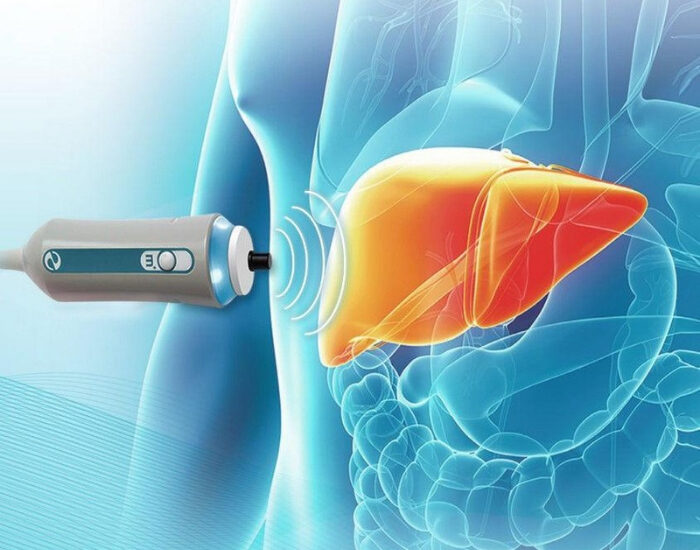
FibroScan is a noninvasive test that uses specialized ultrasound technology to assess the liver.
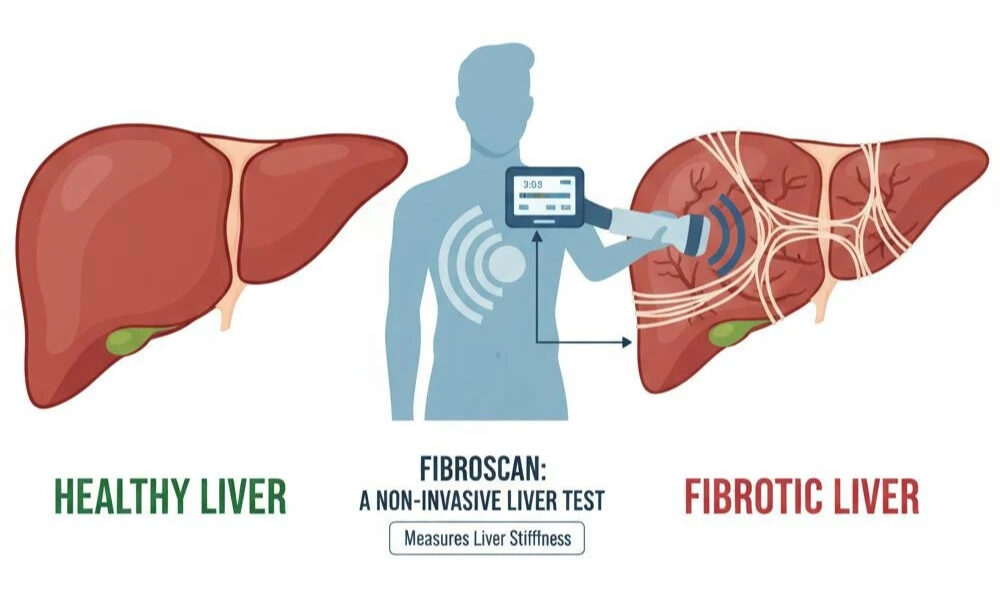
It is sometimes called transient elastography. During the examination, a handheld probe is placed against the skin over the liver. The device sends controlled vibrations through the liver and measures how quickly waves travel through the tissue.
The measurement provides an estimate of liver stiffness. In general, scarred liver tissue is stiffer than healthy liver tissue, so liver stiffness can provide useful information about the likelihood of fibrosis.
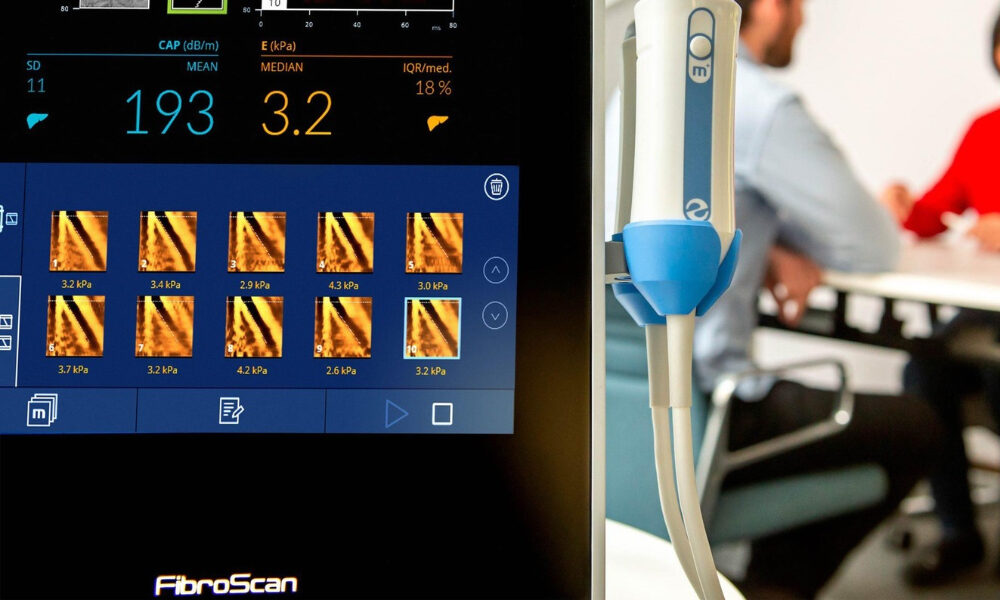
FibroScan can also provide a measurement related to liver fat called the controlled attenuation parameter (CAP). CAP can help estimate the degree of hepatic steatosis, or fat accumulation in the liver.
This means one brief examination can provide two important pieces of information: an assessment related to liver stiffness and an estimate of liver fat.
What Does a FibroScan Measure?
FibroScan primarily measures liver stiffness and provides an estimate of liver fat.
These measurements answer different questions.
The liver stiffness measurement helps your physician assess the likelihood of liver fibrosis, which is the development of scar tissue following ongoing liver injury or inflammation.
The CAP measurement estimates the amount of fat present in the liver.
It is important not to confuse these two measurements. A person can have substantial liver fat without advanced fibrosis, while another person may have significant fibrosis even if the amount of visible liver fat is not particularly high.
That is why doctors consider both the amount of liver fat and the degree of possible scarring when evaluating liver disease.
What Is Liver Stiffness?
Liver stiffness is an indirect measurement that can help estimate the likelihood of liver fibrosis.
Fibrosis develops when repeated liver injury causes scar tissue to accumulate. Early fibrosis may cause no symptoms, which makes it difficult to recognize without testing.
As fibrosis becomes more extensive, the liver can become progressively stiffer.
A FibroScan cannot simply look inside the liver and photograph scar tissue. Instead, it measures how mechanical waves move through the liver and uses that information to estimate stiffness.
Your physician interprets the result in combination with your medical history, blood tests and other findings.
Why Is Liver Fibrosis Important?
Fibrosis is important because the amount of liver scarring is a major factor in determining the risk of future liver complications.
Many people with fatty liver or another chronic liver condition never develop advanced fibrosis. Others may gradually develop more significant scarring over years.
Fibrosis can progress through different stages. Early scarring may be limited, while advanced fibrosis can approach or progress to cirrhosis.
Knowing whether significant fibrosis is likely can help doctors determine how closely a patient should be monitored and whether additional evaluation is appropriate.
What Is the CAP Score?
The controlled attenuation parameter, or CAP, is a FibroScan measurement used to estimate liver fat.
When fat accumulates in the liver, it changes how ultrasound signals travel through the tissue. FibroScan can use these changes to generate a CAP measurement.
The CAP result is generally reported in decibels per meter (dB/m). Higher measurements generally indicate greater amounts of liver fat, although the exact interpretation depends on the equipment, clinical context and other factors.
CAP can be useful when fatty liver is suspected, but it does not replace the complete clinical evaluation.
Who Needs a FibroScan?
FibroScan may be recommended for people who have risk factors or findings suggesting chronic liver disease or possible liver fibrosis.
Common situations in which a physician may consider FibroScan include:
- Fatty liver detected on imaging
- Persistent elevation of liver enzymes
- Metabolic dysfunction-associated steatotic liver disease (MASLD)
- Type 2 diabetes or significant insulin resistance
- Obesity or multiple metabolic risk factors
- Chronic hepatitis B or hepatitis C
- Alcohol-associated liver disease
- Known or suspected liver fibrosis
- Monitoring of certain chronic liver conditions
- Uncertainty about the degree of liver scarring
The test is not necessarily needed simply because one liver enzyme is mildly elevated once. Your physician may first repeat the blood work or investigate more common causes.
Why Is FibroScan Commonly Used for Fatty Liver?
FibroScan can help determine whether someone with fatty liver may also have clinically important fibrosis.
Fatty liver is common, particularly among people with obesity, type 2 diabetes, high triglycerides, insulin resistance and other metabolic risk factors.
Finding liver fat is only part of the evaluation. The more important question for some patients is whether the liver has developed significant scarring.
A person may have fatty liver for years without developing advanced fibrosis. Another person with similar imaging findings may have a higher risk of progression.
FibroScan can help physicians distinguish between these situations and determine who may benefit from closer follow-up.
MASLD and FibroScan
FibroScan can be useful when metabolic dysfunction-associated steatotic liver disease, or MASLD, is suspected.
MASLD is the current terminology used for steatotic liver disease associated with metabolic dysfunction.
Risk factors include type 2 diabetes, overweight or obesity, high blood pressure, abnormal cholesterol or triglycerides and other features of metabolic dysfunction.
Because MASLD can range from simple liver fat to disease with inflammation and fibrosis, determining fibrosis risk is an important part of evaluation.
FibroScan may be one component of that assessment.
Can FibroScan Help If Liver Enzymes Are Elevated?
Yes, FibroScan may be useful when liver enzymes remain elevated and fatty liver or fibrosis is a concern.
ALT and AST can provide clues about liver-cell injury, but they do not directly measure liver scarring.
It is also possible to have significant liver disease with normal or only mildly elevated liver enzymes. This is why blood tests and fibrosis assessment can complement one another.
If your liver enzymes have remained abnormal, your gastroenterologist may consider FibroScan alongside other tests to better understand the condition of your liver.
How Does a FibroScan Work?
FibroScan works by sending a small vibration through the liver and measuring the movement of waves through the tissue.
Before the test, you will generally be asked to lie down and expose the right side of your abdomen.
The technician or healthcare professional places the FibroScan probe against the skin over the liver. You may feel a brief tapping or vibration as measurements are taken.
The device collects multiple readings and produces measurements that can be reviewed by your healthcare provider.
The procedure does not involve cutting the skin, inserting a needle into the liver or using general anesthesia.
How Long Does a FibroScan Take?
A FibroScan is generally a quick examination and often takes only a few minutes to perform.
The exact appointment length can vary depending on the clinic and whether other parts of your medical evaluation are being completed at the same visit.
Because there is no surgical recovery period, most people can return to their normal activities immediately after the examination.
Get answers instead of guessing
Request a visit with Dr. Muhammad Ali Khan at our Katy and Cypress offices. Most major insurance plans are accepted and self-pay options are available.
Does FibroScan Hurt?
FibroScan is generally painless.
The probe rests against the skin, and you may notice a light tapping or vibration during measurements.
There is no incision and no needle entering the liver.
Some people experience mild discomfort from maintaining the examination position, but the test itself is generally well tolerated.
How Do You Prepare for a FibroScan?
Preparation instructions can vary by clinic, but patients are commonly asked to avoid eating for several hours before the test.
Fasting can help improve the reliability of the examination. Your clinic should provide specific instructions about when to stop eating and drinking before the appointment.
Continue prescription medications unless your healthcare provider specifically tells you otherwise.
If you are unsure whether you need to fast or whether a medication should be taken before the test, contact the medical office before your appointment.
What Do FibroScan Results Mean?
FibroScan results are interpreted according to liver stiffness and liver fat measurements, but there is no single number that means exactly the same thing for every patient.
Liver stiffness is commonly reported in kilopascals (kPa). In general, higher liver stiffness can be associated with a greater likelihood of significant fibrosis.
However, interpretation is more complicated than simply comparing your result with an online chart.
Different liver diseases can produce different stiffness patterns, and factors such as inflammation, congestion and other conditions can affect measurements.
Your physician therefore interprets the FibroScan result alongside your diagnosis, blood tests, imaging and clinical history.
What Does a High kPa Result Mean?
A higher liver stiffness measurement may indicate a greater likelihood of liver fibrosis, but it does not automatically diagnose cirrhosis.
This distinction is important.
Patients who receive a higher-than-expected result sometimes immediately assume they have advanced liver disease. That conclusion cannot be made from the number alone.
Inflammation, recent liver injury, congestion and other factors can sometimes influence liver stiffness.
Your specialist will determine what the result means in the context of your other findings.
How Accurate Is FibroScan?
FibroScan is a useful noninvasive tool for assessing liver fibrosis risk, but it is not perfect.
Its usefulness depends on factors including the underlying liver condition, the quality of the measurements and the clinical situation.
Doctors may combine FibroScan with blood-based fibrosis scores, ultrasound or other imaging to improve the overall assessment.
In selected cases where noninvasive tests do not provide enough information, additional evaluation may be necessary.
Is FibroScan Better Than a Liver Biopsy?
FibroScan and liver biopsy answer related but different questions, and FibroScan can reduce the need for biopsy in some patients.
A liver biopsy involves removing a small sample of liver tissue with a needle so it can be examined under a microscope. It can provide detailed information about inflammation, fibrosis and other microscopic changes.
However, biopsy is invasive and carries risks such as bleeding, pain and infection.
FibroScan is noninvasive and can be repeated over time, making it particularly useful for monitoring liver disease.
It does not completely replace biopsy in every clinical situation. A biopsy may still be recommended when the diagnosis is uncertain or when detailed tissue information is necessary.
FibroScan vs. Ultrasound: What's the Difference?
Ultrasound creates images of the liver and surrounding structures, while FibroScan measures liver stiffness and estimates liver fat.
An abdominal ultrasound can help identify fatty liver, gallstones, bile duct abnormalities, masses and other structural findings.
FibroScan does not provide the same type of anatomical picture. Instead, it gives quantitative measurements related to liver stiffness and fat.
For this reason, the two tests can complement one another rather than compete with one another.
FibroScan vs. MRI: Which Is Better?
FibroScan and MRI are different tools, and the best option depends on the clinical question.
MRI can provide highly detailed images and specialized techniques can quantify liver fat or assess fibrosis. However, MRI is more expensive, less accessible in some settings and generally takes longer.
FibroScan is quick, noninvasive and relatively simple to perform, making it a convenient option for many patients who need fibrosis risk assessment.
Your doctor will determine which test is appropriate based on your symptoms, diagnosis and previous results.
Important Note
If your doctor recommends FibroScan, try not to interpret the referral as a diagnosis of advanced liver disease. The purpose of noninvasive testing is often to answer a much simpler question: “Does this liver need closer attention?” Getting that information can actually reduce uncertainty and help your care team choose the right level of follow-up.
Who May Not Need a FibroScan?
Not everyone with fatty liver or a mildly abnormal liver test needs FibroScan immediately.
For example, someone with a single minor laboratory abnormality may simply need repeat blood testing and a review of possible causes.
Another person may have no evidence of liver disease and no meaningful risk factors, making fibrosis testing unnecessary.
On the other hand, persistent abnormalities, multiple metabolic risk factors or imaging findings may make fibrosis assessment more useful.
The decision should be individualized rather than based solely on one laboratory value.
FibroScan for Hepatitis B and C
FibroScan can help assess liver fibrosis in people with chronic viral hepatitis.
Chronic hepatitis B and hepatitis C can cause ongoing liver inflammation and may eventually lead to fibrosis or cirrhosis.
Assessing liver stiffness can help doctors understand the current state of the liver and guide monitoring or treatment decisions.
FibroScan is not a replacement for appropriate viral hepatitis testing and treatment. It is one component of comprehensive liver care.
FibroScan for Alcohol-Associated Liver Disease
FibroScan may also be useful when alcohol-associated liver disease is suspected.
Long-term excessive alcohol exposure can cause fatty liver, inflammation, fibrosis and cirrhosis.
Measuring liver stiffness can provide useful information about possible fibrosis, although results should always be interpreted in clinical context.
If alcohol is contributing to liver disease, reducing or stopping alcohol may be an important part of treatment. Your healthcare provider can help determine what approach is appropriate for you.
Can FibroScan Be Used to Monitor Liver Health?
Yes. FibroScan can sometimes be repeated over time to monitor changes in liver stiffness or liver fat.
This can be helpful when a patient is making lifestyle changes or receiving treatment for a chronic liver condition.
However, changes in measurements should be interpreted carefully. A single result does not tell the entire story, and small fluctuations do not necessarily mean that the disease has suddenly improved or worsened.
Long-term trends, symptoms, blood tests and other clinical findings remain important.
What Are the Benefits of FibroScan?
The major advantage of FibroScan is that it provides useful liver information without requiring an invasive procedure.
Other potential benefits include:
- Noninvasive testing
- No surgical incision
- No needle inserted into the liver
- Usually painless
- Quick examination
- Little or no recovery time
- Can be repeated when clinically appropriate
- Provides information about liver stiffness
- Can estimate liver fat
For many patients, these advantages make FibroScan an appealing part of liver evaluation.
What Are the Limitations of FibroScan?
FibroScan is useful, but it cannot answer every question about liver disease.
It does not provide a microscopic examination of liver tissue, and it cannot diagnose every liver condition.
Some factors can also make measurements less reliable or affect interpretation.
For example, significant inflammation, fluid congestion or certain technical factors may influence liver stiffness.
This is why FibroScan should be viewed as one part of an overall liver evaluation rather than a stand-alone diagnosis.
What Can You Do If FibroScan Shows Liver Fat?
If FibroScan suggests liver fat, the next step is usually to address the factors contributing to metabolic liver disease.
Depending on your health, this may include improving nutrition, increasing physical activity, managing body weight and controlling conditions such as diabetes, high blood pressure and high cholesterol.
A Mediterranean-style dietary pattern and regular physical activity are commonly used approaches for improving metabolic health.
The goal is not a short-term “detox.” It is a sustainable improvement in the factors affecting your liver.
What Happens If FibroScan Suggests Significant Fibrosis?
If the results suggest significant fibrosis, your physician may recommend additional evaluation, closer monitoring or treatment depending on the underlying liver condition.
A higher stiffness result does not automatically mean that you have cirrhosis. Your doctor may review blood-based fibrosis scores, platelet count, liver enzymes, imaging and other findings before deciding what the result means.
In selected cases, additional imaging or a liver biopsy may be considered.
The goal is to determine your actual risk rather than making a diagnosis from one measurement.
FibroScan Testing in Cypress and Katy
If you have fatty liver, abnormal liver enzymes or another condition that may affect your liver, FibroScan may be an appropriate part of your evaluation.
Patients in Cypress, Katy and surrounding Houston-area communities can discuss noninvasive liver assessment with a gastroenterology professional.
At United Gastro TX, liver-related concerns can be evaluated alongside other gastrointestinal conditions. Depending on your medical history and previous testing, your provider can determine whether FibroScan or another form of liver assessment is appropriate.
Learn more about FibroScan in Cypress and Katy, TX.
Could FibroScan Help Assess Your Liver Health?
If you have fatty liver, persistent abnormal liver enzymes or another risk factor for liver disease, a noninvasive fibrosis assessment may provide useful information about your liver health.
Frequently Asked Questions About FibroScan
What does a FibroScan test for?
FibroScan primarily measures liver stiffness and provides an estimate of liver fat. Liver stiffness can help assess the likelihood of liver fibrosis, while the CAP measurement can estimate hepatic steatosis.
Is FibroScan painful?
FibroScan is generally painless. A probe is placed against the skin over the liver, and patients may feel brief tapping or vibration during measurements.
How long does a FibroScan take?
The examination is generally quick and often takes only a few minutes. Your total appointment may be longer if additional medical evaluation is performed.
Do you have to fast before a FibroScan?
Many clinics ask patients to fast for several hours before the test. Follow the specific preparation instructions provided by your healthcare provider.
What does a high FibroScan score mean?
A higher liver stiffness measurement can indicate a greater likelihood of liver fibrosis, but it does not automatically diagnose cirrhosis. Results must be interpreted alongside other clinical information.
What is a normal FibroScan result?
There is no single universal number that defines a normal result for every patient. Interpretation depends on the liver condition being evaluated, the measurement quality and other clinical factors.
Can FibroScan detect fatty liver?
FibroScan can estimate liver fat using the controlled attenuation parameter, or CAP. It can provide useful information about hepatic steatosis but should be interpreted along with other clinical findings.
Is FibroScan the same as a liver biopsy?
No. FibroScan is a noninvasive measurement of liver stiffness and liver fat, while a biopsy removes a small tissue sample for microscopic examination. FibroScan can reduce the need for biopsy in some patients but does not replace it in every situation.
Who should get a FibroScan?
People with fatty liver, persistent abnormal liver enzymes, chronic viral hepatitis, alcohol-associated liver disease or risk factors for liver fibrosis may be candidates. Your physician can determine whether the test is appropriate for you.
Can FibroScan detect cirrhosis?
FibroScan can provide information about liver stiffness that may support an assessment of advanced fibrosis or cirrhosis, but the result should not be interpreted alone. Additional clinical and laboratory information may be necessary.
Can FibroScan replace an ultrasound?
Not completely. Ultrasound provides anatomical images of the liver, gallbladder and bile ducts, while FibroScan provides quantitative measurements related to liver stiffness and fat. The tests can complement each other.
Can FibroScan show if fatty liver is improving?
Repeated FibroScan measurements may help monitor liver fat or stiffness over time in selected patients. However, results can vary, so changes should be interpreted by your healthcare provider rather than judged from one measurement.
The Bottom Line on FibroScan
FibroScan is a quick, noninvasive tool that can provide valuable information about liver fat and liver stiffness.
For people with fatty liver, elevated liver enzymes, chronic hepatitis or other risk factors for liver disease, understanding the amount of possible fibrosis can be more important than simply knowing that liver fat is present.
FibroScan does not diagnose every liver condition and does not completely replace blood tests, imaging or biopsy when those tests are clinically necessary. Instead, it adds another useful piece of information to the overall picture.
If your doctor has recommended FibroScan, it does not necessarily mean that you have advanced liver disease. In many cases, the test is simply a way to replace uncertainty with better information and determine whether your liver needs monitoring or additional evaluation.
Medical Disclaimer: This article is intended for general educational purposes and does not replace personalized medical advice, diagnosis or treatment. FibroScan results should be interpreted by a qualified healthcare professional in the context of your medical history, blood tests and other findings. If you have jaundice, severe abdominal pain, vomiting blood, black stools, confusion or another serious symptom, seek prompt medical attention.
Where to be seen in Katy and Cypress
United Gastroenterology Associates has two offices: Katy, at 23920 Katy Freeway, Suite 555, next to Memorial Hermann Katy Hospital, and Cypress, at 21216 Northwest Freeway, Suite 640, on US-290. Both are open Monday through Friday, 8:30 AM to 5:00 PM, closed for lunch from 12:00 to 1:30 PM, and serve patients from Fulshear, Richmond and across Greater Houston. Call (346) 340-4414 for either office.
Katy office
23920 Katy Freeway, Suite 555
Katy, TX 77494
Memorial Hermann Medical Plaza 1
Next steps
If you are dealing with fibroscan or any ongoing digestive concern, a focused evaluation can find the cause and start the right treatment. Dr. Muhammad Ali Khan and the team at United Gastroenterology Associates see adults from Katy, Cypress, Fulshear, Richmond, Greater Houston and across Texas. Call (346) 340-4414 or request an appointment today.
If you have severe pain, vomit blood, pass black stools or have chest pain, call 911 or go to the nearest emergency room.