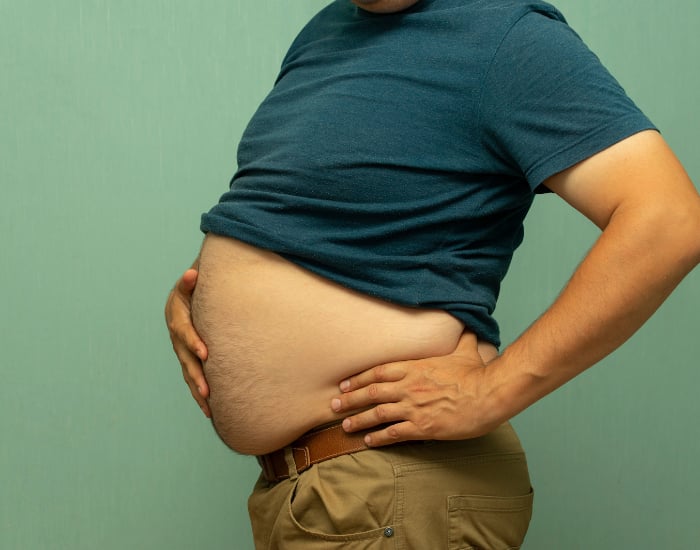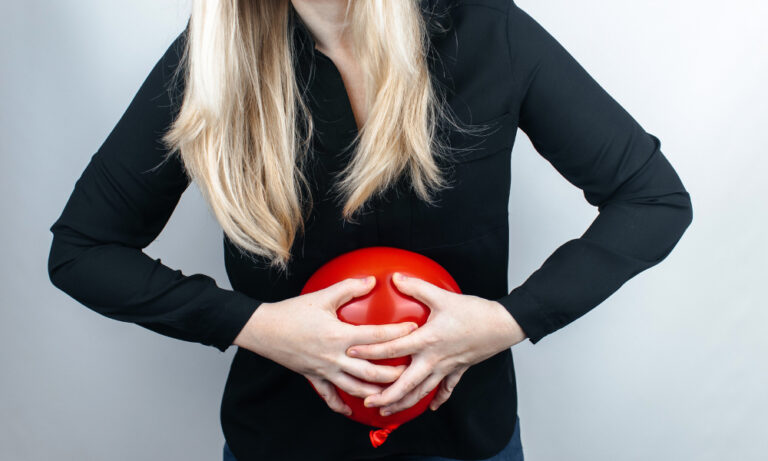
Why do I feel bloated right after eating?
Feeling bloated right after eating is usually caused by a large or fast meal, swallowed air, carbonated drinks, fatty foods that slow stomach emptying, or foods you do not tolerate well. When it happens often, common medical causes are functional dyspepsia (a sensitive stomach that feels full too easily), gastritis, acid reflux, slow stomach emptying (gastroparesis), constipation and irritable bowel syndrome.
Timing clues for bloating after eating
- Within minutesStomach stretch from portion size, swallowed air, carbonation or a sensitive stomach.
- One to three hoursSlow emptying after fatty meals, gastritis or reflux.
- Several hours laterFermentation in the intestines from intolerances, IBS or SIBO.
What is functional dyspepsia?
Functional dyspepsia is a common condition in which the stomach is extra sensitive and may not relax or empty normally after meals, causing early fullness, bloating, upper abdominal discomfort or burning, and nausea, without a visible cause on endoscopy. It is a disorder of gut-brain interaction, not an imagined problem, and treatments include H. pylori testing, acid-reducing medicine, smaller meals and medicines that calm stomach nerves.
What does feeling full after a few bites mean?
Feeling full after only a few bites, called early satiety, often comes from functional dyspepsia or slow stomach emptying (gastroparesis), especially in people with diabetes. It can also be caused by gastritis, ulcers, certain medicines such as GLP-1 drugs, and, less commonly, a blockage or tumor. Early fullness with weight loss or vomiting should be evaluated promptly.
| Cause | Typical clues |
|---|---|
| Large or fast meals | Bloating that settles within an hour or two |
| Functional dyspepsia | Early fullness, upper belly discomfort, normal tests |
| Gastroparesis | Nausea, vomiting undigested food, diabetes |
| Gastritis or ulcer | Burning or gnawing upper abdominal pain |
| Acid reflux | Heartburn, belching, sour taste |
| Food intolerance or IBS | Bloating hours later, gas, change in stools |
| GLP-1 medicines | Fullness and nausea after starting or increasing a dose |
Have symptoms like these?
Dr. Muhammad Ali Khan, a board-certified gastroenterologist and hepatologist, sees adults at our Katy and Cypress offices, serving patients across Greater Houston.
How can I stop feeling bloated after eating?
To reduce bloating after eating, eat smaller meals more often, eat slowly and chew well, limit fatty and fried foods that slow stomach emptying, avoid carbonated drinks and gum, sit upright and take a short walk after meals, and notice which foods trigger symptoms. If bloating follows meals almost every day, see a doctor to check for dyspepsia, gastritis or slow emptying.
- Try five or six small meals instead of two or three large ones
- Choose lower-fat foods and limit fried meals
- Drink still water between meals rather than large amounts with food
- Walk for 10 minutes after eating
- Ask your doctor whether any medicine could be slowing digestion
Tip: Note how soon bloating starts
Write down how many minutes after eating your bloating begins. Bloating within minutes and bloating hours later point to different causes and different tests.
When is bloating after eating a warning sign?
See a doctor promptly if bloating after eating comes with unexplained weight loss, feeling full after a few bites, persistent vomiting, vomiting blood, black stools, trouble swallowing, iron-deficiency anemia, severe abdominal pain, or new symptoms after age 60. These signs can point to conditions that need testing such as an upper endoscopy.
Warning signs
- Unexplained weight loss or early fullness
- Persistent vomiting or vomiting blood
- Black stools or iron-deficiency anemia
- Trouble swallowing or severe pain
- New symptoms after age 60
How is the cause of bloating after meals diagnosed?
Diagnosis begins with your history, medicines and an exam. Tests may include an H. pylori breath or stool test, blood work, an upper endoscopy (EGD) to look for gastritis, ulcers or blockage, a gastric emptying study for suspected gastroparesis, and breath tests for intolerances or SIBO. Treatment then targets the confirmed cause.
Learn more about upper endoscopy, stomach pain after eating and bloating and gas after every meal.
Get answers instead of guessing
Request a visit with Dr. Muhammad Ali Khan at our Katy and Cypress offices. Most major insurance plans are accepted and self-pay options are available.
Key takeaways
- Being bloated after eating often comes from meal size, speed, fat content or swallowed air.
- Frequent bloating after meals may be functional dyspepsia, gastritis, reflux or slow stomach emptying.
- Feeling full after a few bites deserves evaluation, especially with weight loss.
- Smaller, lower-fat meals eaten slowly reduce bloating for many people.
- Vomiting, bleeding, trouble swallowing or weight loss need prompt care.
Frequently asked questions
How long should bloating last after eating?
Normal post-meal bloating usually eases within one to three hours. Bloating that lasts much longer or happens after most meals should be checked.
Can GLP-1 medicines cause bloating after eating?
Yes. Medicines such as semaglutide and tirzepatide slow stomach emptying, which can cause fullness, bloating and nausea. Talk to your prescriber if symptoms are troublesome.
Is bloating after eating a sign of gastritis?
It can be, especially with burning or gnawing upper abdominal pain or nausea. An H. pylori test or endoscopy can confirm it.
What should I eat to avoid bloating after meals?
Smaller portions of lower-fat foods such as lean proteins, rice, cooked vegetables and ripe fruit are usually easier on the stomach.
Do I need a referral to see a gastroenterologist in Katy or Cypress?
It depends on your insurance plan. Many PPO plans let you book a specialist directly, while some HMO plans require a referral from your primary care doctor. Call (346) 340-4414 and the team can help you check.
Sources
- NIDDK — Indigestion (dyspepsia)
- NIDDK — Gastroparesis
- NIDDK — Gas in the digestive tract
- MedlinePlus — Indigestion
- American College of Gastroenterology — Dyspepsia
Where to be seen in Katy and Cypress
United Gastroenterology Associates has two offices: Katy, at 23920 Katy Freeway, Suite 555, next to Memorial Hermann Katy Hospital, and Cypress, at 21216 Northwest Freeway, Suite 640, on US-290. Both are open Monday through Friday, 8:30 AM to 5:00 PM, closed for lunch from 12:00 to 1:30 PM, and serve patients from Fulshear, Richmond and across Greater Houston. Call (346) 340-4414 for either office.
Katy office
23920 Katy Freeway, Suite 555
Katy, TX 77494
Memorial Hermann Medical Plaza 1
Next steps
If you are dealing with bloated after eating or any ongoing digestive concern, a focused evaluation can find the cause and start the right treatment. Dr. Muhammad Ali Khan and the team at United Gastroenterology Associates see adults from Katy, Cypress, Fulshear, Richmond, Greater Houston and across Texas. Call (346) 340-4414 or request an appointment today.
If you have severe pain, vomit blood, pass black stools or have chest pain, call 911 or go to the nearest emergency room.