
Home › Advanced Procedures › Esophagogastroduodenoscopy (EGD)
Upper GI Procedure · Katy & Cypress
Esophagogastroduodenoscopy (EGD) in Katy & Cypress, TX
An esophagogastroduodenoscopy (EGD), also called an upper endoscopy, is a short outpatient exam that uses a thin, flexible camera to look inside the esophagus, stomach and duodenum. At United Gastroenterology Associates, PLLC, EGD is performed by Muhammad Ali Khan, MD, FACP, FASGE, a board-certified gastroenterologist, to find the cause of heartburn, trouble swallowing, upper abdominal pain, nausea, bleeding and other upper digestive symptoms for patients from Katy, Cypress and Greater Houston.
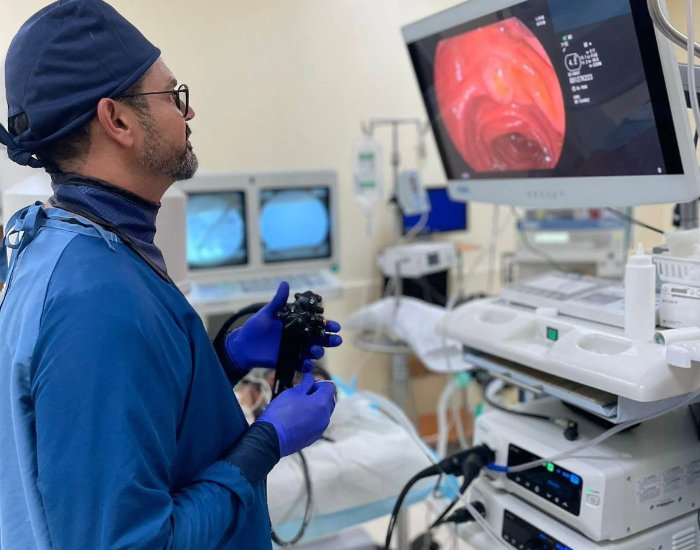
Upper endoscopy (EGD) with Dr. Muhammad Ali Khan
Meet Your EGD Doctor: Muhammad Ali Khan, MD, FACP, FASGE
BOARD-CERTIFIED Gastroenterologist and Hepatologist
CREDENTIALS AT A GLANCE
Board-Certified
Gastroenterology, hepatology, and internal medicine
Academic Medicine
Former Associate Professor, UT MD Anderson Cancer Center
Published Research
More than 100 peer-reviewed articles in gastroenterology
FACP and FASGE
Fellow, American College of Physicians and American Society for Gastrointestinal Endoscopy

“My gastroenterology & hepatology practice is dedicated to working closely with you to develop a personalized treatment plan that meets your unique needs and preferences.”
Dr. Muhammad Ali Khan, MD, FACP, FASGE
Board-certified gastroenterologist and hepatologist, United Gastroenterology Associates
EGD at United Gastroenterology Associates is performed by Dr. Khan, a gastroenterologist board-certified in gastroenterology, hepatology and internal medicine and a Fellow of the American Society for Gastrointestinal Endoscopy (FASGE). He evaluates you before the exam, performs the procedure himself and reviews the results and treatment plan with you afterward.
Dr. Khan completed his gastroenterology and hepatology fellowship at the University of Tennessee Health Science Center, is a former Associate Professor at The University of Texas MD Anderson Cancer Center and has authored more than 100 peer-reviewed publications.
Related areas of care
- GERD, heartburn and Barrett’s esophagus
- Difficulty swallowing and esophageal narrowing
- Gastritis, ulcers and H. pylori
- Celiac disease
- Upper GI bleeding and iron-deficiency anemia
What Is an Esophagogastroduodenoscopy (EGD)?
An esophagogastroduodenoscopy (EGD) is a procedure in which a gastroenterologist gently passes an endoscope, a thin, flexible tube with a light and a camera, through the mouth and into the upper digestive tract. The camera shows the lining of the esophagus, stomach and duodenum on a monitor, which is where the name comes from.
An EGD lets the doctor see inflammation, ulcers, narrowing, bleeding, abnormal tissue and growths directly. Through the same scope, small tissue samples (biopsies) can be taken to check for conditions such as H. pylori infection, celiac disease, Barrett’s esophagus or cancer, and some problems can be treated during the same exam.
An EGD examines only the upper digestive tract. The colon is examined with a colonoscopy, and the middle of the small intestine with capsule endoscopy. When both upper and lower symptoms are present, an EGD and a colonoscopy can often be scheduled on the same day.
EGD at a glance
- Also called: upper endoscopy, upper GI endoscopy
- Areas examined: esophagus, stomach and duodenum
- Preparation: usually nothing to eat or drink for about 8 hours
- Sedation: usually given; an adult driver is required
- Exam time: about 10 to 20 minutes
- During the exam: biopsies, dilation, bleeding control and polyp removal are possible
Your own preparation and timing instructions come from the office and may differ.
Board-Certified Gastroenterologist
Gastroenterology, hepatology and internal medicine
Fellow, ASGE
American Society for Gastrointestinal Endoscopy
Short Outpatient Exam
About 10 to 20 minutes, with sedation for comfort
Two Locations
Offices in Katy and Cypress
Why Is an EGD Performed?
An EGD is used to find the cause of symptoms that start in the upper digestive tract and to check on known conditions. Common reasons include chronic heartburn or GERD that does not improve with treatment, difficulty swallowing or food sticking, and upper abdominal pain that keeps coming back.
Guidelines from the American College of Gastroenterology recommend an endoscopy when reflux comes with warning signs such as trouble swallowing, weight loss, bleeding or vomiting, or when symptoms continue despite acid-reducing medicine. An EGD is also used to look for the source of iron-deficiency anemia or black, tarry stools, and to take biopsies when celiac disease is suspected.
For people already diagnosed with conditions such as Barrett’s esophagus or ulcers, a repeat EGD may be recommended to check healing or watch for changes over time. Dr. Khan decides whether an EGD is the right test based on your symptoms, age and medical history.
Symptoms that may lead to an EGD
- Heartburn or acid reflux on most days, or despite medicine
- Difficulty or pain with swallowing, or food getting stuck
- Upper abdominal pain, indigestion or early fullness
- Ongoing nausea or vomiting
- Vomiting blood, black stools or unexplained anemia
- Unintentional weight loss with digestive symptoms
A symptom alone does not confirm a diagnosis. Symptoms should be evaluated by a qualified medical professional.
What Conditions Can an EGD Diagnose or Treat?
An EGD shows the lining of the upper digestive tract in detail, so it can confirm or rule out many conditions in a single exam. Biopsies add information that the camera alone cannot provide, and several problems can be treated during the same procedure.
Finding the cause of a symptom is the first step. Dr. Khan explains what the exam showed and builds a treatment plan around it, whether that means medicine, diet changes, H. pylori treatment, follow-up surveillance or another test.
Ongoing Heartburn, Swallowing Trouble or Upper Abdominal Pain?
Dr. Khan can review your symptoms and tell you whether an EGD or another test makes the most sense. New patients are welcome at both offices.
How to Prepare and What Happens During an EGD
Preparing for an EGD is simple compared with a colonoscopy. Always follow the specific instructions the office gives you, because they may differ from this overview. See the full EGD preparation instructions.
Review your medicines
Tell the team about blood thinners, aspirin and other NSAIDs, diabetes medicines, GLP-1 medicines and any allergies. Do not stop a prescription medicine unless your doctor tells you to.
Keep your stomach empty
Most patients are asked not to eat or drink anything for about 8 hours before the exam, so the stomach is empty and the view is clear.
Arrange a ride
Because sedation is used, plan for a responsible adult to drive you home. Bring your photo ID, insurance card and a list of your medicines.
The exam
You lie on your left side and receive sedation through an IV. Dr. Khan gently passes the endoscope through your mouth while you breathe normally. The exam usually takes about 10 to 20 minutes.
Recovery
You rest for about an hour while the sedation wears off. A mild sore throat, bloating or nausea is common and usually passes within a day. Most people return to normal activities the next day.
Results
Dr. Khan can describe what he saw shortly after the exam. Biopsy results usually take a few days or longer, and the office will follow up with you.
EGD vs. Colonoscopy vs. Capsule Endoscopy
These three exams look at different parts of the digestive tract. Which one you need depends on where your symptoms are likely coming from. Read more about the difference between endoscopy and colonoscopy.
Is an EGD Safe?
An EGD is a common, low-risk procedure. Possible complications are uncommon and include a reaction to the sedation, bleeding (usually minor, after a biopsy or treatment) and, rarely, a tear (perforation) in the lining of the esophagus, stomach or duodenum. The risk can be slightly higher when treatments such as dilation are performed.
Call the office or seek emergency care after an EGD if you have:
- Trouble breathing, or chest pain
- Throat pain or trouble swallowing that gets worse
- Severe or worsening abdominal pain
- Vomiting blood, or black, tarry stools
- Fever or chills
Insurance and Self-Pay Options
United Gastroenterology Associates participates with many major insurance plans. Coverage and benefits depend on your specific plan and must be verified, and some plans require prior authorization or a referral for an EGD. Please contact the office or your insurance carrier to verify benefits for your specific plan and service. Patients without insurance can ask about self-pay options.
EGD (Upper Endoscopy) FAQs
Answers to common questions about esophagogastroduodenoscopy at United Gastroenterology Associates.
What is an esophagogastroduodenoscopy (EGD)?
An esophagogastroduodenoscopy, or EGD, is an upper endoscopy. A gastroenterologist passes a thin, flexible tube with a light and camera through the mouth to look at the lining of the esophagus, the stomach and the duodenum (the first part of the small intestine). Biopsies and some treatments can be done during the same exam.
Is an EGD the same as an upper endoscopy?
Yes. EGD, upper endoscopy and upper GI endoscopy all describe the same procedure. The full name, esophagogastroduodenoscopy, simply lists the three areas examined: the esophagus, stomach and duodenum.
How long does an EGD take?
The exam itself usually takes about 10 to 20 minutes. Plan on spending a few hours at the facility in total, including check-in, preparation and about an hour of recovery while the sedation wears off.
Am I asleep during an EGD?
Most patients receive sedation or anesthesia, so they are relaxed or asleep and remember little of the exam. You breathe normally throughout, and your heart rate, blood pressure and oxygen level are monitored the whole time.
How long do I need to fast before an EGD?
Most patients are asked not to eat or drink for about 8 hours before the exam so the stomach is empty. Your exact fasting time and any medicine changes come from the office, so follow the written instructions you are given.
Can I drive after an EGD?
No. Because of the sedation, you need an adult to drive you home, and you should not drive, operate machinery or make important decisions for the rest of the day. Most people return to normal activities the next day.
What can an EGD diagnose?
An EGD can find or rule out problems such as GERD damage and esophagitis, Barrett’s esophagus, hiatal hernia, gastritis, stomach and duodenal ulcers, H. pylori infection (with biopsy), celiac disease (with biopsy), narrowing of the esophagus, sources of upper GI bleeding, and growths or cancers of the esophagus and stomach.
When will I get my EGD results?
Dr. Khan can usually tell you what he saw shortly after the exam. If biopsies were taken, the pathology results usually take a few days or longer, and the office will follow up with you to review them and the next steps.
Is an EGD painful?
Most people feel little or nothing because of the sedation. Afterward, a mild sore throat, bloating or nausea is common and usually settles within a day. Biopsies themselves are not painful.
EGD Near Katy and Cypress
Dr. Khan sees patients for upper GI evaluations at both offices of United Gastroenterology Associates, serving Katy, Cypress, Fulshear, Richmond, Rosenberg, Spring, The Woodlands and communities throughout Greater Houston.
United Gastroenterology Associates – Katy
Katy Freeway (I-10) near the Grand Parkway
- Address: 23920 Katy Freeway, Suite 555, Katy, TX 77494
- Phone: (346) 340-4414
- Hours: Monday–Friday, 8:30 AM–5:00 PM (closed 12:00–1:30 PM for lunch; last appointment 4:30 PM)
United Gastroenterology Associates – Cypress
Northwest Freeway (US-290) in Cypress
- Address: 21216 Northwest Freeway, Suite 640, Cypress, TX 77429
- Phone: (346) 340-4414
- Hours: Monday–Friday, 8:30 AM–5:00 PM (closed 12:00–1:30 PM for lunch; last appointment 4:30 PM)
Schedule an EGD Consultation
If you have ongoing heartburn, trouble swallowing, upper abdominal pain or signs of bleeding, Dr. Khan can evaluate you and recommend the right test. Call (346) 340-4414 or request an appointment online.
Sources
- National Institute of Diabetes and Digestive and Kidney Diseases. Upper GI Endoscopy. niddk.nih.gov
- American Society for Gastrointestinal Endoscopy. Understanding Upper Endoscopy. asge.org
- American Journal of Gastroenterology. ACG Clinical Guideline for the Diagnosis and Management of Gastroesophageal Reflux Disease (2022). journals.lww.com
This page provides general educational information and does not replace medical advice, diagnosis or treatment. Follow the preparation instructions provided by your physician. For a medical emergency, call 911. Last updated October 5, 2026.