What does greasy stool indicate about pancreas health?
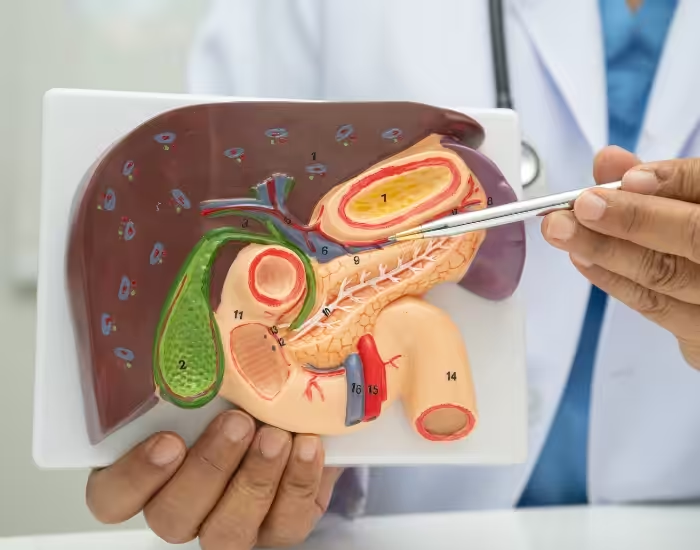
Greasy stool, called steatorrhea, can indicate exocrine pancreatic insufficiency (EPI), a condition where the pancreas does not release enough enzymes to break down fat. Undigested fat passes into the stool, making it pale, oily, bulky, foul-smelling and likely to float. EPI is most often caused by chronic pancreatitis, cystic fibrosis, pancreatic surgery, long-standing diabetes or, less commonly, pancreatic cancer.
How the pancreas affects your stool
- Healthy pancreasReleases lipase and other enzymes that digest fat in the small intestine.
- Enzyme shortfallDamaged pancreas makes too little lipase.
- Greasy stoolUndigested fat passes out, with weight loss and vitamin deficiency.
What does greasy stool look like?
Greasy stool is often pale or clay-colored, bulky, soft or loose, shiny or oily, and very foul-smelling. It may float, stick to the toilet bowl or leave an oily film or orange-yellow droplets on the water. It is often accompanied by bloating, gas, cramping and frequent bowel movements after fatty meals. Compare colors on our stool color chart.
What else can cause greasy stool?
Besides pancreatic problems, greasy stool can be caused by celiac disease, Crohn's disease of the small intestine, small intestinal bacterial overgrowth, bile problems from gallbladder or liver disease, gallbladder removal, certain weight-loss medicines such as orlistat, and eating a very large amount of fat at once. An occasional oily stool after a heavy meal is usually not a concern.
| Cause | Other clues | Key test |
|---|---|---|
| Exocrine pancreatic insufficiency | Weight loss, bloating, history of pancreatitis | Fecal elastase |
| Chronic pancreatitis | Upper abdominal pain to the back, alcohol history | CT, MRI or endoscopic ultrasound |
| Celiac disease | Anemia, bloating, family history | tTG-IgA blood test, biopsy |
| Bile acid problems | After gallbladder removal, liver disease | Liver tests, imaging |
| SIBO | Bloating, gas, loose stools | Breath test |
| Medication | Started orlistat or similar | Medication review |
See a doctor promptly if greasy stool comes with
- Unexplained weight loss
- Yellowing of the skin or eyes, or dark urine
- Upper abdominal pain that spreads to the back
- New diabetes, especially after age 50
- Black or bloody stools
Have symptoms like these?
Dr. Muhammad Ali Khan, a board-certified gastroenterologist and hepatologist, sees adults at our Katy and Cypress offices, serving patients across Greater Houston.
How is pancreatic insufficiency diagnosed?
The main test is fecal elastase, a simple stool test that measures a pancreatic enzyme; low levels suggest EPI. Blood tests check for vitamin A, D, E and K deficiencies, celiac disease and diabetes. Imaging such as CT, MRI or endoscopic ultrasound looks for chronic pancreatitis, cysts or tumors. Your gastroenterologist combines these to confirm the cause.
How is greasy stool from the pancreas treated?
EPI is treated with pancreatic enzyme replacement therapy (PERT), capsules taken with every meal and snack that replace the missing enzymes. Most patients see firmer stools, less bloating and weight gain. Treatment also includes fat-soluble vitamin supplements, avoiding alcohol and smoking, eating balanced meals and treating the underlying pancreatic condition.
Tip: Enzyme capsules work best when taken with the first bites of a meal, not before or after. Ask your doctor about adjusting the dose for larger or higher-fat meals.
When should you see a gastroenterologist?
See a gastroenterologist if greasy stool lasts more than a week or two, keeps returning, or comes with weight loss, abdominal pain, diarrhea or a history of pancreatitis. Dr. Muhammad Ali Khan evaluates pancreatic and digestive causes of greasy stool for patients from Katy, Cypress, Fulshear, Richmond and Greater Houston. Learn more about our pancreatic disorders care and pancreatitis symptoms.
Get answers instead of guessing
Request a visit with Dr. Muhammad Ali Khan at our Katy and Cypress offices. Most major insurance plans are accepted and self-pay options are available.
Key takeaways
- Greasy stool is a sign that fat is not being digested or absorbed.
- Exocrine pancreatic insufficiency is a key cause, often from chronic pancreatitis.
- Celiac disease, bile problems and SIBO can also cause greasy stool.
- Fecal elastase is the main test for pancreatic insufficiency.
- Enzyme replacement with meals is an effective treatment.
Frequently asked questions
Is floating stool always a pancreas problem?
No. Stool can float from extra gas after high-fiber meals. Floating stool that is also greasy, pale and foul-smelling is more concerning.
Can greasy stool be caused by diet?
Yes, an occasional greasy stool can follow a very high-fat meal or eating a lot of nuts or oily fish. Persistent greasy stool needs evaluation.
Can pancreatic cancer cause greasy stool?
It can, especially if a tumor blocks the pancreatic duct, but most cases of greasy stool have other causes. Weight loss and jaundice need prompt testing.
Does greasy stool happen after gallbladder removal?
Some people have looser, greasier stools after gallbladder removal, especially after fatty meals. It usually improves over time. See our diet after gallbladder removal guide.
Is greasy stool dangerous?
Over time, poor fat absorption can cause weight loss and vitamin deficiencies, so persistent greasy stool should be checked.
Do I need a referral to see a gastroenterologist in Katy or Cypress?
It depends on your insurance plan. Many PPO plans let you book a specialist directly, while some HMO plans require a referral from your primary care doctor. Call (346) 340-4414 and the team can help you check.
Sources
- NIDDK — Pancreatitis
- MedlinePlus — Pancreatitis
- MedlinePlus — Malabsorption syndromes
- NIDDK — Celiac disease
- American College of Gastroenterology — Pancreatitis
Where to be seen in Katy and Cypress
United Gastroenterology Associates has two offices: Katy, at 23920 Katy Freeway, Suite 555, next to Memorial Hermann Katy Hospital, and Cypress, at 21216 Northwest Freeway, Suite 640, on US-290. Both are open Monday through Friday, 8:30 AM to 5:00 PM, closed for lunch from 12:00 to 1:30 PM, and serve patients from Fulshear, Richmond and across Greater Houston. Call (346) 340-4414 for either office.
Katy office
23920 Katy Freeway, Suite 555
Katy, TX 77494
Memorial Hermann Medical Plaza 1
Next steps
If you are dealing with greasy stool or any ongoing digestive concern, a focused evaluation can find the cause and start the right treatment. Dr. Muhammad Ali Khan and the team at United Gastroenterology Associates see adults from Katy, Cypress, Fulshear, Richmond, Greater Houston and across Texas. Call (346) 340-4414 or request an appointment today.
If you have severe pain, vomit blood, pass black stools or have chest pain, call 911 or go to the nearest emergency room.