Go to the emergency room now if
You have sudden, severe pain in the upper abdomen, especially if it spreads to your back, with nausea or vomiting, fever, a rapid heartbeat, shortness of breath or yellowing of the skin or eyes. Acute pancreatitis needs hospital care.
What are the main pancreatitis symptoms?
The main symptom of acute pancreatitis is sudden, severe, steady pain in the upper middle or upper left abdomen that often spreads to the back and gets worse after eating. It usually comes with nausea and vomiting, and may include fever, a fast heartbeat and a tender, swollen belly. Chronic pancreatitis causes recurring upper abdominal pain, oily or foul-smelling stools, weight loss and sometimes diabetes.
Many people find the pain eases a little when they sit up and lean forward and gets worse when lying flat. The pain typically builds over minutes to hours and stays constant rather than coming and going in waves, which helps separate it from gas or ordinary indigestion.
| Feature | Acute pancreatitis | Chronic pancreatitis |
|---|---|---|
| Onset | Sudden, over hours | Gradual, over months to years |
| Pain | Severe, constant, upper abdomen into the back | Recurring or ongoing upper abdominal pain, sometimes after meals |
| Digestive symptoms | Nausea, vomiting, poor appetite | Oily, pale, foul-smelling stools, bloating, weight loss |
| Other signs | Fever, fast pulse, tender belly | Diabetes, vitamin deficiencies |
| Care setting | Emergency room and hospital | Ongoing outpatient care with a gastroenterologist |
Why does pancreatitis cause back pain?
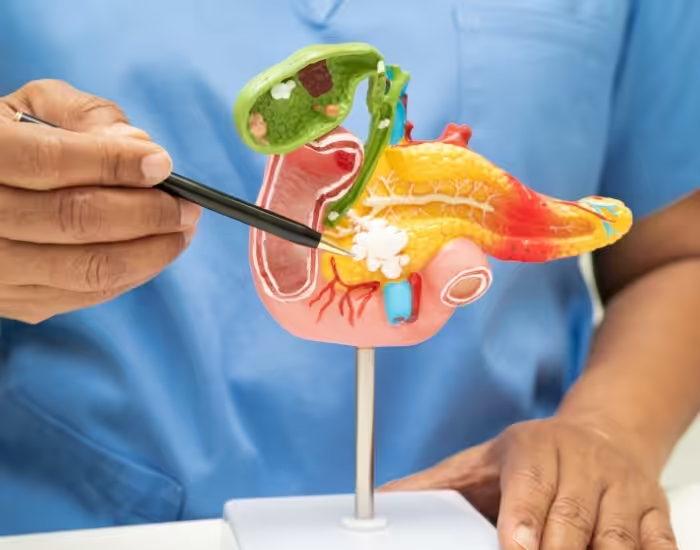
Pancreatitis causes back pain because the pancreas sits deep in the abdomen, behind the stomach and right in front of the spine. When the pancreas becomes inflamed, the swelling and released digestive enzymes irritate surrounding tissues and the nerves that run toward the back, so the pain is felt as a band or boring pain from the upper belly straight through to the mid-back. Roughly half of people with acute pancreatitis notice pain spreading to the back.
Because the pancreas lies against the back wall of the abdomen, leaning forward can take some pressure off it, which is why that position sometimes eases the pain. Lying flat stretches the area and can make the pain worse.
Why the pain travels to your back
- LocationThe pancreas lies behind the stomach, directly in front of the spine.
- InflammationSwelling and leaking digestive enzymes irritate tissue around the pancreas.
- Nerve signalsNearby nerves carry the pain backward, so it is felt as a band through to the mid-back.
Can pancreatitis cause back pain without stomach pain?
It is uncommon for pancreatitis to cause back pain alone. Most people with pancreatitis have upper abdominal pain as the main symptom, with back pain spreading from it. Back pain by itself is far more often caused by muscles, joints, discs or the kidneys. Mid-back pain together with upper belly pain, nausea or vomiting, especially after a heavy meal or drinking alcohol, is a reason to consider the pancreas and get checked.
| Clue | More like pancreatitis | More like a muscle or spine problem |
|---|---|---|
| Where it starts | Upper belly, spreading to the mid-back | Back only, often lower back |
| Other symptoms | Nausea, vomiting, fever, poor appetite | Stiffness, pain with certain movements |
| Triggers | Heavy meals, alcohol | Lifting, twisting, long sitting |
| Position | Eases leaning forward, worse lying flat | Eases with rest or changing position |
Why does pancreatitis cause nausea and vomiting?
Pancreatitis causes nausea and vomiting because inflammation next to the stomach and small intestine slows how food moves through the digestive tract and irritates the nerves that control the vomiting reflex. Eating stimulates the pancreas to release enzymes, which can worsen the pain, so many people lose their appetite. Persistent vomiting can quickly cause dehydration, which is one reason acute pancreatitis is treated in the hospital.
If nausea and loss of appetite are your main symptoms, our guide to nausea and loss of appetite covers other common causes.
Have symptoms like these?
Dr. Muhammad Ali Khan, a board-certified gastroenterologist and hepatologist, sees adults at our Katy and Cypress offices, serving patients across Greater Houston.
What causes pancreatitis?
The two most common causes of acute pancreatitis are gallstones, which can block the duct the pancreas drains through, and heavy alcohol use. Other causes include very high triglycerides, certain medicines, high blood calcium, abdominal injury, a complication of an ERCP procedure, infections, autoimmune conditions and inherited factors. Chronic pancreatitis is most often linked to long-term heavy drinking and smoking, repeated attacks and genetic causes.
- Gallstones that pass into the common bile duct
- Heavy or binge alcohol use
- Very high blood triglycerides
- Some medicines, high calcium levels or abdominal trauma
- Smoking, which raises the risk of chronic pancreatitis
When should I go to the ER for pancreatitis symptoms?
Go to the emergency room for sudden, severe upper abdominal pain, especially pain that spreads to the back, that lasts more than a few hours or comes with vomiting, fever, a rapid heartbeat, shortness of breath, dizziness or yellowing of the skin or eyes. Do not wait to see whether it passes. Acute pancreatitis can become serious, and early hospital treatment with fluids and monitoring improves recovery.
Emergency warning signs
- Severe, constant upper belly pain, with or without back pain
- Vomiting that will not stop, or inability to keep fluids down
- Fever, chills or a rapid heartbeat
- Shortness of breath, dizziness or fainting
- Yellow skin or eyes, dark urine or pale stools
How is pancreatitis diagnosed?
Pancreatitis is diagnosed when at least two of three findings are present: typical upper abdominal pain, a blood level of the pancreatic enzyme lipase (or amylase) at least three times the upper limit of normal, and imaging that shows inflammation of the pancreas. An abdominal ultrasound looks for gallstones, and a CT scan or MRI with MRCP can show the pancreas and bile ducts in detail. Blood tests also check triglycerides, calcium and liver function to find the cause.
For chronic pancreatitis, doctors may use imaging, stool tests that measure how well the pancreas digests fat, and sometimes endoscopic ultrasound.
How is pancreatitis treated?
Acute pancreatitis is treated in the hospital with intravenous fluids, pain control, anti-nausea medicine and close monitoring, with eating restarted as soon as it is tolerated. The cause is then treated: gallbladder removal for gallstone pancreatitis, ERCP to clear stones blocking the bile duct, stopping alcohol and smoking, and lowering very high triglycerides. Chronic pancreatitis is managed with enzyme supplements, pain management, nutrition and diabetes care.
Care from emergency to follow-up
- Emergency roomBlood tests and imaging confirm pancreatitis and look for the cause.
- Hospital careFluids, pain relief and monitoring while the inflammation settles.
- Treat the causeERCP or gallbladder surgery for gallstones, alcohol and smoking cessation, triglyceride control.
- Follow-upGI visits to prevent repeat attacks and watch for chronic changes.
Dr. Khan is affiliated with Memorial Hermann Katy Hospital and Memorial Hermann Cypress Hospital, and performs or arranges ERCP when an evaluation calls for it.
Get answers instead of guessing
Request a visit with Dr. Muhammad Ali Khan at our Katy and Cypress offices. Most major insurance plans are accepted and self-pay options are available.
How can I lower my risk of another attack?
The best ways to lower the risk of another pancreatitis attack are to treat the cause, which often means gallbladder removal after gallstone pancreatitis, to stop drinking alcohol completely if alcohol played a role, to stop smoking, to keep triglycerides and blood sugar under control, and to eat smaller, lower-fat meals while recovering. Review your medicines with your doctor as well.
Tip: Bring your hospital records
After a hospital stay for pancreatitis, bring your discharge summary, lab results and imaging reports to your GI follow-up. They help Dr. Khan confirm the cause and plan the next steps.
Key takeaways
- Pancreatitis symptoms usually include severe upper belly pain that spreads to the back, with nausea and vomiting.
- Pancreatitis causes back pain because the pancreas sits in front of the spine and inflammation irritates nearby nerves.
- Gallstones and heavy alcohol use are the most common causes of acute pancreatitis.
- Sudden, severe upper abdominal pain with vomiting, fever or yellow skin needs the emergency room.
- Treating the cause and avoiding alcohol and smoking help prevent repeat attacks.
Frequently asked questions
Where is pancreatitis back pain felt?
Pancreatitis back pain is usually felt in the middle or upper back, often like a band spreading from the upper belly straight through to the back. It is typically constant rather than linked to movement.
Can pancreatitis go away on its own?
Mild acute pancreatitis often improves within a few days with hospital care, but it should not be managed at home. The underlying cause also needs treatment to prevent another attack.
What does pancreatitis pain feel like?
It is usually a severe, steady, boring pain in the upper middle or upper left abdomen that may spread to the back, often worse after eating or lying flat and a little better when leaning forward.
Can you have pancreatitis without vomiting?
Yes. Vomiting is common but not universal. Some people have pain and nausea without vomiting, and chronic pancreatitis may cause pain, weight loss or oily stools instead.
What should I eat after pancreatitis?
After recovery, most people do best with smaller, lower-fat meals, plenty of fluids and no alcohol. Your doctor or a dietitian can give a plan suited to your cause and whether you have chronic pancreatitis.
Do I need a referral to see a gastroenterologist in Katy or Cypress?
It depends on your insurance plan. Call (346) 340-4414 and the team can help you check and schedule follow-up after a hospital stay.
Sources
- NIDDK — Pancreatitis
- NIDDK — Symptoms and causes of pancreatitis
- NIDDK — Treatment for pancreatitis
- MedlinePlus — Pancreatitis
- American College of Gastroenterology — Pancreatitis
Where to be seen in Katy and Cypress
United Gastroenterology Associates has two offices: Katy, at 23920 Katy Freeway, Suite 555, next to Memorial Hermann Katy Hospital, and Cypress, at 21216 Northwest Freeway, Suite 640, on US-290. Both are open Monday through Friday, 8:30 AM to 5:00 PM, closed for lunch from 12:00 to 1:30 PM, and serve patients from Fulshear, Richmond and across Greater Houston. Call (346) 340-4414 for either office.
Katy office
23920 Katy Freeway, Suite 555
Katy, TX 77494
Memorial Hermann Medical Plaza 1
Next steps
If you are dealing with pancreatitis symptoms or any ongoing digestive concern, a focused evaluation can find the cause and start the right treatment. Dr. Muhammad Ali Khan and the team at United Gastroenterology Associates see adults from Katy, Cypress, Fulshear, Richmond, Greater Houston and across Texas. Call (346) 340-4414 or request an appointment today.
If you have severe pain, vomit blood, pass black stools or have chest pain, call 911 or go to the nearest emergency room.