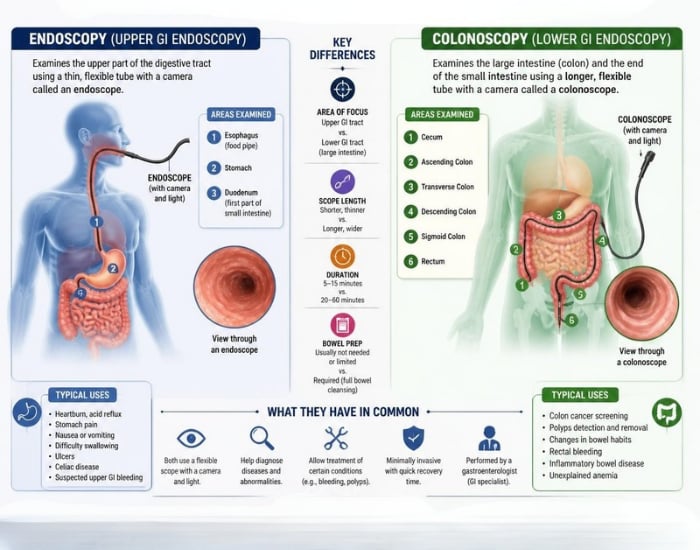
Many patients hear the word “colonoscopy” and assume every procedure is the same. However, the reason your gastroenterologist recommends a colonoscopy can determine whether it is classified as a screening colonoscopy or a diagnostic colonoscopy.
This difference matters because it affects the purpose of the procedure, the medical documentation, insurance processing, and sometimes your expected costs.
For patients in Katy and Cypress, TX, understanding the difference between screening and diagnostic colonoscopy can make the entire process feel less confusing and help you make informed decisions about your digestive health.
Important Note
Many patients feel uncertain when scheduling a colonoscopy because they are unsure why the procedure was recommended or how it may be classified. Understanding the difference between screening and diagnostic colonoscopy can help you feel more prepared, ask better questions, and take an active role in your digestive health.
What Is the Difference Between Screening and Diagnostic Colonoscopy?
The difference between a screening and a diagnostic colonoscopy is the reason for the exam, not the procedure itself. A screening colonoscopy looks for colorectal cancer and polyps in people with no symptoms, while a diagnostic colonoscopy investigates symptoms, abnormal test results or a known condition. Dr. Khan performs both the same way, using the same preparation and sedation.
| Feature | Screening colonoscopy | Diagnostic colonoscopy |
|---|---|---|
| Who it is for | Adults without symptoms, usually 45 and older | People with symptoms or abnormal test results |
| Main goal | Prevent cancer by finding and removing polyps | Find the cause of symptoms or findings |
| Typical insurance coverage | Usually covered with no cost sharing | Deductible, copay or coinsurance may apply |
| Common reasons | Age, family history, routine interval | Bleeding, anemia, bowel changes, positive stool test |
| Preparation and procedure | Same bowel prep and sedation | Same bowel prep and sedation |
A screening colonoscopy is performed to look for colorectal cancer or precancerous polyps in people who do not have symptoms. The goal is prevention and early detection.
A diagnostic colonoscopy is performed because a patient has symptoms, abnormal test results, or a known medical concern that requires further evaluation.
Although the actual procedure may look similar, the medical purpose behind it is different.
Think of it this way:
- Screening colonoscopy: “I do not have symptoms, but I want to check for possible problems before they develop.”
- Diagnostic colonoscopy: “Something has raised concern, and my doctor needs to investigate the cause.”
Both types of colonoscopy are important tools for protecting colorectal health. The classification simply explains why the procedure is being performed.
What Is a Screening Colonoscopy?
A screening colonoscopy is a preventive exam for people with no digestive symptoms, done to find colorectal cancer early and remove precancerous polyps before they turn into cancer. Average-risk adults should start screening at age 45, and people with a family history or other risk factors may start earlier. If the colon is normal, the next exam is usually ten years later.
Colorectal cancer can develop slowly over many years. In many cases, early-stage colorectal cancer or precancerous polyps do not cause noticeable symptoms.
This is why screening is so important.
During a screening colonoscopy, a gastroenterologist examines the inside lining of the colon using a flexible camera. If polyps are found, they may often be removed during the same procedure.
Removing certain polyps can help reduce the chance that they develop into colorectal cancer in the future.
Who Usually Needs a Screening Colonoscopy?
Screening recommendations depend on factors such as age, personal health history, and family history.
Many adults are encouraged to discuss colorectal cancer screening with their healthcare provider as they approach recommended screening ages.
A gastroenterologist may recommend screening based on:
- Age-related screening guidelines
- Family history of colorectal cancer
- Previous colon polyps
- Personal risk factors
- Previous screening results
Learn more about preventive colon screening:
What Is a Diagnostic Colonoscopy?
A diagnostic colonoscopy is done when there is a medical reason to look inside the colon, such as rectal bleeding, iron-deficiency anemia, chronic diarrhea, a change in bowel habits or a positive stool test like Cologuard or FIT. It is also used to monitor conditions such as inflammatory bowel disease. The goal is to find and treat the cause.
Unlike screening colonoscopy, diagnostic colonoscopy is not performed only for prevention. It is used to help identify the cause of a problem.
Your gastroenterologist may recommend a diagnostic colonoscopy if you experience symptoms such as:
- Blood in stool
- Unexplained anemia
- Persistent abdominal pain
- Changes in bowel habits
- Chronic diarrhea
- Unexplained weight loss
- Abnormal stool test results
What are examples of a diagnostic colonoscopy?
A patient may initially schedule a colonoscopy for screening, but additional findings or symptoms can change the purpose of the procedure.
Examples include:
- A positive Cologuard test
- A positive stool blood test
- Previous abnormal colonoscopy findings
- Evaluation of ongoing digestive symptoms
- Follow-up of previously identified polyps
In these situations, the goal is not simply prevention. The goal is to understand what is causing the concern and determine the appropriate treatment or follow-up.
Why Does Screening vs. Diagnostic Colonoscopy Classification Matter?
The classification matters because it records the medical reason for your colonoscopy, which guides your care and how insurance processes the claim. Under federal rules, most plans cover screening colonoscopy without cost sharing, while diagnostic exams may involve a deductible or copay. Knowing the classification ahead of time helps you avoid billing surprises and plan follow-up.
Patients often assume that because the procedure is the same, the billing process is also the same. However, insurance companies may treat preventive screening and diagnostic evaluation differently.
The classification depends on:
- The reason your doctor recommended the procedure
- Your symptoms or lack of symptoms
- Your previous medical history
- Your test results
- Your insurance policy requirements
Your gastroenterologist’s office can help explain how your procedure is documented and what questions you should ask before scheduling.
How Does Screening vs. Diagnostic Colonoscopy Affect Insurance?
Insurance usually covers a screening colonoscopy as preventive care with no out-of-pocket cost under most plans, while a diagnostic colonoscopy is billed like other medical procedures and may require a deductible, copay or coinsurance. A follow-up colonoscopy after a positive stool test is now considered part of screening by many plans. Always confirm benefits with your insurer before the procedure.
Preventive screening colonoscopies may have different coverage rules compared with colonoscopies performed because of symptoms or abnormal findings.
Before your procedure, it is helpful to confirm:
- How your colonoscopy is classified
- What your insurance plan covers
- Whether deductibles or cost-sharing apply
- Whether preparation medications are covered
Insurance details can vary between plans, so discussing your coverage before the procedure can help prevent unexpected surprises.
United Gastroenterology Associates helps patients understand their digestive care options and provides support with insurance-related questions.
Learn more:
When Does a Screening Colonoscopy Become Diagnostic?
A screening colonoscopy becomes diagnostic when you have symptoms before the exam, such as bleeding or a change in bowel habits, or when the indication is a known condition. Coding can also change if a polyp is removed or a biopsy is taken during a screening exam, depending on your plan. Ask the office how your procedure will be billed.
For example, someone may schedule a colonoscopy because they are due for routine colorectal cancer screening. However, if they recently developed rectal bleeding or had an abnormal stool test, the medical reason for evaluation may change.
This distinction helps ensure that your doctor evaluates your health based on your actual medical needs.
What Happens During a Colonoscopy?
Whether screening or diagnostic, a colonoscopy is performed the same way. After you receive sedation, Dr. Khan guides a thin, flexible camera through the rectum and the entire colon, inflating it gently to see the lining. Polyps can be removed and biopsies taken during the exam, which usually lasts about 20 to 40 minutes, followed by a short recovery.
Many patients feel nervous before their first colonoscopy because they are unsure what will happen. Understanding each step can make the experience much easier and help reduce unnecessary anxiety.
Before the procedure begins, your gastroenterology team will review your medical history, medications, allergies, and any specific concerns you may have. You will also receive instructions about bowel preparation, which is an important part of making sure your doctor can clearly view the inside of your colon.
During the colonoscopy, a thin, flexible instrument called a colonoscope is gently guided through the rectum and into the colon. The camera attached to the scope allows your gastroenterologist to examine the intestinal lining for abnormalities.
Your doctor may look for:
- Colon polyps
- Areas of inflammation
- Sources of bleeding
- Abnormal growths
- Signs of digestive conditions
If polyps or suspicious areas are found, your gastroenterologist may remove polyps or collect tissue samples for further evaluation.
This ability to both diagnose and sometimes treat problems during the same procedure is one reason colonoscopy remains an important tool in digestive healthcare.
Does a Colonoscopy Hurt?
Most patients do not experience significant discomfort during colonoscopy because sedation is commonly used to help them relax and remain comfortable.
Some people may notice temporary bloating, gas, or mild abdominal discomfort afterward. These effects usually improve as your body returns to normal after the procedure.
Your gastroenterology team will provide instructions about what to expect after your colonoscopy and when you can return to normal activities.
How Should You Prepare for a Screening or Diagnostic Colonoscopy?
Preparation is the same for screening and diagnostic colonoscopy and is the most important step for an accurate exam. You will follow a low-residue diet, switch to clear liquids the day before and drink a prescribed bowel prep, usually split into two doses. Review blood thinners and diabetes medicines with the office, and arrange a driver for after the procedure.
Many patients are more concerned about the preparation than the actual procedure. While bowel preparation can feel inconvenient, following your doctor’s instructions can make a significant difference in the quality of your examination.
Preparation instructions may include:
- Adjusting your diet before the procedure
- Drinking a prescribed bowel cleansing solution
- Avoiding certain foods and beverages
- Following medication instructions carefully
Your preparation plan may vary depending on your health history, medications, and the type of procedure being performed.
United Gastroenterology Associates provides detailed colonoscopy preparation guidance to help patients feel informed and ready.
Learn more about preparation instructions:
Does a Screening Colonoscopy Cost Less Than a Diagnostic Colonoscopy?
A screening colonoscopy often costs less out of pocket than a diagnostic one, because most insurance plans cover preventive screening without cost sharing. Diagnostic colonoscopy costs depend on your deductible, copay, facility fees, anesthesia and whether biopsies or polyp removal are needed. Self-pay pricing is also available. Call the office to ask about your expected costs before scheduling.
Many patients assume that screening colonoscopy and diagnostic colonoscopy automatically have different prices. However, the final cost depends on your individual circumstances and insurance plan.
Factors that may influence cost include:
- Your insurance benefits
- Your deductible and copay requirements
- Whether polyps are removed
- Pathology testing requirements
- The location where the procedure is performed
Before your procedure, it is always helpful to discuss financial questions with both your insurance provider and your gastroenterology office.
Understanding your expected costs ahead of time can help you feel more prepared and avoid unexpected concerns.
Have symptoms like these?
Dr. Muhammad Ali Khan, a board-certified gastroenterologist and hepatologist, sees adults at our Katy and Cypress offices, serving patients across Greater Houston.
What Happens If a Colonoscopy Finds Polyps or Other Abnormalities?
Finding a polyp or abnormal area does not mean you have cancer. Most polyps are removed during the same colonoscopy and sent to a lab, where a pathologist checks whether they are benign, precancerous or, rarely, cancerous. Dr. Khan then reviews the results with you and recommends when your next colonoscopy should be, often in three to ten years.
Many colon polyps are benign, meaning they are not cancerous. However, some types of polyps can slowly develop into colorectal cancer over time if they are not identified and removed.
This is why colonoscopy is so valuable. It allows your gastroenterologist to identify changes early and take action when appropriate.
If a polyp is removed, it may be sent to a laboratory for analysis. The results help your doctor determine whether additional monitoring or future screening is needed.
Important Note
A colonoscopy recommendation does not mean something serious has already been found. Many procedures are performed to rule out problems, prevent future disease, or better understand symptoms. The purpose of evaluation is to provide answers and protect your long-term digestive health.
Why Is Screening Colonoscopy Important Even Without Symptoms?
Screening colonoscopy matters even without symptoms because colorectal cancer and precancerous polyps usually grow silently for years. By the time symptoms such as bleeding or weight loss appear, cancer may be more advanced. Finding and removing polyps early can prevent cancer altogether, which is why screening is recommended for average-risk adults starting at age 45.
Many patients wait until they experience symptoms before seeking evaluation. However, symptoms often appear after a condition has already progressed.
Preventive screening allows doctors to look for possible concerns before they cause problems.
The benefits of screening colonoscopy include:
- Finding precancerous polyps early
- Reducing colorectal cancer risk
- Identifying hidden abnormalities
- Creating personalized follow-up recommendations
- Providing peace of mind
For many patients, a screening colonoscopy is not just a test. It is an important investment in future health.
What are common reasons for a diagnostic colonoscopy?
Your gastroenterologist may recommend a diagnostic colonoscopy for rectal bleeding, unexplained iron-deficiency anemia, chronic diarrhea or constipation, a lasting change in bowel habits, abdominal pain with other warning signs, or an abnormal stool test or CT scan. It is also used to monitor inflammatory bowel disease and to check areas found on earlier exams. Each reason is explained below.
Some common reasons include:
Does rectal bleeding call for a diagnostic colonoscopy?
Blood in the stool can occur for many reasons, including hemorrhoids, inflammation, polyps, or other conditions. A diagnostic colonoscopy helps determine the source.
Why does unexplained anemia need a colonoscopy?
Low iron levels or iron-deficiency anemia may sometimes be related to hidden gastrointestinal bleeding. Colonoscopy can help investigate possible causes.
Do changes in bowel habits need a colonoscopy?
Persistent changes such as ongoing diarrhea, constipation, or a noticeable change in stool patterns may require evaluation.
Do abnormal stool test results need a colonoscopy?
A positive stool-based screening test, such as an abnormal Cologuard result, usually requires follow-up colonoscopy to determine the reason behind the finding.

How do you choose the right gastroenterologist for colonoscopy in Katy or Cypress?
Choose a gastroenterologist who is board-certified, performs colonoscopies regularly and tracks quality measures such as adenoma detection rate. It also helps to work with a practice that explains preparation clearly, verifies insurance and reviews results with you. Dr. Muhammad Ali Khan is a board-certified gastroenterologist and Fellow of the American Society for Gastrointestinal Endoscopy serving Katy and Cypress.
Whether you need a routine screening colonoscopy or evaluation for symptoms, your GI specialist should provide clear explanations and personalized recommendations based on your health history.
Patients often value a gastroenterologist who:
- Takes time to explain procedures
- Answers questions clearly
- Provides preventive and diagnostic care
- Uses evidence-based treatment approaches
- Offers compassionate support throughout the process
United Gastroenterology Associates provides digestive healthcare services for patients in Katy, Cypress, and surrounding communities.
The practice offers advanced GI services, including colonoscopy, digestive disease evaluation, colorectal cancer screening, and treatment planning.
Learn more about digestive care services:
United Gastroenterology Associates
Where can you get a colonoscopy in Katy or Cypress, TX?
United Gastroenterology Associates offers screening and diagnostic colonoscopy for patients in Katy and Cypress, with offices on Katy Freeway and Northwest Freeway. Dr. Muhammad Ali Khan reviews your history, explains whether your exam is screening or diagnostic and coordinates preparation, sedation and follow-up. Patients also come from Fulshear, Richmond and across Greater Houston, and most major insurance plans are accepted.
At United Gastroenterology Associates, patients receive personalized digestive care designed around their individual health history, symptoms, and screening needs.
Whether you are scheduling a routine screening colonoscopy or you need a diagnostic colonoscopy because of symptoms or abnormal results, the goal is the same: providing accurate answers and helping protect your digestive health.
Our gastroenterology team provides evaluation and treatment for a wide range of digestive concerns, including:
- Colorectal cancer screening
- Colon polyps
- Abnormal stool test results
- Digestive symptoms requiring evaluation
- Gastrointestinal conditions affecting the colon
Having access to experienced GI care close to home can make it easier to stay consistent with important preventive screenings and follow-up appointments.
How does screening colonoscopy help prevent colorectal cancer?
Screening colonoscopy helps prevent colorectal cancer because most colon cancers begin as small polyps that grow slowly over many years. During the exam, Dr. Khan finds and removes these polyps before they can turn cancerous. Unlike stool tests, colonoscopy both detects and treats in one step, and a normal result usually means you do not need another exam for ten years.
Many cancers begin as small growths called polyps. Some polyps may remain harmless, while others can slowly change over time and become cancerous.
During colonoscopy, your gastroenterologist can identify these growths and often remove them before they become a serious health concern.
This preventive approach makes colonoscopy different from many other medical tests. It is not only used to find disease — it can also help stop disease from developing.
For patients who qualify for colorectal cancer screening, completing recommended screenings can be one of the most important steps they take for their long-term health.
What questions should you ask before your colonoscopy?
Before your colonoscopy, ask whether it will be billed as screening or diagnostic, what your insurance will cover and which preparation to use. Also ask which medications to stop, such as blood thinners or diabetes drugs, what type of sedation you will receive, and how and when you will get biopsy or polyp results. Write questions down before your visit.
Many patients hesitate to ask questions because they assume their concerns are common or not important. However, your healthcare team wants you to feel informed before moving forward.
Helpful questions may include:
- Is my colonoscopy considered screening or diagnostic?
- Why is this procedure recommended for me?
- What should I expect during preparation?
- Will my insurance cover this procedure?
- How long will recovery take?
- When will I receive my results?
- What happens if polyps are found?
Having these conversations can reduce uncertainty and help you feel more prepared on the day of your procedure.
What are common misunderstandings about screening and diagnostic colonoscopy?
Many patients misunderstand colonoscopy classification. A diagnostic label does not mean something serious is wrong; it simply records the reason for the exam. A screening label does not guarantee a normal result, and a negative stool test does not replace colonoscopy forever. Colonoscopy is also not only for older adults, since symptoms or family history can justify earlier testing.
Does a diagnostic colonoscopy mean something is wrong?
A diagnostic colonoscopy simply means your doctor is evaluating a symptom, concern, or abnormal finding. It does not automatically mean a serious disease has been discovered.
Doctors often use diagnostic procedures to investigate problems and provide answers.
Does a screening colonoscopy mean there is no risk?
Screening is recommended because there can still be hidden concerns even when you feel completely healthy.
The purpose of screening is to identify possible problems early, when they may be easier to manage.
If my Cologuard test was negative, will I ever need a colonoscopy?
Different screening methods serve different purposes. Your gastroenterologist can help determine which screening approach is appropriate based on your age, medical history, and risk factors.
Is colonoscopy only for older adults?
While age is an important factor in colorectal cancer screening recommendations, younger patients may also require evaluation if they have symptoms, family history, or other risk factors.
Get answers instead of guessing
Request a visit with Dr. Muhammad Ali Khan at our Katy and Cypress offices. Call the office to check your insurance coverage; self-pay options are available.
What Should You Expect After a Colonoscopy?
After a colonoscopy, you rest in a recovery area for about 30 to 60 minutes while sedation wears off. Mild bloating or gas cramps are common and usually pass within hours. You will need a driver home and should avoid driving, working or making major decisions for the rest of the day. Most people eat normally afterward unless told otherwise.
Because sedation is typically used, you will need someone to drive you home after the procedure.
After colonoscopy, some temporary effects may occur, including:
- Mild bloating
- Gas discomfort
- Sleepiness from sedation
- Minor abdominal cramping
Your gastroenterologist will provide specific instructions regarding diet, medications, activity levels, and when to expect results.
If tissue samples are collected or polyps are removed, additional laboratory testing may be needed before your doctor provides final recommendations.
When Should You Contact Your Gastroenterologist After Colonoscopy?
Complications after colonoscopy are uncommon, but contact your gastroenterologist right away if you develop severe or worsening abdominal pain, a fever, a hard and swollen belly, repeated vomiting, or more than a small amount of rectal bleeding. Bleeding can occur up to two weeks after polyp removal. Go to the emergency room if symptoms are severe or you feel faint.
Call your doctor if you experience:
- Heavy rectal bleeding
- Severe abdominal pain
- Persistent fever
- Severe dizziness or weakness
- Symptoms that feel unusual or concerning
Your gastroenterology team can help determine whether your symptoms require additional evaluation.
Frequently Asked Questions About Screening vs. Diagnostic Colonoscopy
What is a diagnostic colonoscopy?
A diagnostic colonoscopy is a colonoscopy done to investigate symptoms such as bleeding, anemia or bowel changes, or to follow up an abnormal test. The procedure is identical to a screening colonoscopy, but the reason for the exam is different.
Is a diagnostic colonoscopy covered by insurance?
Most plans cover diagnostic colonoscopy as a medical procedure, but your deductible, copay or coinsurance may apply. Check with your insurer and the office before the procedure to confirm your expected costs.
Can a screening colonoscopy turn into a diagnostic colonoscopy?
Yes, depending on your plan, removing polyps or taking biopsies during a screening exam can change how it is billed. Symptoms reported before the exam usually make it diagnostic from the start.
Why would my doctor order a diagnostic colonoscopy instead of screening?
Your doctor orders a diagnostic colonoscopy when symptoms or test results need an explanation, such as rectal bleeding, iron-deficiency anemia or a positive Cologuard test. It allows the cause to be found, biopsied and often treated in the same session.
Why does knowing your colonoscopy type help you make better decisions?
Knowing whether your colonoscopy is screening or diagnostic helps you understand why it is being done, plan for costs and know what follow-up to expect. Either way, the exam is one of the most effective tools for preventing colorectal cancer and finding the cause of bowel symptoms. Dr. Khan's team can answer coverage and preparation questions before your appointment.
Both screening and diagnostic colonoscopies play an important role in digestive health. A screening colonoscopy focuses on prevention and early detection, while a diagnostic colonoscopy helps identify the cause of symptoms or abnormal findings.
Regardless of the classification, the purpose remains the same: helping patients receive accurate answers and appropriate care.
If you have questions about colonoscopy recommendations, preparation, insurance coverage, or digestive symptoms, discussing your concerns with an experienced gastroenterologist can provide clarity.
How do you schedule a colonoscopy consultation in Katy or Cypress, TX?
To schedule a colonoscopy consultation, request an appointment online or call United Gastroenterology Associates and choose the Katy or Cypress office. The team verifies your insurance, explains whether your exam will be billed as screening or diagnostic and sends preparation instructions. Dr. Muhammad Ali Khan then reviews your history and plans the procedure that fits your needs.
Our team offers comprehensive colonoscopy services, colorectal cancer screening, and evaluation for digestive concerns with a patient-focused approach.
Whether you need preventive screening or diagnostic evaluation, our goal is to make your experience clear, comfortable, and personalized.
United Gastroenterology Associates, PLLC
Cypress Location:
21216 Northwest Freeway, Suite 640
Cypress, TX 77429
Katy Location:
23920 Katy Fwy, Suite 555
Katy, TX 77494
Phone: (346) 340-4414
Schedule your consultation today and take an important step toward protecting your digestive health.
What sources support this article?
- NIDDK — Colonoscopy
- MedlinePlus — Colonoscopy
- USPSTF — Colorectal cancer screening
- American College of Gastroenterology — Colorectal cancer
Is this article a substitute for medical advice?
No, this article is for general education and does not replace professional medical advice, diagnosis or treatment. Colonoscopy timing, preparation and coverage depend on your personal health history and insurance plan. Always talk with a qualified healthcare professional about your symptoms, screening schedule and test results, and seek emergency care for severe pain or heavy bleeding.
Where can you see a gastroenterologist in Katy or Cypress?
United Gastroenterology Associates has two offices: Katy, at 23920 Katy Freeway, Suite 555, next to Memorial Hermann Katy Hospital, and Cypress, at 21216 Northwest Freeway, Suite 640, on US-290. Both are open Monday through Friday, 8:30 AM to 5:00 PM, closed for lunch from 12:00 to 1:30 PM, and serve patients from Fulshear, Richmond and across Greater Houston. Call (346) 340-4414 for either office.
Where is the Katy office?
23920 Katy Freeway, Suite 555
Katy, TX 77494
Memorial Hermann Medical Plaza 1
Where is the Cypress office?
21216 Northwest Freeway, Suite 640
Cypress, TX 77429
On US-290
What should you do next?
If you are dealing with diagnostic colonoscopy or any ongoing digestive concern, a focused evaluation can find the cause and start the right treatment. Dr. Muhammad Ali Khan and the team at United Gastroenterology Associates see adults from Katy, Cypress, Fulshear, Richmond, Greater Houston and across Texas. Call (346) 340-4414 or request an appointment today.
If you have severe pain, vomit blood, pass black stools or have chest pain, call 911 or go to the nearest emergency room.