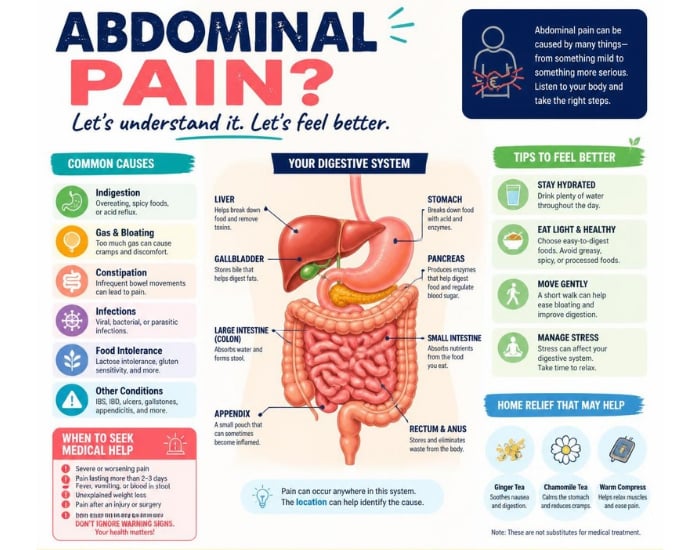
Can stress cause abdominal pain?
Yes. Dr. Khan explains that stress can cause real abdominal pain by changing how the intestines contract, increasing the sensitivity of gut nerves, altering digestion and affecting the balance of gut bacteria. This can lead to cramping, bloating, nausea, diarrhea or constipation. Stress is a common trigger for irritable bowel syndrome flares. Ongoing abdominal pain should still be checked for physical causes before it is attributed to stress.
How stress affects the gut
- MovementStress hormones speed up or slow down intestinal contractions.
- SensitivityGut nerves become more reactive, so normal digestion hurts.
- Microbiome and habitsStress alters gut bacteria, sleep and eating patterns.
What is the gut-brain axis?
The gut-brain axis is the two-way communication network between the digestive tract and the brain, carried by nerves such as the vagus nerve, hormones, immune signals and chemicals produced by gut bacteria. Stress and emotions send signals to the gut that change how it works, and gut signals influence mood and stress levels. In IBS and functional dyspepsia, this communication is out of balance.
Have symptoms like these?
Dr. Muhammad Ali Khan, a board-certified gastroenterologist and hepatologist, sees adults at our Katy and Cypress offices, serving patients across Greater Houston.
How are stress and IBS connected?
Stress does not cause IBS on its own, but it is one of the most common triggers for IBS symptoms. Stress can increase pain sensitivity, speed up the bowel and cause diarrhea, or slow it and worsen constipation and bloating. Living with IBS can also cause stress and anxiety, creating a cycle. Treatments that calm the gut-brain axis help break that cycle.
| Symptom | How stress contributes | What can help |
|---|---|---|
| Cramping pain | Stronger contractions, sensitive nerves | Diaphragmatic breathing, antispasmodics, gut-directed therapy |
| Diarrhea or urgency | Faster bowel movement | Regular meals, trigger diet changes, IBS-D treatment |
| Constipation and bloating | Slower movement, swallowed air | Fiber, fluid, activity, IBS-C treatment |
| Nausea and indigestion | Slowed stomach emptying | Smaller meals, stress management |
How can I reduce stress-related abdominal pain?
To reduce stress-related abdominal pain, combine gut-friendly habits with stress management: eat regular, moderate meals, limit caffeine, alcohol and greasy foods, stay physically active, keep a consistent sleep schedule, and practice relaxation techniques such as slow diaphragmatic breathing, mindfulness or yoga. Gut-directed cognitive behavioral therapy and hypnotherapy have strong evidence for IBS.
- Practice slow belly breathing for 5 to 10 minutes twice a day
- Walk or exercise for 20 to 30 minutes most days
- Eat at regular times and avoid skipping meals
- Protect seven to nine hours of sleep
- Ask your doctor about gut-directed therapy
Tip: Score stress and pain side by side
Each evening, rate stress and abdominal pain from 0 to 10. Seeing them together for two weeks shows how much stress is driving symptoms and how well relaxation techniques help.
When is abdominal pain not just stress?
Abdominal pain should not be blamed on stress when it is severe, getting worse, wakes you at night, or comes with fever, vomiting, rectal bleeding, black stools, unexplained weight loss, anemia or new bowel changes after age 45. These signs point to conditions that need evaluation, such as ulcers, gallbladder disease, inflammatory bowel disease or celiac disease.
See a doctor promptly for
- Severe or worsening pain
- Fever, vomiting, rectal bleeding or black stools
- Weight loss or anemia
- Pain that wakes you at night
See how to tell if you have IBS and stress and acid reflux.
Get answers instead of guessing
Request a visit with Dr. Muhammad Ali Khan at our Katy and Cypress offices. Call the office to check your insurance coverage; self-pay options are available.
Key takeaways
- Stress can cause real abdominal pain by changing gut movement, sensitivity and bacteria.
- The gut-brain axis links digestion and mood in both directions.
- Stress is a common trigger for IBS flares but not the sole cause of IBS.
- Breathing exercises, activity, sleep and gut-directed therapy help.
- Severe pain or warning signs should never be assumed to be stress.
Frequently asked questions
Can anxiety cause stomach pain every day?
Yes, anxiety can cause daily stomach discomfort, but persistent daily pain should be evaluated for physical causes as well.
Where is stress stomach pain felt?
It is often felt as cramping in the lower or middle abdomen, or as a knot or nausea in the upper abdomen.
Do probiotics help stress-related gut symptoms?
Some people notice improvement, but evidence is mixed. Stress management and IBS-specific treatment are more reliable.
Can therapy really help stomach pain?
Yes. Gut-directed cognitive behavioral therapy and hypnotherapy reduce IBS symptoms for many people.
Do I need a referral to see a gastroenterologist in Katy or Cypress?
It depends on your insurance plan. Many PPO plans let you book a specialist directly, while some HMO plans require a referral from your primary care doctor. Call (346) 340-4414 and the team can help you check.
Sources
- NIDDK — Irritable bowel syndrome
- NIDDK — Symptoms and causes of IBS
- MedlinePlus — Stress
- MedlinePlus — Irritable bowel syndrome
- American College of Gastroenterology — IBS
Where to be seen in Katy and Cypress
United Gastroenterology Associates has two offices: Katy, at 23920 Katy Freeway, Suite 555, next to Memorial Hermann Katy Hospital, and Cypress, at 21216 Northwest Freeway, Suite 640, on US-290. Both are open Monday through Friday, 8:30 AM to 5:00 PM, closed for lunch from 12:00 to 1:30 PM, and serve patients from Fulshear, Richmond and across Greater Houston. Call (346) 340-4414 for either office.
Katy office
23920 Katy Freeway, Suite 555
Katy, TX 77494
Memorial Hermann Medical Plaza 1
Next steps
If you are dealing with abdominal pain and stress or any ongoing digestive concern, a focused evaluation can find the cause and start the right treatment. Dr. Muhammad Ali Khan and the team at United Gastroenterology Associates see adults from Katy, Cypress, Fulshear, Richmond, Greater Houston and across Texas. Call (346) 340-4414 or request an appointment today.
If you have severe pain, vomit blood, pass black stools or have chest pain, call 911 or go to the nearest emergency room.