What do elevated ALT and AST levels indicate?
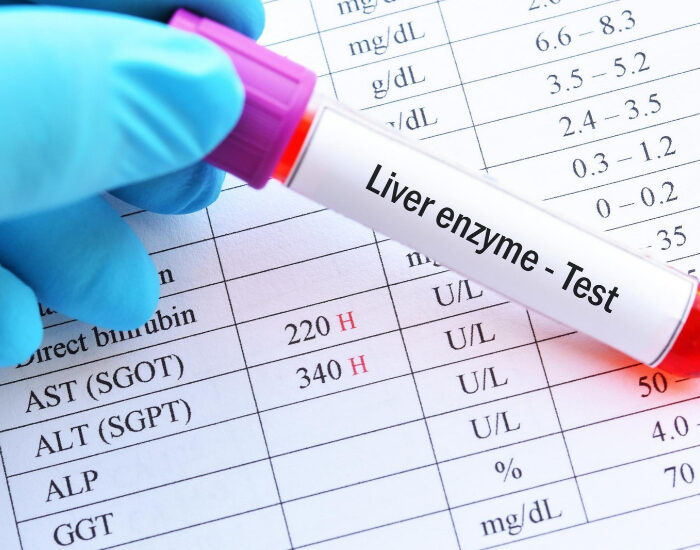
ALT (alanine aminotransferase) and AST (aspartate aminotransferase) are enzymes that leak into the blood when liver cells are irritated or damaged. A high result is a signal to look for the cause, not a diagnosis by itself. In the Katy and Cypress area the most common cause is fatty liver disease; alcohol, common medications, viral hepatitis and several less common conditions account for most of the rest.
How high is too high?
Laboratories print their own reference range, and the true upper limit of normal for ALT is lower than many labs list: roughly 29 to 33 U/L for men and 19 to 25 U/L for women, according to the American College of Gastroenterology. Any ALT above that range on two tests deserves evaluation. Levels under about two times the upper limit are usually described as borderline or mild, two to five times as moderate, and more than fifteen times the limit as severe. A very high AST with a lower ALT points toward alcohol, muscle injury or a medication effect rather than fatty liver.
What causes elevated liver enzymes?
- Metabolic dysfunction-associated steatotic liver disease (MASLD), formerly called NAFLD: the leading cause in adults with excess weight, type 2 diabetes, high triglycerides or high blood pressure.
- Alcohol: even moderate regular drinking can raise AST and GGT.
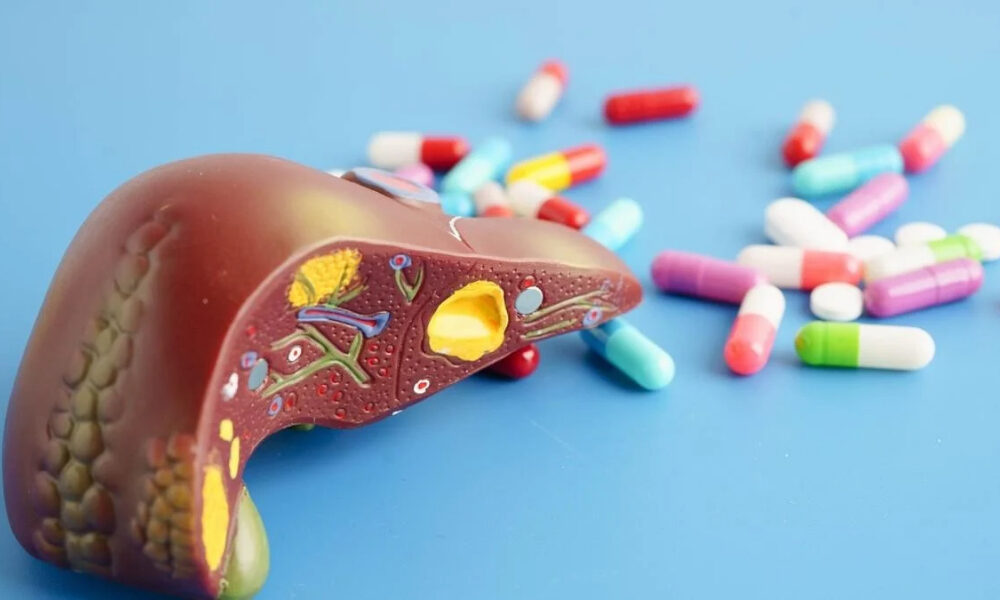
- Medications and supplements: acetaminophen, statins, some antibiotics, antifungals, anabolic steroids and herbal products such as green tea extract or kava.
- Viral hepatitis B and C: often silent for years and detected only by blood tests.
- Less common causes: hemochromatosis (iron overload), autoimmune hepatitis, celiac disease, thyroid disease, Wilson disease and alpha-1 antitrypsin deficiency.
What tests come next?
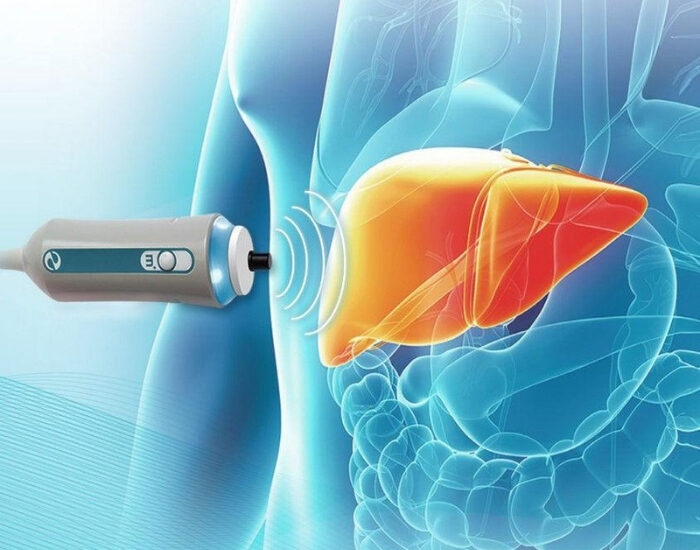
A liver specialist repeats the liver panel and adds a targeted work-up: hepatitis B and C screening, iron studies, autoimmune antibodies, celiac testing and thyroid function, along with a liver ultrasound. The FIB-4 score, calculated from age, AST, ALT and platelet count, estimates the chance of scarring: below 1.3 is low risk, 1.3 to 2.67 is indeterminate, and above 2.67 is high risk. Indeterminate or high scores are followed by a FibroScan. Read more on our abnormal liver enzymes evaluation page.
One abnormal test is not a diagnosis
Enzymes can rise temporarily after strenuous exercise, a viral illness, a new medication or heavy drinking. Dr. Khan looks at the pattern over time, your history and risk factors before naming a cause.
Can fatty liver disease (MASLD) be reversed, and how long does it take?
Yes. Liver fat and inflammation are reversible in most people, and even early scarring can regress. The strongest evidence is for weight loss: about 5% of body weight reduces liver fat, 7% or more improves the inflammation of MASH, and 10% or more can improve fibrosis. Blood tests often improve within three to six months; fibrosis regression takes one to several years.
What actually works
- Weight loss of 7 to 10% through calorie reduction and a Mediterranean-style diet, with fewer sugary drinks and ultra-processed foods.
- Exercise: 150 minutes a week of moderate activity plus resistance training lowers liver fat even before the scale moves.
- Treating the drivers: type 2 diabetes, high triglycerides, high blood pressure and sleep apnea all push MASLD forward.
- Avoiding alcohol, which adds to liver injury at any amount once MASLD is present.
- Medications, when appropriate: resmetirom became the first FDA-approved drug for MASH with moderate to advanced fibrosis in March 2024, and semaglutide 2.4 mg received accelerated FDA approval for the same group in August 2025. Both are prescribed with diet and exercise, not instead of them. GLP-1 medicines used for diabetes or weight management also reduce liver fat.
How progress is measured
Dr. Khan tracks ALT and AST, the FIB-4 score and, when appropriate, repeat FibroScan measurements of stiffness and fat. Ultrasound and liver enzyme improvement usually come first; stiffness falls more slowly. Learn more about fatty liver care in Cypress and Katy and read can fatty liver be reversed?
How do I know if belly swelling is fat or liver ascites?
Visceral fat builds up over months to years, feels firm, and does not change when you lie down. Ascites is fluid in the abdominal cavity: it appears over days to weeks, makes the belly tight and shiny, shifts to the flanks when you lie flat, and usually comes with ankle swelling, rapid weight gain or shortness of breath. An ultrasound settles the question in minutes.
| Feature | Visceral (belly) fat | Ascites (fluid retention) |
|---|---|---|
| Speed of change | Gradual, over months or years | Days to a few weeks; clothes stop fitting quickly |
| Feel | Soft to firm, same all over | Tense, tight; skin may look stretched or shiny |
| Lying flat | Shape stays the same | Fluid flows to the sides ("bulging flanks"); belly flattens in the middle |
| Navel | Unchanged | May flatten or push outward |
| Legs and breathing | Usually normal | Ankle and leg swelling, breathlessness when lying down |
| Weight | Slow gain | Several pounds in a week |
| Other clues | Waist size rising with overall weight | Yellow eyes, easy bruising, confusion, dark urine |
| How it is confirmed | Exam, waist measurement, body composition | Abdominal ultrasound; a fluid sample (paracentesis) if needed |
| What it means for the liver | Risk factor for MASLD | Sign of decompensated cirrhosis, heart failure or other serious illness; needs prompt evaluation |
Ascites with fever, abdominal pain, confusion or vomiting blood is an emergency. Call 911 or go to the nearest emergency room.
What does a FibroScan score mean for liver fibrosis stages (F0–F4)?
A FibroScan reports two numbers. Liver stiffness in kilopascals (kPa) estimates scarring: below about 8 kPa makes advanced fibrosis unlikely, 8 to 12 kPa is indeterminate, and above 12 kPa suggests advanced fibrosis (F3) with cirrhosis (F4) becoming likely above roughly 15 kPa. The CAP score in dB/m estimates liver fat; higher values mean more fat.
| Fibrosis stage (biopsy) | Meaning | Typical liver stiffness in MASLD (kPa)* | Next step |
|---|---|---|---|
| F0 | No scarring | Under 6 | Treat the cause; recheck in 1–3 years |
| F1 | Mild scarring | About 6–8 | Lifestyle treatment; repeat FibroScan in 1–2 years |
| F2 | Significant (moderate) scarring | About 8–10 | Specialist care; medication may be considered |
| F3 | Advanced scarring (bridging fibrosis) | About 10–15 | Specialist care; medication; closer follow-up |
| F4 | Cirrhosis | Above about 15; above 20–25 raises concern for portal hypertension | Cirrhosis care plan; liver cancer screening every 6 months; endoscopy to check for varices |
| CAP score (dB/m)* | Steatosis grade | Approximate liver cells containing fat |
|---|---|---|
| Under about 248 | S0 | Less than 5–10% |
| About 248–268 | S1 (mild) | Up to a third |
| About 268–280 | S2 (moderate) | One to two thirds |
| Above about 280 | S3 (severe) | More than two thirds |
*Ranges are approximate and vary with the cause of liver disease, body size, recent eating and the probe used. A result in the indeterminate zone, an unreliable scan or a result that does not match the blood tests is a reason to repeat the test, use MR elastography or, occasionally, perform a liver biopsy. Dr. Khan interprets every FibroScan alongside your labs and history. See FibroScan in Cypress and Katy for how the test is done.
What are the warning signs of cirrhosis and decompensated liver failure?
Early cirrhosis is often silent and found only by FibroScan, imaging or a falling platelet count. Decompensation is the point at which the liver can no longer keep up, and it shows as fluid in the abdomen (ascites), bleeding from swollen veins in the esophagus (varices), confusion or sleepiness (hepatic encephalopathy), or yellowing of the skin and eyes (jaundice). Any of these needs same-day medical attention.
Signs that may appear before decompensation
- Persistent fatigue and loss of muscle in the arms and legs
- Easy bruising, nosebleeds or bleeding gums
- Small spider-shaped blood vessels on the chest and face; red palms
- Itching, dark urine or pale stools
- Swelling in the legs and ankles
- Low platelet count or a rising INR on routine labs
Emergency warning signs
Call 911 or go to the nearest emergency room if you have:
- Vomiting blood or passing black, tarry stools
- New confusion, extreme sleepiness or personality change
- A swollen, painful abdomen with fever
- Rapidly worsening jaundice
- Shortness of breath with abdominal or leg swelling
People with cirrhosis need a structured care plan: an ultrasound with or without a blood marker every six months to screen for liver cancer, an upper endoscopy to look for varices when indicated, vaccinations, careful medication review and nutrition support. Cirrhosis found early, with the cause controlled, can remain stable for many years. Learn how Dr. Khan manages liver disease on our hepatology and liver specialist pages.
When should you see a liver specialist in Katy or Cypress?
See a gastroenterologist with hepatology training if your ALT or AST stays elevated on repeat testing, an ultrasound reports fatty liver, your FIB-4 is 1.3 or higher, you have hepatitis B or C, a family history of liver disease, or any symptom listed above. Muhammad Ali Khan, MD, FACP, FASGE, is board-certified in gastroenterology and internal medicine, completed fellowship training in gastroenterology and hepatology, and sees patients at the practice’s Katy and Cypress offices.
Bring your lab reports, imaging results and a list of medications and supplements. Testing such as FibroScan is arranged through the office; the team confirms where it is performed when you schedule. Call (346) 340-4414 or request an appointment online.
Abnormal liver tests? Get answers instead of guessing.
Dr. Khan evaluates elevated liver enzymes, fatty liver, hepatitis and cirrhosis for patients from Katy, Cypress, Fulshear, Richmond and Greater Houston.
Frequently asked questions
Is an ALT of 50 or 60 dangerous?
An ALT of 50 to 60 U/L is a mild elevation, roughly 1.5 to 2 times the true upper limit of normal. It is rarely dangerous on its own, but it should be repeated and explained. Fatty liver, alcohol, medications and viral hepatitis are the usual causes, and a FIB-4 score tells you whether scarring needs to be checked.
Which is worse, high ALT or high AST?
Neither is "worse" in isolation. ALT is more specific to the liver, so an isolated ALT rise usually points to liver cell injury such as fatty liver. AST also comes from muscle and heart, and an AST that is more than twice the ALT suggests alcohol-related liver disease or advanced scarring rather than simple fatty liver.
Can elevated liver enzymes go back to normal?
Yes. When the cause is fatty liver, alcohol or a medication, enzymes often normalize within weeks to months after the cause is treated or removed. Persistent elevation despite those changes needs further testing for hepatitis, autoimmune or genetic liver disease.
How much weight do I need to lose to reverse fatty liver?
About 5% of body weight reduces liver fat, 7% or more improves inflammation (MASH), and 10% or more can improve scarring. For a 220-pound person that is 11 to 22 pounds. Exercise helps even before the weight comes off.
What FibroScan score is cirrhosis?
In fatty liver disease, a liver stiffness above roughly 15 kPa raises strong concern for cirrhosis, and values above 20 to 25 kPa suggest increased pressure in the portal vein. Results between 8 and 12 kPa are indeterminate and are usually repeated or confirmed with another test. Cut-offs differ by cause of liver disease, so the number is always interpreted with your labs.
What is a normal CAP score?
A CAP score below about 248 dB/m indicates little or no liver fat. Scores from roughly 248 to 268 suggest mild fat, 268 to 280 moderate, and above 280 severe steatosis. These ranges are approximate.
Is ascites always from the liver?
No. Cirrhosis is the most common cause, but heart failure, kidney disease, cancer, infection and pancreatitis can also cause fluid in the abdomen. A sample of the fluid, together with an ultrasound and blood tests, identifies the cause.
Do I need a liver biopsy?
Most people do not. FibroScan, FIB-4 and imaging answer the question in the majority of cases. A biopsy is reserved for results that conflict, an unclear diagnosis such as suspected autoimmune hepatitis, or when the stage would change treatment.
Where to be seen in Katy and Cypress
United Gastroenterology Associates has two offices: Katy, at 23920 Katy Freeway, Suite 555, in Memorial Hermann Medical Plaza 1 next to Memorial Hermann Katy Hospital, and Cypress, at 21216 Northwest Freeway, Suite 640, on US-290. Both are open Monday through Friday, 8:30 AM to 5:00 PM, closed for lunch from 12:00 to 1:30 PM. Call (346) 340-4414 for either office.
Katy office
23920 Katy Freeway, Suite 555
Katy, TX 77494
Memorial Hermann Medical Plaza 1
Next steps
If your liver tests are abnormal, an ultrasound showed fatty liver, or you are worried about scarring, a focused evaluation can find the cause and start the right plan. Dr. Muhammad Ali Khan and the team at United Gastroenterology Associates see adults from Katy, Cypress, Fulshear, Richmond and across Greater Houston. Call (346) 340-4414 or request an appointment today.
If you vomit blood, pass black stools, become confused, or have severe abdominal pain with fever, call 911 or go to the nearest emergency room.
Sources
- Kwo PY, Cohen SM, Lim JK. ACG Clinical Guideline: Evaluation of Abnormal Liver Chemistries. Am J Gastroenterol. 2017;112(1):18–35. doi:10.1038/ajg.2016.517
- Rinella ME, et al. AASLD Practice Guidance on the clinical assessment and management of nonalcoholic fatty liver disease. Hepatology. 2023;77(5):1797–1835. doi:10.1097/HEP.0000000000000323
- de Franchis R, et al. Baveno VII – Renewing consensus in portal hypertension. J Hepatol. 2022;76(4):959–974. doi:10.1016/j.jhep.2021.12.022
- Karlas T, et al. Individual patient data meta-analysis of controlled attenuation parameter (CAP) technology for assessing steatosis. J Hepatol. 2017;66(5):1022–1030. doi:10.1016/j.jhep.2016.12.022
- U.S. Food and Drug Administration. FDA approves first treatment for patients with liver scarring due to fatty liver disease (resmetirom). March 14, 2024. fda.gov
- Novo Nordisk. FDA grants accelerated approval of Wegovy® (semaglutide 2.4 mg) for MASH with moderate to advanced liver fibrosis. August 15, 2025. novonordisk.com
- National Institute of Diabetes and Digestive and Kidney Diseases. Cirrhosis. niddk.nih.gov
- National Institute of Diabetes and Digestive and Kidney Diseases. NAFLD & NASH (MASLD & MASH). niddk.nih.gov