What causes acid reflux at night?
Acid reflux at night happens mainly because lying flat removes the help of gravity, so stomach acid can flow back into the esophagus more easily. During sleep you also swallow less and make less saliva, which normally washes acid away. Eating late, large or fatty meals, alcohol, a hiatal hernia, excess weight, pregnancy and some medications make the valve between the stomach and esophagus more likely to open at night.
Why reflux gets worse when you lie down
- No gravityLying flat lets acid move up into the esophagus.
- Less clearingLess swallowing and saliva during sleep means acid stays longer.
- A full stomachLate meals stretch the stomach and relax the lower esophageal sphincter.
What are the symptoms of nighttime acid reflux?
Nighttime acid reflux can cause burning in the chest or throat after lying down, waking up with heartburn, a sour or bitter taste in the mouth, regurgitation of food or liquid, coughing or choking at night, hoarseness or a sore throat in the morning, and poor sleep. Some people have no heartburn at all and notice only cough, throat clearing or worsening asthma.
| Cause | Why it worsens acid reflux at night | What helps |
|---|---|---|
| Eating within 3 hours of bed | Full stomach pushes acid upward | Finish dinner 3 hours before lying down |
| Large, fatty or spicy dinners | Slow emptying and relax the valve | Smaller, lighter evening meals |
| Alcohol, caffeine, chocolate, mint | Relax the lower esophageal sphincter | Avoid in the evening |
| Hiatal hernia | Weakens the barrier between stomach and esophagus | Medical treatment, sometimes surgery |
| Excess weight or pregnancy | Increase pressure on the stomach | Weight loss, positioning |
| Smoking and some medicines | Lower valve pressure or irritate the esophagus | Quit smoking; review medicines with your doctor |
How do you stop acid reflux at night?
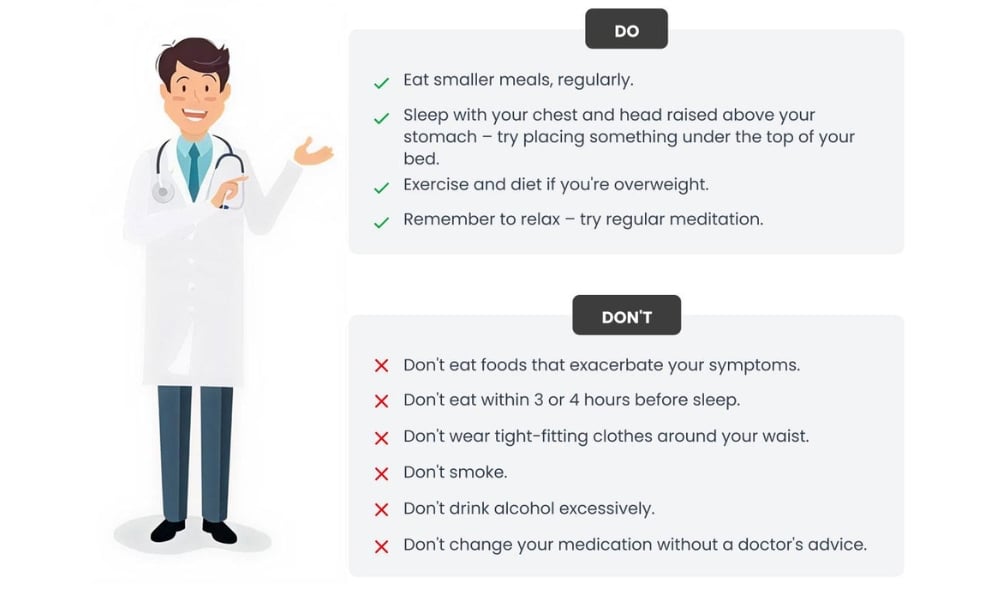
To stop acid reflux at night, finish eating at least three hours before bed, raise the head of your bed by 6 to 8 inches with blocks or a wedge, sleep on your left side, keep evening meals small, and avoid alcohol, caffeine, chocolate, mint, fatty and spicy foods in the evening. Losing extra weight and stopping smoking also help. If symptoms continue, medicines such as H2 blockers or proton pump inhibitors may be recommended.
Tip: Extra pillows usually do not help and can make reflux worse by bending you at the waist. Raise the whole head of the bed or use a foam wedge that lifts your upper body instead.
Have symptoms like these?
Dr. Muhammad Ali Khan, a board-certified gastroenterologist and hepatologist, sees adults at our Katy and Cypress offices, serving patients across Greater Houston.
Why is left-side sleeping better for reflux?
Because of the shape of the stomach, lying on your left side keeps the junction between the stomach and esophagus above the level of stomach acid, so less acid flows back. Studies show that people with nighttime reflux have fewer and shorter episodes on their left side than on their right side or back.
See a doctor promptly if nighttime reflux comes with
- Trouble or pain when swallowing, or food getting stuck
- Choking, gasping or wheezing that wakes you up
- Unexplained weight loss or vomiting
- Vomiting blood or black, tarry stools
- Chest pain with sweating, shortness of breath or arm pain (call 911, as this can be a heart problem)
Is acid reflux at night dangerous?
Frequent acid reflux at night is more likely than daytime reflux to damage the esophagus, because acid stays in contact with the lining longer during sleep. Over time this can cause esophagitis, narrowing of the esophagus, and Barrett's esophagus, a change that raises the risk of esophageal cancer. Nighttime reflux can also worsen asthma, chronic cough and sleep quality. Read more about whether acid reflux is dangerous.
When should you see a gastroenterologist?
See a gastroenterologist if acid reflux at night happens more than twice a week, wakes you up regularly, continues despite lifestyle changes or over-the-counter medicine, or comes with warning signs. An upper endoscopy or pH monitoring may be recommended. Dr. Muhammad Ali Khan treats GERD for patients from Katy, Cypress, Fulshear, Richmond and Greater Houston. Learn more about our GERD care and the GERD diet.
Get answers instead of guessing
Request a visit with Dr. Muhammad Ali Khan at our Katy and Cypress offices. Most major insurance plans are accepted and self-pay options are available.
Key takeaways
- Acid reflux at night is caused mainly by lying flat, late meals and a weak valve between the stomach and esophagus.
- Nighttime acid reflux can cause heartburn, sour taste, cough, hoarseness and poor sleep.
- Stop eating three hours before bed, raise the head of the bed and sleep on your left side.
- Frequent nighttime reflux is more likely to damage the esophagus.
- Trouble swallowing, weight loss, bleeding or choking need prompt evaluation.
Frequently asked questions
Why is my acid reflux worse at night?
Lying down removes gravity, and you swallow less while sleeping, so acid reaches the esophagus more easily and stays longer.
What should I drink for acid reflux at night?
Water is the best choice. Avoid alcohol, coffee, soda, citrus juice and mint tea in the evening.
How long before bed should I stop eating?
At least three hours, so your stomach has time to empty before you lie down.
Can acid reflux at night cause a cough?
Yes. Acid reaching the throat can trigger coughing and throat clearing. Read about GERD and chronic cough.
When should I take reflux medicine for nighttime symptoms?
It depends on the medicine. Some are taken before dinner and others at bedtime. Follow your doctor's or pharmacist's instructions.
Do I need a referral to see a gastroenterologist in Katy or Cypress?
It depends on your insurance plan. Many PPO plans let you book a specialist directly, while some HMO plans require a referral from your primary care doctor. Call (346) 340-4414 and the team can help you check.
Sources
- NIDDK — Acid reflux (GER and GERD) in adults
- NIDDK — Treatment for GER and GERD
- NIDDK — Eating, diet and nutrition for GER and GERD
- MedlinePlus — GERD
- MedlinePlus — Heartburn
- MedlinePlus — Hiatal hernia
- American College of Gastroenterology — Acid reflux
Where to be seen in Katy and Cypress
United Gastroenterology Associates has two offices: Katy, at 23920 Katy Freeway, Suite 555, next to Memorial Hermann Katy Hospital, and Cypress, at 21216 Northwest Freeway, Suite 640, on US-290. Both are open Monday through Friday, 8:30 AM to 5:00 PM, closed for lunch from 12:00 to 1:30 PM, and serve patients from Fulshear, Richmond and across Greater Houston. Call (346) 340-4414 for either office.
Katy office
23920 Katy Freeway, Suite 555
Katy, TX 77494
Memorial Hermann Medical Plaza 1
Next steps
If you are dealing with acid reflux at night or any ongoing digestive concern, a focused evaluation can find the cause and start the right treatment. Dr. Muhammad Ali Khan and the team at United Gastroenterology Associates see adults from Katy, Cypress, Fulshear, Richmond, Greater Houston and across Texas. Call (346) 340-4414 or request an appointment today.
If you have severe pain, vomit blood, pass black stools or have chest pain, call 911 or go to the nearest emergency room.