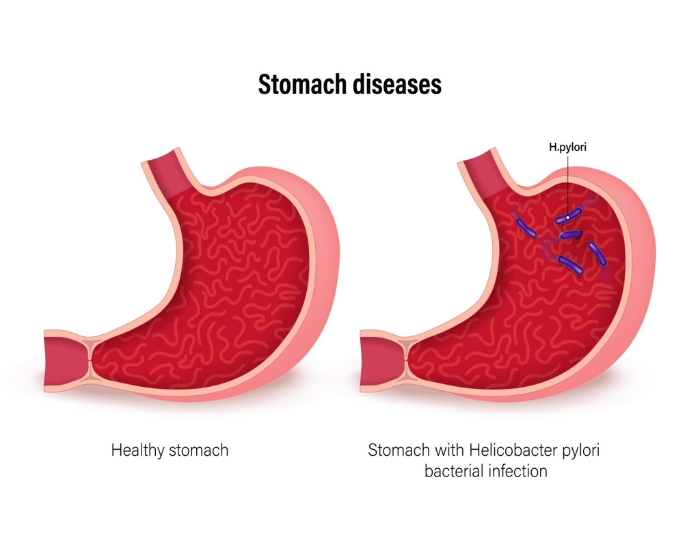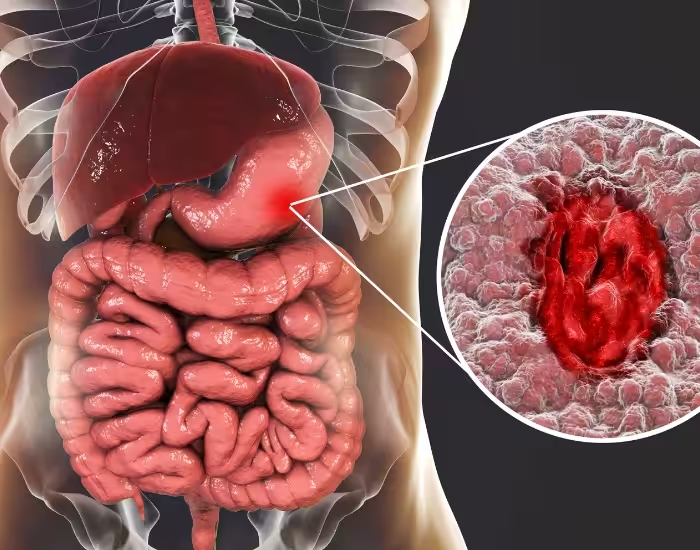
Helicobacter pylori is a common stomach bacterium that can cause gastritis, stomach and duodenal ulcers and, over many years, raises the risk of stomach cancer. Many people carry it without symptoms; others have burning upper-abdominal pain, bloating, nausea or early fullness.
Because H. pylori is treated with antibiotics, getting an accurate test before treatment — and a confirmed result after — is essential. The urea breath test is one of the most reliable ways to do both without an endoscopy.
Key takeaways
- The urea breath test detects a current infection, unlike blood antibody tests.
- Stop PPIs about 2 weeks and antibiotics or bismuth about 4 weeks before testing, if your doctor agrees.
- Everyone treated for H. pylori should have a test of cure at least 4 weeks after finishing treatment.
- Warning symptoms call for an endoscopy rather than a breath test alone.
What Is the H. pylori Urea Breath Test?
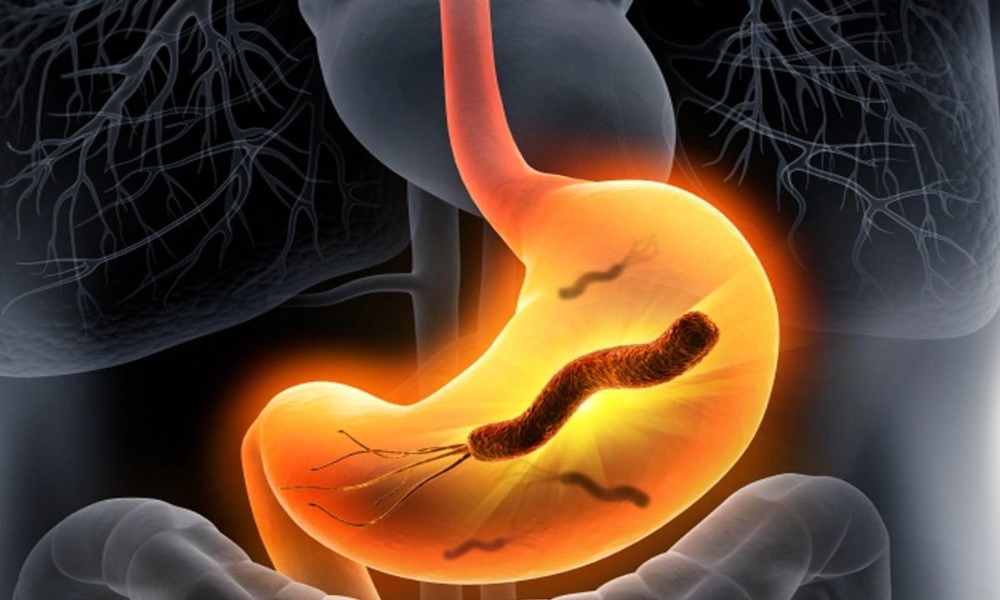
The urea breath test (UBT) is a non-invasive test that detects active H. pylori infection by measuring labeled carbon dioxide in your breath after you swallow urea marked with a carbon isotope. H. pylori survives stomach acid by producing an enzyme called urease. Urease breaks urea down into ammonia and carbon dioxide.
In the test, the carbon in the urea is “labeled,” so the lab can tell whether the carbon dioxide you breathe out came from bacteria breaking down the test dose.
What is the difference between carbon-13 and carbon-14 breath tests?
- Carbon-13 (13C) UBT uses a natural, non-radioactive isotope. It is the most common version in the United States and is considered safe for children and during pregnancy.
- Carbon-14 (14C) UBT uses a very small amount of a radioactive isotope. It is accurate but generally avoided in children and pregnant women.
How Is the Urea Breath Test Done?
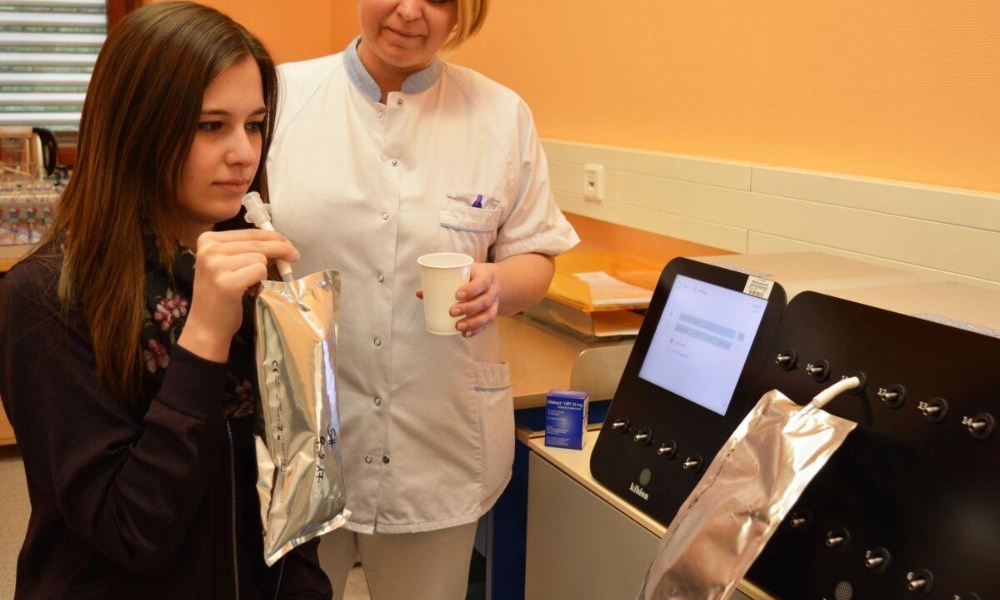
You first give a baseline breath sample, then swallow a urea solution or tablet, often with a citric acid drink. After waiting about fifteen to thirty minutes, you give a second breath sample. If Helicobacter pylori is present, its urease enzyme breaks down the labeled urea, and the lab detects the extra labeled carbon dioxide in the second sample.
Urea breath test, step by step
- Baseline breathExhale into a bag or tube before the test drink.
- Urea doseSwallow the labeled urea solution or tablet.
- WaitSit quietly for about 15–30 minutes.
- Second breathExhale into a second collection bag.
- Lab analysisLabeled CO2 is compared between samples.
How Do You Prepare for an H. pylori Breath Test?
To avoid a false-negative result, current guidance is to stop proton pump inhibitors (PPIs) for 2 weeks and antibiotics and bismuth for 4 weeks before the test, and to fast for about 1 hour or as your testing center instructs. These medicines suppress H. pylori without killing it, so the bacteria may not show up even though they are still there.
- PPIs (omeprazole, esomeprazole, pantoprazole, lansoprazole, rabeprazole, dexlansoprazole): stop about 2 weeks before, if your doctor agrees.
- Potassium-competitive acid blockers such as vonoprazan: ask your doctor; these are also usually held.
- Antibiotics: wait about 4 weeks after the last dose.
- Bismuth (Pepto-Bismol, Kaopectate and some combination pills): avoid for about 4 weeks.
- H2 blockers (famotidine) and plain antacids are generally allowed for symptom relief, though some labs ask you to skip them on the morning of the test.
- Fast for at least 1 hour before the test, or longer if instructed, and avoid smoking.
Important note
Do not stop a PPI on your own if it was prescribed for a bleeding ulcer, Barrett’s esophagus or another serious condition. Talk with your doctor — in those cases an alternative test or plan may be better.
How Accurate Is the Urea Breath Test?
When patients prepare correctly, the urea breath test is one of the most accurate noninvasive Helicobacter pylori tests, with sensitivity and specificity commonly reported above ninety percent. Recent use of proton pump inhibitors, antibiotics or bismuth can cause a false negative. That is why these medicines are usually stopped for two to four weeks before testing.
| Test | Shows current infection? | Used for test of cure? | Notes |
|---|---|---|---|
| Urea breath test | Yes | Yes | Highly accurate; affected by PPIs, antibiotics and bismuth |
| Stool antigen test | Yes | Yes | Good alternative; same medicine precautions |
| Endoscopy with biopsy | Yes | Yes | Needed when there are warning signs; allows antibiotic-resistance testing |
| Blood antibody (serology) | No | No | Stays positive after cure; no longer recommended for diagnosis |
What can cause a false-negative result?
- Recent PPI, antibiotic or bismuth use
- Recent upper GI bleeding
- Prior stomach surgery (partial gastrectomy)
- Testing too soon after finishing H. pylori treatment
What Do Urea Breath Test Results Mean?
A positive result means there is an active Helicobacter pylori infection, and treatment with antibiotics plus acid-reducing medicine is recommended. A negative result on a properly prepared test means active infection is unlikely. After treatment, a repeat breath test at least four weeks after antibiotics confirms whether the infection has been cleared, which guidelines recommend for everyone treated.
What does a positive result mean?
The guiding principle is simple: anyone who tests positive for active infection should be offered treatment. Under the 2024 American College of Gastroenterology guideline, the preferred first treatment for most patients is optimized bismuth quadruple therapy for 14 days. Clarithromycin- and levofloxacin-based regimens are now avoided unless testing shows the bacteria are susceptible, because resistance is common.
What does a negative result mean?
If you stopped the right medicines and still test negative, H. pylori is unlikely to explain your symptoms. Other causes — GERD, gastritis from NSAIDs, functional dyspepsia, gallbladder disease — may need to be considered. If you were taking a PPI or antibiotic before the test, your doctor may repeat it.
Positive H. pylori test or ongoing stomach pain?
Dr. Muhammad Ali Khan, a board-certified gastroenterologist and hepatologist, diagnoses and treats H. pylori, gastritis and ulcers at our Katy and Cypress offices.
Do You Need a Breath Test After H. pylori Treatment?
Yes. Current guidance recommends that everyone treated for H. pylori have a test of cure — a urea breath test, stool antigen test or biopsy — at least 4 weeks after finishing antibiotics, with PPIs stopped for 2 weeks beforehand. Feeling better is not proof that the infection is gone. Antibiotic resistance means a meaningful share of first treatments fail, and an untreated infection can lead to recurrent ulcers.
If the test of cure is still positive, a different regimen is chosen — ideally guided by resistance testing.
Who Should Be Tested for H. pylori?
Testing is recommended for people with a current or past peptic ulcer, ongoing indigestion, gastric MALT lymphoma or a family history of stomach cancer. It is also advised before long-term aspirin or NSAID use in some people and for unexplained iron-deficiency anemia. Anyone treated for Helicobacter pylori should be retested to confirm the infection is gone.
- Upper-abdominal burning or pain, bloating or early fullness
- History of stomach or duodenal ulcer
- First-degree relative with stomach cancer
- Unexplained iron deficiency or low platelets (ITP)
- Long-term NSAID or low-dose aspirin use
- Family origin in regions where H. pylori and stomach cancer are more common, such as parts of Latin America, East Asia and Eastern Europe
Houston’s communities are among the most diverse in the country, and in our Katy and Cypress practice we see many patients whose family background raises their stomach cancer risk. For them, testing and confirmed eradication are especially worthwhile.
When is an endoscopy better than a breath test?
An upper endoscopy (EGD) is usually recommended instead of, or in addition to, breath testing if you have trouble swallowing, vomiting, weight loss, black stools, anemia, or new symptoms after about age 60. Endoscopy can check for ulcers and other conditions and take biopsies for H. pylori and antibiotic resistance.
Learn more about stomach inflammation care on our gastritis treatment page.
Frequently Asked Questions About the H. pylori Breath Test
How long does an H. pylori urea breath test take?
The test itself usually takes about 15 to 30 minutes between the first and second breath samples. Most people are done in under an hour, and results typically come back within a few days.
What should I avoid before an H. pylori breath test?
If your doctor agrees, stop proton pump inhibitors such as omeprazole for about 2 weeks, and avoid antibiotics and bismuth products such as Pepto-Bismol for about 4 weeks. Fast for at least an hour and do not smoke before the test.
Can I take famotidine before an H. pylori breath test?
H2 blockers such as famotidine are generally allowed while you are off PPIs, although some testing centers ask you to skip them on the morning of the test. Follow your testing center's instructions.
Where can I get H. pylori testing and treatment in Katy or Cypress, TX?
Dr. Muhammad Ali Khan at United Gastroenterology Associates diagnoses and treats H. pylori, gastritis and ulcers at offices in Katy and Cypress, and confirms that treatment worked. Call (346) 340-4414.
What sources support this article?
- Chey WD et al. ACG Clinical Guideline: Treatment of Helicobacter pylori infection, Am J Gastroenterol (2024)
- ACG — H. pylori guideline highlights (2024)
- MedlinePlus — Helicobacter pylori tests
- NIDDK — Diagnosis of peptic ulcers
Where can you see a gastroenterologist in Katy or Cypress?
United Gastroenterology Associates has two offices: Katy, at 23920 Katy Freeway, Suite 555, next to Memorial Hermann Katy Hospital, and Cypress, at 21216 Northwest Freeway, Suite 640, on US-290. Both are open Monday through Friday, 8:30 AM to 5:00 PM, closed for lunch from 12:00 to 1:30 PM, and serve patients from Fulshear, Richmond and across Greater Houston. Call (346) 340-4414 for either office.
Where is the Katy office?
23920 Katy Freeway, Suite 555
Katy, TX 77494
Memorial Hermann Medical Plaza 1
Where is the Cypress office?
21216 Northwest Freeway, Suite 640
Cypress, TX 77429
On US-290
What should you do next?
If you have stomach pain, indigestion, an ulcer history or a positive H. pylori result, the right test at the right time — and a confirmed cure afterward — matter. Dr. Muhammad Ali Khan and the team at United Gastroenterology Associates see adults from Katy, Cypress, Fulshear, Richmond and across Greater Houston. Call (346) 340-4414 or request an appointment today.