
If you have a colonoscopy coming up, one of the first questions you may ask is, “What can I actually eat?” The answer matters because what you eat in the days leading up to your procedure can affect how well your bowel preparation works.
You may be told to change your diet before starting the bowel-cleansing medication. Then, at a specific point before the procedure, you will usually need to stop eating solid foods and switch to approved clear liquids. Knowing when that transition happens—and what counts as a clear liquid—can make colonoscopy preparation much less stressful.
Important Note
Your colonoscopy diet is part of the preparation, not just a temporary food restriction. The goal is to reduce residue in the colon so your gastroenterologist can clearly examine the intestinal lining. Preparation instructions vary by patient and bowel-prep product, so always follow the specific instructions provided by your medical team if they differ from this general guide.
What Can You Eat Before a Colonoscopy?
Before the clear-liquid phase begins, your medical team may recommend foods that are low in fiber and easy to digest. These foods produce less residue in the digestive tract and can make bowel cleansing more effective.
The exact timing varies. Some patients may be instructed to follow a low-fiber or low-residue diet for one or more days before the colonoscopy, while others receive different instructions based on their medical history and the type of preparation prescribed.
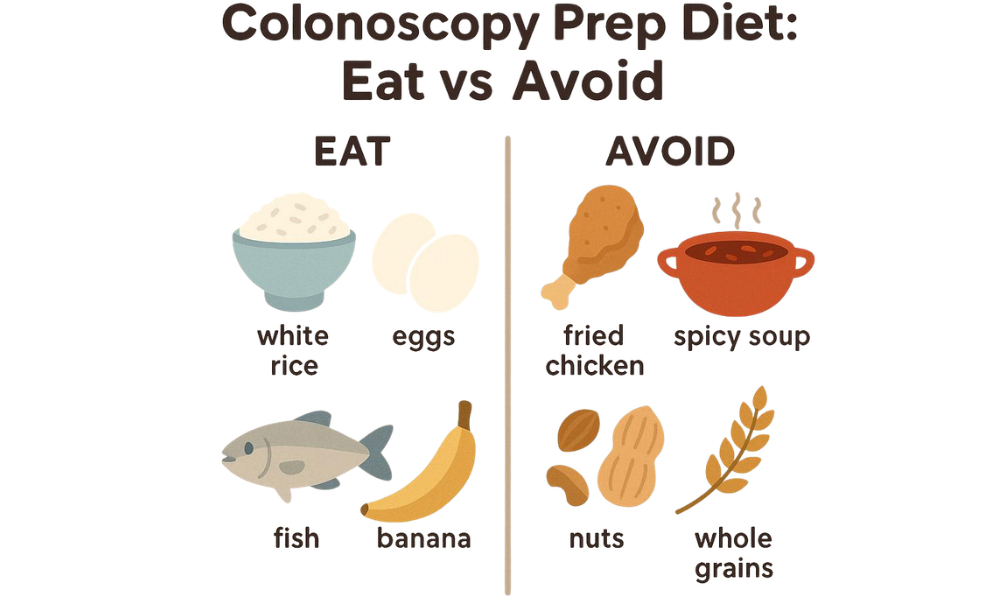
Common foods that may be permitted during the low-residue phase include eggs, lean meats, poultry, fish, white bread, refined grains and other foods that are relatively easy to digest.
However, once your instructions tell you to begin a clear-liquid diet, solid foods generally need to stop.
Why Does Your Diet Matter Before a Colonoscopy?
The colon needs to be as clean as possible for the examination.
During colonoscopy, the gastroenterologist examines the lining of the colon for abnormalities such as polyps, inflammation, bleeding sources and suspicious tissue. Food particles, stool and undigested fiber can obscure the view.
A thorough bowel preparation gives your physician a better opportunity to see the entire colon clearly. Inadequate preparation can make the examination more difficult and, in some situations, may mean that the colonoscopy needs to be repeated earlier than planned.
Dietary preparation and bowel-cleansing medication work together. Neither should be treated as optional.
What Is a Low-Fiber Diet Before Colonoscopy?
A low-fiber diet limits foods that leave substantial undigested material in the digestive tract.
Fiber is normally an important part of a healthy diet, but temporarily reducing certain high-fiber foods before a colonoscopy can help reduce residue in the colon.
Foods commonly limited during this period include whole grains, nuts, seeds, popcorn, raw vegetables, vegetable skins and many fruits with seeds or tough skins.
The goal is not to permanently eliminate fiber from your diet. The restriction is temporary and specifically related to preparing the colon for examination.
What Is a Low-Residue Diet?
A low-residue diet is designed to reduce the amount of material that remains in the digestive tract. It may overlap considerably with a low-fiber diet, although the terms are not always used identically.
Your gastroenterologist may recommend a low-residue approach if there is concern about inadequate bowel cleansing or if your medical history suggests you may need additional preparation.
If you have chronic constipation or previously had difficulty achieving adequate bowel preparation, tell your physician before the procedure. Your preparation plan may be different.
What Foods Can You Usually Eat Before the Clear-Liquid Phase?
Food choices depend on your instructions, but many patients are able to eat simple, low-fiber foods during the earlier phase of preparation.
Eggs
Eggs are often considered an easy-to-digest, low-fiber option before the clear-liquid phase. Scrambled, poached or boiled eggs may be suitable depending on your instructions.
Lean Meat, Poultry and Fish
Plain chicken, turkey, fish and other lean proteins may be permitted before you transition to clear liquids. Avoid preparations that contain large amounts of vegetables, seeds or high-fiber ingredients.
White Bread and Refined Grains
White bread, refined pasta and other low-fiber grains may be allowed during the appropriate phase of preparation. Whole-grain products are generally more likely to contain the fiber that your preparation instructions are designed to reduce.
Other Low-Fiber Foods
Your medical team may provide a specific list of permitted foods. If you are unsure whether something fits your diet, check your written instructions rather than guessing.
What Foods Should You Avoid Before a Colonoscopy?
Foods high in fiber, seeds, nuts and material that can remain in the colon are commonly restricted before colonoscopy.
Examples may include popcorn, nuts, seeds, whole grains, raw vegetables and fruits with seeds or tough skins.
You may also be instructed to avoid foods containing small seeds because they can leave particles behind in the digestive tract.
The exact restrictions can vary, so your facility’s instructions should always take priority.
| Food Category | Before Clear Liquids | During Clear-Liquid Phase |
|---|---|---|
| Eggs | May be permitted | No solid food |
| Lean protein | May be permitted | No solid food |
| White bread | May be permitted | No |
| Whole grains | Usually restricted | No |
| Nuts and seeds | Usually restricted | No |
| Raw vegetables | Usually restricted | No |
| Clear liquids | May be consumed | Commonly permitted |
What Can You Drink the Day Before a Colonoscopy?
Once you begin the clear-liquid phase, hydration becomes especially important.
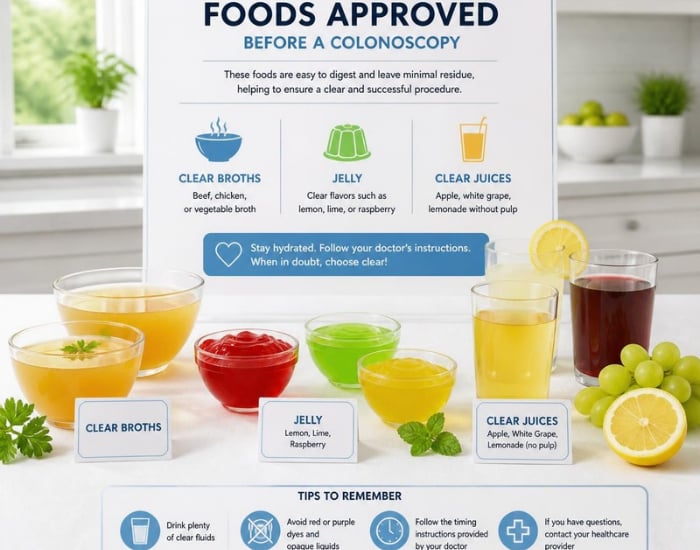
Clear liquids may include water, clear broth, certain pulp-free juices, approved electrolyte drinks, tea or black coffee when permitted by your instructions.
Different facilities may have different policies regarding specific beverages, so read your instructions carefully.
The goal is to maintain hydration while avoiding drinks or ingredients that could interfere with the preparation or fasting requirements.
Can you drink water before a colonoscopy?
Water is commonly included among permitted clear liquids during the preparation period. However, there is a specific cutoff time before the procedure when you may need to stop drinking altogether.
Do not assume that because water is a clear liquid, you can drink it right up until the procedure. Follow your facility’s fasting instructions.
Can you drink clear broth before a colonoscopy?
Clear broth may be permitted during the clear-liquid phase and can provide some sodium and variety when you are tired of drinking sweet beverages.
Avoid broth containing solid vegetables, noodles or other food particles unless your medical team specifically permits them.
Can you drink apple juice before a colonoscopy?
Some clear fruit juices without pulp may be permitted. Apple juice is commonly considered a clear-liquid option, but you should follow the specific beverage list given by your procedure facility.
Can you drink coffee before a colonoscopy?
Some preparation instructions permit black coffee during the clear-liquid period. Milk, cream and other opaque additions generally do not fit the definition of a clear liquid.
Because fasting requirements vary, check your instructions regarding both coffee and the time when all liquids must be stopped.
What Colors Should You Avoid Before a Colonoscopy?
Some facilities advise patients to avoid certain strongly colored drinks, particularly red or purple beverages, during the preparation period.
The concern is that artificial coloring can potentially be confused with blood or interfere with the visual assessment during the examination.
Follow your facility’s instructions regarding beverage colors rather than relying on a universal list. If your written instructions specify certain colors to avoid, follow them.
When Do You Stop Eating Solid Food Before a Colonoscopy?
The exact time when you must stop eating depends on your procedure schedule and the instructions provided by your medical team.
Many patients are instructed to stop solid food the day before the procedure and switch to clear liquids. However, instructions can differ, particularly based on procedure time, anesthesia requirements and the preparation plan.
Never assume that you can eat a small meal shortly before your colonoscopy because you feel hungry. Eating too close to the procedure can affect preparation and may interfere with the safety requirements for sedation.
Can You Eat Breakfast the Day Before a Colonoscopy?
In some preparation plans, patients can eat a low-fiber breakfast the day before the procedure before transitioning to a restricted diet or clear liquids.
In other plans, your physician may give you different instructions.
The important point is that “the day before” does not necessarily mean that every patient follows exactly the same meal schedule. Follow the written instructions provided by your gastroenterology practice.
Can You Eat Lunch the Day Before a Colonoscopy?
This depends on your specific preparation schedule.
Some patients may be permitted to have a low-fiber meal earlier in the day and then switch to clear liquids. Others may be instructed to begin clear liquids earlier.
If your instructions are unclear, contact your medical team rather than choosing a meal based on a generic internet list.
Can You Eat Dinner the Night Before a Colonoscopy?
Most patients will not be allowed to eat a normal solid-food dinner the night before a colonoscopy once the clear-liquid phase has begun.
Instead, you will typically continue with approved clear liquids while taking the prescribed bowel preparation.
Your exact timing depends on your preparation instructions and procedure schedule.
Can You Eat Anything During the Bowel Prep?
Once you have been instructed to begin the clear-liquid phase, you should not eat solid food unless your medical team specifically tells you otherwise.
This can be one of the hardest parts of preparation because you may feel hungry, especially during the evening.
Having a variety of approved clear liquids available can make the process easier. Clear broth may provide a savory option, while approved electrolyte drinks can provide variety and help replace fluids.
Remember that the bowel preparation is temporary. The purpose is to give your gastroenterologist the clearest possible view of your colon.
What Happens If You Accidentally Eat Before a Colonoscopy?
If you accidentally eat something you were instructed to avoid, do not automatically cancel your procedure.
Contact your medical team and tell them what you ate, how much you consumed and when you ate it. They can determine whether you should continue the preparation as planned or whether additional instructions are necessary.
Do not attempt to compensate by taking extra bowel preparation unless specifically instructed.
What If You Are Extremely Hungry During Colonoscopy Prep?
Hunger is common, especially during the clear-liquid phase.
Planning ahead can help. Have several approved beverages available so you are not relying on plain water alone. Clear broth may provide a more satisfying savory option if it is allowed by your instructions.
Some patients find that staying occupied with a quiet activity makes the temporary dietary restrictions easier to manage.
Most importantly, do not break the preparation instructions simply because you are hungry. If you are unsure what is allowed, call your medical team.
Important Note
Being hungry during colonoscopy preparation can be frustrating, but it is temporary. The dietary restrictions are intended to help your bowel preparation work effectively. If you have diabetes, kidney disease, heart disease or another condition that affects your diet or fluid intake, do not follow a generic diet plan without speaking with your healthcare team.
What Should You Eat Two Days Before a Colonoscopy?
Not every patient needs a special diet two days before a colonoscopy. However, some people may benefit from beginning dietary changes earlier, particularly if they have chronic constipation or previously experienced an inadequate bowel preparation.
Your gastroenterologist may recommend reducing high-fiber foods before the day of the procedure. This can include temporarily limiting nuts, seeds, popcorn, whole grains, raw vegetables and fruits with tough skins.
If your written instructions begin the dietary restrictions earlier than expected, follow those instructions.
What About Fruits and Vegetables Before a Colonoscopy?
Fruits and vegetables are normally an important part of a healthy diet, but many are restricted during the preparation period because of their fiber content, seeds or skins.
Raw vegetables, leafy greens, berries with seeds and fruits with tough skins may be restricted.
Some cooked or peeled foods may be allowed during the low-residue phase, but this varies by preparation plan.
Once you switch to clear liquids, fruits and vegetables in solid form are generally no longer permitted.
What About Nuts, Seeds and Popcorn?
Nuts, seeds and popcorn are commonly restricted before colonoscopy because small pieces can remain in the digestive tract.
This includes foods such as sunflower seeds, sesame seeds, chia seeds, flaxseed and seeded breads in many preparation plans.
Because recommendations can vary, follow your gastroenterologist’s specific food list.
What About Whole-Grain Bread and Brown Rice?
Whole grains contain more fiber than refined grains and may be restricted before colonoscopy.
During the low-fiber phase, your medical team may recommend refined grains such as white bread, white rice or plain pasta instead.
Once you begin the clear-liquid phase, all solid grains are generally eliminated.
What About Dairy Before a Colonoscopy?
Dairy recommendations can vary depending on the stage of preparation and your facility’s instructions.
Some preparation plans may permit certain dairy products during the earlier low-residue phase, while others may restrict them as the procedure approaches.
Milk and cream are generally not considered clear liquids, so they should not be added to beverages during the clear-liquid phase unless your medical team specifically permits them.
What About Jell-O Before a Colonoscopy?
Some colonoscopy instructions allow certain types of gelatin during the clear-liquid phase. However, color restrictions may apply, and gelatin containing fruit or other solid ingredients may not be appropriate.
Follow the specific list provided by your medical team.
What About Popsicles Before a Colonoscopy?
Some clear or appropriately colored popsicles may be permitted during the clear-liquid phase, but not every popsicle qualifies.
Avoid products containing milk, cream, fruit pieces or colors that your facility has instructed you to avoid.
Can You Drink Sports Drinks Before a Colonoscopy?
Some electrolyte or sports drinks may be permitted during bowel preparation because they can provide fluid and electrolytes.
However, color restrictions may apply. Your medical team may recommend specific beverages or colors to avoid.
If you have diabetes, ask whether a particular electrolyte drink is appropriate for you because some beverages contain significant amounts of sugar.
How Does the Colonoscopy Prep Solution Fit Into the Diet?
The bowel-cleansing medication is the main component that empties the colon, while dietary restrictions help reduce the amount of residue that needs to be cleared.
Your preparation product may come in different forms, including large-volume solutions or lower-volume products taken with additional clear liquids.
Do not change the amount of preparation solution or substitute another product without speaking with your medical team.
You can review United Gastro TX’s colonoscopy preparation instructions for additional information.
How Can You Make the Colonoscopy Diet Easier?
The easiest way to make the diet manageable is to plan before the restricted phase begins.
Purchase approved clear liquids in advance. If your instructions permit broth, keep some available. If you prefer sweet drinks, have several approved options so you do not become tired of one flavor.
Do not wait until you are hungry to figure out what you can have. Review your instructions ahead of time and make a simple plan for each stage of preparation.
It may also help to think of the diet as a short-term part of a larger process. You are not changing your normal diet permanently. You are preparing your colon for a specific medical examination.
What If You Have Diabetes or Another Medical Condition?
People with diabetes, kidney disease, heart disease and other medical conditions may need individualized instructions.
For example, fasting and bowel preparation can affect blood glucose, hydration and electrolyte balance. Certain medications may also require adjustment.
Do not follow a generic colonoscopy diet without discussing your situation with your healthcare provider if you have a condition that affects your diet, fluid intake or medication schedule.
What If You Have Chronic Constipation?
Tell your gastroenterologist if constipation is a regular problem.
Chronic constipation can sometimes make bowel preparation more difficult. Your physician may recommend starting dietary changes earlier or using a different preparation strategy.
If you have previously had an inadequate bowel preparation, mention that as well. Your medical team can use that information when planning your next colonoscopy.
What Should You Eat After a Colonoscopy?
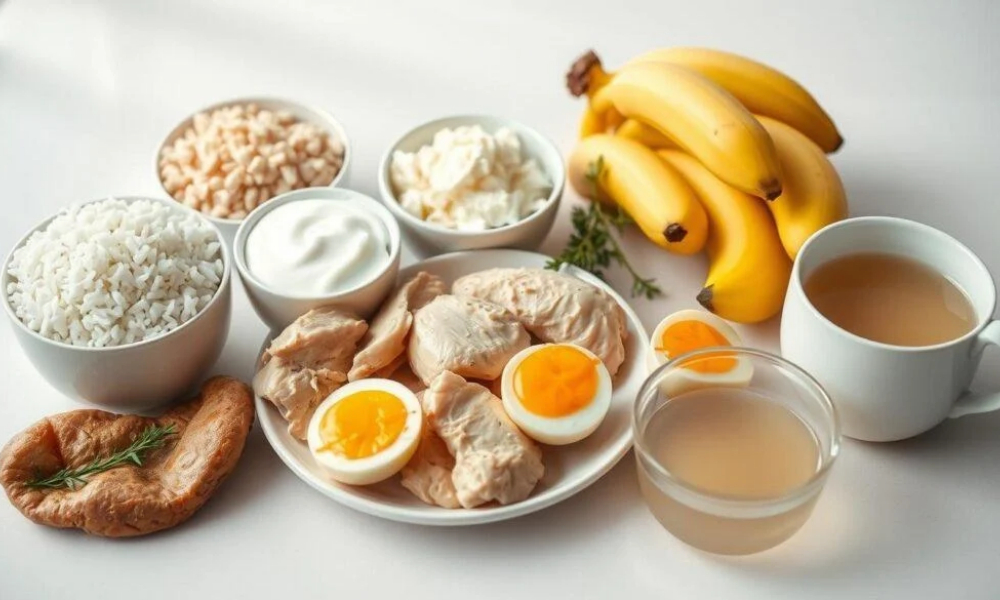
After a colonoscopy, many people can gradually return to their normal diet depending on their procedure findings and discharge instructions.
Your appetite may initially be lower, particularly if you have spent much of the previous day on clear liquids.
Some people prefer to start with lighter foods and gradually return to regular meals. If polyps were removed or biopsies were performed, follow the specific dietary instructions provided by your medical team.
When Should You Call Your Doctor During Colonoscopy Preparation?
Contact your medical team if you are unsure about what you can eat or drink, cannot tolerate the bowel preparation, are vomiting repeatedly or are not having bowel movements as expected.
You should also seek prompt medical attention for severe abdominal pain, fainting, significant weakness, chest pain, difficulty breathing or other serious symptoms.
It is always better to ask for clarification than to guess when preparation instructions are unclear.
Colonoscopy Diet and Preparation in Cypress and Katy, TX
If you are having a colonoscopy with United Gastro TX, use the preparation instructions supplied by your care team as your primary source of information.
United Gastro TX provides colonoscopy preparation resources along with specific instructions for commonly prescribed bowel-prep products.
You can also review preparation information for Suprep, Sutab, Clenpiq, Colyte and other bowel-preparation products.
For patients in the local area, learn more about colonoscopy in Cypress, TX or colonoscopy in Katy, TX.
Have Questions About What to Eat Before Your Colonoscopy?
Your preparation instructions should be clear and specific to your procedure. If you are unsure about food, drinks, medications or when to begin your clear-liquid diet, contact your gastroenterology team before the procedure.
Review colonoscopy preparation information before your procedure.
Frequently Asked Questions About Eating Before a Colonoscopy
What can I eat the day before a colonoscopy?
Your instructions may allow a low-fiber or low-residue meal earlier in the day, followed by a clear-liquid diet. Once the clear-liquid phase begins, solid foods are generally not allowed.
Can I eat eggs before a colonoscopy?
Eggs may be permitted during the low-fiber phase of some preparation plans. They are not generally appropriate once you have been instructed to consume only clear liquids.
Can I eat chicken before a colonoscopy?
Plain chicken or another lean protein may be permitted during the earlier low-residue phase depending on your instructions. Solid food should stop once you enter the clear-liquid phase.
Can I eat rice before a colonoscopy?
Refined white rice may be permitted during the low-fiber phase in some preparation plans. Brown rice and other high-fiber whole grains are more commonly restricted.
Can I eat bread before a colonoscopy?
White bread may be permitted during the low-fiber phase, while whole-grain and seeded breads are often restricted. Your specific instructions should take priority.
Can I eat fruit before a colonoscopy?
Many fruits are restricted as the procedure approaches because of fiber, seeds and skins. Your preparation instructions may allow certain peeled or processed foods during the earlier phase but generally transition to clear liquids later.
Can I eat vegetables before a colonoscopy?
Raw vegetables and high-fiber vegetables are commonly restricted before colonoscopy. Some cooked or peeled vegetables may be permitted during an earlier low-residue phase, depending on your instructions.
Can I eat popcorn before a colonoscopy?
Popcorn is commonly restricted before colonoscopy because the kernels and hulls can leave residue in the digestive tract.
Can I eat nuts and seeds before a colonoscopy?
Nuts and seeds are commonly avoided during the preparation period because they can leave material in the colon. This includes many seeded foods and products containing small seeds.
Can I drink coffee before a colonoscopy?
Black coffee may be permitted during some clear-liquid phases, but milk and cream generally are not considered clear liquids. Always follow your facility’s specific instructions.
Can I drink water before a colonoscopy?
Water is commonly permitted during colonoscopy preparation, but you must stop all liquids at the time specified by your medical team before the procedure.
Can I drink juice before a colonoscopy?
Some clear juices without pulp may be allowed. Juices containing pulp are generally avoided during the clear-liquid phase.
What should I avoid eating before a colonoscopy?
Foods commonly restricted include nuts, seeds, popcorn, whole grains, raw vegetables and fruits with seeds or tough skins. Once you begin the clear-liquid phase, solid foods are generally eliminated.
What happens if I eat solid food during colonoscopy prep?
Contact your medical team and tell them what you ate and when. Do not assume you need to cancel the procedure or take extra bowel preparation without guidance.
Final Thoughts
Knowing what to eat before a colonoscopy can make preparation considerably easier. The general approach is to reduce high-fiber and high-residue foods before transitioning to clear liquids and the prescribed bowel-cleansing medication.
But there is no universal colonoscopy diet that applies perfectly to every patient. Your procedure time, medical history, medications, bowel habits and preparation product can all affect the instructions you receive.
When preparing for your colonoscopy, follow the written instructions from your gastroenterology team rather than combining advice from multiple websites. If something is unclear, ask before the preparation begins.
A well-prepared colon gives your gastroenterologist the best opportunity to perform a careful examination and identify important findings such as polyps, inflammation or other abnormalities.
Medical Disclaimer: This article is intended for general educational purposes and does not replace individualized medical advice. Colonoscopy dietary and fasting instructions vary between patients and facilities. Always follow the specific instructions provided by your gastroenterologist or procedure center. If you have diabetes, kidney disease, heart disease, take prescription medications or have other medical conditions, speak with your healthcare team before making changes to your diet or medication schedule.