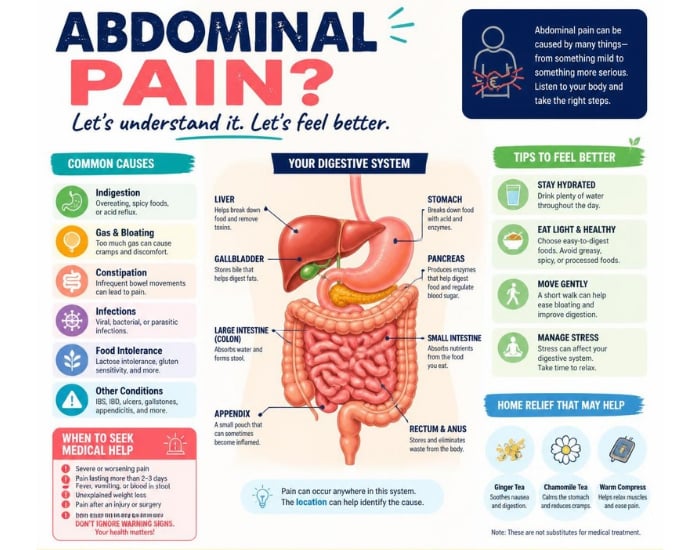
When should you see a doctor for abdominal pain?
See a doctor, such as Dr. Khan, for abdominal pain that lasts more than a few days, keeps coming back or interferes with eating, sleep or work. A visit is also needed when pain comes with changes in bowel habits, unexplained weight loss, fever, nausea that will not settle or pain after meals. These patterns suggest a cause that needs testing and treatment.
Where to go for abdominal pain
- Emergency room nowSevere or sudden pain, hard belly, fever, bleeding, fainting, pregnancy, chest symptoms.
- Doctor within a day or twoModerate pain lasting more than a day, pain with vomiting or diarrhea that is not improving.
- Scheduled GI visitRecurring or ongoing pain for weeks, with bowel changes, bloating or reflux.
What abdominal pain needs the emergency room?
Abdominal pain needs the emergency room when it is sudden and severe, steadily worsening, or comes with a rigid or very tender belly, fever, persistent vomiting, inability to pass gas or stool, vomiting blood or coffee-ground material, black or bloody stools, yellow skin or eyes, fainting, chest pain or shortness of breath, or when you are pregnant. Pain after an injury also needs urgent care.
Go to the emergency room for
- Sudden, severe or worsening pain
- A hard, rigid or very tender belly
- Fever with abdominal pain, or persistent vomiting
- Vomiting blood, black stools or heavy bleeding
- Fainting, chest pain, shortness of breath, or pain in pregnancy
Have symptoms like these?
Dr. Muhammad Ali Khan, a board-certified gastroenterologist and hepatologist, sees adults at our Katy and Cypress offices, serving patients across Greater Houston.
When can abdominal pain wait for an appointment?
Abdominal pain can usually wait for a scheduled appointment when it is mild to moderate, you can eat and drink, you have no fever or bleeding, and it has been coming and going over days to weeks rather than suddenly getting worse. Examples include recurring bloating and cramps, pain linked to bowel movements, indigestion after meals and heartburn. Book a visit rather than waiting months.
| Situation | Where to go |
|---|---|
| Severe, sudden or worsening pain, or with fever or bleeding | Emergency room |
| Pain with vomiting or diarrhea lasting more than a day or two | Primary care or urgent care soon |
| Pain that keeps returning for weeks | Gastroenterologist |
| Pain with bowel changes, weight loss or anemia | Gastroenterologist promptly |
| Heartburn or indigestion needing medicine often | Gastroenterologist |
What should I tell the doctor about my pain?
Tell the doctor where the pain is, when it started, whether it is constant or comes and goes, what it feels like (burning, cramping, sharp, dull), what makes it better or worse, its relation to meals and bowel movements, and any other symptoms such as fever, vomiting, diarrhea, constipation, bleeding or weight loss. List your medicines, especially pain relievers.
- Location, and whether it moves
- Start date and how often it happens
- Type of pain and severity from 0 to 10
- Link to meals, bowel movements or periods
- Other symptoms and all medicines
Tip: Use a simple pain diary
For one to two weeks, note the time, location, severity and what you ate. A short diary often helps your doctor find the cause faster than any single test.
What does a gastroenterologist do for abdominal pain?
A gastroenterologist reviews your history and medicines, examines your abdomen, and orders tests based on the pattern, which may include blood and stool tests, H. pylori testing, an abdominal ultrasound or CT scan, and an upper endoscopy or colonoscopy. Common causes found include gastritis, ulcers, gallbladder disease, IBS, constipation, food intolerances and inflammatory bowel disease.
See abdominal pain by location and when stomach pain is serious.
Get answers instead of guessing
Request a visit with Dr. Muhammad Ali Khan at our Katy and Cypress offices. Call the office to check your insurance coverage; self-pay options are available.
What are the key takeaways?
- Sudden, severe or worsening pain, or pain with fever, bleeding or fainting, needs the emergency room.
- Pain lasting more than a few days or returning for weeks deserves a doctor visit.
- Pain with bowel changes, weight loss or anemia should be seen promptly by a gastroenterologist.
- Location, timing and triggers are the most useful details to share.
- A gastroenterologist chooses tests based on your pain pattern.
Frequently Asked Questions
How long is too long for stomach pain?
Mild stomach pain that lasts more than a few days, or keeps returning over weeks, should be checked by a doctor. Severe pain of any length needs prompt care.
Should I go to urgent care or the ER for stomach pain?
Go to the ER for severe, sudden or worsening pain, or pain with fever, vomiting blood, black stools or fainting. Urgent care can handle milder pain that is not getting worse.
Can I take pain medicine for abdominal pain?
Acetaminophen is usually safer than NSAIDs such as ibuprofen, which can irritate the stomach. Avoid masking severe pain with medicine before a doctor has evaluated it.
Do I need a referral to see a gastroenterologist in Katy or Cypress?
Many PPO plans and traditional Medicare do not require a referral, while HMO plans usually do. United Gastroenterology Associates can check your plan before you schedule.
What sources support this article?
- MedlinePlus — Abdominal pain
- MedlinePlus — Digestive diseases
- NIDDK — Indigestion (dyspepsia)
- American College of Gastroenterology — Patient resources
Where can you see a gastroenterologist in Katy or Cypress?
United Gastroenterology Associates has two offices: Katy, at 23920 Katy Freeway, Suite 555, next to Memorial Hermann Katy Hospital, and Cypress, at 21216 Northwest Freeway, Suite 640, on US-290. Both are open Monday through Friday, 8:30 AM to 5:00 PM, closed for lunch from 12:00 to 1:30 PM, and serve patients from Fulshear, Richmond and across Greater Houston. Call (346) 340-4414 for either office.
Where is the Katy office?
23920 Katy Freeway, Suite 555
Katy, TX 77494
Memorial Hermann Medical Plaza 1
Where is the Cypress office?
21216 Northwest Freeway, Suite 640
Cypress, TX 77429
On US-290
What should you do next?
If you are dealing with abdominal pain when to see a doctor or any ongoing digestive concern, a focused evaluation can find the cause and start the right treatment. Dr. Muhammad Ali Khan and the team at United Gastroenterology Associates see adults from Katy, Cypress, Fulshear, Richmond, Greater Houston and across Texas. Call (346) 340-4414 or request an appointment today.
If you have severe pain, vomit blood, pass black stools or have chest pain, call 911 or go to the nearest emergency room.