First, make sure it is not your heart
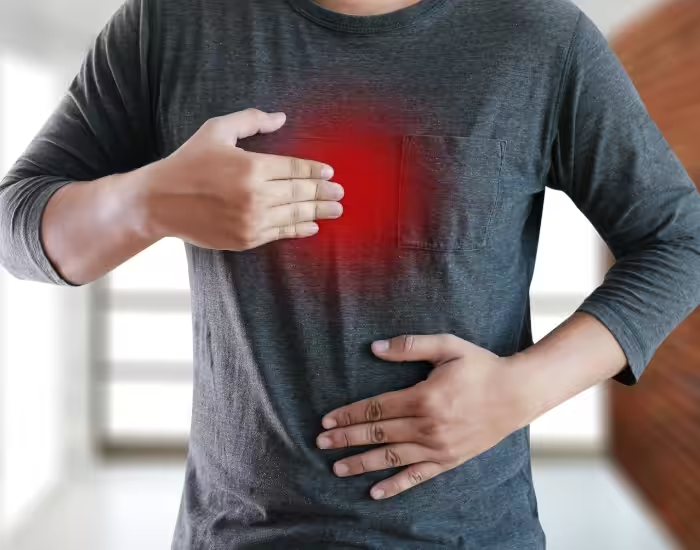
Call 911 for chest pain that is new, severe, feels like pressure or squeezing, or comes with shortness of breath, sweating, nausea, lightheadedness, or pain spreading to the arm, back, neck or jaw. Heart attacks can feel like heartburn. Read more about reflux chest pain vs. heart pain.
How do I stop burning chest pain from acid reflux fast?
To stop burning chest pain from acid reflux fast, Dr. Khan suggests you sit or stand upright, loosen tight clothing or belts, and sip a little water to rinse acid from the esophagus. An over-the-counter antacid usually relieves heartburn within minutes, and an alginate product can form a protective layer on top of stomach contents. An H2 blocker taken as directed works within about an hour and lasts longer. Avoid lying down, eating more or smoking until the burning passes.
Fast relief, step by step
- Get uprightSit or stand up straight. Gravity helps keep acid in the stomach.
- Loosen upUndo tight belts or waistbands that squeeze the stomach.
- Sip waterA few sips can rinse acid back down from the esophagus.
- Use an antacidTake an over-the-counter antacid or alginate as directed on the label.
Which over-the-counter medicines help heartburn fastest?
Antacids such as calcium carbonate act fastest, usually within minutes, by neutralizing acid, but the effect is short. Alginate products form a foam barrier that reduces acid rising into the esophagus. H2 blockers such as famotidine start working in about an hour and last several hours. Proton pump inhibitors are the strongest acid reducers but take a day or more for full effect, so they are better for preventing frequent heartburn than for instant relief.
| Type | How fast it works | Best used for |
|---|---|---|
| Antacids | Minutes | Occasional, mild heartburn |
| Alginates | Minutes | Heartburn after meals or at night |
| H2 blockers | About an hour, lasts several hours | Heartburn you expect, such as before a large meal |
| Proton pump inhibitors | One to four days for full effect | Frequent heartburn, under a doctor’s guidance |
Follow the label for every product. Over-the-counter proton pump inhibitors are labeled for a 14-day course, and you should talk to a doctor if you need them more often. Ask a pharmacist before combining medicines, especially if you have kidney disease, are pregnant or take other prescriptions.
What should I avoid during a reflux flare?
During a reflux flare, avoid lying down, bending over, eating a large meal, drinking alcohol, coffee or carbonated drinks, smoking, and foods that commonly trigger reflux such as fried or fatty foods, chocolate, mint, citrus, tomatoes and spicy dishes. Avoid tight clothing, and do not use home remedies like baking soda regularly, since it is high in sodium and not safe for everyone.
- Lying flat or napping right after eating
- Large or late meals, alcohol and carbonated drinks
- Fried and fatty foods, chocolate, mint, citrus, tomatoes and spicy foods
- Smoking or vaping
- Baking soda or other home remedies without your doctor’s approval
How can I sleep with burning chest pain from reflux?
To sleep with reflux, raise the head of your bed 6 to 8 inches with blocks or a foam wedge, finish eating at least two to three hours before bed, and try sleeping on your left side, which keeps the stomach below the esophagus. Extra pillows alone bend you at the waist and can make reflux worse. If night-time burning happens often, talk to your doctor about longer-acting treatment.
Tip: Left side, head up
Sleeping on your left side with the head of the bed raised is one of the simplest ways to reduce night-time reflux. Pair it with an earlier dinner for the best effect.
Have symptoms like these?
Dr. Muhammad Ali Khan, a board-certified gastroenterologist and hepatologist, sees adults at our Katy and Cypress offices, serving patients across Greater Houston.
How can I prevent burning chest pain from acid reflux?
You can prevent burning chest pain from acid reflux by eating smaller meals, finishing dinner two to three hours before bed, staying upright after eating, keeping a healthy weight, limiting alcohol, stopping smoking, and identifying your personal trigger foods. People with frequent heartburn often need a regular acid-reducing medicine prescribed by a doctor, in addition to these steps.
- Eat four or five smaller meals instead of two large ones
- Wait one to two hours after meals before exercise or bending
- Keep a two-week log of meals and symptoms to find triggers
- Lose a few pounds if you carry extra weight around the waist
- Wear looser clothing around the waist
If you get reflux even with a healthy diet, see why acid reflux happens when you eat healthy.
Why does acid reflux cause burning chest pain?
Acid reflux causes burning chest pain because stomach acid and digestive enzymes flow back into the esophagus, which lacks the protective lining of the stomach. The acid irritates the esophageal lining and nerves behind the breastbone, producing a burning feeling that may rise toward the throat. Acid can also trigger the esophageal muscle to spasm, which can feel like squeezing pressure.
Occasional heartburn is common. Heartburn at least twice a week, or reflux that causes complications, is called gastroesophageal reflux disease (GERD). Learn more about GERD treatment.
When is burning chest pain an emergency?
Burning chest pain is an emergency when it is new or severe, feels like pressure, or comes with shortness of breath, sweating, nausea, lightheadedness, fainting, or pain spreading to the arm, back, neck or jaw. Call 911. Also seek emergency care for chest pain with vomiting blood, black stools, or food stuck in your chest that you cannot swallow or bring up.
Call 911 for
- Chest pressure, squeezing or heaviness, especially with exertion
- Shortness of breath, sweating, nausea or lightheadedness
- Pain spreading to the arm, shoulder, back, neck or jaw
- Vomiting blood or black stools
- Food stuck in the chest
Get answers instead of guessing
Request a visit with Dr. Muhammad Ali Khan at our Katy and Cypress offices. Call the office to check your insurance coverage; self-pay options are available.
When should I see a gastroenterologist for reflux chest pain?
See a gastroenterologist if burning chest pain from reflux happens more than twice a week, if you need over-the-counter medicine for more than two weeks, if it wakes you at night, or if your heart has been checked and the pain keeps returning. Get prompt care for trouble swallowing, food sticking, weight loss, vomiting or anemia. An upper endoscopy and pH monitoring can find the cause and guide treatment.
Your evaluation, step by step
- Heart firstNew chest pain is checked with an ECG and blood tests.
- Reflux historyDr. Khan reviews meals, night symptoms and medicines.
- TestingUpper endoscopy and esophageal pH monitoring when needed.
- Your planMedicine and habits matched to the cause, with follow-up.
Learn more about upper endoscopy (EGD).
Key takeaways
- To stop burning chest pain from acid reflux fast, get upright, loosen clothing, sip water and use an antacid or alginate as directed.
- H2 blockers help within about an hour; proton pump inhibitors prevent frequent heartburn but are not instant.
- Avoid lying down, large meals, alcohol, smoking and your trigger foods during a flare.
- Raise the head of the bed and sleep on your left side to reduce night-time reflux.
- New, severe or pressure-like chest pain needs emergency care to rule out the heart.
Frequently asked questions
What can I drink to stop burning chest pain from acid reflux?
Sipping water can rinse acid from the esophagus. Some people find low-fat milk or ginger tea soothing, although milk can sometimes increase acid later. Avoid alcohol, coffee, citrus juices and carbonated drinks during a flare.
How long does burning chest pain from acid reflux last?
Reflux burning can last from a few minutes to several hours. Pain that is severe, does not improve, or comes with other warning signs needs emergency evaluation.
Is it safe to take antacids every day?
Antacids are meant for occasional use. If you need them most days or for more than two weeks, see a doctor to find the cause and choose a safer long-term plan.
Does lying on my left side help heartburn?
Yes, for many people. Sleeping on the left side keeps the stomach below the esophagus, which can reduce night-time reflux, especially with the head of the bed raised.
Can acid reflux chest pain feel like a heart attack?
Yes. Reflux chest pain and heart pain can feel very similar. If you are not sure, call 911, especially if you have shortness of breath, sweating or pain spreading to the arm or jaw.
Do I need a referral to see a gastroenterologist in Katy or Cypress?
It depends on your insurance plan. Call (346) 340-4414 and the team can help you check.
Sources
- NIDDK — Treatment for GER and GERD
- NIDDK — Eating, diet and nutrition for GER and GERD
- MedlinePlus — Heartburn
- MedlinePlus — Chest pain
- NHLBI — Heart attack symptoms
- American College of Gastroenterology — Acid reflux
Where to be seen in Katy and Cypress
United Gastroenterology Associates has two offices: Katy, at 23920 Katy Freeway, Suite 555, next to Memorial Hermann Katy Hospital, and Cypress, at 21216 Northwest Freeway, Suite 640, on US-290. Both are open Monday through Friday, 8:30 AM to 5:00 PM, closed for lunch from 12:00 to 1:30 PM, and serve patients from Fulshear, Richmond and across Greater Houston. Call (346) 340-4414 for either office.
Katy office
23920 Katy Freeway, Suite 555
Katy, TX 77494
Memorial Hermann Medical Plaza 1
Next steps
If you are dealing with burning chest pain acid reflux or any ongoing digestive concern, a focused evaluation can find the cause and start the right treatment. Dr. Muhammad Ali Khan and the team at United Gastroenterology Associates see adults from Katy, Cypress, Fulshear, Richmond, Greater Houston and across Texas. Call (346) 340-4414 or request an appointment today.
If you have severe pain, vomit blood, pass black stools or have chest pain, call 911 or go to the nearest emergency room.