Why does diarrhea after gallbladder removal happen?
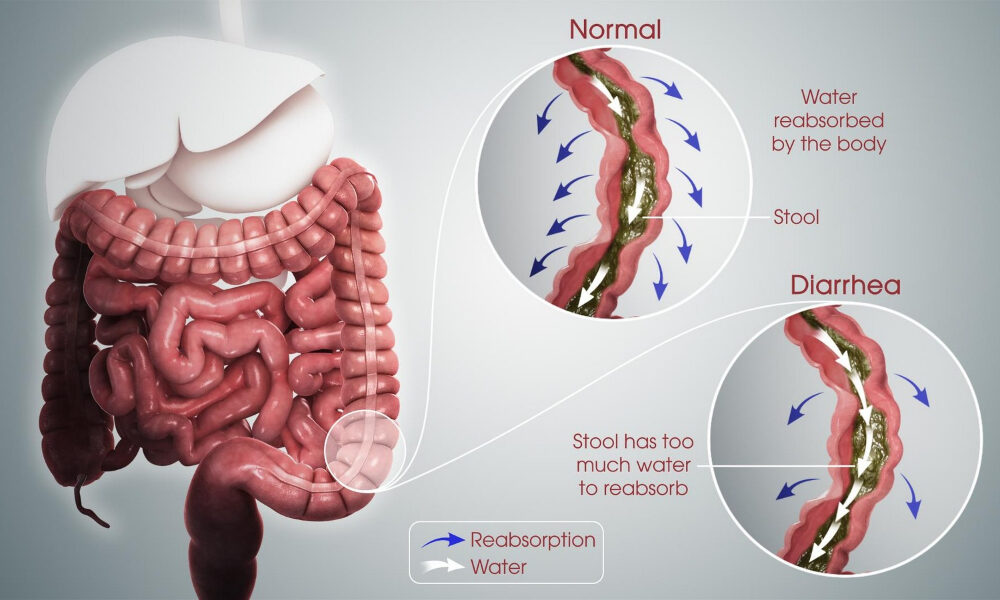
Diarrhea after gallbladder removal, a problem Dr. Khan evaluates at our Cypress and Katy offices, is usually caused by bile acids. The gallbladder normally stores bile and releases it in measured amounts with meals. Without it, bile drips into the intestine constantly, and some of it reaches the colon, where it draws in water and speeds up the bowel.
This is called bile acid diarrhea. It often improves over weeks to months but can persist in some people.
How bile flow changes after cholecystectomy
- Before surgeryBile is stored in the gallbladder and released with meals.
- After surgeryBile flows continuously into the small intestine.
- Extra bile in the colonBile acids pull water into the colon, causing loose, urgent stools.
Why do I get diarrhea after eating without a gallbladder?
Diarrhea after eating without a gallbladder happens because meals, especially fatty ones, trigger the gastrocolic reflex and increase bile flow at the same time. The colon receives more bile than it can handle, so you may need to rush to the bathroom shortly after eating. Large, high-fat meals, fried foods, coffee and alcohol tend to make it worse.
| Timeline | What is common | What to do |
|---|---|---|
| First 1 to 4 weeks | Loose stools, urgency after meals | Small low-fat meals, soluble fiber, fluids |
| 1 to 3 months | Gradual improvement for most people | Reintroduce foods slowly, track triggers |
| Beyond 3 months | Ongoing diarrhea after gallbladder surgery in some people | See a gastroenterologist; bile acid binder may help |
| Any time | Fever, jaundice, severe pain, blood | Seek prompt medical care |
How is ongoing diarrhea after gallbladder surgery treated?
The most effective treatment for ongoing diarrhea after gallbladder surgery is a bile acid binder such as cholestyramine, colestipol or colesevelam, which binds extra bile in the gut. Many patients improve within days. Diet changes help too: smaller meals, less fat, and more soluble fiber from oats, psyllium and bananas. Your doctor will also check for other causes before starting treatment.
Contact a doctor promptly if you have
- Fever or chills after surgery
- Yellowing of the skin or eyes, or dark urine
- Severe or worsening abdominal pain
- Blood in the stool or black stools
- Signs of dehydration, such as dizziness or very little urine
- Weight loss or diarrhea that wakes you at night
Have symptoms like these?
Dr. Muhammad Ali Khan, a board-certified gastroenterologist and hepatologist, sees adults at our Katy and Cypress offices, serving patients across Greater Houston.
Could something else be causing the diarrhea?
Yes. Diarrhea after gallbladder removal is often bile-related, but other conditions can start or be unmasked after surgery, including IBS, an infection such as C. difficile after hospital antibiotics, a retained bile duct stone, celiac disease, lactose intolerance, microscopic colitis and pancreatic problems. Stool tests, blood tests, and sometimes imaging or colonoscopy help rule these out.
Tip: Take bile acid binders at a different time from other medicines and vitamins, usually at least one hour before or four hours after, because they can block absorption.
What should you eat after gallbladder removal?
Choose small, frequent meals with lean protein, cooked vegetables, fruit, oats, rice and low-fat dairy. Limit fried foods, fatty meats, cream sauces, pastries and very spicy dishes, which can worsen loose stools. Add soluble fiber gradually to firm up stool, and see a doctor if symptoms turn into chronic diarrhea or diarrhea after eating that keeps returning.
When should you see a gastroenterologist?
See a gastroenterologist if diarrhea lasts more than four to six weeks after surgery, keeps you close to a bathroom, or comes with weight loss, night-time symptoms or bleeding. Dr. Muhammad Ali Khan evaluates and treats bile acid diarrhea for patients from Katy, Cypress, Fulshear, Richmond and Greater Houston. Learn more about our chronic diarrhea care.
Get answers instead of guessing
Request a visit with Dr. Muhammad Ali Khan at our Katy and Cypress offices. Call the office to check your insurance coverage; self-pay options are available.
What are the key takeaways?
- Diarrhea after gallbladder removal is usually caused by extra bile acids in the colon.
- Diarrhea after eating without a gallbladder is often worse after fatty meals.
- Most people improve within weeks to a few months.
- Bile acid binders are very effective for ongoing diarrhea after gallbladder surgery.
- Fever, jaundice, severe pain or bleeding need prompt care.
Frequently Asked Questions
How long does diarrhea after gallbladder removal last?
For most people, diarrhea after gallbladder removal improves within a few weeks to a few months. A smaller group has ongoing symptoms that need treatment.
Is diarrhea after gallbladder removal permanent?
It is rarely permanent, and long-lasting cases usually respond well to diet changes or a bile acid binder. A gastroenterologist can confirm the cause and adjust treatment.
Can I take loperamide?
Occasional loperamide is generally safe for mild diarrhea after gallbladder removal in healthy adults. Avoid it and call your doctor if you have fever, blood in the stool or severe pain.
Do I need a referral to see a gastroenterologist in Katy or Cypress?
Many PPO plans and traditional Medicare do not require a referral, while HMO plans usually do. United Gastroenterology Associates can check your plan before you schedule.
What sources support this article?
- NIDDK — Gallstones
- MedlinePlus — Gallbladder diseases
- NIDDK — Diarrhea
- MedlinePlus — Diarrhea
- MedlinePlus — C. diff infections
Where can you see a gastroenterologist in Katy or Cypress?
United Gastroenterology Associates has two offices: Katy, at 23920 Katy Freeway, Suite 555, next to Memorial Hermann Katy Hospital, and Cypress, at 21216 Northwest Freeway, Suite 640, on US-290. Both are open Monday through Friday, 8:30 AM to 5:00 PM, closed for lunch from 12:00 to 1:30 PM, and serve patients from Fulshear, Richmond and across Greater Houston. Call (346) 340-4414 for either office.
Where is the Katy office?
23920 Katy Freeway, Suite 555
Katy, TX 77494
Memorial Hermann Medical Plaza 1
Where is the Cypress office?
21216 Northwest Freeway, Suite 640
Cypress, TX 77429
On US-290
What should you do next?
If you are dealing with diarrhea after gallbladder removal or any ongoing digestive concern, a focused evaluation can find the cause and start the right treatment. Dr. Muhammad Ali Khan and the team at United Gastroenterology Associates see adults from Katy, Cypress, Fulshear, Richmond, Greater Houston and across Texas. Call (346) 340-4414 or request an appointment today.
If you have severe pain, vomit blood, pass black stools or have chest pain, call 911 or go to the nearest emergency room.