
Constipation is one of those digestive problems people often try to manage on their own. Maybe you are going less often than usual, your stool has become hard and difficult to pass, or you feel like you still need to go even after using the bathroom. For many people, occasional constipation improves with changes in diet, fluids, activity or routine. But when constipation keeps coming back, lasts for weeks, becomes painful or starts affecting everyday life, it may be time to ask a more important question: when should you see a GI doctor for constipation?
A gastroenterologist can help determine whether constipation is related to diet, medications, lifestyle, irritable bowel syndrome, a problem with how the pelvic floor muscles work, a thyroid or metabolic condition, or another digestive disorder. In some cases, persistent constipation can also signal a more serious problem that needs prompt evaluation.
The good news is that constipation is usually manageable once the underlying cause is understood. The goal is not simply to make you have a bowel movement. It is to understand why your bowel habits have changed and find a treatment approach that produces comfortable, predictable bowel movements without relying on trial and error.
Important Note
Constipation can be frustrating and sometimes embarrassing, but it is a legitimate medical concern when symptoms persist. If you are regularly straining, going several days without a bowel movement, feeling incompletely emptied or needing repeated laxatives to stay regular, you do not have to simply live with it. Understanding the cause can make treatment safer and more effective.
What Is Constipation?
Constipation generally means having bowel movements that are infrequent, difficult to pass or associated with hard stools or incomplete emptying.
There is no single number of bowel movements that is considered normal for everyone. Some healthy people have bowel movements several times a day, while others naturally go every other day. What matters is a change from your usual pattern and whether bowel movements are difficult or uncomfortable.
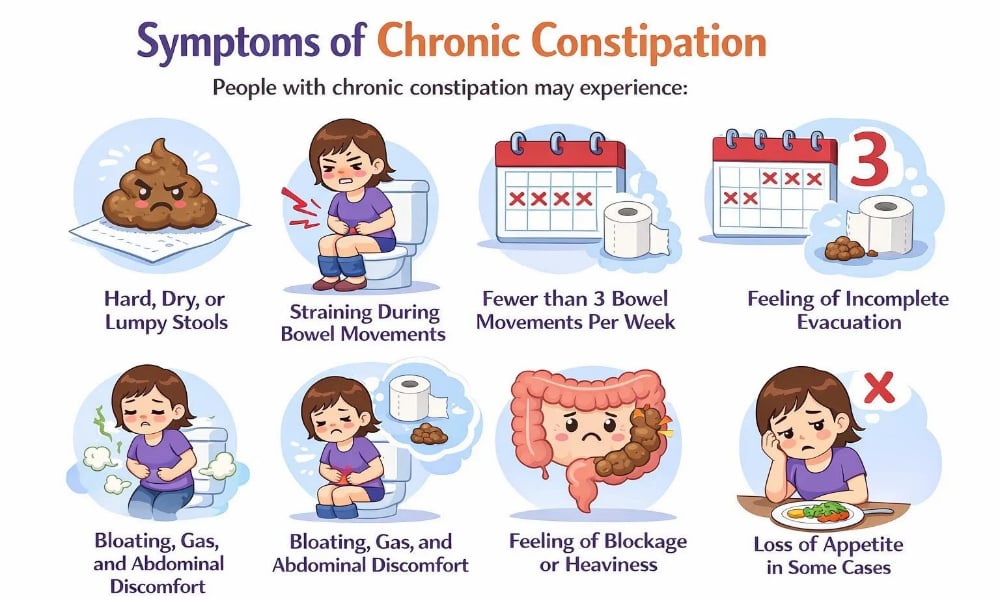
Constipation may involve fewer bowel movements than usual, hard or lumpy stools, significant straining, a sensation that stool is stuck, or the feeling that you have not completely emptied your rectum.
Some people experience constipation only occasionally. Others develop chronic constipation that continues for months or repeatedly returns despite home treatment.
Constipation can also occur alongside bloating, abdominal discomfort, gas and changes in appetite. When these symptoms become persistent, a gastroenterologist can help determine whether there is an underlying digestive condition contributing to the problem.
When Should You See a GI Doctor for Constipation?
You should consider seeing a gastroenterologist when constipation is persistent, recurrent, significantly uncomfortable, difficult to manage or associated with concerning symptoms.
Occasional constipation after travel, a change in diet or a temporary disruption in routine is usually not a reason for alarm. But constipation that continues despite reasonable lifestyle changes deserves more attention.
A GI doctor may be particularly helpful if you regularly need laxatives to have bowel movements, your symptoms interfere with daily activities, constipation alternates with diarrhea, or you feel that your bowel habits have changed significantly.
Medical evaluation is also important when constipation begins suddenly without an obvious explanation, particularly in an older adult or someone with other risk factors.
The purpose of seeing a gastroenterologist is not automatically to perform invasive testing. In many cases, the first step is a detailed discussion of your symptoms, medications, diet, bowel habits and medical history.
How Long Is Too Long to Be Constipated?
There is no universal number of days that automatically means constipation is dangerous, but persistent symptoms should not be ignored.
Going a day or two without a bowel movement may be normal for some people. However, if you normally have regular bowel movements and suddenly go several days without one, particularly if you are uncomfortable, it is worth paying attention to the change.
Constipation that continues for several weeks or repeatedly returns despite self-care should be discussed with a healthcare professional.
Chronic constipation is generally considered when symptoms occur over an extended period rather than as an isolated episode. Your gastroenterologist can evaluate the pattern rather than focusing only on how many days have passed since your last bowel movement.
What Are the Symptoms of Constipation?
Constipation can look different from person to person, but common symptoms include:
- Fewer bowel movements than usual
- Hard or dry stools
- Straining during bowel movements
- A feeling that stool is difficult to pass
- A sensation of incomplete bowel emptying
- Feeling that there is a blockage near the rectum
- Needing to use your hands or change your body position to help pass stool
- Bloating or abdominal fullness
- Abdominal discomfort
Not everyone with constipation experiences every symptom. A person may have bowel movements relatively often but still be constipated if the stool is consistently hard, difficult to pass or associated with incomplete emptying.
Why Is My Stool Hard and Difficult to Pass?
Hard stool often develops when stool moves too slowly through the colon, allowing more water to be absorbed from it.
The colon normally absorbs water as digestive material moves through it. When transit becomes slower, the stool can become drier, harder and more difficult to pass.
Not drinking enough fluids, eating too little fiber, being physically inactive and ignoring the urge to have a bowel movement can contribute.
However, persistent hard stools can also occur because of medications, hormonal or metabolic conditions, slow-transit constipation, pelvic floor dysfunction or other medical problems.
If your stool remains hard despite reasonable changes to fluids, fiber and activity, a GI evaluation may help identify what is preventing normal bowel function.
Is Straining During a Bowel Movement Normal?
Occasional mild straining can happen, but frequent or significant straining is a common symptom of constipation and should not be considered something you simply have to tolerate.
Repeated straining can make bowel movements stressful and uncomfortable. Over time, it may also contribute to problems such as hemorrhoids or anal fissures.
Some people strain because stool is hard. Others have difficulty relaxing the pelvic floor muscles during defecation, which can make it difficult to evacuate stool even when the stool itself is not particularly hard.
This distinction matters because the treatment for a pelvic floor evacuation disorder can be very different from simply adding more fiber.
What Causes Constipation?
Constipation can result from diet, lifestyle, medications, changes in bowel movement patterns, medical conditions or problems with how the colon and pelvic floor function.
One of the most common contributors is inadequate dietary fiber. Fiber adds bulk and can help stool retain water, making it easier to pass.
Low fluid intake can also contribute, although simply drinking enormous amounts of water is not a universal solution for chronic constipation.
Physical inactivity may slow bowel function. Travel and changes in daily routines can also disrupt normal bowel habits.
Medications are another important cause. Certain pain medications, particularly opioids, can cause significant constipation. Some antacids, iron supplements, antidepressants and other medications may also affect bowel function.
Medical conditions such as hypothyroidism, diabetes, neurologic disorders and certain electrolyte abnormalities can contribute to constipation.
Digestive disorders, including irritable bowel syndrome with constipation, can also cause chronic symptoms.
Can Medications Cause Constipation?
Yes. Many commonly used medications and supplements can cause or worsen constipation.
Opioid pain medicines are particularly well known for slowing intestinal movement. Some medications used for depression, allergies, high blood pressure and other conditions can also contribute.
Iron supplements may cause hard stools and constipation in some people. Certain calcium-containing antacids can have a similar effect.
This is one reason your medication list is important during a GI evaluation.
If you suspect a medication is causing constipation, do not stop a prescribed medicine on your own. Your doctor can determine whether the medication is contributing and whether the dose or treatment plan can safely be adjusted.
Can Low Fiber Cause Constipation?
A low-fiber diet can contribute to constipation because dietary fiber helps add bulk and structure to stool.
Fiber is found in foods such as vegetables, fruits, whole grains, legumes, nuts and seeds. Increasing fiber gradually can help some people become more regular.
However, more fiber is not always the answer for every person with chronic constipation.
Someone with significant bloating, slow-transit constipation or a pelvic floor disorder may feel worse after suddenly adding large amounts of fiber. The type and amount of fiber can matter, too.
For that reason, persistent constipation deserves an individualized approach rather than a simple instruction to “eat more fiber.”
Does Drinking More Water Help Constipation?
Staying adequately hydrated can support normal stool consistency, particularly when dehydration is contributing to constipation.
However, drinking excessive amounts of water does not necessarily correct chronic constipation if the underlying problem involves slow bowel transit, medications or pelvic floor dysfunction.
A practical goal is to maintain normal hydration throughout the day and increase fluid intake when appropriate, particularly during hot weather or increased physical activity.
If you have a medical condition that requires fluid restriction, follow your healthcare professional’s recommendations rather than increasing fluids on your own.
Can Exercise Help Constipation?
Regular physical activity can help support bowel function and may improve constipation for some people.
Movement stimulates normal activity throughout the body, including the digestive tract. Even simple activities such as walking can be helpful for people who spend much of the day sitting.
Exercise is not a cure for every type of constipation, however. If symptoms persist despite regular activity, further evaluation may be needed.
Could Constipation Be IBS?
Yes. Irritable bowel syndrome with constipation, often called IBS-C, is one possible cause of chronic constipation.
IBS is a disorder of gut-brain interaction characterized by abdominal pain associated with changes in bowel habits. Some people primarily experience constipation, while others experience diarrhea or alternating bowel patterns.
IBS-C is different from simple constipation because recurrent abdominal pain is a central part of the condition.
IBS does not cause the intestinal inflammation seen in inflammatory bowel disease such as Crohn’s disease or ulcerative colitis.
If constipation occurs alongside persistent abdominal pain, bloating or alternating diarrhea, a gastroenterologist can help determine whether IBS or another digestive disorder may be involved.
What Is Slow-Transit Constipation?
Slow-transit constipation occurs when stool moves unusually slowly through the colon.
People with slow-transit constipation may have infrequent bowel movements and may not feel a strong urge to go. Stool can become hard because it remains in the colon longer.
In some cases, dietary changes and standard over-the-counter treatments may not provide adequate relief.
A gastroenterologist can determine whether symptoms suggest slow transit and, when appropriate, recommend specialized testing or prescription treatments.
What Is Pelvic Floor Dysfunction?
Pelvic floor dysfunction can make it difficult to relax the muscles needed to pass stool normally.
Defecation requires coordinated relaxation of the pelvic floor and anal muscles while pressure is generated in the abdomen.
If these muscles do not relax appropriately, stool can feel stuck even when it has reached the rectum.
Clues can include prolonged straining, repeated attempts to have a bowel movement, a sensation of blockage or the need to change positions or use manual techniques to evacuate stool.
When pelvic floor dysfunction is identified, pelvic floor physical therapy and biofeedback may be more effective than repeatedly increasing laxative doses.

What Are the Warning Signs of Constipation?
Constipation accompanied by bleeding, unexplained weight loss, severe abdominal pain, vomiting, fever or a major change in bowel habits requires medical attention.
These symptoms do not automatically mean that something serious is wrong, but they should not be dismissed as ordinary constipation.
Warning signs include:
- Blood in the stool or rectal bleeding
- Black, tarry stools
- Unexplained weight loss
- Persistent or severe abdominal pain
- Persistent vomiting
- Fever
- Severe abdominal swelling or distention
- Inability to pass stool or gas with significant abdominal discomfort
- A sudden and unexplained change in bowel habits
- New constipation that persists, particularly later in adulthood
- Unexplained anemia
These symptoms can have many causes, but they warrant appropriate evaluation.
When Is Constipation an Emergency?
Severe abdominal pain, repeated vomiting, significant abdominal swelling and an inability to pass stool or gas can be signs of a bowel obstruction and require urgent medical evaluation.
A bowel obstruction is different from ordinary constipation. It occurs when the normal movement of intestinal contents becomes blocked.
If you have severe or worsening abdominal pain along with vomiting, marked distention or inability to pass gas or stool, do not continue trying increasingly strong laxatives at home without medical guidance.
Seek urgent medical care.
Important Note
Most constipation is not an emergency, and there are many effective treatments available. The concern is when constipation behaves differently from your usual pattern or appears with warning signs. Severe pain, repeated vomiting, significant swelling, bleeding or an inability to pass gas should not be treated as routine constipation at home.
How Does a GI Doctor Diagnose Constipation?
Diagnosing chronic constipation usually starts with a detailed medical history and physical examination rather than immediately performing invasive tests.
Your gastroenterologist may ask how often you have bowel movements, what your stools look like, how much you strain and whether you feel completely empty afterward.
You may also be asked about abdominal pain, bloating, bleeding, weight changes and whether constipation alternates with diarrhea.
Your diet, fluid intake, physical activity, medications, supplements and previous digestive problems are also important.
A physician may use a standardized stool classification system, such as the Bristol Stool Form Scale, to understand stool consistency.
Depending on your age, symptoms, medical history and warning signs, additional testing may be recommended.
What Blood Tests May Be Used for Constipation?
Blood tests may be used when your doctor suspects an underlying medical condition contributing to constipation.
Testing may evaluate for conditions such as anemia, thyroid dysfunction, electrolyte abnormalities or other metabolic problems depending on the individual situation.
Blood testing is not necessary for every person with occasional constipation.
Your doctor will decide whether laboratory testing is appropriate based on your symptoms and medical history.
Does Constipation Require a Colonoscopy?
Not everyone with constipation needs a colonoscopy.
A colonoscopy may be recommended when there are symptoms or risk factors that make examination of the colon appropriate.
Examples can include rectal bleeding, unexplained iron-deficiency anemia, significant changes in bowel habits, unexplained weight loss or appropriate colorectal cancer screening based on age and risk.
For some patients with chronic constipation and no warning signs, a colonoscopy may not be the first test needed.
The decision should be based on the overall clinical picture rather than constipation alone.
Learn more about colonoscopy and colorectal evaluation.
What Tests Are Used for Chronic Constipation?
When constipation does not improve with standard treatment, a gastroenterologist may consider specialized testing.
Depending on the suspected cause, tests may evaluate how quickly stool moves through the colon or how well the rectum and pelvic floor muscles function.
Anorectal manometry, for example, can evaluate pressure and coordination of muscles involved in defecation.
A balloon expulsion test may also help assess whether a person can appropriately evacuate stool from the rectum.
Colonic transit testing can provide information about how quickly material moves through the colon.
These tests are not necessary for everyone. They are generally considered when symptoms persist despite appropriate initial management or when a specific bowel-movement disorder is suspected.
How Is Chronic Constipation Treated?
Chronic constipation treatment depends on the cause and may involve lifestyle changes, fiber, medications, bowel-training strategies or specialized therapy.
The first step is often to establish a consistent bowel routine and address contributing factors.
For some people, increasing dietary fiber gradually can improve stool bulk and consistency. Adequate hydration and regular physical activity may also help.
When these measures are not enough, physicians may recommend medications such as osmotic laxatives, stimulant laxatives for selected situations, stool-softening approaches or prescription medications designed specifically for chronic constipation.
People with IBS-C may require a different treatment strategy than someone with opioid-induced constipation or pelvic floor dysfunction.
That is why finding the underlying pattern matters.
Are Laxatives Safe for Constipation?
Many laxatives can be used safely when taken appropriately, but the right type depends on the individual.
Osmotic laxatives work by drawing water into the stool and are commonly used for constipation.
Stimulant laxatives increase intestinal contractions and may be appropriate in certain situations.
Fiber supplements can help some people, while others may experience more bloating if fiber is increased too quickly or if their constipation has another underlying cause.
Using multiple products repeatedly without understanding why constipation is occurring is not an ideal long-term strategy.
If you find yourself depending on laxatives regularly, speak with a healthcare professional about a more structured treatment plan.
Can a Regular Bathroom Routine Help?
Yes. Establishing a consistent time to use the bathroom can help train the body to respond to the normal gastrocolic reflex.
For many people, the urge to have a bowel movement is strongest after eating, particularly after breakfast.
Instead of repeatedly delaying the urge, allow enough time to sit comfortably without rushing.
Position can also matter. Using a small footstool to raise the feet slightly may help place the body in a more natural position for defecation.
These strategies are simple, but they can become an important part of a broader constipation-management plan.
How Can You Prevent Constipation?
Regular movement, adequate dietary fiber, appropriate hydration and consistent bowel habits can help reduce the risk of constipation.
Try to include a variety of fiber-rich foods in your diet rather than suddenly consuming very large amounts of fiber.
Regular physical activity can support overall digestive health.
Responding to the urge to have a bowel movement rather than consistently postponing it may also help.
If a medication is causing constipation, your healthcare professional may be able to recommend an alternative or an additional treatment to prevent symptoms.
What Should You Eat When You Are Constipated?
Foods containing dietary fiber can help many people with constipation. Fruits, vegetables, whole grains, legumes, nuts and seeds can all contribute fiber.
Some people find foods such as kiwifruit or prunes helpful, while others benefit from a broader increase in dietary fiber.
Increase fiber gradually rather than making a dramatic overnight change. A sudden increase can cause gas and bloating.
If you have significant chronic constipation, severe bloating or a diagnosed digestive condition, ask your healthcare professional about an appropriate dietary approach.
What Foods Can Make Constipation Worse?
There is no universal list of foods that causes constipation in everyone.
However, diets that contain very little fiber and rely heavily on highly processed foods may make constipation more likely in some people.
Large amounts of certain foods may also displace fiber-rich foods from the diet.
The goal is generally not to create a long list of forbidden foods. Instead, focus on dietary balance and identify patterns that consistently worsen your symptoms.
What Happens If Chronic Constipation Is Left Untreated?
Persistent constipation can affect quality of life and may contribute to complications such as hemorrhoids, anal fissures or fecal impaction.
Constant straining can make bowel movements physically uncomfortable and can create anxiety around using the bathroom.
In some cases, stool can become severely impacted and difficult to pass.
Chronic constipation can also make it harder to identify a new change in bowel habits because the person may assume every new symptom is simply part of their usual constipation.
That is another reason significant changes should be discussed with a healthcare professional.
What Is Fecal Impaction?
Fecal impaction occurs when a large amount of hard stool becomes lodged in the rectum or colon and cannot be passed normally.
It can occur after prolonged constipation and is more common in certain populations, including people with limited mobility or those taking medications that slow intestinal movement.
Symptoms can include abdominal discomfort, rectal pressure, difficulty passing stool and sometimes leakage of liquid stool around the impacted stool.
Liquid leakage does not necessarily mean constipation has resolved. In some situations, it can occur because liquid stool is passing around an obstruction of hardened stool.
Suspected fecal impaction should be evaluated by a healthcare professional.
Constipation Care in Cypress, Katy and the Houston Area
Living with constipation can become frustrating when every meal, trip or workday starts with the question of whether you will be able to use the bathroom comfortably.
If constipation is persistent, recurrent or difficult to control, a gastroenterologist can help evaluate potential causes and develop a treatment plan suited to your symptoms.
United Gastro TX provides gastroenterology care for patients in Cypress, Katy and surrounding Houston-area communities. Our digestive health services include evaluation of bowel symptoms, abdominal discomfort and other gastrointestinal concerns.
You can explore our gastroenterology services in the Houston area or learn more about related digestive conditions such as IBS, which can sometimes involve chronic constipation and abdominal pain.
Persistent Constipation Deserves an Explanation
If constipation keeps returning, requires frequent laxatives or is interfering with your daily life, you do not have to keep guessing at the cause. A gastroenterology evaluation can help identify contributing factors and guide appropriate treatment.
Frequently Asked Questions About Constipation
When should I see a GI doctor for constipation?
You should consider seeing a gastroenterologist when constipation is persistent, repeatedly returns, does not improve with reasonable lifestyle changes or interferes with your daily life. Medical evaluation is especially important if constipation occurs with bleeding, unexplained weight loss, severe abdominal pain, vomiting or a significant change in bowel habits.
How long is too long to be constipated?
There is no single number of days that applies to everyone. A change from your normal bowel pattern that persists or causes significant discomfort deserves attention. Constipation lasting several weeks or repeatedly returning should be discussed with a healthcare professional.
Is constipation a sign of something serious?
Most constipation is not caused by a serious disease. However, persistent constipation accompanied by warning signs such as blood in the stool, unexplained weight loss, severe abdominal pain, vomiting or a major change in bowel habits requires evaluation.
Can constipation cause abdominal pain?
Yes. Stool buildup and slower bowel movement can cause abdominal discomfort, cramping and bloating. Severe or persistent abdominal pain should not automatically be blamed on constipation because other conditions can cause similar symptoms.
Can constipation cause bloating?
Yes. Constipation can contribute to bloating because stool and gas may remain in the digestive tract longer. Persistent or severe bloating may have other causes and should be evaluated when it does not improve.
Can IBS cause constipation?
Yes. IBS-C is a form of irritable bowel syndrome in which constipation is a predominant bowel symptom. Recurrent abdominal pain is also an important part of IBS.
Does drinking water help constipation?
Adequate hydration can help maintain normal stool consistency, especially when dehydration contributes to constipation. However, chronic constipation may have other causes that require additional treatment.
Does fiber help constipation?
Fiber can help many people with constipation by adding bulk and supporting stool consistency. It is usually best to increase fiber gradually. People with chronic constipation or significant bloating may need individualized advice about the type and amount of fiber.
Can medications cause constipation?
Yes. Opioid pain medicines, some antidepressants, certain antacids, iron supplements and other medications can contribute to constipation. Talk with your healthcare professional before changing a prescribed medication.
Do I need a colonoscopy for constipation?
Not necessarily. A colonoscopy is not automatically required simply because someone is constipated. It may be recommended when there are warning signs, colorectal cancer screening needs or other reasons to examine the colon.
Can constipation be caused by pelvic floor problems?
Yes. Pelvic floor dysfunction can prevent the muscles from relaxing appropriately during a bowel movement, creating a sensation of blockage or incomplete evacuation. Specialized testing can sometimes identify this problem.
Can constipation cause rectal bleeding?
Hard stools and repeated straining can contribute to hemorrhoids or anal fissures, which can cause bright red blood. However, rectal bleeding has many possible causes and should not automatically be attributed to constipation.
What does a gastroenterologist do for chronic constipation?
A gastroenterologist evaluates your bowel pattern, symptoms, medications, diet and medical history to identify possible causes. Depending on your situation, treatment may include dietary changes, medications, bowel-training strategies or specialized testing.
When is constipation an emergency?
Severe or worsening abdominal pain, repeated vomiting, significant abdominal swelling and inability to pass stool or gas can be signs of a bowel obstruction and require urgent medical evaluation.
The Bottom Line
Constipation is common, but persistent constipation is not something you should feel obligated to manage alone.
Occasional constipation may improve with changes to fiber, fluids, activity and bowel habits. But when symptoms continue, repeatedly return or require frequent use of laxatives, it is worth looking beyond temporary relief and asking why the problem keeps happening.
A gastroenterologist can evaluate potential contributors ranging from diet and medications to IBS-C, slow-transit constipation and pelvic floor dysfunction. When warning signs are present, appropriate testing can help rule out more serious causes.
The most important message is simple: you do not need to wait until constipation becomes severe before asking for help. Persistent changes in bowel habits deserve attention, and effective treatments are available once the underlying problem is understood.
Medical Disclaimer: This article is intended for general educational purposes and does not replace professional medical advice, diagnosis or treatment. If you have severe abdominal pain, repeated vomiting, significant abdominal swelling, gastrointestinal bleeding or an inability to pass stool or gas, seek prompt medical attention.