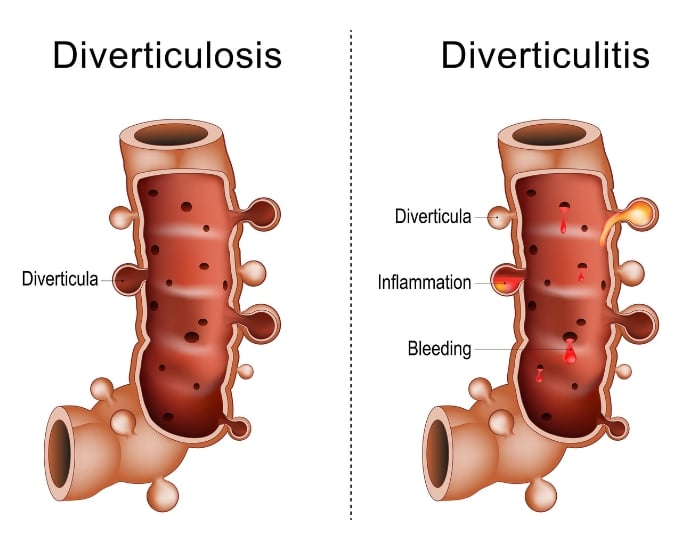
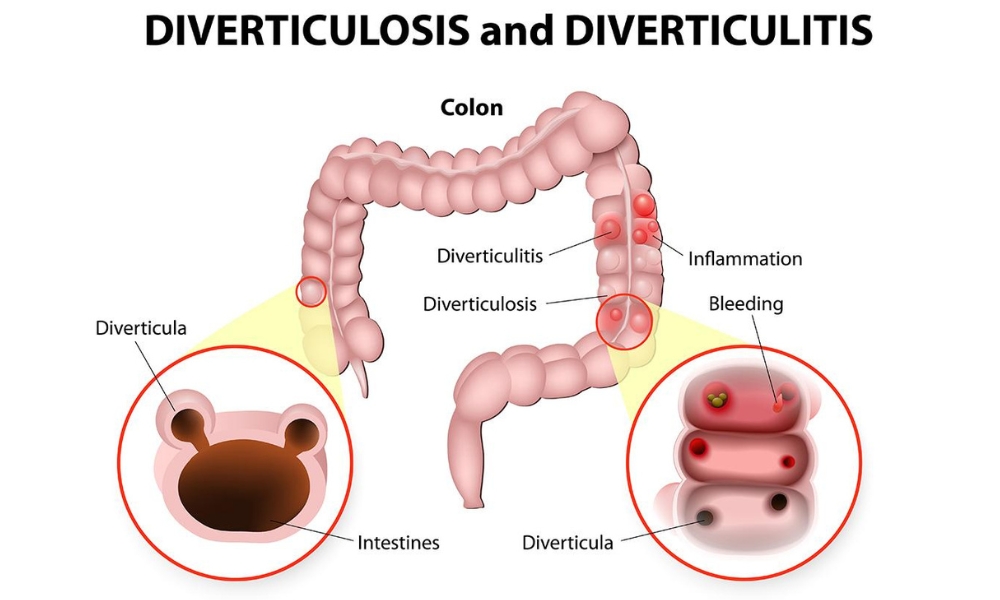
Diverticulosis occurs when small pouches called diverticula develop in the wall of the colon. These pouches become more common as people get older, and many individuals never realize they have them because they often cause no symptoms at all. In fact, diverticulosis is frequently discovered during a routine colonoscopy performed for colorectal cancer screening or evaluation of another digestive concern.
Diverticulitis is different. It develops when one or more of these pouches become inflamed or infected. Unlike diverticulosis, diverticulitis often causes noticeable symptoms that may include lower abdominal pain, fever, nausea, changes in bowel habits, and tenderness over the affected area of the colon.
Although diverticulitis can sometimes become serious, most people recover well with appropriate medical care. The key is recognizing symptoms early, understanding when they require prompt evaluation, and avoiding common misconceptions about diet and treatment.
This comprehensive guide explains the differences between diverticulosis and diverticulitis, how each condition is diagnosed, available treatment options, recovery, dietary considerations, and when to seek care from a gastroenterologist.
Important Note
Finding out that you have diverticulosis can sound alarming, but many people live their entire lives without developing diverticulitis or serious complications. Understanding the difference between these conditions helps you recognize symptoms appropriately while avoiding unnecessary anxiety. If abdominal pain develops suddenly or becomes severe, prompt medical evaluation is important because several digestive conditions can produce similar symptoms.
What Is Diverticulosis?
Dr. Khan explains that diverticulosis refers to the presence of small pouch-like structures that develop along weak areas of the colon wall. These pouches, known as diverticula, most commonly form in the sigmoid colon, which is located in the lower left portion of the abdomen. Doctors believe diverticula develop gradually over many years as pressure inside the colon repeatedly pushes against naturally weaker areas of the intestinal wall.
Aging appears to play a significant role, which is why diverticulosis becomes increasingly common after age 40 and especially after age 60.
Most people with diverticulosis experience no symptoms whatsoever. The condition is often discovered accidentally during imaging studies or while undergoing a screening colonoscopy.
Some individuals may occasionally experience mild bloating, constipation, or intermittent lower abdominal discomfort, although these symptoms are not always directly caused by diverticulosis itself. In many cases, symptoms may instead be related to constipation, irritable bowel syndrome, or another digestive condition.
Having diverticulosis does not automatically mean diverticulitis will develop. In fact, only a minority of people with diverticulosis ever experience inflammation of these pouches.
What Is Diverticulitis?
Diverticulitis occurs when one or more diverticula become inflamed and, in some cases, infected. This inflammation causes the symptoms most people associate with diverticular disease. Unlike uncomplicated diverticulosis, diverticulitis usually develops suddenly. Many patients describe feeling well before noticing increasing discomfort over several hours or a day or two. The inflammation may remain relatively mild, or it may become more severe if complications develop.
Fortunately, many uncomplicated episodes can be successfully treated without surgery, especially when diagnosed early.
Doctors continue studying exactly why diverticulitis develops. While blockage of a diverticulum, changes in gut bacteria, immune responses, and inflammation may all contribute, there is no single explanation that applies to every patient.
The important point is that diverticulitis represents an active inflammatory condition, whereas diverticulosis simply describes the presence of diverticula.
How do diverticulosis and diverticulitis compare?
Diverticulosis means small pouches called diverticula have formed in the colon wall, and it usually causes no symptoms. Diverticulitis means one or more of those pouches has become inflamed or infected, causing pain, fever and sometimes nausea or changes in bowel habits. The table below compares the two conditions, including symptoms, testing and treatment.
| Feature | Diverticulosis | Diverticulitis |
|---|---|---|
| Meaning | Pouches in the colon | Inflamed or infected pouches |
| Symptoms | Usually none | Pain, fever, bowel changes |
| Treatment | Lifestyle guidance | Depends on severity |
| Medical urgency | Usually no | Sometimes urgent |
Understanding this distinction helps patients appreciate why treatment recommendations differ depending on whether inflammation is currently present.
What are the common symptoms of diverticulitis?
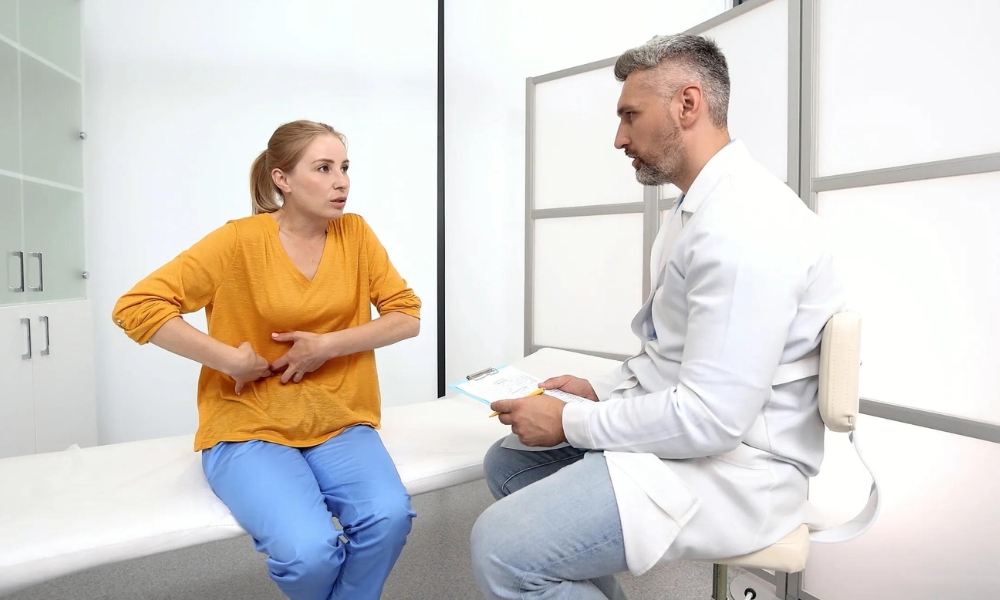
The most common symptom of diverticulitis is abdominal pain, particularly in the lower left side of the abdomen. However, symptoms can vary depending on the location and severity of the inflammation. Many patients describe the pain as steady rather than cramping. It often becomes progressively worse over several hours and may make walking, bending, coughing, or pressing on the abdomen uncomfortable.
Other symptoms may include:
- Lower left abdominal pain
- Fever or chills
- Nausea or vomiting
- Constipation
- Diarrhea
- Bloating
- Loss of appetite
- Abdominal tenderness
Not everyone experiences every symptom. Some individuals have only mild abdominal discomfort, while others develop several symptoms at once.
Because many digestive conditions can cause abdominal pain—including appendicitis, kidney stones, inflammatory bowel disease, gynecologic disorders, and gastrointestinal infections—a medical evaluation is often necessary to determine the exact cause.
Patients experiencing persistent abdominal discomfort should also become familiar with other causes of abdominal pain based on location, since pain location alone cannot establish a diagnosis.
When does abdominal pain need urgent medical evaluation?
Most episodes of abdominal discomfort are not medical emergencies, but severe or worsening pain should never be ignored. Because diverticulitis shares symptoms with several other digestive conditions, it is impossible to confirm the diagnosis based on symptoms alone. You should seek prompt medical care if abdominal pain is severe, continues to worsen, or is accompanied by symptoms that suggest a more serious illness.
Warning signs include:
- Severe or rapidly worsening abdominal pain.
- Persistent fever or chills.
- Repeated vomiting that prevents you from keeping fluids down.
- Significant abdominal swelling.
- Heavy rectal bleeding.
- Dizziness, fainting, or signs of dehydration.
- Difficulty passing stool or gas together with severe abdominal pain.
- Confusion or weakness in older adults.
These symptoms do not automatically mean diverticulitis has become complicated, but they do require prompt medical assessment because other serious conditions—including bowel obstruction, appendicitis, perforation, or severe infection—may produce similar symptoms.
If you're unsure whether your abdominal pain requires immediate attention, learning more about when stomach pain is serious can help you recognize situations that warrant urgent evaluation.
How is diverticulitis diagnosed?
Although symptoms often suggest diverticulitis, doctors usually confirm it with a medical history, physical exam, blood tests and imaging. Blood tests check for infection and inflammation, and a CT scan of the abdomen and pelvis is the most accurate test. CT confirms the diagnosis, shows how severe it is and detects complications such as an abscess or perforation.
Your healthcare provider will begin by asking detailed questions about your symptoms, including:
- When the pain started.
- Exactly where the pain is located.
- Whether the pain has become progressively worse.
- If fever, chills, nausea, or vomiting are present.
- Recent bowel habit changes.
- Previous episodes of diverticulitis.
- Current medications and other medical conditions.
During the physical examination, the abdomen is carefully evaluated for tenderness, guarding, swelling, or signs that suggest a more serious infection.
Which blood tests help diagnose diverticulitis?
Blood tests may help identify infection, inflammation, dehydration, or other abnormalities that contribute to the overall assessment.
Why is a CT scan used?
A computed tomography (CT) scan is one of the most commonly used imaging tests when diverticulitis is suspected. It allows physicians to visualize inflamed diverticula, assess the surrounding tissues, and determine whether complications such as abscesses or perforation are present.
CT imaging also helps distinguish diverticulitis from other causes of abdominal pain that may require different treatment approaches.
Can Colonoscopy Diagnose Diverticulitis?
Although colonoscopy is an excellent tool for evaluating many digestive disorders, it is generally not performed during an acute attack of diverticulitis because active inflammation may increase procedural risks.
Instead, colonoscopy may be recommended several weeks after recovery in selected patients to evaluate the colon further and exclude other conditions that can produce similar symptoms.
Important Note
Not every episode of diverticulitis requires hospitalization, surgery, or antibiotics. Treatment recommendations have evolved considerably over the past decade and are now tailored to each patient's symptoms, examination findings, overall health, and the presence or absence of complications. This individualized approach helps patients receive appropriate care while avoiding unnecessary treatments.
Have symptoms like these?
Dr. Muhammad Ali Khan, a board-certified gastroenterologist and hepatologist, sees adults at our Katy and Cypress offices, serving patients across Greater Houston.
How are uncomplicated and complicated diverticulitis treated?
Treatment depends on how severe the illness is. Mild, uncomplicated diverticulitis is often treated at home with a short liquid or low-fiber diet and rest, and some patients may not need antibiotics. Complicated diverticulitis with an abscess, perforation or blockage usually needs hospital care, intravenous antibiotics, drainage or surgery. Fiber is added back once symptoms settle.
For individuals with uncomplicated diverticulitis, treatment may include:
- Temporary dietary modifications.
- Adequate hydration.
- Pain management.
- Careful follow-up with a healthcare provider.
- Selective use of antibiotics when clinically appropriate.
In recent years, research has shown that antibiotics are not necessary for every patient with mild uncomplicated diverticulitis. Instead, physicians determine whether antibiotics are appropriate based on the individual's symptoms, immune status, overall health, and examination findings.
Patients should never self-treat with leftover antibiotics or discontinue prescribed medications without consulting their healthcare provider.
When may hospitalization be needed?
Hospital treatment may be recommended for individuals with:
- Severe pain.
- Persistent vomiting.
- High fever.
- Difficulty maintaining hydration.
- Complicated diverticulitis.
- Significant underlying medical conditions.
Hospital care may include intravenous fluids, pain control, antibiotics when indicated, close observation, and consultation with surgical specialists if complications develop.
What is complicated diverticulitis?
Although uncommon, diverticulitis can occasionally lead to complications such as abscess formation, perforation, fistulas, bowel obstruction, or widespread abdominal infection.
Some complications require drainage procedures or surgery, while others can be managed without an operation depending on their severity and the patient's overall condition.
Fortunately, most patients with uncomplicated diverticulitis recover successfully with appropriate medical management.
What Should You Eat During Recovery?
One of the most common questions patients ask after being diagnosed with diverticulitis is, "What should I eat?" The answer is not always the same because dietary recommendations may change as symptoms improve. During an acute episode, your healthcare provider may recommend temporarily adjusting your diet to allow the inflamed colon time to recover.
As symptoms improve, foods are typically reintroduced gradually based on your individual recovery and medical advice.
Because every patient is different, there is no universal diverticulitis diet that works for everyone.
Following your healthcare provider's recommendations is more important than following generalized advice found online, since treatment depends on symptom severity, complications, and your overall medical condition.
After recovery, many patients discuss longer-term eating habits that support overall digestive health, including appropriate fiber intake, hydration, and balanced nutrition.
Diet and Lifestyle After Recovery: Can Future Episodes Be Prevented?
After recovering from diverticulitis, one of the first questions many patients ask is whether another episode can be prevented. While no strategy can guarantee that diverticulitis will never return, healthy lifestyle habits may help support overall colon health and potentially reduce the risk of future flare-ups. Recovery is also an opportunity to discuss long-term digestive wellness with your gastroenterologist.
Recommendations should always be individualized based on your medical history, age, previous episodes, and any other digestive conditions you may have.
Why increase fiber gradually?
For many people with diverticulosis, gradually increasing dietary fiber after recovery may help promote regular bowel movements and reduce pressure within the colon. Good sources of fiber include fruits, vegetables, beans, lentils, and whole grains.
Rather than making sudden dietary changes, it's generally best to increase fiber slowly while drinking plenty of water. A rapid increase in fiber may temporarily lead to bloating or gas in some individuals.
Why does staying hydrated help?
Adequate hydration helps fiber work effectively and supports normal bowel function. Drinking enough fluids each day may reduce constipation, which can contribute to increased pressure inside the colon.
How does regular exercise help?
Routine physical activity benefits the digestive system in many ways. Walking, swimming, cycling, and other moderate exercise may help support healthy bowel function while also contributing to overall wellness.
Why maintain a healthy weight?
Research suggests that obesity may increase the risk of diverticulitis and its complications. Maintaining a healthy weight through balanced nutrition and regular activity benefits both digestive and general health.
Why should you avoid smoking?
Smoking has been associated with several digestive diseases, including an increased risk of complications related to diverticular disease. Quitting smoking provides health benefits that extend far beyond the digestive system.
Although lifestyle modifications cannot completely eliminate the possibility of another episode, they remain an important part of long-term digestive health.
Do nuts, seeds and popcorn cause diverticulitis?
For many years, patients with diverticulosis were routinely advised to avoid foods such as popcorn, nuts, corn, and seeds because it was believed these foods could become trapped inside diverticula and trigger diverticulitis. Today, medical research has not supported this long-standing belief. Current evidence does not show that routinely avoiding nuts, seeds, popcorn, or similar foods prevents diverticulitis.
As a result, many gastroenterologists no longer recommend eliminating these foods solely because diverticula are present.
Instead, dietary advice is now individualized. Some people notice that certain foods temporarily worsen their digestive symptoms, while others tolerate those same foods without difficulty.
If a particular food consistently causes discomfort, your healthcare provider or registered dietitian may recommend limiting it based on your personal experience rather than following unnecessary restrictions.
Rather than focusing on avoiding specific foods, long-term digestive health generally emphasizes a balanced eating pattern rich in fiber after recovery, adequate hydration, and healthy lifestyle habits.
When may a colonoscopy be recommended?
Many patients wonder whether they need a colonoscopy after recovering from diverticulitis. The answer depends on several factors, including whether you've previously undergone colorectal cancer screening, your age, your medical history, and how the diagnosis was established. Because acute inflammation can make colonoscopy more difficult and potentially increase procedural risks, the examination is usually postponed until the inflammation has resolved.
Your gastroenterologist may recommend a follow-up colonoscopy after recovery to:
- Evaluate the colon after healing.
- Exclude other conditions that may mimic diverticulitis.
- Assess for colorectal polyps or colorectal cancer when appropriate.
- Complete age-appropriate colorectal cancer screening.
If you've never had a colonoscopy or are due for routine screening, your physician will discuss the timing that is most appropriate for your situation.
Patients in the Houston area who require further evaluation can learn more about colonoscopy in Katy, colonoscopy in Cypress, or advanced colonoscopy procedures offered by United Gastroenterologists.
Get answers instead of guessing
Request a visit with Dr. Muhammad Ali Khan at our Katy and Cypress offices. Call the office to check your insurance coverage; self-pay options are available.
When Should You See a Gastroenterologist?
Although occasional digestive discomfort is common, recurring abdominal pain or repeated episodes of diverticulitis deserve evaluation by a gastroenterologist. You should also be seen after a first episode to discuss prevention and whether you need a colonoscopy. Seek care sooner for rectal bleeding, ongoing changes in bowel habits or pain that does not improve with treatment.
You should consider scheduling an appointment if you experience:
- Repeated attacks of diverticulitis.
- Persistent lower abdominal pain.
- Constipation or diarrhea that continues despite lifestyle changes.
- Blood in the stool.
- Unexplained weight loss.
- Frequent bloating associated with bowel changes.
- Difficulty returning to your normal diet after recovery.
Because symptoms such as abdominal pain and bowel habit changes can result from many digestive disorders, an accurate diagnosis is essential before beginning treatment.
Your gastroenterologist may also evaluate for other digestive conditions including chronic constipation, persistent diarrhea, inflammatory bowel disease, irritable bowel syndrome, or colorectal conditions depending on your symptoms.
Important Note
Most people with diverticulosis never develop diverticulitis, and most episodes of uncomplicated diverticulitis improve with appropriate medical care. The most important step is obtaining an accurate diagnosis rather than assuming every episode of abdominal pain has the same cause. Personalized treatment from a gastroenterologist helps ensure the safest and most effective recovery.
Frequently Asked Questions
What is the difference between diverticulosis and diverticulitis?
Diverticulosis is the presence of small pouches in the colon wall and usually causes no symptoms. Diverticulitis is when those pouches become inflamed or infected and cause pain and fever.
Can diverticulosis turn into diverticulitis?
Yes, but only a small share of people with diverticulosis ever develop diverticulitis. A high-fiber diet, exercise, a healthy weight and not smoking lower the risk.
Where is diverticulitis pain usually located?
Diverticulitis pain is usually felt in the lower left abdomen, where most diverticula form in Western countries. Some people, especially of Asian descent, have pain on the right side.
When should I go to the emergency room?
Go to the emergency room for severe abdominal pain, high fever, vomiting that prevents drinking, rectal bleeding or a hard, swollen belly. These signs can point to a complication that needs urgent care.
Where can you get diverticular disease care in Katy, Cypress and greater Houston?
If you have been diagnosed with diverticulosis, recently had diverticulitis or continue to have recurring abdominal pain, the gastroenterology team at United Gastroenterology Associates can help. Dr. Muhammad Ali Khan sees patients from Katy, Cypress and greater Houston and offers consultations, colonoscopy and prevention plans. Call either office or request an appointment online to schedule a visit.
Patients throughout Katy, Cypress, Houston, and surrounding communities have access to advanced digestive disease care, including diagnostic testing, colonoscopy, and long-term management for a wide range of gastrointestinal conditions. Early evaluation can help identify the underlying cause of symptoms and guide the most appropriate treatment plan.
Whether you're experiencing a first episode of abdominal pain or managing recurrent diverticular disease, working with an experienced gastroenterologist can help you better understand your condition and reduce the risk of future complications.
What sources support this article?
What should you know about this medical information?
This article is intended for educational purposes only and should not replace professional medical advice, diagnosis, or treatment. Symptoms such as abdominal pain, fever, constipation, diarrhea, nausea, or rectal bleeding may have many different causes. If your symptoms are severe, persistent, or worsening, seek prompt evaluation from a qualified healthcare professional.
Where can you see a gastroenterologist in Katy or Cypress?
United Gastroenterology Associates has two offices: Katy, at 23920 Katy Freeway, Suite 555, next to Memorial Hermann Katy Hospital, and Cypress, at 21216 Northwest Freeway, Suite 640, on US-290. Both are open Monday through Friday, 8:30 AM to 5:00 PM, closed for lunch from 12:00 to 1:30 PM, and serve patients from Fulshear, Richmond and across Greater Houston. Call (346) 340-4414 for either office.
Where is the Katy office?
23920 Katy Freeway, Suite 555
Katy, TX 77494
Memorial Hermann Medical Plaza 1
Where is the Cypress office?
21216 Northwest Freeway, Suite 640
Cypress, TX 77429
On US-290
What should you do next?
If you are dealing with diverticulitis or any ongoing digestive concern, a focused evaluation can find the cause and start the right treatment. Dr. Muhammad Ali Khan and the team at United Gastroenterology Associates see adults from Katy, Cypress, Fulshear, Richmond, Greater Houston and across Texas. Call (346) 340-4414 or request an appointment today.
If you have severe pain, vomit blood, pass black stools or have chest pain, call 911 or go to the nearest emergency room.