
Difficulty Swallowing (Dysphagia)
Difficulty Swallowing and Dysphagia Evaluation in Cypress and Katy, TX
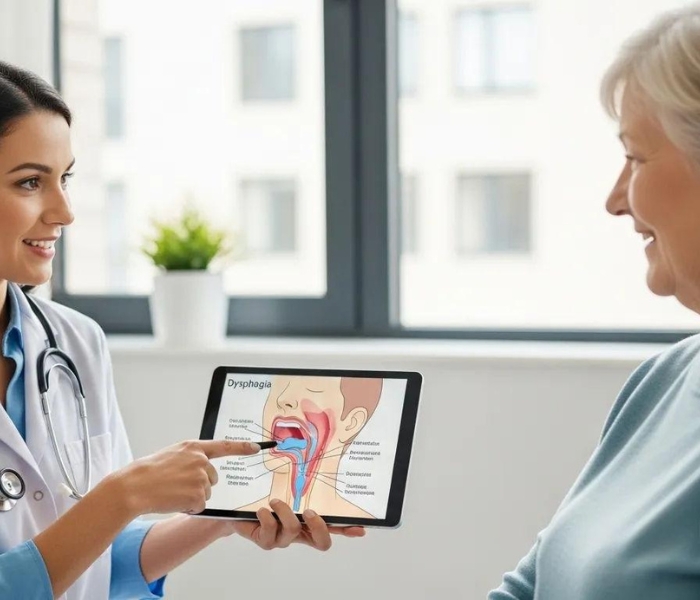
Difficulty swallowing is medically known as dysphagia. It may feel as though food, liquids, pills, or saliva do not move normally from your mouth to your stomach. Some people have trouble beginning a swallow. Others can swallow normally at first but feel food sticking in the throat, neck, or chest.
Swallowing problems should not be ignored when they persist, recur, worsen, interfere with eating, or cause choking, coughing, pain, weight loss, or food impaction.
United Gastroenterology Associates evaluates adult swallowing and esophageal symptoms for patients from Cypress, Katy, West Houston, and surrounding Greater Houston communities.
Call (346) 340-4414 or request a non-emergency appointment online.
Call Now: (346) 340-4414
When Difficulty Swallowing Is an Emergency
Call 911 when a person:
- Cannot breathe
- Is choking and cannot speak or cough effectively
- Develops sudden swallowing difficulty with facial weakness, arm weakness, speech difficulty, severe dizziness, or another possible stroke symptom
- Has severe chest pain or another potentially life-threatening symptom
Go to the nearest emergency department promptly when:
- Food feels completely stuck and does not pass
- You cannot swallow liquids
- You cannot swallow your own saliva
- You are drooling because you cannot swallow
- Swallowing difficulty begins suddenly during a meal and does not resolve
- You have repeated choking or trouble breathing after swallowing
- You vomit blood or material resembling coffee grounds
- You have black, tarry stool
- You have severe chest or neck pain after food becomes stuck
- You are becoming dehydrated because you cannot swallow safely
A persistent sensation that food is stuck in the esophagus requires immediate emergency evaluation. Complete esophageal blockage may prevent a person from swallowing even saliva and may require urgent endoscopic removal.
Do not use the online appointment form for an emergency.
Do not repeatedly force food or liquids down when something feels firmly stuck.
What Is Dysphagia?
Dysphagia means difficulty moving food, liquid, medicine, or saliva from the mouth to the stomach.
It is more than occasionally swallowing a bite too quickly. Persistent dysphagia can make eating take longer, limit food and fluid intake, and increase the risk of dehydration, poor nutrition, choking, or aspiration of food or liquid into the airway.
Dysphagia is a symptom, not a diagnosis. Treatment depends on where the swallowing problem occurs and what is causing it.
Common Symptoms of Dysphagia
Difficulty swallowing may cause:
- Food sticking in the throat
- Food sticking behind the breastbone
- Trouble starting a swallow
- Coughing during or immediately after eating
- Choking during meals
- Gagging when swallowing
- Difficulty swallowing pills
- Difficulty swallowing solid food
- Difficulty swallowing liquids
- Needing repeated swallows for one bite
- Food or liquid coming back into the mouth
- Food or liquid coming through the nose
- Drooling
- A wet, gurgling, weak, or hoarse voice after swallowing
- Pain or burning when swallowing
- Chest discomfort during meals
- Frequent throat clearing while eating
- Taking an unusually long time to finish meals
- Avoiding meat, bread, rice, or other difficult textures
- Cutting food into extremely small pieces
- Drinking large amounts of liquid to help food pass
- Recurrent pneumonia or chest infections
- Unexplained weight loss
- Dehydration
- Fear or anxiety about eating because food may become stuck
Coughing, gagging, hoarseness, food sticking, painful swallowing, regurgitation, drooling, and weight loss are recognized symptoms that may lead to dysphagia testing.
Oropharyngeal Dysphagia Versus Esophageal Dysphagia
Determining where the swallowing problem begins is an important part of the evaluation.
Oropharyngeal dysphagia
Oropharyngeal dysphagia involves the mouth, tongue, throat, or the beginning of the esophagus.
Possible signs include:
- Difficulty starting the swallow
- Coughing immediately after swallowing
- Choking on liquids
- Food or liquid entering the nose
- A wet or gurgling voice
- Drooling
- Weakness of the tongue or face
- Repeated swallowing for one bite
- A sensation that food remains in the throat
- Recurrent respiratory infections
- Symptoms beginning after a stroke, neurologic illness, head injury, or head-and-neck treatment
Oropharyngeal dysphagia often involves the nerves and muscles that control chewing, airway protection, and the first stage of swallowing. Food or liquid entering the airway is called aspiration and may contribute to aspiration pneumonia.
Evaluation may involve a speech-language pathologist, ear-nose-and-throat specialist, neurologist, radiologist, or another appropriate specialist in addition to a gastroenterologist.
Esophageal dysphagia
Esophageal dysphagia occurs after the swallow begins.
A person may describe:
- Food sticking in the neck or chest
- Solid food moving slowly
- Meat or bread getting stuck
- Food returning to the mouth
- Chest pressure during meals
- Difficulty swallowing pills
- Progressively worsening swallowing
- Intermittent episodes of food impaction
- Difficulty with both solids and liquids
- Associated heartburn or acid regurgitation
Esophageal dysphagia may be caused by narrowing, inflammation, abnormal muscle movement, or another disorder of the esophagus.
Common Gastritis Symptoms
Upper stomach pain, burning stomach pain, sour stomach, nausea, bloating after eating, indigestion, feeling full quickly, and loss of appetite are common signs of gastritis.
What Causes Gastritis?
Common causes include H. pylori infection, frequent NSAID pain relievers, alcohol, bile reflux, and autoimmune gastritis, among other digestive conditions.
When to See a GI Doctor
See a gastroenterologist if symptoms are persistent, worsening, or not improving, or if you have a history of ulcers or H. pylori or long-term NSAID use with stomach pain. Need Consultation!
Board-Certified Gastroenterology Excellence
Digestive Disease Specialist in Cypress, TX
Dr. Muhammad Ali Khan, MD, FACP, FASGE

At the heart of our practice is Dr. Muhammad Ali Khan, a highly respected, board-certified gastroenterologist and hepatologist. Dr. Khan brings a wealth of clinical expertise and a deep commitment to patient-centered care, helping patients across Cypress and the surrounding areas manage complex digestive and liver conditions.
A Legacy of Excellence
Dr. Khan’s approach to medicine is built upon a foundation of rigorous training and a passion for continuous learning. After earning his medical degree from Dow Medical College, he completed his Internal Medicine residency at the University of Toledo. He further specialized through advanced fellowship training in Gastroenterology and Hepatology at the University of Tennessee.
Academic Leadership & Research
Before joining our team, Dr. Khan served as an Associate Professor at the prestigious MD Anderson Cancer Center. During his tenure, he played a vital role in the care of patients with complex gastrointestinal conditions and cancers, while simultaneously shaping the future of medicine through research and education.
Dr. Khan is a recognized leader in the field, having:
- Authored 100+ peer-reviewed scientific publications.
- Presented groundbreaking research at national and international medical conferences.
- Contributed to the development of clinical practice guidelines that influence gastroenterology care worldwide.
Committed to Your Health
Dr. Khan’s dedication to excellence is reflected in his professional recognitions as a Fellow of the American College of Physicians (FACP) and a Fellow of the American Society for Gastrointestinal Endoscopy (FASGE). He is also an active member of the American College of Gastroenterology and the Texas Medical Association.
By combining his extensive academic background with a compassionate, patient-focused approach, Dr. Khan ensures that every patient receives evidence-based, high-quality care tailored to their unique needs.
Experience the difference of expert care.
Consult with Our GI SpecialistAdvanced Care for Swallowing Disorders.
Dysphagia, Painful Swallowing, and a Lump-in-the-Throat Sensation
These symptoms are related but are not identical.
Dysphagia
Dysphagia means that food, liquid, pills, or saliva do not pass normally when you try to swallow.
Odynophagia
Odynophagia means pain with swallowing.
Pain may be felt:
- In the throat
- Behind the breastbone
- In the upper chest
- While swallowing food, liquids, or pills
Painful swallowing may occur with inflammation, infection, medication injury, reflux-related injury, or other esophageal conditions.
Globus sensation
Globus is a persistent feeling of a lump or something present in the throat, even when you are not swallowing.
Unlike dysphagia, globus does not necessarily stop food or liquid from passing. ACG distinguishes globus from dysphagia because true dysphagia occurs specifically when a person attempts to swallow.
Persistent or unexplained symptoms still deserve medical evaluation.
When Should You See a Gastroenterologist for Difficulty Swallowing?
Schedule an evaluation when swallowing difficulty:
- Happens repeatedly
- Persists for more than a brief isolated episode
- Is gradually becoming worse
- Causes food to stick
- Causes you to avoid certain foods
- Makes meals unusually long
- Requires excessive chewing or repeated swallowing
- Causes you to drink liquids to force food down
- Occurs with heartburn or acid regurgitation
- Occurs with chest discomfort
- Occurs with unexplained weight loss
- Occurs with persistent vomiting
- Occurs with anemia or gastrointestinal bleeding
- Has caused a previous food impaction
- Returns after prior esophageal dilation
- Occurs after reflux surgery or another upper digestive procedure
- Is associated with food allergies, asthma, eczema, or possible eosinophilic esophagitis
- Has not been explained by previous testing
Even intermittent episodes of food sticking should be medically evaluated because they may represent narrowing, eosinophilic esophagitis, or another esophageal disorder.
NIDDK also recommends medical evaluation for swallowing difficulty when it occurs with persistent vomiting, gastrointestinal bleeding, loss of appetite, chest pain, or unexplained weight loss.
What Causes Difficulty Swallowing?
Dysphagia can have many causes. The symptom pattern may provide useful clues, but symptoms alone cannot confirm the diagnosis.
Acid reflux and esophageal stricture
Long-term gastroesophageal reflux disease may irritate the esophagus and contribute to scar tissue or narrowing, called an esophageal stricture.
A stricture may cause:
- Solid food sticking
- Progressive difficulty swallowing
- Trouble swallowing pills
- Food impaction
- Heartburn or acid regurgitation
GERD can cause swallowing difficulty or painful swallowing, and reflux-related scarring can narrow the esophagus.
Schatzki ring
A Schatzki ring is a thin ring of tissue that narrows the lower esophagus.
Symptoms may include:
- Intermittent solid-food dysphagia
- Meat or bread getting stuck
- Sudden food impaction
- Long symptom-free periods between episodes
A patient may be able to swallow normally most of the time and still have a clinically important narrowing.
Eosinophilic esophagitis
Eosinophilic esophagitis, often called EoE, is a chronic inflammatory disease of the esophagus.
Adults may experience:
- Difficulty swallowing solid food
- Food impaction
- Chest discomfort
- Heartburn
- Prolonged meals
- Excessive chewing
- Avoidance of difficult food textures
- Drinking large amounts of liquid to help food pass
Diagnosis generally requires upper endoscopy with esophageal biopsies. Current ACG guidance bases diagnosis on symptoms of esophageal dysfunction together with characteristic biopsy findings and exclusion of other causes.
EoE can lead to narrowing or strictures. Dilation may improve narrowing, but treatment of the underlying inflammation is also important.
Achalasia
Achalasia is a swallowing disorder in which the lower esophageal muscle does not relax normally and the esophagus does not move food toward the stomach effectively.
Possible symptoms include:
- Difficulty swallowing solids and liquids
- Regurgitation of undigested food
- Chest discomfort
- Coughing at night
- Weight loss
- Slowly progressive symptoms
Esophageal manometry is commonly used to diagnose achalasia and other movement disorders after a structural blockage has been excluded.
Other esophageal motility disorders
Abnormal esophageal muscle contraction may cause:
- Difficulty with solids and liquids
- Chest pain
- Regurgitation
- Intermittent swallowing problems
Examples include esophageal spasm and weak or absent esophageal contractions.
Esophageal inflammation
Inflammation may be caused by:
- Acid reflux
- Eosinophilic esophagitis
- Certain infections
- Pills or medications that irritate the esophagus
- Radiation treatment
- Other inflammatory disorders
Pain while swallowing may be more prominent when inflammation is present.
Esophageal tumors or external compression
Less commonly, difficulty swallowing may result from:
- Esophageal cancer
- A growth pressing on the esophagus
- Another structural abnormality
- Severe narrowing
Progressively worsening swallowing difficulty, weight loss, bleeding, anemia, or persistent vomiting requires timely medical evaluation.
Neurologic and muscular conditions
Oropharyngeal swallowing problems may occur after or with:
- Stroke
- Parkinson’s disease
- Multiple sclerosis
- Dementia
- Brain injury
- Spinal cord injury
- Certain muscular disorders
- Disorders affecting the nerves that control swallowing
- Head-and-neck cancer or treatment
Government health information identifies stroke, neurologic disorders, head or spinal injury, and head, neck, or esophageal cancer among conditions associated with swallowing disorders.
Structural throat or mouth problems
Difficulty initiating a swallow may also be related to:
- Oral or throat tumors
- Scar tissue
- Diverticula
- Dental problems
- Weakness after surgery
- Head-and-neck treatment
- Structural changes affecting the swallowing pathway
Does the Type of Food Matter?
The type of food that causes swallowing difficulty can help identify the underlying problem.
- Difficulty with solid foods may suggest a narrowing of the esophagus, such as a stricture, Schatzki ring, eosinophilic esophagitis, or another structural condition.
- Difficulty with both solids and liquids may indicate a swallowing muscle disorder, such as achalasia or another motility disorder.
- Trouble starting a swallow with coughing or choking may point to a mouth, throat, nerve, or muscle condition.
- Food sticking after swallowing often suggests an esophageal problem.
While these patterns provide valuable clues, a medical evaluation is needed for an accurate diagnosis.
How Is Difficulty Swallowing Diagnosed?
Your gastroenterologist will recommend tests based on your symptoms, medical history, and physical examination. Common diagnostic tests include:
- Upper Endoscopy (EGD): Examines the esophagus, stomach, and upper small intestine to identify narrowing, inflammation, ulcers, tumors, or other abnormalities. Biopsies may be taken when needed.
- Barium Esophagram: Uses X-rays and contrast material to evaluate the shape and movement of the esophagus.
- Modified Barium Swallow: Assesses how food and liquids move through the mouth and throat during swallowing.
- FEES (Fiberoptic Endoscopic Evaluation of Swallowing): Uses a small camera to evaluate swallowing function in the throat.
- Esophageal Manometry: Measures muscle contractions and pressure within the esophagus to diagnose motility disorders.
- Reflux (pH) Testing: May be recommended when acid reflux is suspected as a contributing factor.
Not every patient requires every test. Your physician will select the most appropriate evaluation based on your individual symptoms.
Trusted Esophageal Care.
How Is Dysphagia Treated?
Relief Starts with the Right Diagnosis.
Treatment Options
Treatment depends on the underlying cause of your swallowing difficulty. Your gastroenterologist will recommend the most appropriate approach after evaluation.
Common treatment options include:
- Medications for acid reflux and esophageal inflammation
- Lifestyle and dietary modifications
- Esophageal dilation to widen narrowed areas of the esophagus when appropriate
- Treatment for eosinophilic esophagitis (medications, dietary therapy, or biologic therapy)
- Specialized treatment for achalasia, including pneumatic dilation, POEM, or surgery
- Swallowing therapy with a speech-language pathologist for oropharyngeal dysphagia
- Treatment of infections, medication-related injury, or underlying neurological conditions
- Referrals to ENT, neurology, surgery, or other specialists when needed
The right treatment plan is personalized to address the cause of dysphagia and help improve swallowing safely and effectively.
Call (346) 340-4414What Should You Do While Waiting for an Appointment?
When you can swallow safely and are not having emergency symptoms:
- Eat slowly
- Take small bites
- Chew thoroughly
- Avoid foods that have repeatedly become stuck
- Sit upright while eating
- Remain upright after meals when reflux is present
- Take note of which foods or liquids cause symptoms
- Record whether symptoms occur at the start of swallowing or after food has passed into the chest
- Bring a complete medicine list to your appointment
- Tell your clinician about prior choking or food-impaction episodes
Do not:
- Force additional food on top of something that feels stuck
- Repeatedly drink large amounts to push down an impaction
- Attempt home remedies for a complete blockage
- Continue eating when choking repeatedly
- Delay emergency care when you cannot swallow saliva or breathe normally
How to Prepare for a Dysphagia Appointment
Bring or record:
- When the problem began
- Whether it is getting worse
- Whether the problem involves solids, liquids, pills, or saliva
- Where food feels stuck
- Whether you cough or choke
- Whether your voice changes after swallowing
- Any previous food impactions
- Any history of reflux
- Any history of asthma, eczema, or food allergies
- Unintentional weight change
- Current medicines and supplements
- Previous EGD, barium-study, or manometry reports
- History of stroke or neurologic illness
- History of head-and-neck surgery or radiation
- History of esophageal dilation
- Family history of upper digestive disease or cancer
This information can help determine whether the problem is more likely to involve the throat, esophageal structure, inflammation, or esophageal movement.
Better Swallowing Begins Here.
Difficulty Swallowing Care in Cypress, Katy, and Greater Houston
United Gastroenterology Associates provides adult gastroenterology consultations at offices in Cypress and Katy.
Cypress gastroenterology office
21216 Northwest Freeway, Suite 640
Cypress, TX 77429
View the Cypress gastroenterology office.
Katy gastroenterology office
23920 Katy Freeway, Suite 555
Katy, TX 77494
View the Katy gastroenterology office.
Appointments
Telephone: (346) 340-4414
Excellence in Esophageal Care.
Why Choose United Gastroenterology Associates for Dysphagia Evaluation?
United Gastroenterology Associates offers:
- Evaluation by a gastroenterologist
- Adult esophageal and digestive care
- Cypress and Katy consultation locations
- Assessment of reflux, esophageal narrowing, inflammation, and motility concerns
- Upper endoscopy when clinically appropriate
- Esophageal biopsies when indicated
- Esophageal dilation for appropriate narrowing
- Coordination of barium imaging or swallowing studies when needed
- Referral to speech-language pathology, ENT, neurology, surgery, or another specialist when appropriate
- A treatment plan based on the actual cause rather than the symptom alone
Request an Evaluation for Difficulty Swallowing
Recurring swallowing difficulty should not be managed indefinitely by avoiding more foods, chewing excessively, or repeatedly forcing food down with liquids.
An evaluation may help determine whether symptoms are related to:
- Acid reflux
- Esophageal narrowing
- Schatzki ring
- Eosinophilic esophagitis
- Achalasia
- Another esophageal movement disorder
- A throat or neurologic swallowing problem
- Another condition requiring treatment or referral
Call (346) 340-4414 or request a non-emergency appointment at the Cypress or Katy office.
Your Questions, Answered
Frequently Asked Questions
What kind of doctor treats difficulty swallowing?
A gastroenterologist commonly evaluates swallowing problems that appear to involve the esophagus, especially when food sticks in the neck or chest after swallowing.
Symptoms involving difficulty starting a swallow, immediate coughing, choking, nasal regurgitation, or a wet voice may also require evaluation by a speech-language pathologist, ENT specialist, neurologist, or another swallowing specialist.
Is difficulty swallowing always caused by acid reflux?
No.
GERD can cause inflammation or narrowing, but dysphagia may also result from eosinophilic esophagitis, Schatzki ring, achalasia, other motility disorders, neurologic disease, medication injury, tumors, or other structural conditions.
Why does meat or bread get stuck when I swallow?
Solid food sticking may occur when the esophagus is narrowed by a stricture, ring, eosinophilic esophagitis, or another structural problem.
Intermittent symptoms still deserve evaluation because food impaction can occur even when swallowing is normal between episodes.
Why can I swallow liquids but not solid food?
Difficulty mainly with solids may suggest a narrowed or obstructed area of the esophagus.
This pattern is not diagnostic, and endoscopy or imaging may be required to determine the cause.
Why do both food and liquids feel stuck?
Difficulty with both solids and liquids may occur with an esophageal motility disorder such as achalasia, an oropharyngeal swallowing problem, or advanced structural disease.
Formal evaluation is needed to identify the cause.
Is painful swallowing the same as dysphagia?
No.
Dysphagia means difficulty swallowing. Odynophagia means pain during swallowing. A person may have one or both symptoms.
Does everyone with dysphagia need an endoscopy?
Not necessarily.
Upper endoscopy is commonly used for suspected esophageal dysphagia, but patients with symptoms suggesting a throat or neurologic swallowing problem may first need a modified barium swallow, FEES, or another swallowing evaluation.
The testing sequence depends on the symptom pattern and clinical history.
Can an upper endoscopy diagnose eosinophilic esophagitis?
Diagnosis generally requires esophageal biopsies obtained during endoscopy and interpreted together with symptoms and other clinical information.
The esophagus may not always appear severely abnormal, so biopsy decisions are important when EoE is suspected.
Can esophageal dilation cure difficulty swallowing?
Dilation may improve symptoms when dysphagia is caused by an appropriate narrowing.
It will not correct every cause. Motility disorders, neurologic swallowing problems, inflammation, and other conditions may require different treatment.
Where can I see a dysphagia specialist near Cypress or Katy?
United Gastroenterology Associates offers adult gastroenterology consultations at offices in Cypress and Katy.
Call (346) 340-4414 to confirm the appropriate office and appointment availability.