
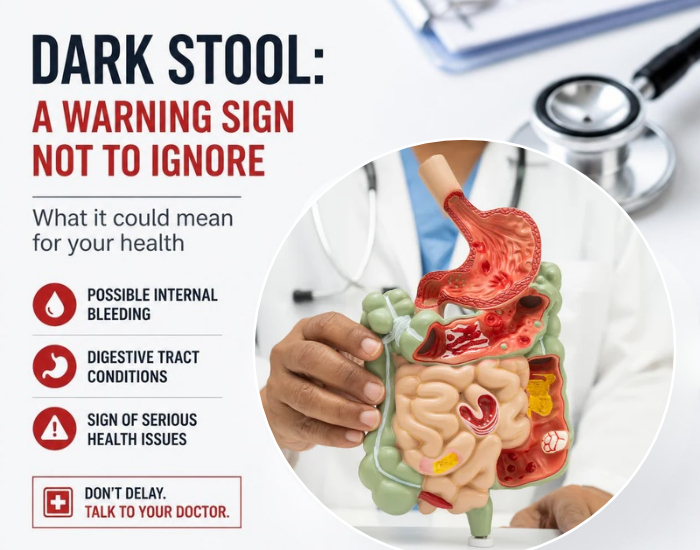
Seeing black stool can be unsettling, especially when the color appears suddenly or the stool looks unusually dark, sticky, or tar-like. Black stool can have a harmless explanation, such as iron supplements or bismuth-containing medicine, but black, tarry stool can also be a sign of bleeding in the upper digestive tract. This type of stool is called melena and may occur when blood is digested as it moves through the stomach and intestines.
Understanding the difference matters. Black stool does not always mean internal bleeding, but unexplained black or tarry stool should not automatically be dismissed. Conditions such as stomach ulcers, gastritis, esophagitis, enlarged veins in the esophagus or stomach, and other gastrointestinal problems can cause bleeding. Knowing what to look for can help determine when medical evaluation is appropriate.

Note:
Black stool has several possible causes, and the appearance alone cannot always tell you whether blood is present. This guide explains common black stool causes, what melena can look like, how stomach ulcers and gastritis may cause bleeding, which symptoms require urgent attention, and what a gastroenterologist may do to identify the source. If black stool is new, unexplained, or accompanied by dizziness, weakness, vomiting blood, severe abdominal pain, or other signs of significant bleeding, prompt medical attention is important.
What You Will Learn in This Guide
-
- Why stool can turn black or very dark
- How black stool from GI bleeding differs from stool darkened by food or medication
- Common causes of melena and upper gastrointestinal bleeding
- Whether stomach ulcers and gastritis can cause black stool
- Warning signs that may require urgent medical evaluation
- When to see a gastroenterologist and what testing may be needed
What Does Black Stool Mean?
Black stool can mean different things depending on its appearance, duration, and possible triggers. Stool that is simply darker brown than usual may not be concerning. However, stool that is truly black, sticky, tar-like, and unusually foul-smelling can indicate melena, which commonly occurs when blood from the upper digestive tract is digested before it leaves the body.
The upper gastrointestinal tract includes the esophagus, stomach, and first part of the small intestine. Bleeding in these areas can produce black or tarry stool because digestive processes change the appearance of the blood as it travels through the GI tract.
That is why the exact appearance matters. A dark brown bowel movement after eating certain foods is different from a sticky, tar-like bowel movement that repeatedly appears almost black.
At the same time, stool color alone cannot confirm GI bleeding. Certain medications, supplements, and foods can also make stool appear black. The important question is whether there is a reasonable explanation for the color change and whether other symptoms are present.
Black, tarry stool without an obvious explanation deserves medical attention, particularly when it occurs more than once or comes with symptoms such as weakness, dizziness, abdominal pain, shortness of breath, or vomiting blood.

Does Black Stool Always Mean GI Bleeding?
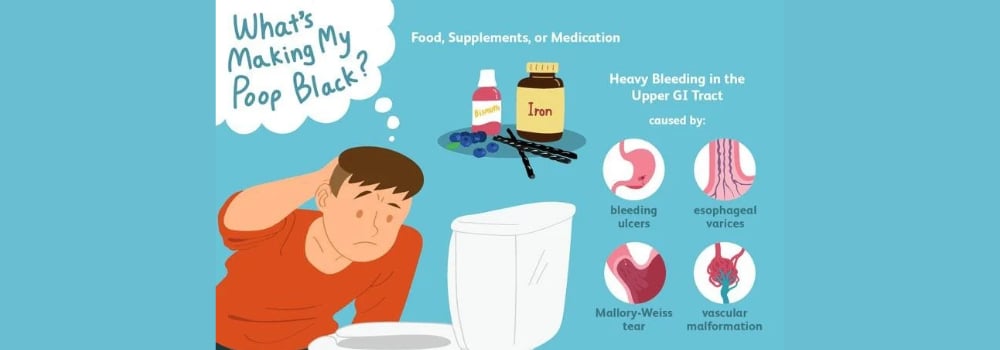
No. Black stool does not always mean internal bleeding. Iron supplements, bismuth-containing medicines such as some products used for stomach upset, activated charcoal, and certain dark-colored foods can make stool appear black.
For example, people taking iron tablets may notice black stools as a normal effect of the supplement. However, stool that is both black and tarry, especially when accompanied by abdominal pain, red blood, weakness, or other concerning symptoms, should be discussed with a healthcare professional.
Bismuth can also darken stool. This is one reason it is useful to consider recent medications and supplements before assuming that a change in stool color is caused by bleeding.
Food can sometimes contribute as well. Dark foods, black licorice, blueberries, and other strongly pigmented foods may temporarily affect stool color.
The challenge is that a person cannot reliably determine whether stool contains digested blood simply by looking at it. When the cause is uncertain, a medical evaluation may include stool testing, blood tests, and, when appropriate, an endoscopic examination.
What Does Melena Look Like?
Melena is the medical term for black, tarry stool caused by digested blood. It is often described as sticky or tar-like and may have a particularly strong or foul odor. Melena most commonly points to bleeding in the upper GI tract, although the exact source must be determined through medical evaluation.
A single dark bowel movement does not automatically establish that melena is present. The appearance, consistency, symptoms, medication history, and possible causes all matter.
Some people with gastrointestinal bleeding also experience symptoms that are not directly related to bowel movements. These may include fatigue, dizziness, lightheadedness, shortness of breath, abdominal discomfort, or fainting. Chronic blood loss can contribute to anemia, while more significant acute bleeding can become an emergency.
A Dark Stool Color Is Not the Whole Story
It is understandable to feel worried after seeing black stool. Fortunately, not every dark bowel movement represents a dangerous condition. Iron, bismuth, and some foods can cause harmless color changes. However, unexplained tarry stool should not be self-diagnosed, particularly if it keeps happening or is accompanied by symptoms such as dizziness, fainting, weakness, vomiting blood, or severe abdominal pain.
What Are the Common Black Stool Causes?
Black stool causes can be divided broadly into non-bleeding causes and causes involving gastrointestinal bleeding. Understanding both groups helps explain why the same stool color can have very different meanings.
Iron Supplements
Iron tablets commonly make stool black. This can be a normal side effect and does not necessarily mean that bleeding is occurring. However, stool that becomes tarry in appearance or is accompanied by red blood, abdominal pain, or other concerning symptoms should be evaluated rather than automatically attributed to iron.
Bismuth-Containing Medicines
Bismuth-containing products can temporarily darken stool. If the color change begins after taking a bismuth medication and there are no other concerning symptoms, the medication may explain the change. Even so, persistent or unusual black stool should not be ignored if the appearance is strongly tar-like or symptoms suggest bleeding.
Dark-Colored Foods
Some foods can make bowel movements look darker. Black licorice and blueberries are examples reported by MedlinePlus. Food-related changes are generally temporary and should improve after the food is no longer being consumed.
Peptic Ulcers
Peptic ulcers are an important cause of upper GI bleeding. An ulcer can develop in the stomach or duodenum and may bleed into the digestive tract. Common causes of peptic ulcers include Helicobacter pylori infection and nonsteroidal anti-inflammatory drugs, commonly called NSAIDs.
When an ulcer bleeds, the blood can become digested and produce black, tarry stool. This is one reason unexplained melena deserves attention even when abdominal pain is mild or absent.
Gastritis and Stomach Lining Damage
Gastritis involves inflammation of the stomach lining. In some cases, inflammation or damage can lead to erosions or ulcers that bleed. Black or tarry stool can occur when bleeding comes from the stomach.
If stomach inflammation is suspected, an appropriate evaluation can help identify the underlying cause rather than treating the stool color alone. More information about stomach inflammation and treatment is available through gastritis treatment in Texas.
Esophagitis and Other Esophageal Problems
Inflammation or injury of the esophagus can sometimes lead to bleeding. Esophagitis may be associated with gastroesophageal reflux disease, while severe vomiting can cause a Mallory-Weiss tear, another possible source of upper GI bleeding.
Persistent reflux symptoms should therefore not be separated completely from bleeding symptoms. If reflux occurs with black, tarry stool, vomiting blood, or unexplained weight loss, medical evaluation is important. Patients can review available information about acid reflux treatment while discussing concerning symptoms with a qualified provider.
Esophageal or Gastric Varices
Varices are enlarged veins that can develop in the esophagus or stomach, often in association with advanced liver disease and cirrhosis. If these veins rupture, bleeding can be significant.
People with known liver disease who develop black tarry stool, vomiting blood, dizziness, or weakness should seek urgent medical attention. Liver-related digestive concerns can be evaluated as part of specialized liver disease management.
Less Common Causes
Other conditions can cause gastrointestinal bleeding, including abnormal blood vessels, tears, tumors, and cancers affecting portions of the upper digestive tract. The presence of black stool does not tell you which condition is responsible. Testing is often necessary to identify the actual source.
Can a Stomach Ulcer Cause Black Stool?
Yes. A bleeding stomach or duodenal ulcer can cause black, tarry stool. In fact, peptic ulcers are among the important causes of acute upper gastrointestinal bleeding.
An ulcer may develop without dramatic symptoms. Some people experience burning or discomfort in the upper abdomen, while others may have few symptoms until bleeding occurs. This is particularly important for people who regularly use NSAIDs such as ibuprofen or naproxen or who have an H. pylori infection.
Black stool associated with an ulcer can occur because blood is exposed to digestive enzymes and stomach contents as it travels through the GI tract. The result can be a black, tar-like bowel movement rather than bright red blood.
Warning signs of a bleeding ulcer include black or tarry stool, blood in vomit, vomit that looks like coffee grounds, sudden or severe abdominal pain, dizziness, fainting, rapid heart rate, or other symptoms of shock. These symptoms require prompt medical attention.
Can Gastritis Cause Black Stool?
Gastritis can cause black stool if inflammation or damage to the stomach lining results in bleeding. Many people with gastritis have no symptoms, while others experience upper abdominal discomfort, nausea, vomiting, early fullness, or loss of appetite.
Bleeding gastritis is different from mild stomach irritation. When the stomach lining develops erosions or ulcers and begins bleeding, black or tarry stool may appear. Blood in vomit or coffee-ground-like vomit can also occur.
Because gastritis has multiple possible causes, treatment depends on the underlying problem. H. pylori, NSAIDs, alcohol, and other factors can contribute to different forms of stomach inflammation. A gastroenterologist can determine whether further testing is appropriate.
What Other Symptoms Can Occur With GI Bleeding?
Black stool may be the most visible sign of GI bleeding, but it is not the only possible symptom. Depending on how quickly and how much bleeding occurs, a person may experience abdominal pain, weakness, fatigue, dizziness, fainting, or shortness of breath.
Vomiting blood or material that resembles coffee grounds is another important warning sign. In more severe cases, gastrointestinal bleeding can cause a rapid heart rate, pale or cold skin, sweating, confusion, or loss of consciousness. These may be signs of shock and require emergency medical care.
Chronic or slower blood loss may be less obvious. Over time, ongoing GI bleeding can contribute to anemia, which may cause fatigue, pale skin, or shortness of breath.
When Should You Worry About Dark Stool?
You should take dark stool more seriously when it is truly black and tar-like, has an unusually strong odor, occurs repeatedly, or appears without an obvious food or medication explanation.
Urgent medical evaluation is particularly important if black stool occurs with vomiting blood, coffee-ground-like vomit, fainting, severe dizziness, significant weakness, shortness of breath, rapid heart rate, confusion, severe abdominal pain, or other signs of substantial blood loss.
If you are taking a blood thinner, aspirin, or an NSAID, it is also important to tell the healthcare professional. These medicines can increase the risk or severity of gastrointestinal bleeding in some circumstances.
When Black Stool Should Not Be Ignored
A black bowel movement after taking iron or bismuth may have a straightforward explanation. Unexplained black, tarry stool is different. If the cause is uncertain, especially when other symptoms are present, medical evaluation can help determine whether bleeding is occurring and where it may be coming from.
How Is GI Bleeding Diagnosed?
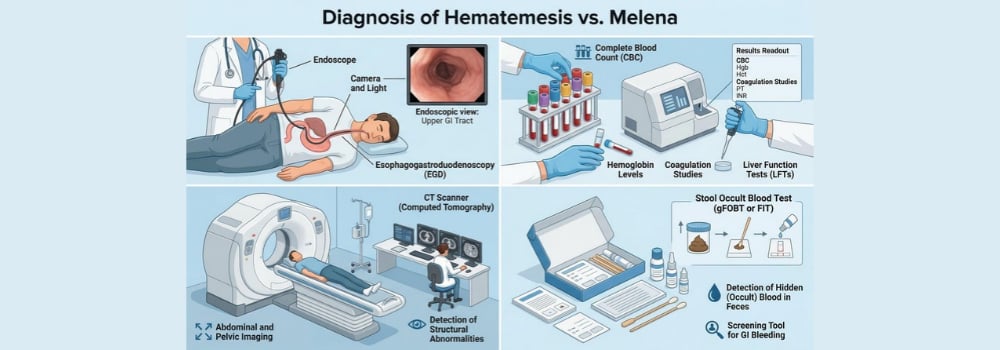
Diagnosing gastrointestinal bleeding usually begins with a detailed medical history and physical examination. A healthcare professional may ask when the stool changed color, whether it is consistently black or tarry, what medications and supplements are being taken, and whether symptoms such as abdominal pain, vomiting, dizziness, or fatigue are present.
Blood and Stool Tests
Blood tests can help determine whether bleeding has contributed to anemia and can provide information about the severity of blood loss. Stool testing may also be used to detect blood that is not visible to the naked eye.
Upper Endoscopy
An upper endoscopy, also called an esophagogastroduodenoscopy or EGD, allows a gastroenterologist to examine the esophagus, stomach, and duodenum using a flexible camera. It can help identify ulcers, inflammation, tears, varices, and other sources of upper GI bleeding. In some situations, treatment can be performed during the same procedure
Patients preparing for an EGD may need specific instructions regarding food, liquids, and medications. United Gastroenterology Associates provides information about esophagogastroduodenoscopy and EGD preparation.
Additional Testing
Depending on the symptoms and suspected source, doctors may use colonoscopy, capsule endoscopy, CT-based imaging, angiography, or other tests. The goal is to locate the bleeding, determine its cause, and assess how serious it is.
Not every person with black stool needs every test. The appropriate evaluation depends on the medical history, symptoms, suspected bleeding location, and clinical findings.
How Is GI Bleeding Treated?
Treatment for GI bleeding depends on the cause, location, and severity of the bleeding. In some cases, doctors can identify and treat the source during an endoscopic procedure. Techniques may include applying clips, using thermal treatment, injecting medication, or applying other methods to stop bleeding.
Medication may also be used to treat the underlying condition. For example, treatment may be directed at peptic ulcers, gastritis, or H. pylori infection when appropriate. Doctors may also review medications that increase bleeding risk and determine whether changes are medically appropriate.
More severe bleeding may require additional interventions, including angiography or surgery. The treatment plan is individualized according to the patient’s condition and the source of bleeding.
People should not stop prescribed blood thinners or other important medications on their own simply because their stool has become dark. Instead, the medication history should be discussed promptly with a healthcare professional so the risks and benefits can be assessed.
Can Colon Problems Cause Black Stool?
Black, tarry stool more commonly points toward bleeding from the upper digestive tract because blood can become darker as it is digested. Bleeding from the colon, rectum, or anus more often appears as bright red or fresh blood.
However, stool color is not enough to identify the source with certainty. The amount and speed of bleeding can affect how blood appears. This is why persistent unexplained black stool should be evaluated rather than assuming that the problem is either the stomach or the colon.
Colon health still matters. Separate from evaluating black stool, appropriate colorectal cancer screening is an important part of preventive digestive care. United Gastroenterology Associates provides information about colorectal cancer screening and colonoscopy services.
When Should You See a Gastroenterologist for Black Stool?
A gastroenterologist can be appropriate when black stool is unexplained, recurrent, tar-like, or associated with other digestive symptoms. Evaluation becomes especially important when there is a history of ulcers, gastritis, liver disease, GI bleeding, anemia, frequent NSAID use, or medications that may increase bleeding risk.
It is also reasonable to discuss persistent changes in stool color when there is no clear explanation from food, iron, or bismuth. A gastroenterologist can review the symptoms and medication history and determine whether blood testing, stool testing, endoscopy, colonoscopy, or another evaluation is appropriate.
Patients in Cypress, Katy, and surrounding Houston communities can explore GI specialist services in Houston or visit the practice’s Cypress and Katy locations for more information about digestive care.
Do Not Ignore Unexplained Black or Tarry Stool
Black stool can have a harmless explanation, but it can also be the first visible sign of gastrointestinal bleeding. The difference is not always obvious from color alone. If the stool is repeatedly black and tar-like or occurs with dizziness, weakness, abdominal pain, vomiting blood, or other concerning symptoms, getting evaluated is more important than trying to identify the cause at home.
A gastroenterology evaluation can help determine whether the stool color is related to medication, food, an ulcer, gastritis, or another digestive condition.
Frequently Asked Questions About Black Stool
Why is my stool black?
Black stool can result from iron supplements, bismuth-containing medicines, certain dark foods, or gastrointestinal bleeding. Black, tarry, sticky stool is more concerning for melena, particularly when there is no obvious medication or food explanation.
Does black stool always mean internal bleeding?
No. Iron, bismuth, activated charcoal, and certain foods can darken stool without causing bleeding. However, unexplained black or tarry stool can indicate upper GI bleeding and should be medically evaluated when the cause is uncertain or other warning symptoms are present.
When should I worry about dark stool?
Dark stool deserves prompt attention when it is black and tar-like, keeps occurring, has an unusually foul smell, or appears with dizziness, fainting, weakness, shortness of breath, abdominal pain, vomiting blood, or coffee-ground-like vomit. Severe symptoms may require emergency care.
Can stomach ulcers cause black stool?
Yes. A bleeding stomach or duodenal ulcer can cause black, tarry stool because blood is digested as it passes through the GI tract. Peptic ulcers are an important cause of upper GI bleeding, with H. pylori infection and NSAID use among common causes.
Can gastritis cause black stool?
Yes. Gastritis can cause black stool when inflammation or damage to the stomach lining produces erosions or ulcers that bleed. Black stool with weakness, lightheadedness, abdominal discomfort, or vomiting blood requires prompt medical attention.
Can iron supplements cause black stool?
Yes. Black stool is a common and expected effect of iron tablets. However, stool that is also tarry-looking or accompanied by red blood, significant abdominal pain, or other concerning symptoms should be evaluated rather than automatically attributed to iron.
Can Pepto-Bismol make stool black?
Yes. Bismuth-containing medicines can temporarily make stool appear black. If black stool is persistent, tar-like, or accompanied by symptoms of possible bleeding, it is important to seek medical advice rather than assuming the medication is the only explanation.
What does GI bleeding feel like?
GI bleeding may cause no obvious symptoms at first, particularly when bleeding is slow. Other people may experience abdominal discomfort, fatigue, dizziness, weakness, shortness of breath, fainting, or vomiting blood. The symptoms depend on the location and severity of the bleeding.
When should I see a gastroenterologist for black stool?
Consider seeing a gastroenterologist when black stool is unexplained, recurrent, tar-like, or accompanied by other digestive symptoms. Urgent evaluation is more important when black stool occurs with vomiting blood, fainting, severe dizziness, significant weakness, severe abdominal pain, or other signs of substantial bleeding.
Final Thoughts
Black stool can be caused by something as simple as an iron supplement or bismuth-containing medicine, but it can also signal gastrointestinal bleeding. The most concerning pattern is black, sticky, tar-like stool that appears without an obvious explanation, especially when it occurs with weakness, dizziness, abdominal pain, shortness of breath, vomiting blood, or fainting.
Stomach ulcers, gastritis, esophageal inflammation, varices, tears, and other upper GI conditions can cause bleeding that turns stool black as the blood moves through the digestive tract. Identifying the cause is important because treatment depends on what is actually producing the bleeding.
If you are unsure whether a dark bowel movement is simply a medication or food effect or something that requires evaluation, it is better to discuss the change with a healthcare professional rather than relying on stool color alone. A gastroenterologist can assess the symptoms and determine whether further testing is needed.
Medical Disclaimer
This article is for general educational purposes and is not a substitute for professional medical advice, diagnosis, or treatment. Black or tarry stool can sometimes indicate gastrointestinal bleeding. Seek prompt medical attention for unexplained black stool, especially when accompanied by vomiting blood, dizziness, fainting, severe abdominal pain, weakness, shortness of breath, rapid heart rate, confusion, or other signs of significant bleeding.
Related Digestive Health Resources: GI Specialist in Houston | GI Diseases and Symptoms | EGD and Upper Endoscopy | Liver Specialist | Colonoscopy Services