

Feeling full after eating only a small amount can be frustrating, especially when it happens often. You may sit down for a normal meal feeling hungry, but after just a few bites, your stomach may feel uncomfortably full. Doctors call this symptom early satiety. Several conditions can cause it, including indigestion, gastritis, stomach ulcers, bloating, and problems that slow stomach emptying, such as gastroparesis.
Occasional fullness may simply follow a large meal or temporary digestive upset. However, persistent early fullness deserves attention, particularly when it occurs with nausea, vomiting, abdominal pain, bloating, poor appetite, unexplained weight loss, difficulty swallowing, or other changes in digestion. A gastroenterologist can help determine whether the problem is related to the stomach, digestive motility, inflammation, an ulcer, medication, or another condition.

Note:
Feeling full quickly does not automatically mean something serious is wrong. Many causes are manageable, and symptoms can occur with common digestive problems such as indigestion or gastritis. However, ongoing early satiety should not simply be dismissed, especially if eating less is leading to weight loss or weakness. Understanding the possible causes can help determine when a routine GI evaluation is appropriate and when symptoms need more urgent attention.
What You Will Learn in This Guide
- What early satiety means and why you may feel full after eating only a little
- The most common causes of feeling full quickly after eating
- How gastritis, ulcers, indigestion, and bloating can affect fullness
- Whether early fullness can be a sign of gastroparesis
- Symptoms that may indicate a more significant digestive problem
- When persistent early satiety should be evaluated by a gastroenterologist
What Is Early Satiety?
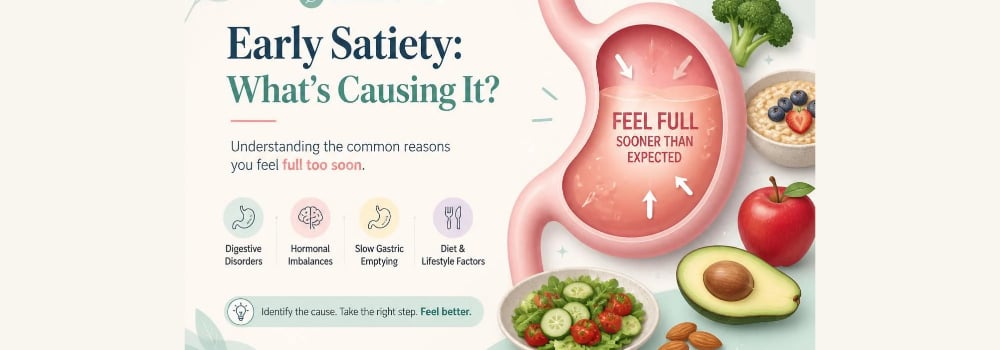
Early satiety means feeling full sooner than expected during a meal or feeling full after eating less food than usual. Instead of comfortably finishing a typical portion, a person may feel satisfied or overly full after only a few bites. The sensation can occur alone or alongside bloating, nausea, belching, upper abdominal discomfort, heartburn, or loss of appetite.
Early satiety is a symptom rather than a diagnosis. It can occur with several digestive conditions, which is why the same complaint may have very different causes from one person to another. For example, one person may have functional dyspepsia, while another may have gastritis or delayed stomach emptying.
If the sensation happens occasionally and resolves on its own, it may not indicate a major problem. If it happens regularly or progressively worsens, however, it is worth discussing with a healthcare professional.
Why Do I Feel Full After Eating Only a Little?
Feeling full after eating only a small amount can happen when the stomach cannot comfortably accommodate food, digestion or stomach emptying slows down, or another digestive problem causes discomfort during meals. Indigestion, gastritis, peptic ulcers, gastroparesis, bloating, certain medications, and other stomach or digestive conditions can all contribute to this sensation.
In some people, the stomach may become uncomfortable as it expands during a meal. In others, food may remain in the stomach longer than expected. Functional dyspepsia can also cause early fullness even when testing does not identify an obvious structural problem.
That is why persistent early satiety should be evaluated based on the entire symptom pattern rather than the feeling of fullness alone.
What Causes Early Satiety?
Indigestion and Functional Dyspepsia
Indigestion, also called dyspepsia, is one of the common reasons a person may feel full too soon. Symptoms can include upper abdominal discomfort, burning, bloating, nausea, belching, and feeling uncomfortably full after eating a small amount.
When chronic indigestion continues without another identifiable cause, doctors may diagnose functional dyspepsia. This condition involves how the gut and brain interact and may be associated with problems with the stomach’s ability to relax and expand with food.
For someone experiencing early satiety along with bloating or upper abdominal discomfort, functional dyspepsia may be part of the evaluation.
Gastritis
Can gastritis make you feel full quickly? Yes. Gastritis and gastropathy can cause indigestion symptoms, including feeling full too soon during a meal or feeling overly full after eating. Other possible symptoms include upper abdominal discomfort, nausea, vomiting, loss of appetite, and weight loss.
Gastritis involves inflammation of the stomach lining, while gastropathy refers to damage of the stomach lining with little or no inflammation. H. pylori infection is a common cause of gastritis, while certain medications and other irritants can contribute to stomach lining damage.
If your doctor suspects gastritis, they may consider your symptoms, medication history, medical history, and appropriate testing. In some cases, an upper GI endoscopy can help examine the stomach lining and identify gastritis, ulcers, or other abnormalities.
For related information, see gastritis treatment in Cypress and stomach inflammation and gastritis treatment.
Gastroparesis
Is feeling full quickly a sign of gastroparesis? It can be. Gastroparesis, also called delayed gastric emptying, occurs when food moves through the stomach more slowly than normal without a physical blockage. Feeling full shortly after starting a meal or remaining full long after eating is a characteristic symptom.
Gastroparesis may also cause nausea, vomiting, bloating, excessive belching, upper abdominal pain, heartburn, and poor appetite. Diabetes is the most common known underlying cause, although gastroparesis can have other causes or remain unexplained.
Some medications can also slow stomach emptying or produce symptoms that resemble gastroparesis. This makes a medication review an important part of the evaluation.
Gastroparesis is not diagnosed simply because someone feels full quickly. Doctors may use symptoms and medical history along with testing that measures how quickly the stomach empties.
Peptic Ulcers
A stomach or duodenal ulcer can sometimes cause early fullness, indigestion, nausea, or upper abdominal discomfort. Ulcers affect the lining of the digestive tract and may cause symptoms that become more noticeable around meals.
Persistent fullness accompanied by abdominal pain, nausea, loss of appetite, vomiting, or evidence of GI bleeding should be evaluated rather than treated as ordinary indigestion. An upper GI endoscopy may be used when a doctor needs to look for an ulcer or another abnormality.
Anyone experiencing black, tarry stools, vomiting blood, or vomit that resembles coffee grounds should seek urgent medical attention because these can indicate gastrointestinal bleeding.
Bloating and Excess Gas
Bloating can make the abdomen feel stretched or uncomfortably full even when the actual amount of food eaten is small. Gas-related symptoms may occur with functional digestive disorders, including functional dyspepsia and other gastrointestinal conditions.
Some people notice that fullness is worse after particular foods or carbonated beverages. Keeping track of meals and symptoms may help identify patterns, although persistent symptoms should not automatically be blamed on food intolerance without proper evaluation.
Medications
Some medications can contribute to indigestion or affect how food moves through the stomach. Certain medicines used for diabetes or obesity, for example, may cause digestive symptoms. Other medications can slow stomach emptying or worsen symptoms that resemble gastroparesis.
Do not stop a prescribed medication on your own. If your early satiety started after you began taking a medication or changed your dose, tell your prescribing healthcare professional. Your medication, dose, timing, and other health conditions can all affect your symptoms and help guide the next steps.
Stomach or Digestive Tract Conditions That Need Further Evaluation
Less commonly, persistent early satiety can occur with structural problems affecting the stomach or digestive tract. Gastric outlet obstruction and stomach tumors are among the possible causes listed for early satiety.
This does not mean feeling full quickly is a sign of cancer. Many much more common and less serious conditions can cause the same symptom. However, persistent or progressive symptoms, particularly when combined with unexplained weight loss, vomiting, bleeding, difficulty swallowing, or significant loss of appetite, deserve medical evaluation.
When Early Fullness Should Not Be Ignored
It is understandable to assume that feeling full quickly is simply gas, eating too fast, or having a sensitive stomach. Sometimes that is the explanation. But when early satiety keeps returning, makes it difficult to eat enough, or comes with weight loss, repeated vomiting, bleeding, severe pain, or other concerning changes, guessing at the cause can delay appropriate care. A GI evaluation can help separate common digestive symptoms from problems that require treatment.
Can Gastritis Make You Feel Full Quickly?
Yes. Gastritis can cause early satiety because inflammation or damage involving the stomach lining may produce indigestion symptoms such as feeling full too soon, nausea, upper abdominal discomfort, and loss of appetite
However, early satiety by itself cannot confirm gastritis. Similar symptoms occur with functional dyspepsia, peptic ulcers, gastroparesis, medication effects, and other digestive conditions. If symptoms continue, a doctor may recommend testing to determine the underlying cause.
For people with ongoing stomach symptoms, United Gastroenterology Associates also provides information about common gastrointestinal symptoms and conditions.
What Other Symptoms Can Happen With Early Satiety?
The symptoms accompanying early fullness can provide important clues. Some people experience only early satiety, while others develop a group of symptoms involving the upper digestive tract.
Common associated symptoms can include bloating, nausea, belching, upper abdominal discomfort, heartburn, poor appetite, or feeling full for a long time after a meal. These symptoms are commonly described with indigestion and gastroparesis.
More concerning symptoms include persistent vomiting, unexplained weight loss, difficulty swallowing, vomiting blood, black or tarry stools, severe or constant abdominal pain, weakness, shortness of breath, or fainting. These symptoms warrant prompt medical attention.
When Should Early Satiety Be Evaluated?
Early satiety should be discussed with a healthcare professional when it becomes persistent, repeatedly interferes with meals, or is accompanied by other symptoms. The need for evaluation depends on how long the symptom has been present, how severe it is, whether it is getting worse, and whether other warning signs are present.
Medical evaluation is particularly important when you are losing weight without trying, have a significant loss of appetite, experience frequent vomiting, have difficulty swallowing, notice bleeding, or develop persistent abdominal pain. NIDDK recommends medical evaluation for indigestion accompanied by symptoms such as unexplained weight loss, frequent vomiting, difficulty swallowing, severe abdominal pain, black stools, or other concerning changes.
How Does a Gastroenterologist Find the Cause?
A gastroenterologist does not diagnose early satiety from one symptom alone. The evaluation usually starts with a detailed discussion about what you experience, when the fullness occurs, how much food triggers it, whether certain meals make it worse, and whether you also have nausea, vomiting, pain, bloating, heartburn, bowel changes, or weight loss.
Your medical history and medications also help guide the evaluation. Your doctor may ask about diabetes, previous abdominal or stomach surgery, existing digestive conditions, and medications that can affect digestion or slow stomach movement.
Depending on your symptoms, your gastroenterologist may recommend tests to look for gastritis, peptic ulcers, or other digestive abnormalities. An upper GI endoscopy allows the doctor to examine the lining of the upper digestive tract and identify conditions such as gastritis, ulcers, or certain cancers.
If your symptoms suggest delayed stomach emptying, specific tests can measure how quickly food moves through your stomach. Doctors diagnose gastroparesis by considering your medical history, physical examination, symptoms, and test results that measure stomach emptying.
The goal goes beyond simply labeling the symptom. Your gastroenterologist aims to find out why you become full so quickly and determine whether you need treatment.
How Is Early Satiety Treated?
There is no single treatment for early satiety because treatment depends on the underlying cause. Someone with gastritis may need treatment directed at the cause of the stomach inflammation, while someone with functional dyspepsia may need a different approach. If gastroparesis is responsible, treatment may focus on the underlying condition, nutrition, stomach emptying, and symptom control.
For gastroparesis, dietary changes can sometimes help. Depending on the person’s condition, a healthcare professional may recommend smaller, more frequent meals and foods that are easier to digest. NIDDK notes that people with gastroparesis may be advised to eat five or six small, nutritious meals rather than two or three larger meals, with dietary adjustments based on individual needs.
It is important not to assume that a restrictive diet is necessary simply because you feel full quickly. Cutting out large numbers of foods without identifying the underlying problem can make it harder to meet nutritional needs. A GI specialist or dietitian can provide more appropriate guidance when symptoms are persistent.
What Can You Do While Waiting for an Evaluation?
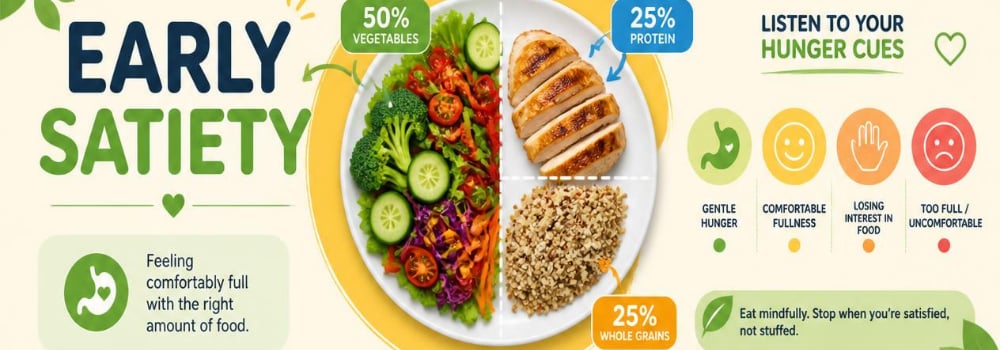
If early satiety is mild and you are otherwise feeling well, paying attention to eating patterns may be useful. Eating slowly, avoiding very large meals, and keeping a record of symptoms can help you recognize whether fullness consistently occurs with particular foods, meal sizes, or times of day.
A food and symptom diary can also give your gastroenterologist useful information. Record what you ate, approximately how much you ate, when you started feeling full, and whether you experienced bloating, nausea, pain, reflux, or vomiting afterward.
However, self-care should not replace medical evaluation when symptoms persist or warning signs develop. In particular, unexplained weight loss, repeated vomiting, bleeding, severe pain, or difficulty eating enough should not be managed solely through dietary experimentation.
Can Early Satiety Be Related to Weight Loss?
Yes. If you consistently become full after eating very little, you may unintentionally reduce your food intake. Over time, this can contribute to weight loss or nutritional problems. Weight loss can also be a sign that the underlying condition needs further evaluation.
Gastroparesis, for example, can be associated with poor appetite, weight loss, dehydration, and malnutrition when symptoms become significant.
Unexplained weight loss does not identify one particular diagnosis, but it changes the importance of the symptom. If early fullness is causing you to eat substantially less than usual or your weight is falling without an intentional diet change, speak with a healthcare professional.
Is Feeling Full Quickly Always a Sign of Gastroparesis?
No. Early satiety is one of the symptoms of gastroparesis, but it is not specific to gastroparesis. Indigestion, functional dyspepsia, gastritis, peptic ulcers, bloating, medication effects, and other digestive problems can produce a similar sensation.
Gastroparesis becomes more relevant when early fullness occurs with symptoms such as nausea, vomiting, prolonged fullness after meals, bloating, upper abdominal pain, and poor appetite. Even then, proper testing is needed to determine whether stomach emptying is actually delayed.
When Should You See a Gastroenterologist for Early Satiety?
A gastroenterologist can help when feeling full quickly is persistent, unexplained, worsening, or interfering with normal eating. Evaluation becomes especially important when early satiety occurs with weight loss, recurrent vomiting, significant abdominal pain, difficulty swallowing, loss of appetite, black stools, blood in vomit, or other concerning symptoms.
People with diabetes who experience persistent early fullness, nausea, vomiting, or prolonged fullness after meals may benefit from an evaluation because diabetes is the most common known cause of gastroparesis.
United Gastroenterology Associates provides gastroenterology care in Cypress and Katy, including evaluation of digestive symptoms and conditions affecting the stomach and gastrointestinal tract. Patients can also learn more about available GI treatments and procedures.
When to Seek Prompt Medical Care
Do not wait for a routine appointment if early fullness is accompanied by vomiting blood, vomit that looks like coffee grounds, black or tarry stools, severe or persistent abdominal pain, fainting, significant weakness, difficulty breathing, or signs of dehydration. These symptoms can indicate a more serious digestive problem and may require urgent assessment.
Frequently Asked Questions About Feeling Full Quickly
Why do I feel full after eating only a little?
Feeling full after eating only a small amount is called early satiety. Several conditions can cause it, including indigestion, functional dyspepsia, gastritis, peptic ulcers, bloating, medication effects, and delayed stomach emptying, such as gastroparesis. If the symptom persists, see a healthcare professional to identify the underlying cause rather than assuming it has one specific cause.
What causes early satiety?
Early satiety can result from problems affecting the stomach’s ability to accommodate food, delayed stomach emptying, inflammation, ulcers, functional digestive disorders, medications, or less common structural conditions. The cause cannot be determined from the symptom alone.
Can gastritis make me feel full quickly?
Yes. Gastritis and gastropathy can cause indigestion symptoms that include feeling full too soon during a meal or feeling overly full afterward. Nausea, upper abdominal discomfort, loss of appetite, and other digestive symptoms may also occur.
Is feeling full quickly a sign of gastroparesis?
It can be, particularly when early fullness occurs with nausea, vomiting, bloating, prolonged fullness after meals, or upper abdominal discomfort. However, many other conditions can cause the same symptom. Testing may be needed to determine whether stomach emptying is delayed.
Can bloating make me feel full after a small meal?
Yes. Bloating and excess gas can create pressure and discomfort that makes a person feel overly full. Functional digestive disorders, including functional dyspepsia, can be associated with bloating and other upper digestive symptoms.
When should early fullness be evaluated by a GI doctor?
Consider a GI evaluation when early satiety is persistent, worsening, interfering with normal eating, or associated with unexplained weight loss, poor appetite, recurrent vomiting, difficulty swallowing, significant abdominal pain, or signs of bleeding.
Can early satiety cause weight loss?
Yes. If feeling full quickly consistently limits how much you can eat, you may lose weight unintentionally. Weight loss can also be a symptom of an underlying digestive condition, so unexplained weight loss should be discussed with a healthcare professional.
Final Thoughts
Feeling full quickly after eating is common enough to be easy to dismiss, but persistent early satiety deserves a closer look. The cause may be something manageable such as indigestion, functional dyspepsia, gastritis, or bloating. In other cases, delayed stomach emptying, an ulcer, medication effects, or another digestive condition may be involved.
The most useful next step is to look at the complete symptom picture. Notice whether early fullness is accompanied by nausea, vomiting, abdominal pain, bloating, heartburn, appetite changes, or weight loss. If the problem keeps returning or makes it difficult to eat normally, a gastroenterologist can help determine what is causing it and whether testing is appropriate.
Persistent Early Fullness Should Not Be Ignored
If you regularly feel full after only a few bites, especially with bloating, nausea, abdominal discomfort, vomiting, or unexplained weight loss, a GI evaluation can help identify the cause.
Medical Disclaimer: This article is for general educational purposes and does not replace medical advice, diagnosis, or treatment from a qualified healthcare professional. Persistent or severe digestive symptoms should be evaluated by a healthcare professional. Seek urgent medical care for severe abdominal pain, vomiting blood, black or tarry stools, fainting, difficulty breathing, or other signs of significant illness.